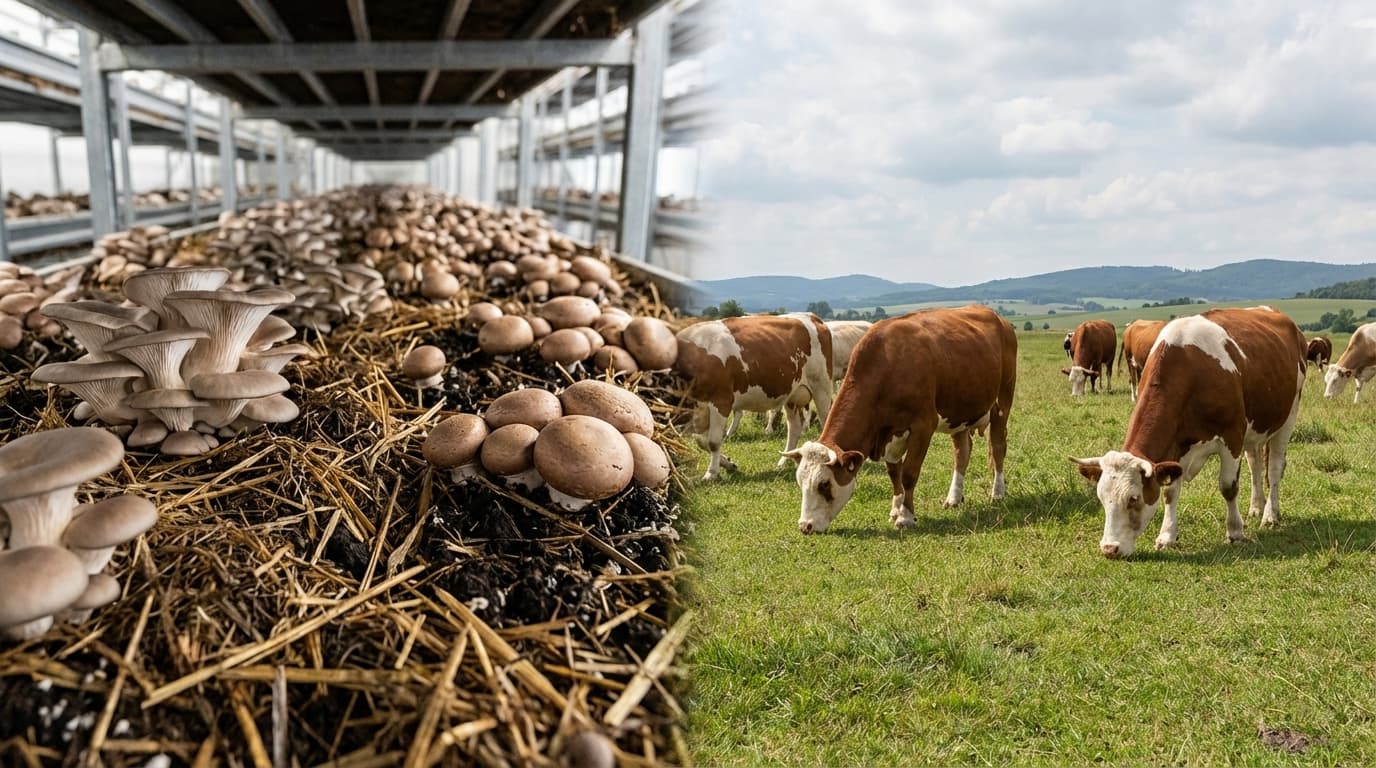
Mushroom cultivation versus livestock farming: an environmental and nutritional comparison
Food production today faces a central challenge: feeding a growing population without depleting natural resources. In this context, mushroom cultivation emerges as a highly efficient alternative to traditional livestock farming, both environmentally and nutritionally.
Comparing mushrooms and meat does not imply fully replacing one system with another, but rather understanding differences in water use, land use, caloric density, and nutritional profile to make informed production and consumption decisions.
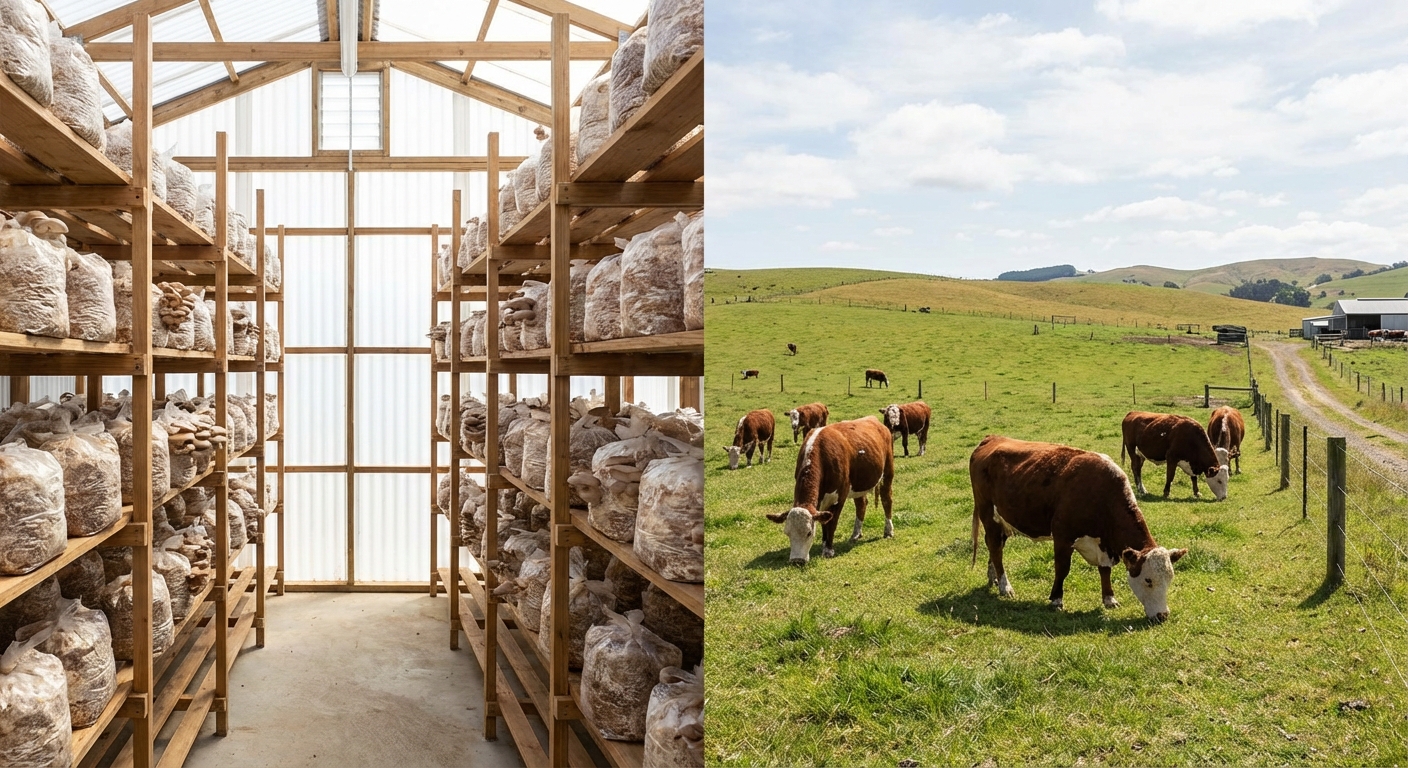
Water use: a difference of orders of magnitude
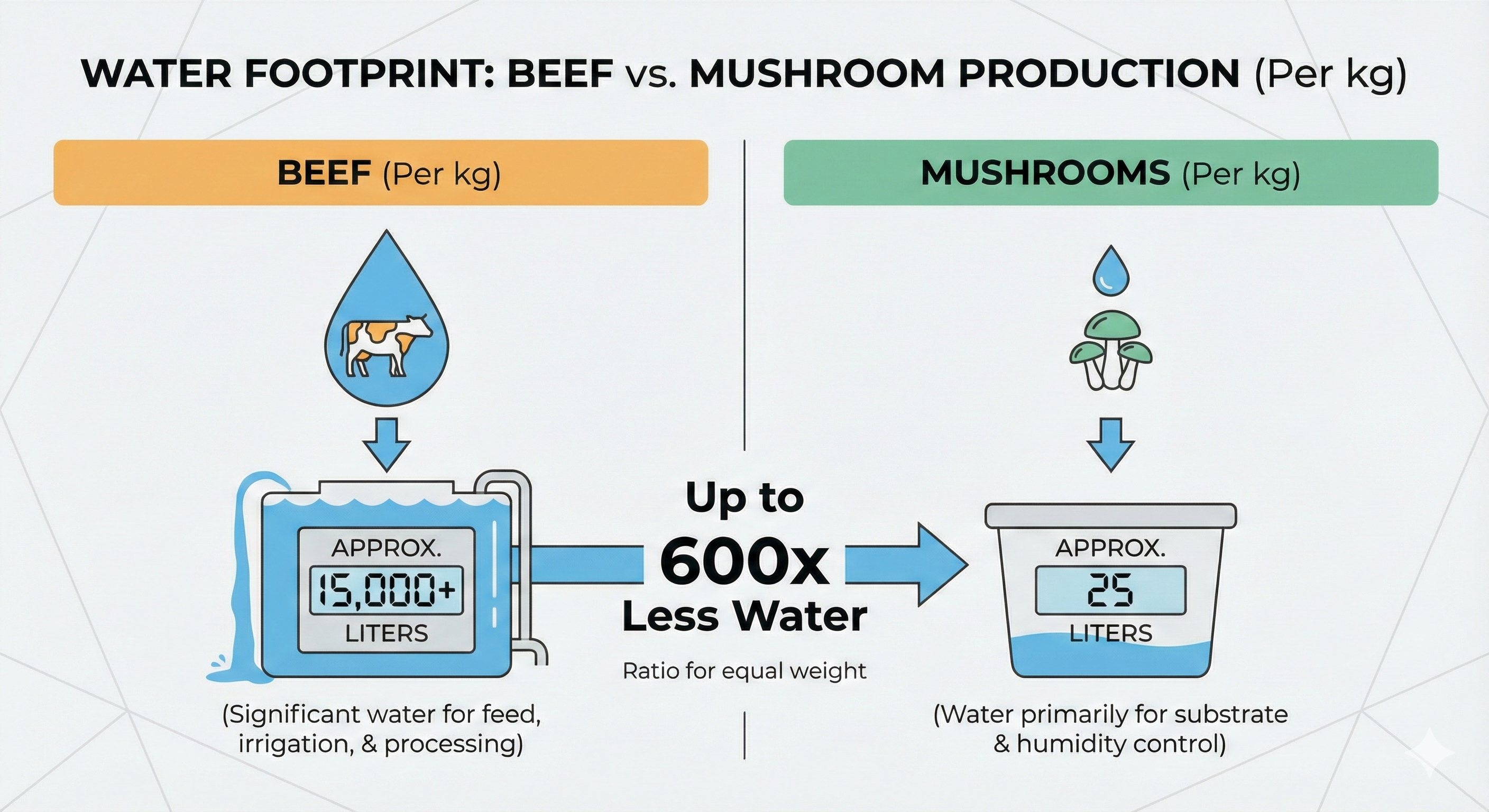
Livestock farming is one of the food systems with the highest water footprint. Producing one kilogram of beef can require between 13,000 and 15,000 liters of water, considering forage irrigation, animal consumption, and processing.
In contrast, mushroom cultivation requires only a small fraction of that volume. Depending on the species and system, producing one kilogram of fresh mushrooms is estimated to require between 300 and 500 liters of water, mainly to hydrate the substrate and maintain ambient humidity.
Land use: vertical production and reduced space requirements
Livestock farming not only occupies space for animals, but also vast areas of land to produce feed. This contributes to deforestation, soil degradation, and biodiversity loss.
Mushroom cultivation, by contrast, can be carried out vertically and in controlled environments. It is produced in warehouses, closed rooms, or containers, using agricultural byproducts such as straw, sawdust, or lignocellulosic residues, without the need for fertile land.
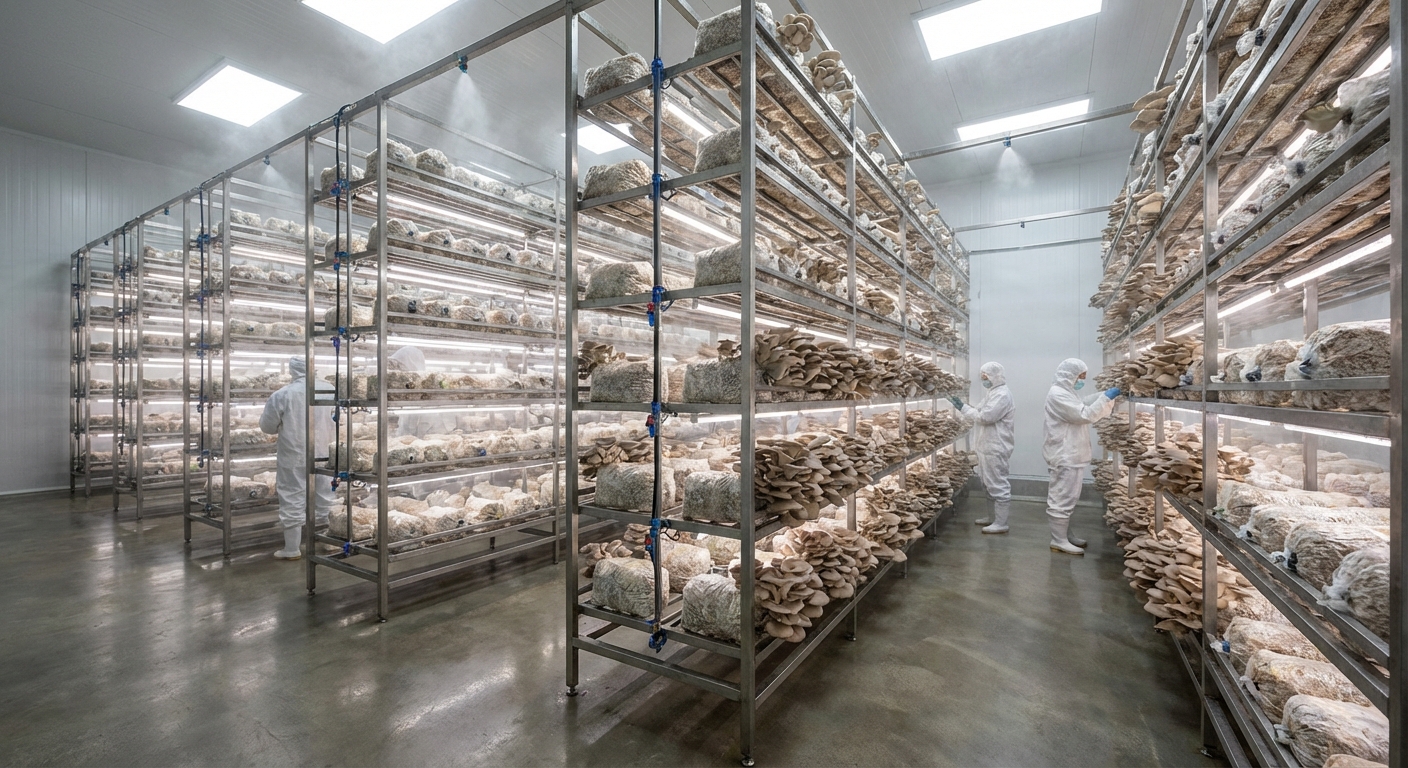
In terms of yield, a small surface area can generate multiple production cycles per year. This makes mushrooms one of the most efficient ways to transform residual biomass into food.
Caloric comparison: lower energy, higher efficiency
From a caloric perspective, mushrooms do not directly compete with meat. Fresh mushrooms provide approximately 20–35 kcal per 100 g, while beef provides between 200 and 250 kcal for the same amount.
However, this lower caloric density is an advantage in healthy diets, as it allows greater food volume with low energy intake, promoting satiety and weight control.
Nutritional profile: what mushrooms actually provide
Although they are not a high-calorie food, mushrooms stand out for their nutritional profile. They provide fiber, B-complex vitamins (B2, B3, B5), minerals such as potassium, phosphorus, and selenium, and bioactive compounds like beta-glucans.
Their protein content usually ranges between 2 and 4 g per 100 g fresh. Although lower than meat, mushroom protein has good digestibility and a complementary amino acid profile when combined with cereals or legumes.
Meat, on the other hand, is rich in complete protein, heme iron, and vitamin B12, but its production entails greater environmental impacts. From a food systems perspective, both foods play different roles.
Global environmental impact and sustainability
Beyond water and land use, livestock farming generates significant greenhouse gas emissions, especially methane. Mushroom cultivation presents a considerably lower carbon footprint, partly because it does not require ruminant animals or extensive input chains.
Additionally, spent mushroom substrate can be reincorporated into soil as organic amendments, closing nutrient cycles and reducing waste.
Conclusion: efficiency, not absolute replacement
Mushroom cultivation demonstrates that it is possible to produce food using minimal water and land while offering meaningful nutritional value. Although mushrooms do not completely replace livestock farming from a caloric or protein standpoint, they represent one of the most efficient and sustainable options available.
Integrating mushrooms into food systems, diets, and production models is not a trend, but a logical response to current environmental constraints.