
Free tool
Mushroom cultivation contamination guide
Profiles of the 12 most common contaminants: what they look like, when they show up, what to do and how to prevent them.
How do I identify the contaminant in my grow?
Answer what you see in your grow. The tool compares your answers with the 12 profiles and shows the three most likely.
The 12 contaminants in the guide
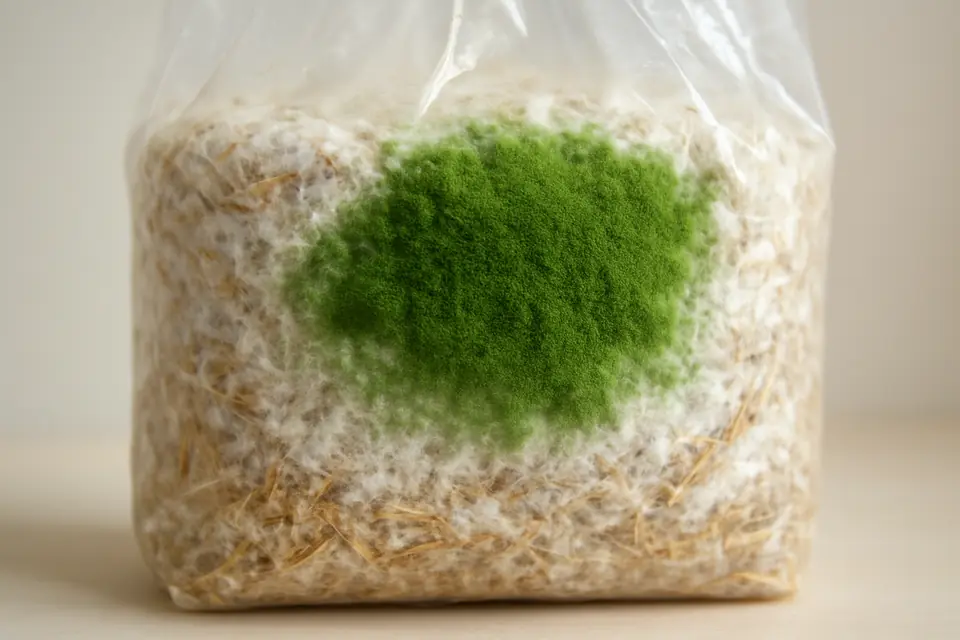
Green Mold (Trichoderma)
Trichoderma harzianum
Starts as white patches that quickly turn bright green as spores develop.
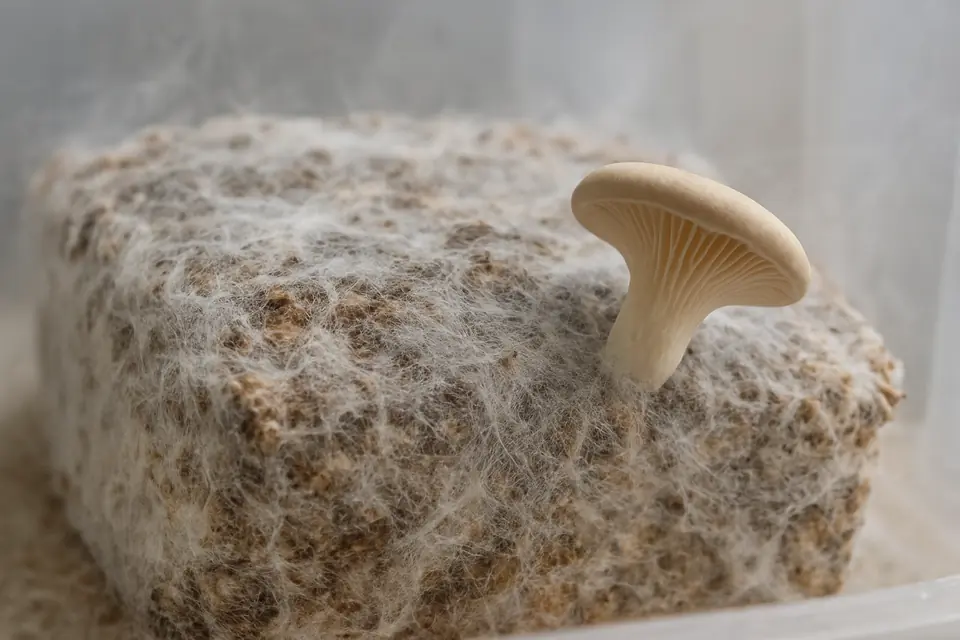
Cobweb Mold
Dactylium dendroides
Wispy, gray-white threads that spread rapidly over the substrate surface, resembling cobwebs.
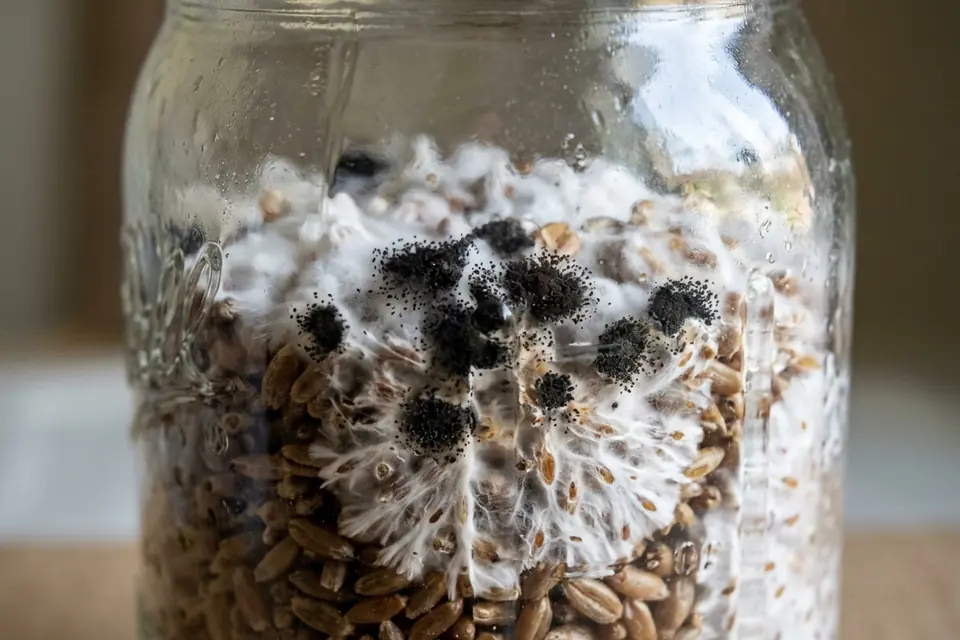
Black Mold (Aspergillus)
Aspergillus niger
Dark black or dark brown powdery colonies.
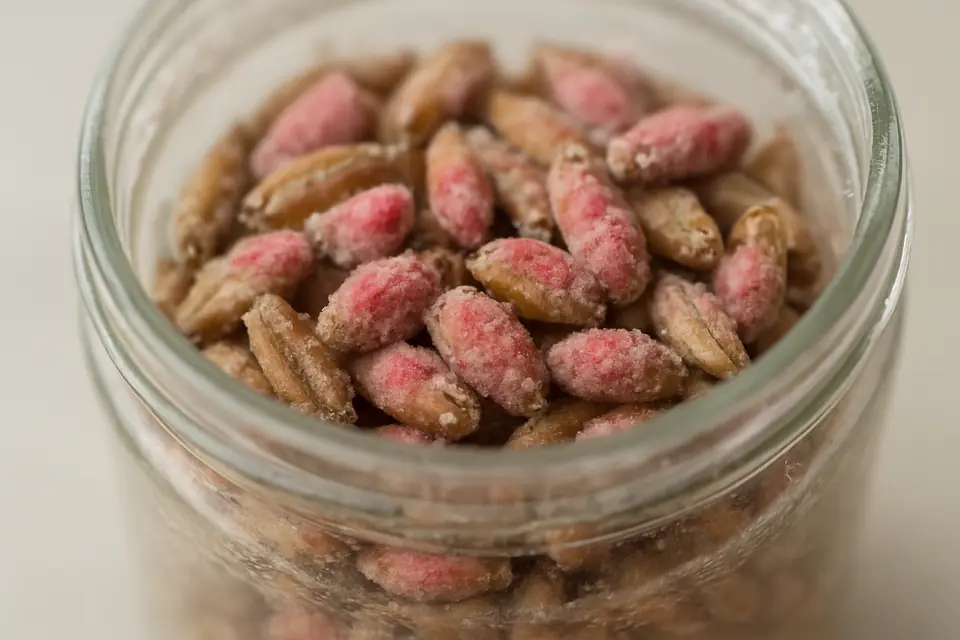
Lipstick Mold
Sporendonema purpurascens
Bright pink to rose-red powdery patches on grain.
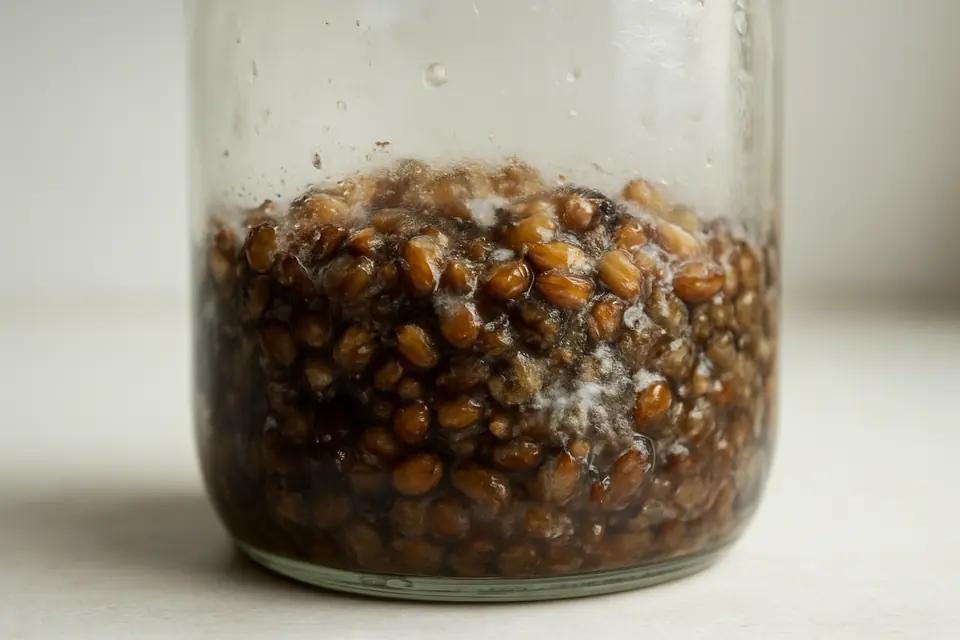
Wet Spot / Sour Rot
Bacillus spp.
Wet, slimy, translucent spots on grain.
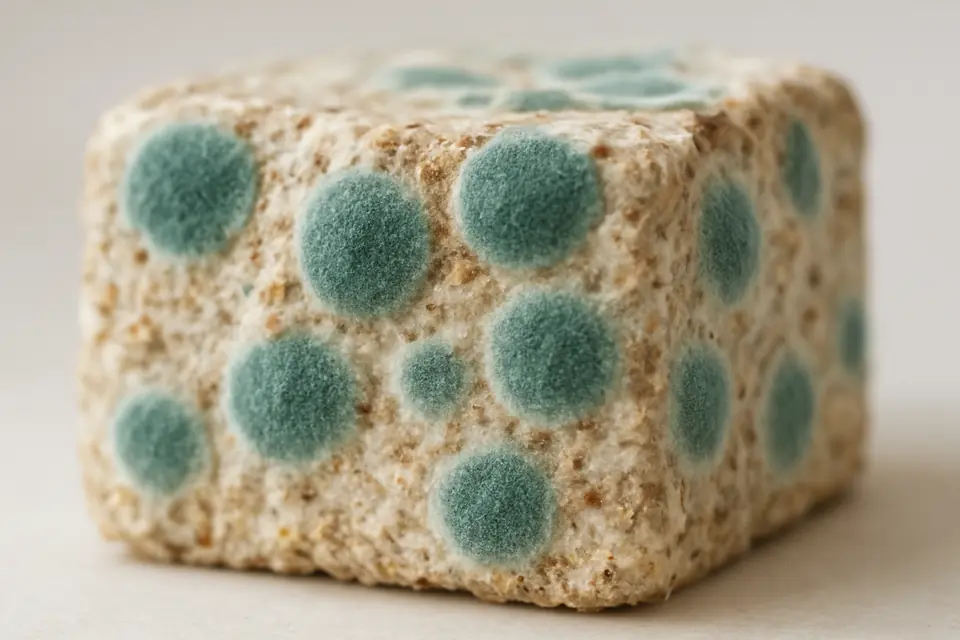
Blue-Green Mold (Penicillium)
Penicillium spp.
Blue-green to dark green powdery patches.
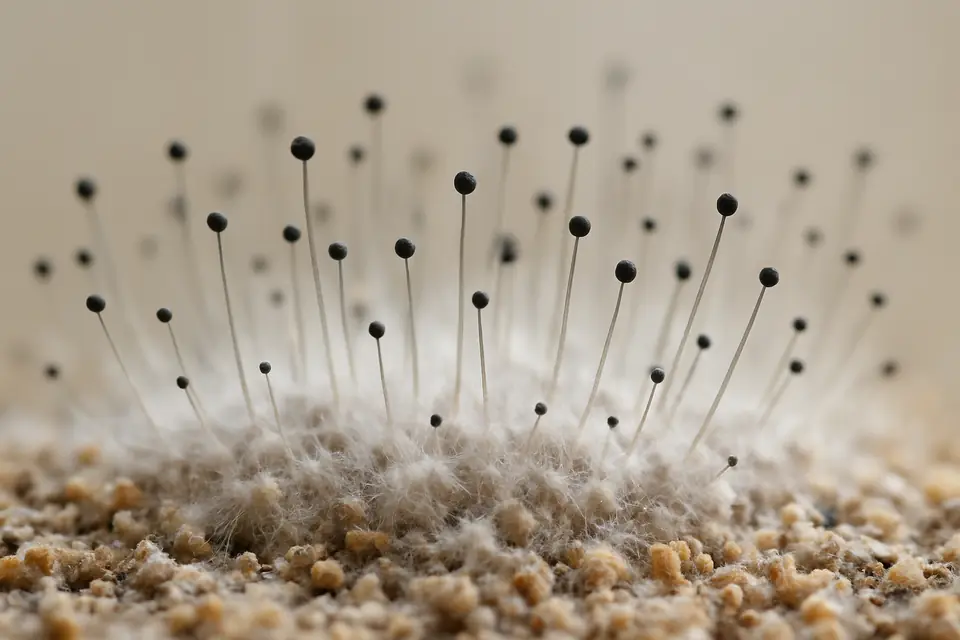
Black Pin Mold
Mucor spp.
Initially white fuzzy growth, then develops tall stalks (sporangiophores) topped with round black dots (sporangia).
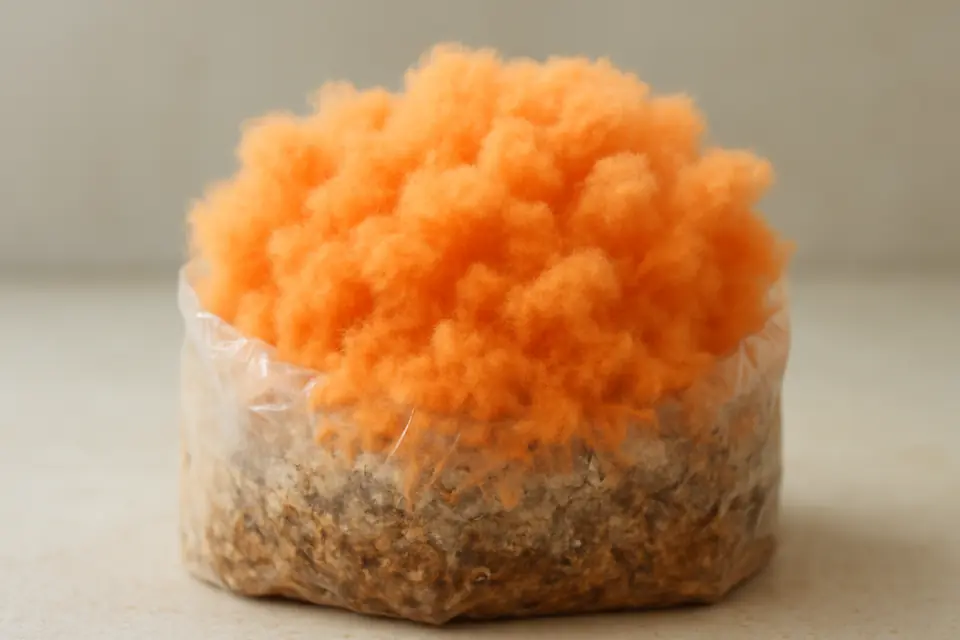
Orange Bread Mold (Neurospora)
Neurospora crassa
Bright orange to peach-colored fluffy growth that spreads explosively.
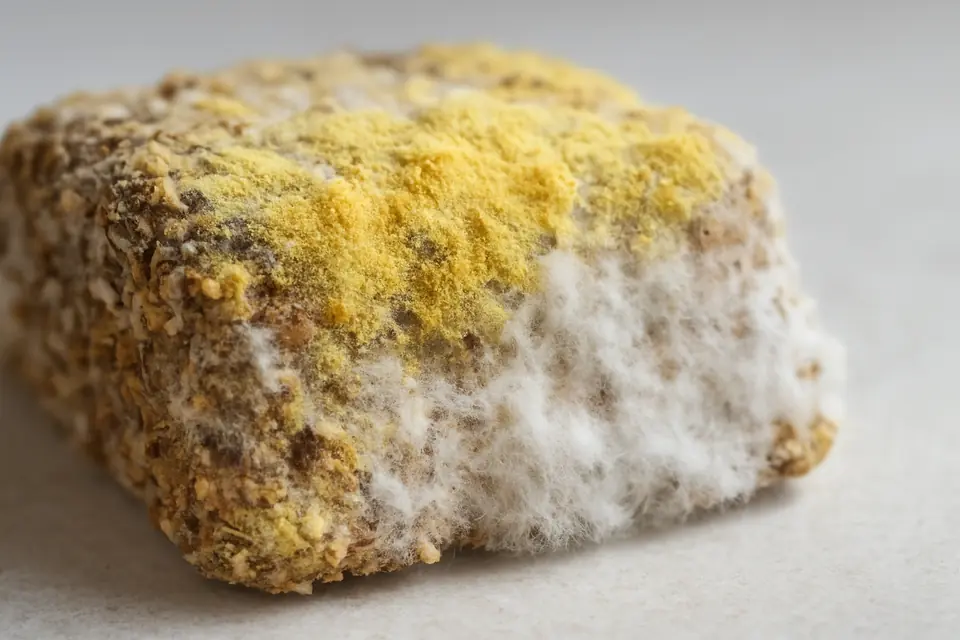
Yellow Mold
Chrysosporium spp.
Pale yellow to golden powdery patches.
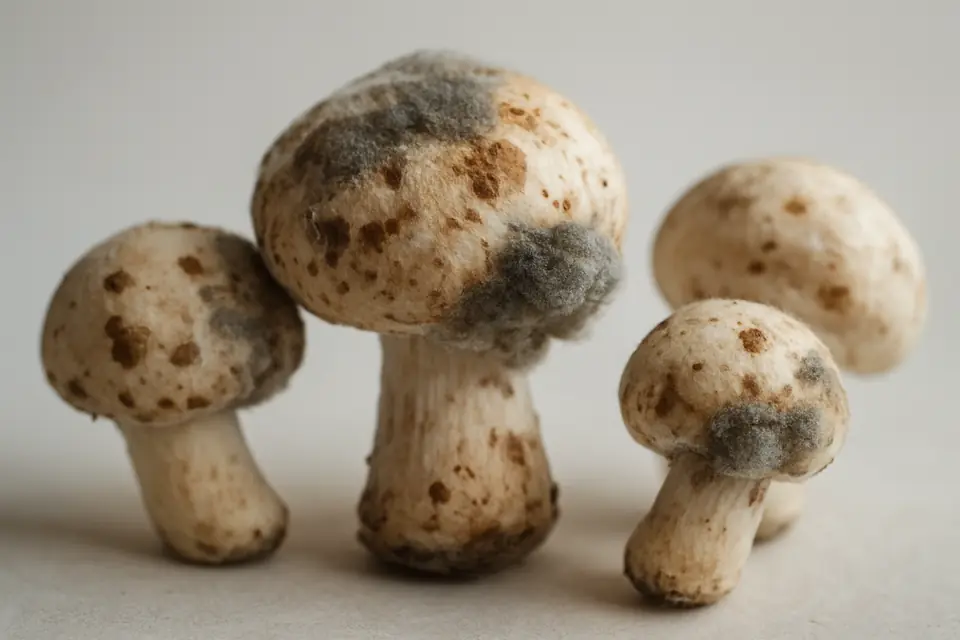
Dry Bubble Disease
Verticillium fungicola
Deformed, lumpy, round mushroom masses instead of normal caps and stems.
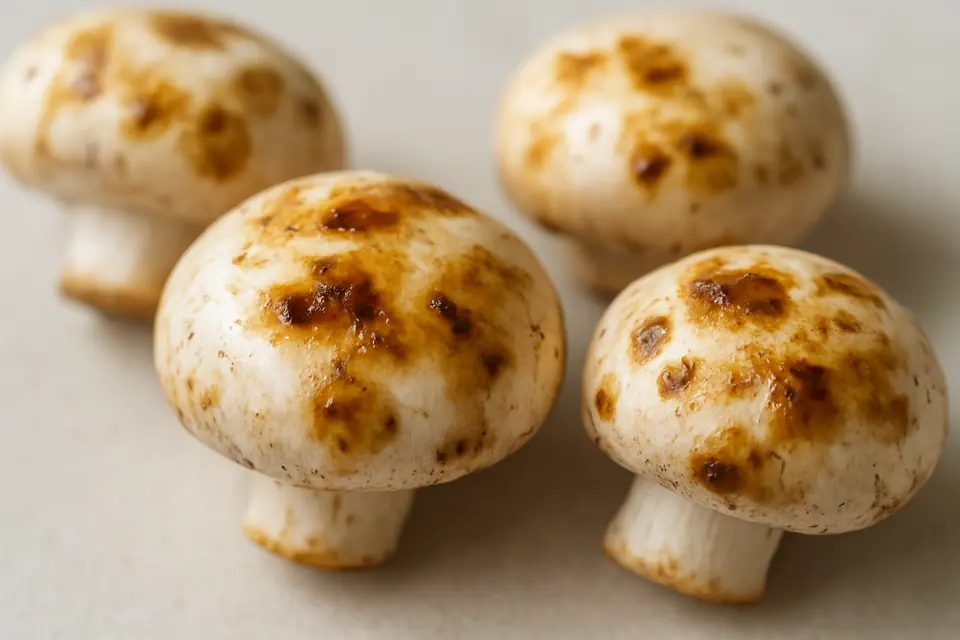
Bacterial Blotch
Pseudomonas tolaasii
Yellow to dark brown sticky, slimy spots on mushroom caps.
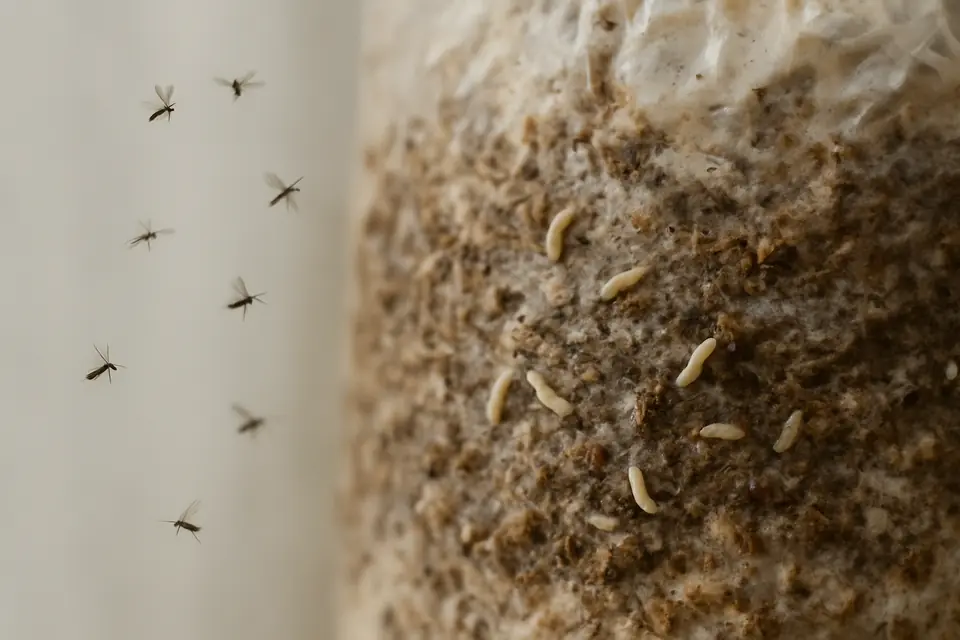
Mites & Insects
Various (Tyrophagus, Lycoriella, Megaselia spp.)
Tiny flying insects (gnats/flies), microscopic mites visible as moving dots, small jumping insects (springtails).
What does each mold color mean in mushroom cultivation?
Color is the first clue. Each row links to the full profile.
| Color | Contaminant |
|---|---|
| Green | Green Mold (Trichoderma) |
| Gray | Cobweb Mold |
| Black | Black Mold (Aspergillus), Black Pin Mold |
| Pink | Lipstick Mold |
| Brown | Wet Spot / Sour Rot, Dry Bubble Disease, Mites & Insects |
| Blue | Blue-Green Mold (Penicillium) |
| Orange | Orange Bread Mold (Neurospora) |
| Yellow | Yellow Mold, Bacterial Blotch |
At which cultivation stage does each contaminant appear?
Risk of each contaminant across the five cultivation stages.
| Contaminant | Preparation | Inoculation | Colonization | Fruiting | Harvest |
|---|---|---|---|---|---|
| Green Mold (Trichoderma) | Moderate | Moderate | High | Moderate | Low |
| Cobweb Mold | No risk | No risk | Low | High | Moderate |
| Black Mold (Aspergillus) | Moderate | Moderate | High | Low | Low |
| Lipstick Mold | Moderate | Low | High | Low | No risk |
| Wet Spot / Sour Rot | High | High | Moderate | Low | No risk |
| Blue-Green Mold (Penicillium) | Moderate | Moderate | High | Low | Low |
| Black Pin Mold | Moderate | High | Moderate | Low | No risk |
| Orange Bread Mold (Neurospora) | Low | Moderate | High | Moderate | Low |
| Yellow Mold | Low | Low | Moderate | Low | No risk |
| Dry Bubble Disease | Low | No risk | Low | High | Moderate |
| Bacterial Blotch | No risk | No risk | No risk | High | Moderate |
| Mites & Insects | Low | Low | Moderate | High | Moderate |
Frequently asked questions
How do I tell mycelium from mold?
Healthy mycelium is white, even and smells like fresh mushrooms. Mold has color (green, black, pink, orange) or grows in patches with a different texture. If a white area changes color within a few days, it is mold releasing spores.
Can a grow with green mold be saved?
Almost never. Green mold (Trichoderma) eats the mycelium and fills the room with spores. The safe move is to take the batch out closed, throw it away and clean the area before starting again.
Which contaminants can be treated?
Cobweb mold responds to 3% hydrogen peroxide and more airflow. Pests are controlled with traps and cleaning. Each profile says whether the batch can be saved and which steps to follow.
What is the most common cause of contamination?
Incomplete sterilization or pasteurization and poor technique when inoculating. Heat above 27 °C (80 °F) during colonization and stale air during fruiting also open the door.
This guide is for orientation. A reliable diagnosis needs a lab. If in doubt, ask an experienced mycologist.
Track your batches in MycoLab
MycoLab keeps your recipes, your batches and every contamination you find. You see which recipe and which stage cause trouble. It is free.
Cultures to start your next batch
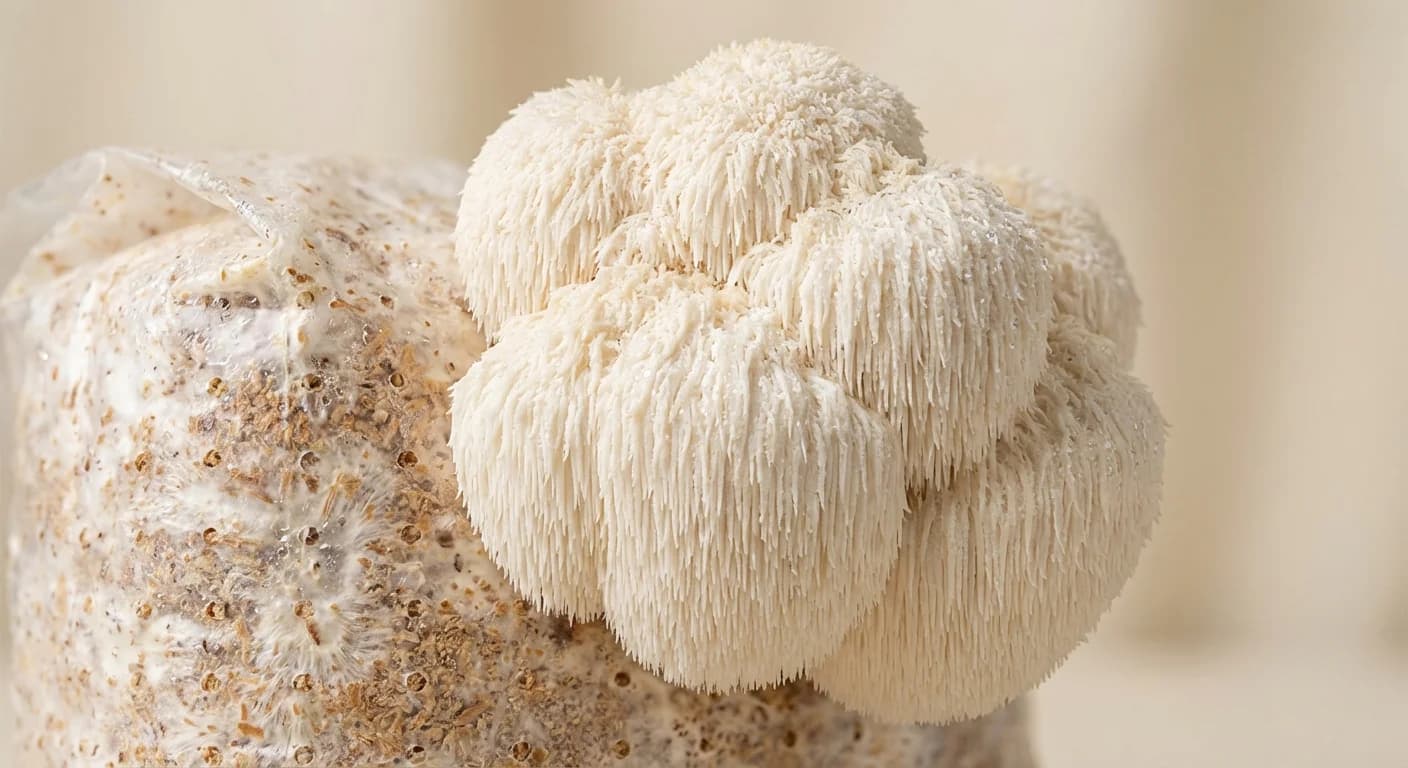
Lion's Mane (Hericium Erinaceus)
The brain mushroom. Known for its neuroprotective properties and delicate seafood-like flavor.
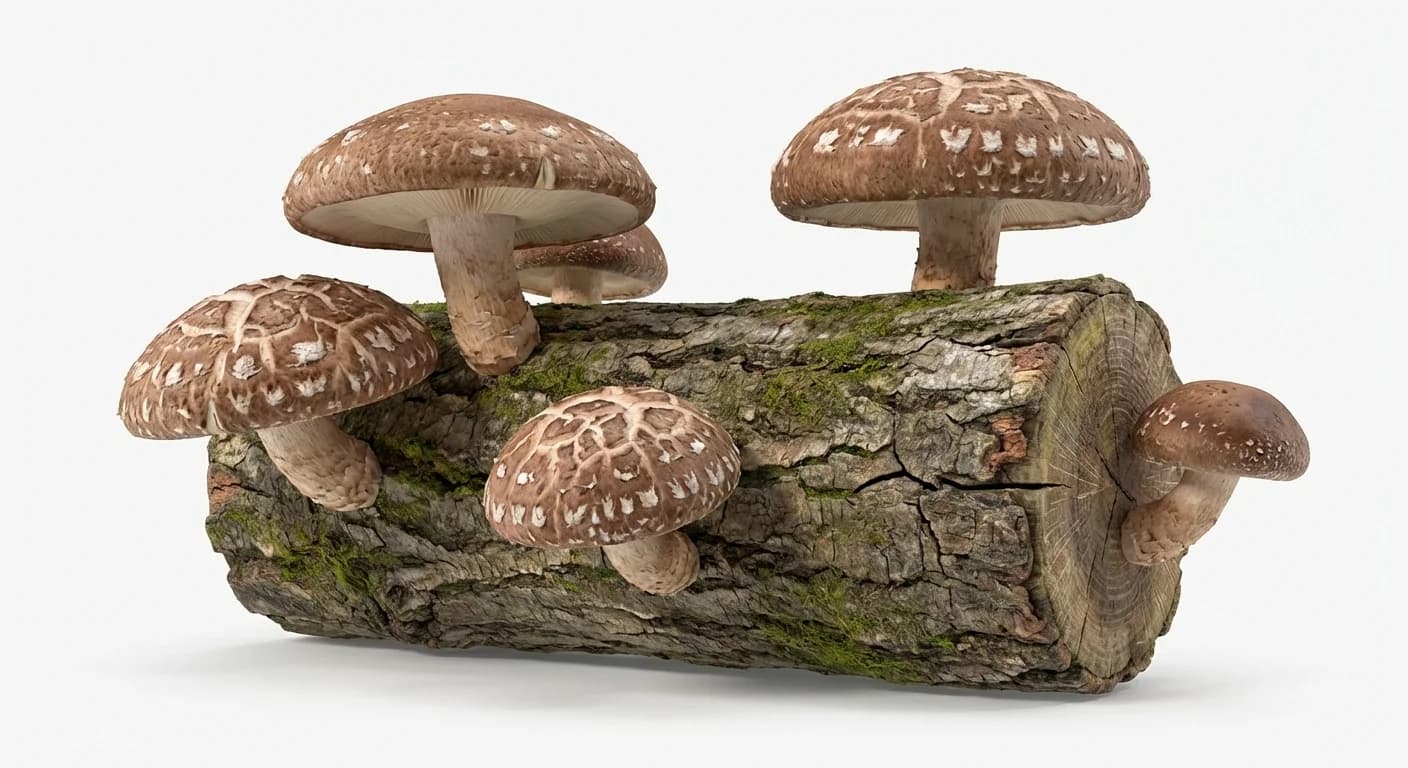
Shiitake (Lentinula Edodes)
The king of gourmet mushrooms. Intense flavor, meaty texture, and proven health benefits.
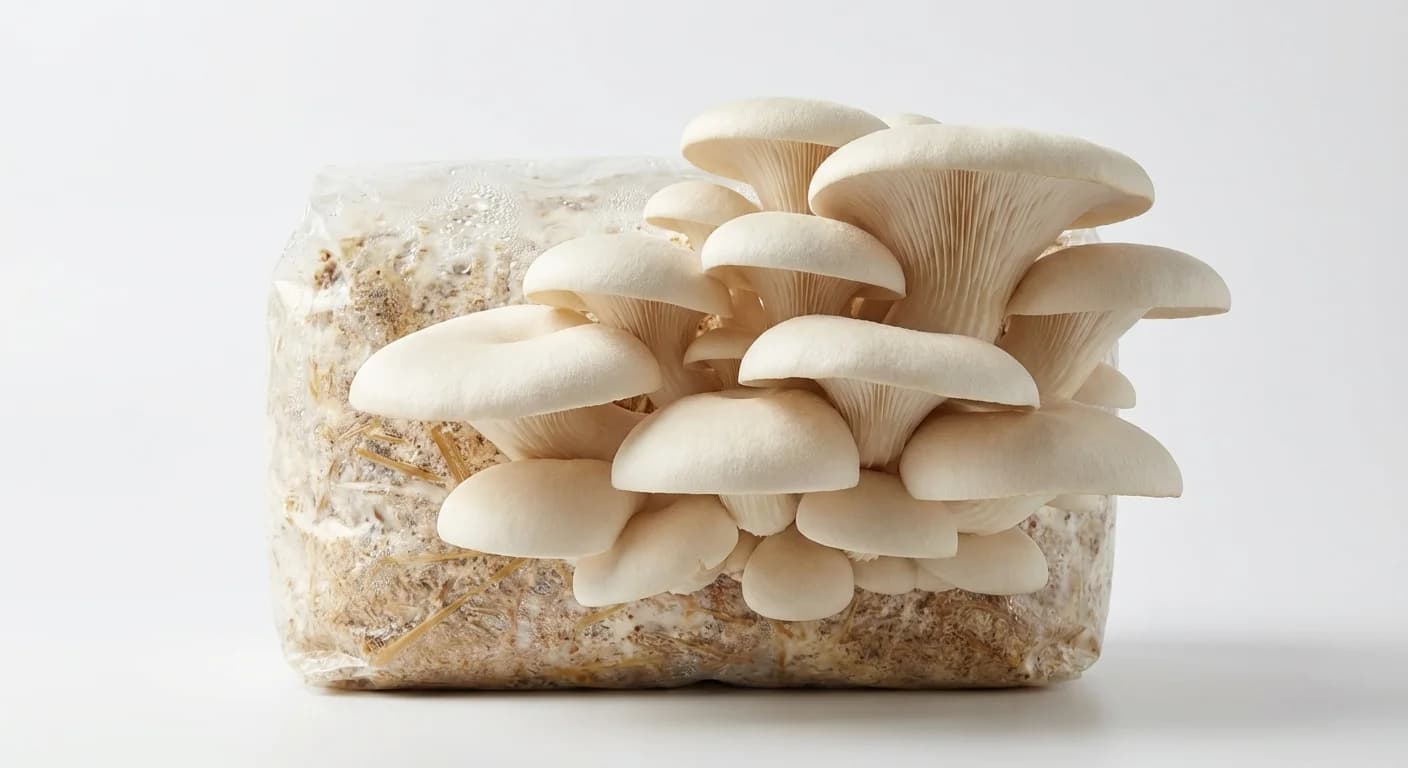
White Oyster (Pleurotus Ostreatus)
The perfect classic. Purity, versatility, and exceptional yield in every grow.