Edible. Eat it cooked. Never eat a wild mushroom identified only from photos.
- Season in Mexico
- HabitatMoist soil with humus
- FamilyPhallaceae
How do you identify Long net stinkhorn?
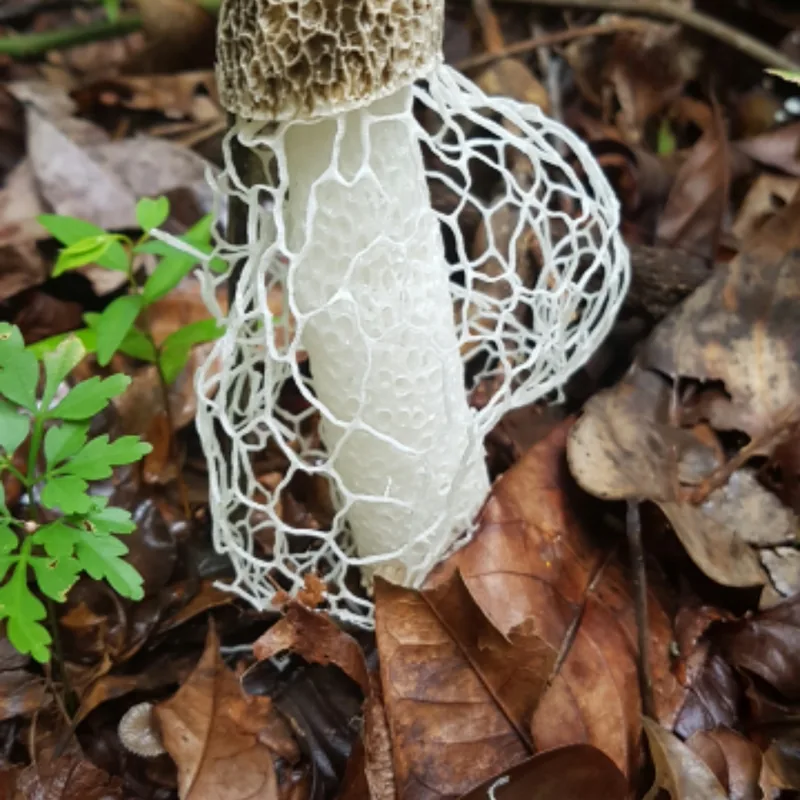
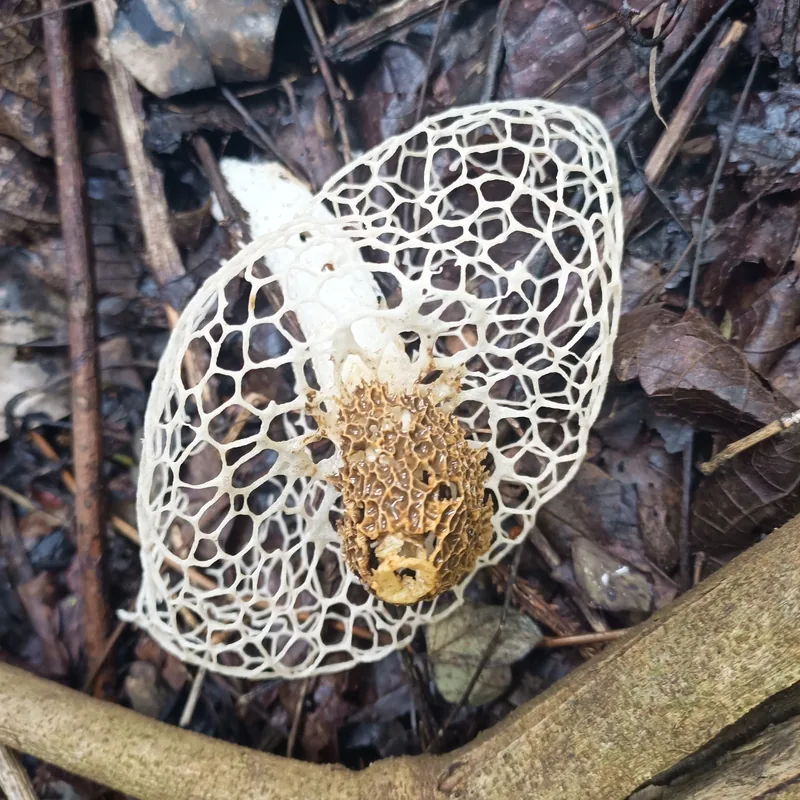
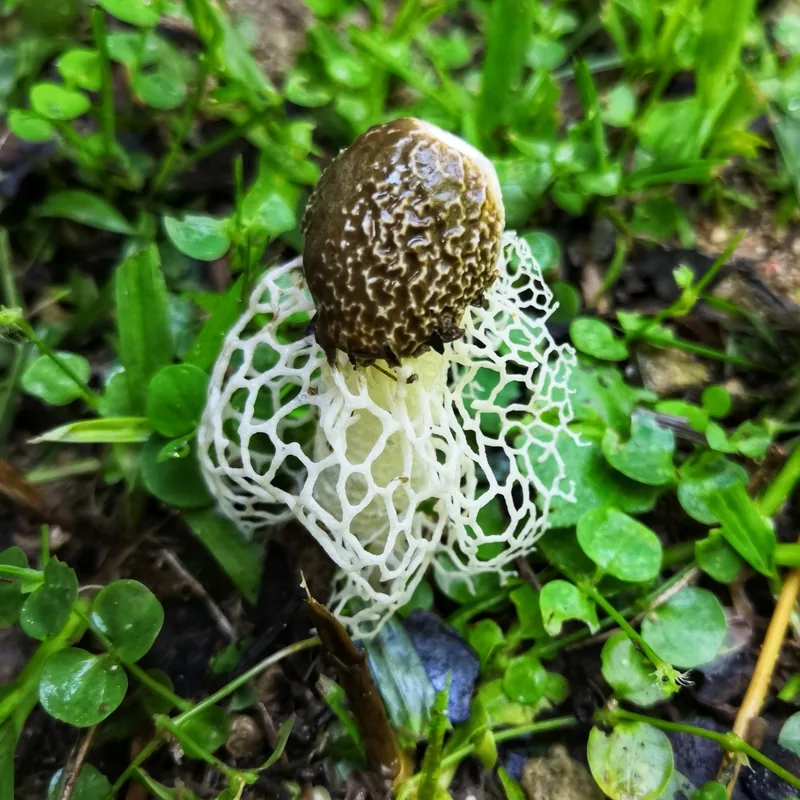
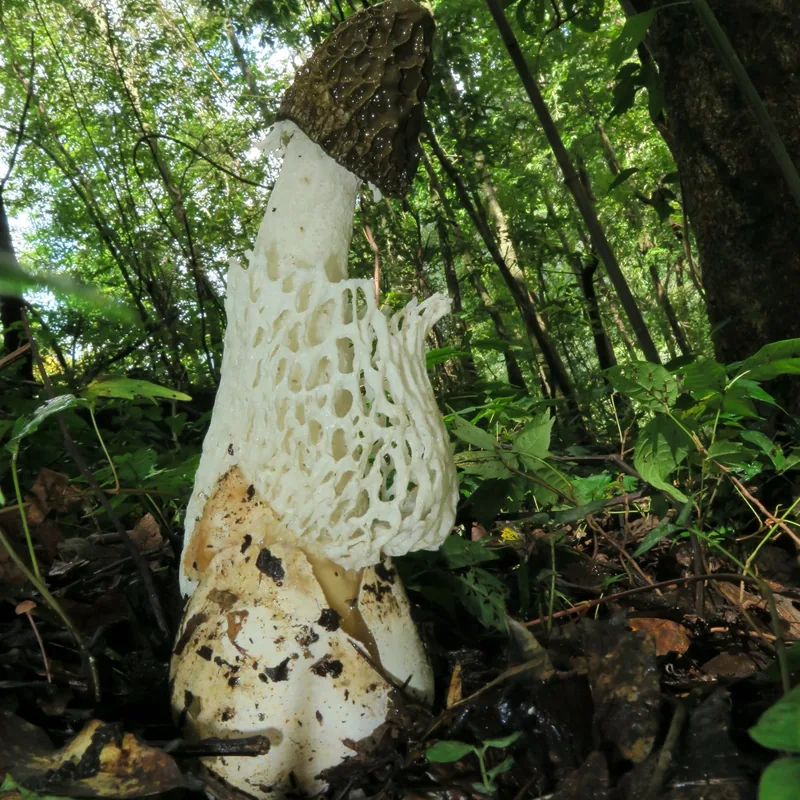
- Cap
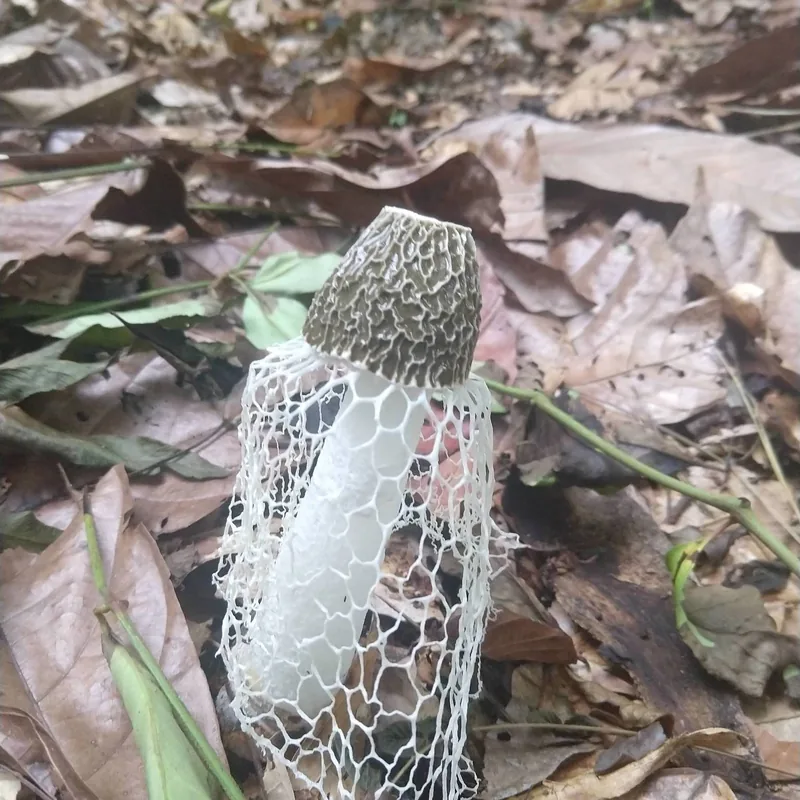
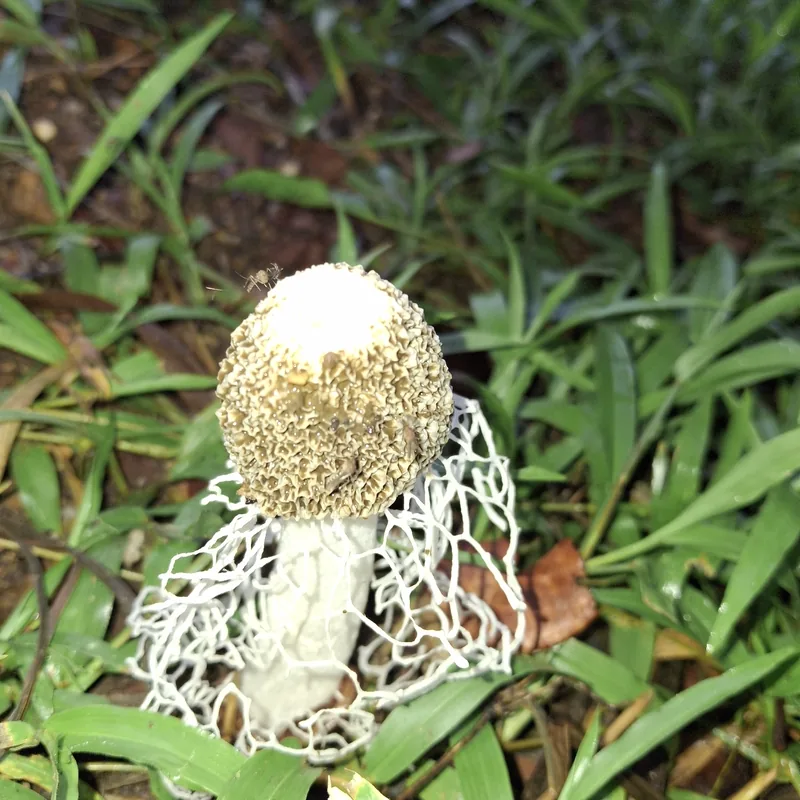
- Broadly conical or bell-shaped, white; up to about 4 cm high and 4 cm wide.[2]
- Gleba
- A dark olive-green layer covers the cap surface.[3]
- Stem
- Cylindrical, whitish and hollow, with small pockets; up to 20 cm high and 2 cm thick.[2]
- Veil or indusium
- A white net hangs beneath the cap and reaches the ground when fully developed.[5]
- Volva
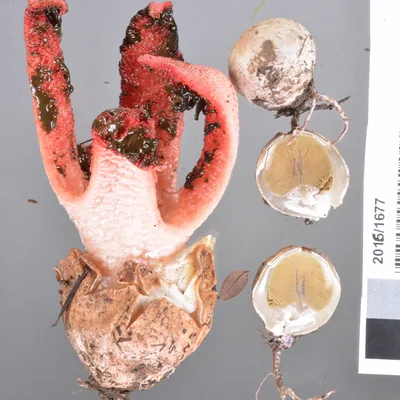
- A white basal enclosure with pinkish pigments and a smooth surface; it develops underground.[5]
- Egg stage
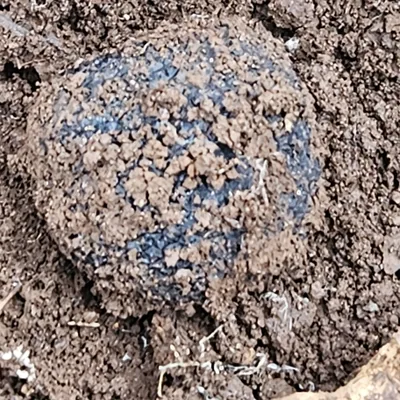
- The young fruiting body is nearly spherical or egg-shaped, whitish with a slight pale gray tint.[3]
- Odor
- Strong and unpleasant.[2]
Can you eat Long net stinkhorn?
Phallus indusiatus is documented as edible. Before eating a wild specimen, confirm its identification: closely similar species exist, and accurate identification is essential when checking edibility.[7][8][5]
How do you cook Long net stinkhorn?
Chinese cooking uses it in chicken soups and stir-fries. The dried fungus is rehydrated and soaked or simmered in water until tender.[4]
Where and when does Long net stinkhorn grow?
It decomposes organic matter and grows in rich soil and well-rotted wood. In Jalisco, it was recorded in Quercus woodland and tropical semi-deciduous forest, in moist places rich in humus.[7][3]
Collections from August are documented in Jalisco. This confirms the month at that locality; a fruiting calendar for all of Mexico requires additional records.[3]
A published record comes from Cerro El Cípil, Jalisco. The name has been applied to fungi from tropical Africa, Asia, Australia and the Americas. A taxonomic study questions that worldwide range and proposes that Phallus indusiatus in the strict sense may be restricted to South America.[3][7][5]
About the name
Dictyophora indusiata is a synonym of Phallus indusiatus. The name has also been applied to a complex of similar species: a 2019 study distinguished three new species using morphological features and DNA analyses.[5]
Fun facts
- Étienne Pierre Ventenat described the species in 1798 from a specimen collected in Suriname.[5]
- The Latin epithet indusiatus means “wearing an undergarment.”[4]
- Insects eat the gleba and disperse intact spores in their droppings.[4]
- The series Planet Earth showed its growth and unfolding veil through time-lapse photography.[2]