Skip to content
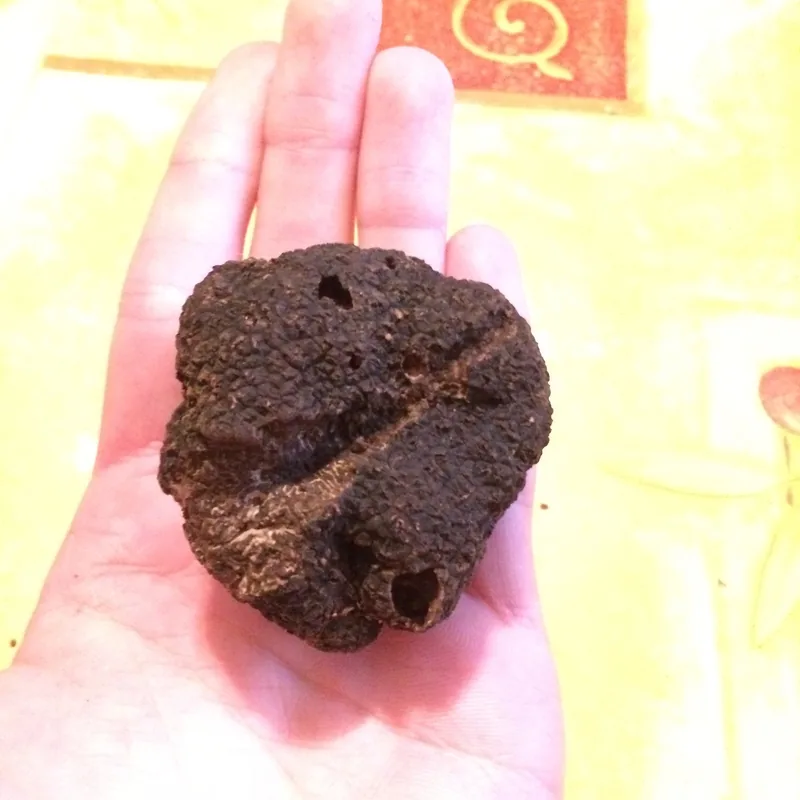
black truffle (Tuber melanosporum), photo
Photo
Curious

Black truffleTuber melanosporum

Périgord truffle

Tuber melanosporum is an edible fungus that forms truffles underground. It is native to southern Europe and associates with tree roots in calcareous soils. Its aroma and culinary use explain its fame.[3][13]

Edible. Eat it cooked. Never eat a wild mushroom identified only from photos.

  • Season in Mexico
  • HabitatCalcareous soil with trees
  • FamilyTuberaceae

How do you identify black truffle?
Underground truffle
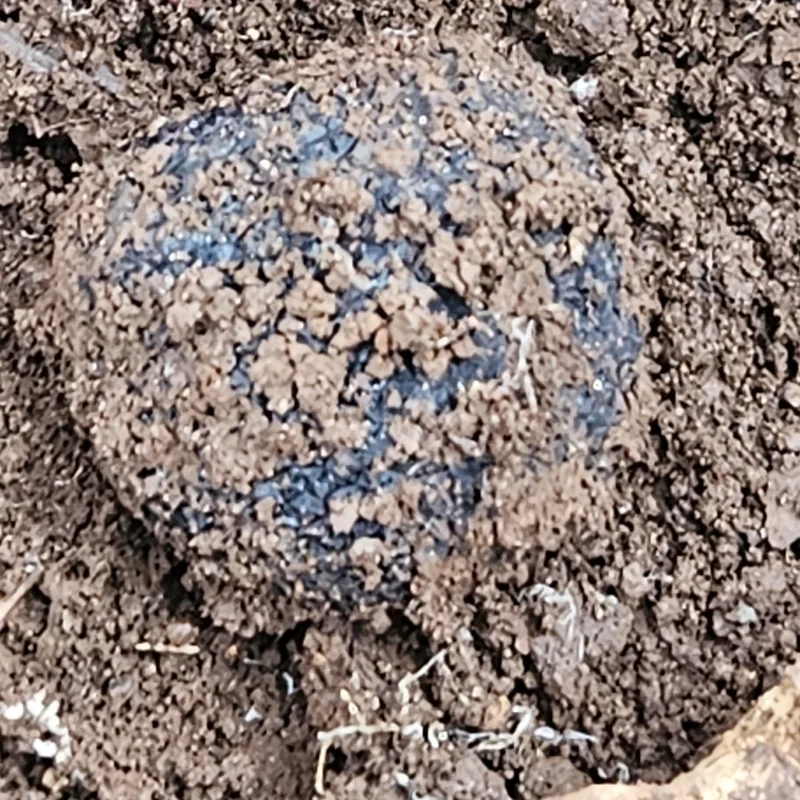
The fruiting body develops underground.[3]
Rind
The rind, called the peridium, is dark brown.[4]
Surface
The surface is warty.[5]
Interior
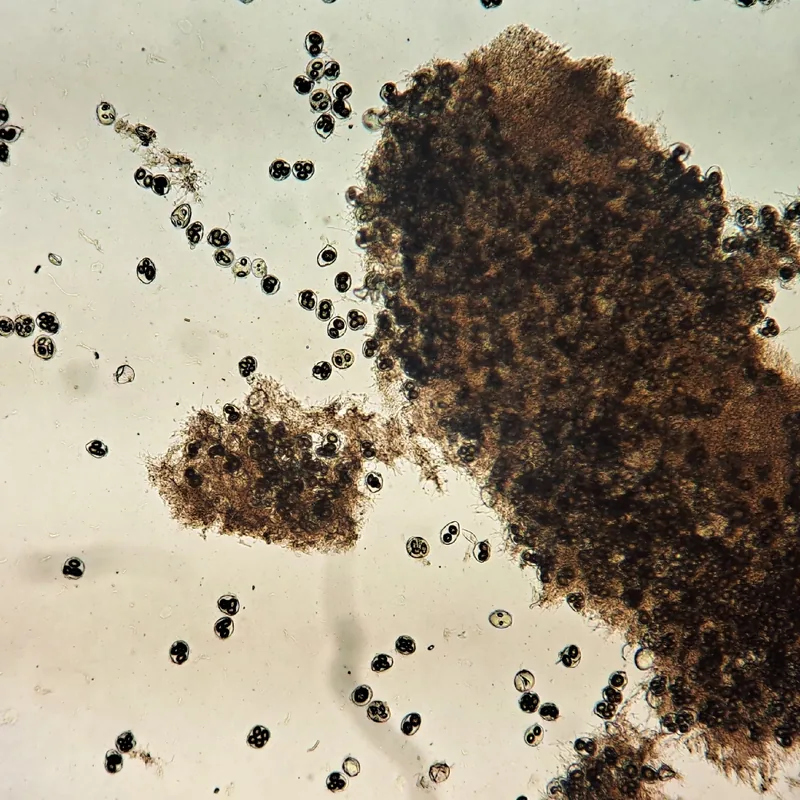
The interior starts white and then darkens, with white veins that turn brown with age.[4]
Stem
The fruiting body lacks a stem.[7]

Can you eat black truffle?

It is edible and used in cooking. Verify the identity of what you eat: Tuber indicum closely resembles this species and has been used in commercial substitutions.[13][6]

How do you cook black truffle?

It flavors meat, fish, soups, cheeses, and risotto. You can shave it over a dish or infuse it into olive oil or butter. Heat and contact with salt change its aroma profile.[2][10]

Where and when does black truffle grow?

It grows in calcareous or neutral soils and forms ectomycorrhizas with tree roots, including oaks and hazels. This association connects the fungus with its host; a study using a hazel tree showed that the tree supplies carbon to developing truffles.[11][4]

It is a winter truffle in its European range. In Teruel, Spain, the official harvesting season runs from November 15 to March 15.[11][12]

It is native to southern Europe, with productive areas in Spain, France, and Italy. It is also cultivated outside its native range, including Australia.[11]

See the mushroom map

Fun facts

  • Italian naturalist Carlo Vittadini described the species in 1831.[2]
  • Its genome sequence was published in the journal Nature in 2010.[3]
  • The fungus can contribute to vegetation-free areas around its associated trees. These areas are called brûlés, and its volatile compounds help drive their formation.[8]
  • The species is heterothallic: sexual reproduction requires compatible mating types. This condition matters when establishing cultivated truffle grounds.[9][3]
Frequently asked questions

Sources

  1. Tuber melanosporum - Wikipedia, la enciclopedia libre
  2. Tuber melanosporum - Wikipedia
  3. Périgord black truffle genome uncovers evolutionary origins and mechanisms of symbiosis
  4. Carbon Transfer from the Host to Tuber melanosporum Mycorrhizas and Ascocarps Followed Using a 13C Pulse-Labeling Technique
  5. Three New Truffle Species (Tuber, Tuberaceae, Pezizales, and Ascomycota) from Yunnan, China, and Multigen Phylogenetic Arrangement within the Melanosporum Group
  6. An Overview on Truffle Aroma and Main Volatile Compounds
  7. Tour of Truffles: Aromas, Aphrodisiacs, Adaptogens, and More
  8. Truffle brûlé: an efficient fungal life strategy
  9. Tuber melanosporum: mating type distribution in a natural plantation and dynamics of strains of different mating types on the roots of nursery-inoculated host plants
  10. Changes in Black Truffle (Tuber melanosporum) Aroma during Storage under Different Conditions
  11. Mycorrhizal competition release and microbial dynamics in native and non-native Tuber melanosporum habitats
  12. Edaphic and temporal patterns of Tuber melanosporum fruitbody traits and effect of localised peat-based amendment
  13. Bacteria of the genus Rhodopseudomonas (Bradyrhizobiaceae): obligate symbionts in mycelial cultures of the black truffles Tuber melanosporum and Tuber brumale

Written with AI help from the cited sources. A second model checked every fact against those sources and removed what they did not support.

Image credits

Photos are under free licenses (CC0, CC BY or CC BY-SA).

Related mushrooms