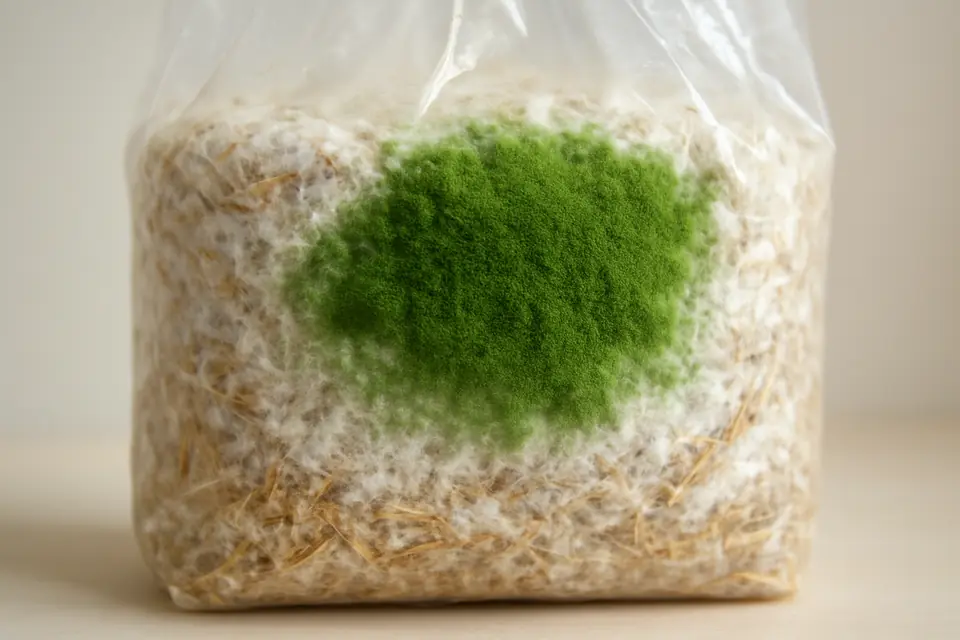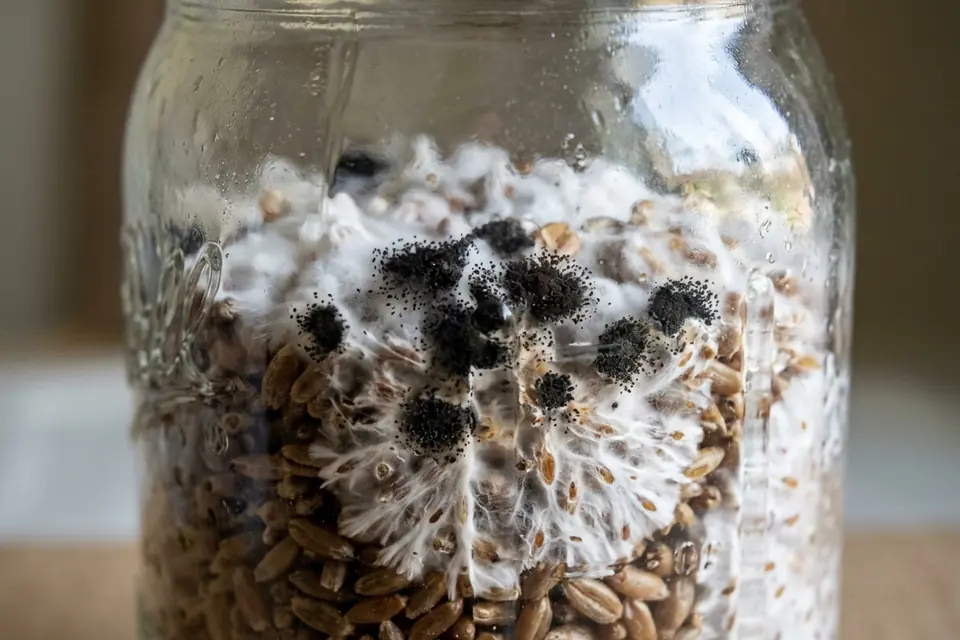
What does Cobweb Mold look like?
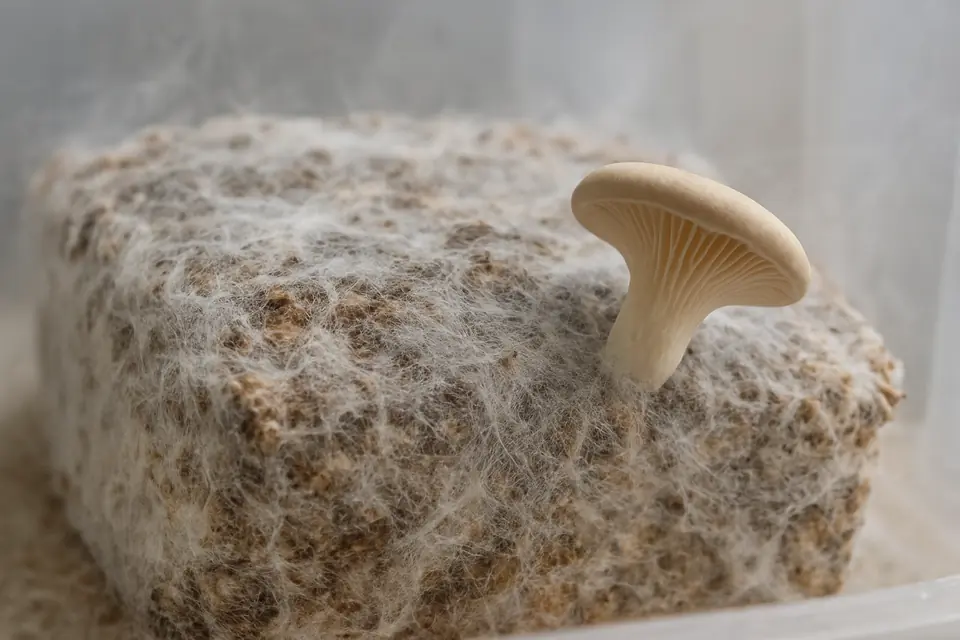
Wispy, gray-white threads that spread rapidly over the substrate surface, resembling cobwebs. Much lighter and more diffuse than mushroom mycelium.
- Color
- Gray
- Texture
- Wispy, web-like
- Smell
- None or slightly musty
- Growth speed
- Fast
Why does Cobweb Mold show up?
Excessive humidity, poor air circulation, stagnant air in fruiting chamber, contaminated casing layer.
What do I do if I find Cobweb Mold in my grow?
- Increase fresh air exchange immediately.
- Spray affected areas directly with 3% hydrogen peroxide — this kills cobweb mold on contact without harming mushroom mycelium.
- Remove heavily affected areas.
- Reduce humidity slightly.
How do I prevent Cobweb Mold?
- Maintain proper fresh air exchange (FAE) in fruiting chamber.
- Keep humidity at appropriate levels (not excessive).
- Ensure good air circulation.
- Use clean casing materials.
At which stage does Cobweb Mold appear?
| Stage | Risk | What happens | How to prevent it |
|---|---|---|---|
| Preparation | No risk | — | — |
| Inoculation | No risk | — | — |
| Colonization | Low | Rare during colonization, but can occur with poor conditions. | Maintain clean incubation environment. |
| Fruiting | High | Most common during fruiting when humidity is high and air is stagnant. | Ensure good FAE. Keep humidity at 85-90%, not higher. Use a small fan for air movement. |
| Harvest | Moderate | Can appear between flushes on exposed substrate. | Continue FAE between flushes. Remove any dead mushroom tissue. |
Updated: February 24, 2026
This guide is for orientation. A reliable diagnosis needs a lab. If in doubt, ask an experienced mycologist.