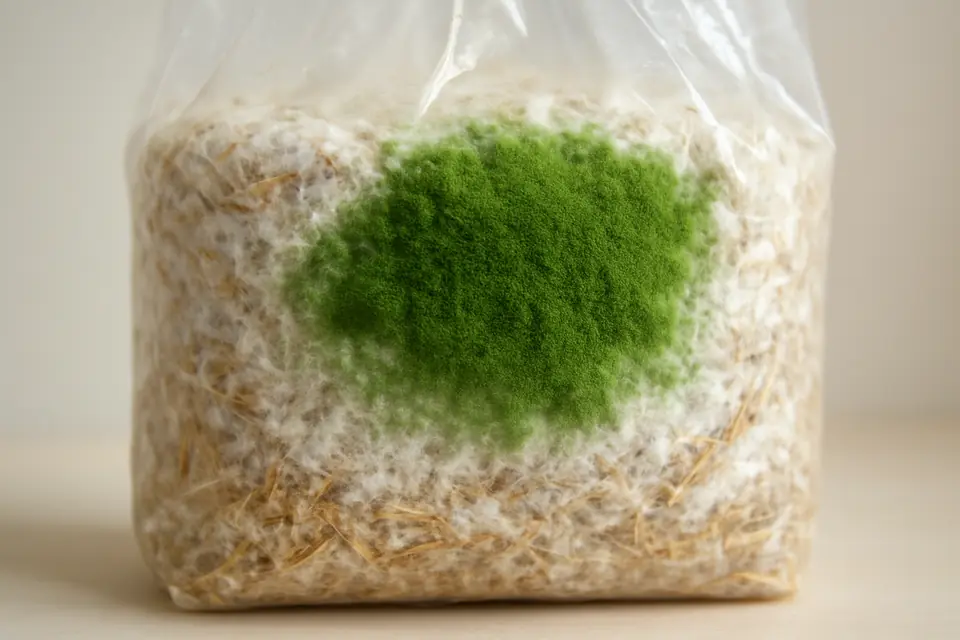
What does Green Mold (Trichoderma) look like?
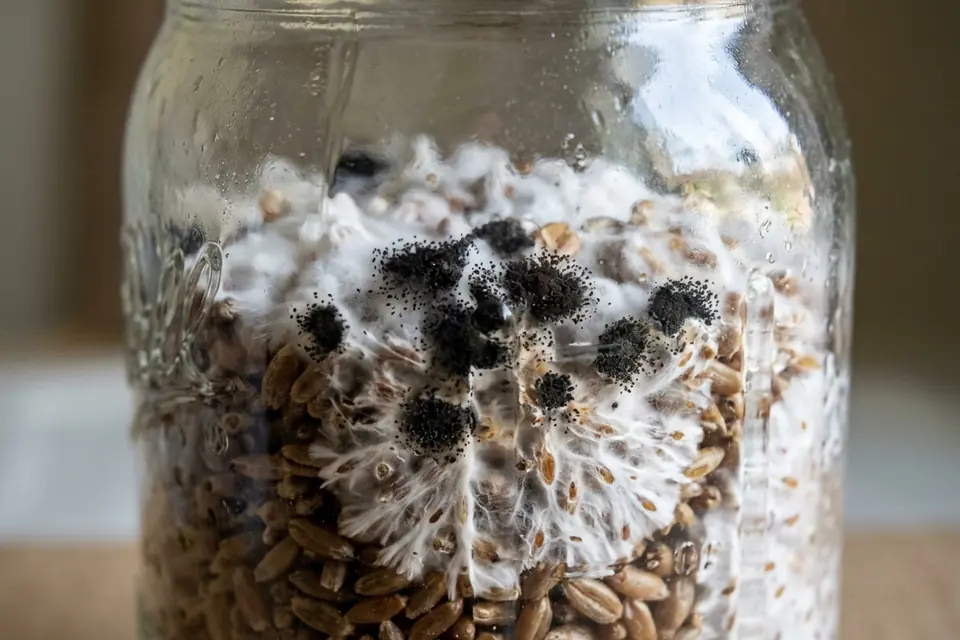
Starts as white patches that quickly turn bright green as spores develop. Dense, carpet-like growth that spreads rapidly across the substrate surface.
- Color
- Green
- Texture
- Fuzzy, carpet-like
- Smell
- Sweet, coconut-like
- Growth speed
- Very fast
Why does Green Mold (Trichoderma) show up?
Insufficient sterilization, contaminated spawn, dirty equipment, high temperatures, excessive moisture, poor air filtration.
What do I do if I find Green Mold (Trichoderma) in my grow?
- Immediately isolate the affected container.
- Do NOT open it indoors as this releases millions of spores.
- Dispose of the entire batch — Trichoderma cannot be effectively treated once established.
- Thoroughly disinfect the growing area before starting new batches.
How do I prevent Green Mold (Trichoderma)?
- Maintain strict sterile technique.
- Ensure proper substrate pasteurization/sterilization.
- Use clean spawn with strong mycelium.
- Monitor temperature — avoid exceeding 27°C during colonization.
At which stage does Green Mold (Trichoderma) appear?
| Stage | Risk | What happens | How to prevent it |
|---|---|---|---|
| Preparation | Moderate | Can be present in unsterilized substrate materials. | Ensure thorough pasteurization or sterilization of all substrate materials. |
| Inoculation | Moderate | Spores can enter during the inoculation process. | Work in a clean environment, preferably with a laminar flow hood or SAB. |
| Colonization | High | Most vulnerable stage — Trichoderma can outcompete mushroom mycelium. Green patches appear within days. | Keep temperatures below 27°C. Ensure good spawn ratio (10-20%). Monitor daily for green patches. |
| Fruiting | Moderate | Less common if colonization was clean, but can appear on spent substrate. | Maintain proper fresh air exchange and avoid stale air conditions. |
| Harvest | Low | May appear on aging substrate between flushes. | Remove spent substrate promptly after final flush. |
Updated: February 24, 2026
This guide is for orientation. A reliable diagnosis needs a lab. If in doubt, ask an experienced mycologist.