What does Black Pin Mold look like?
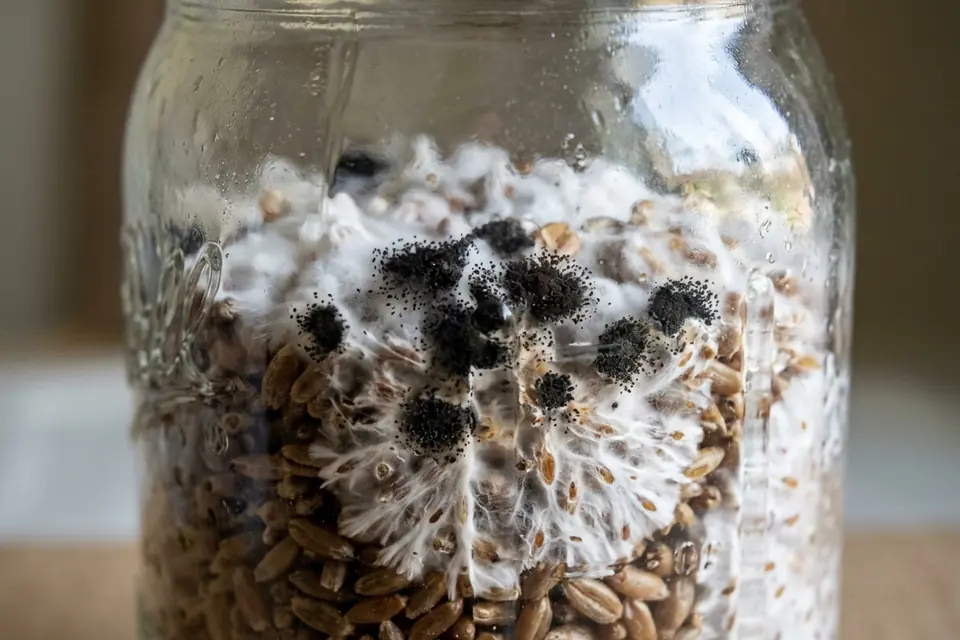
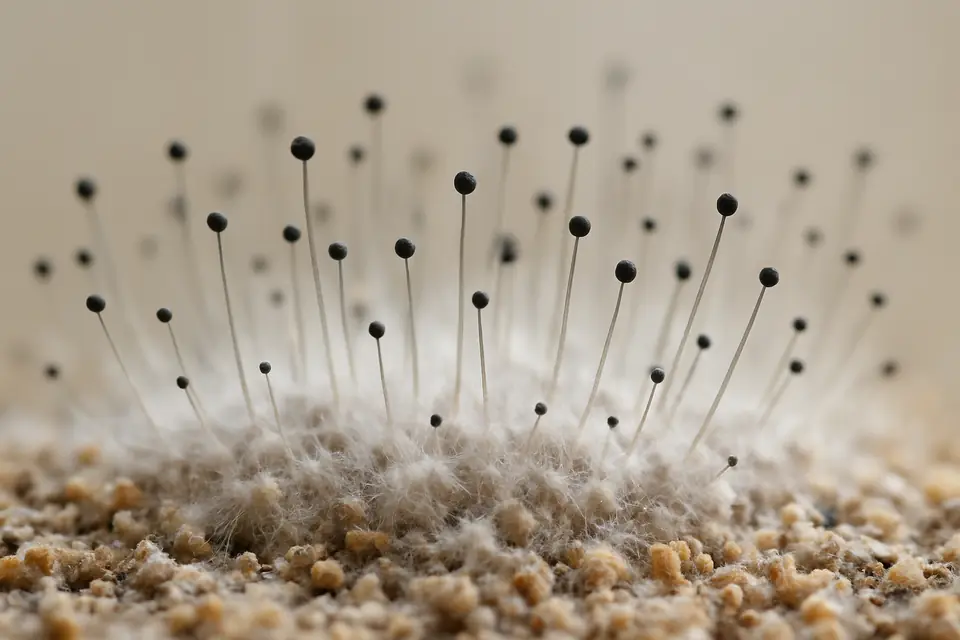
Initially white fuzzy growth, then develops tall stalks (sporangiophores) topped with round black dots (sporangia). Looks like pins stuck in a pincushion.
- Color
- Black
- Texture
- Fuzzy with pin-like structures
- Smell
- Musty
- Growth speed
- Fast
Why does Black Pin Mold show up?
Insufficient sterilization, contaminated air during inoculation, dirty tools.
What do I do if I find Black Pin Mold in my grow?
- Discard affected containers.
- Do not open indoors.
- Clean work area.
- Review sterilization protocol.
How do I prevent Black Pin Mold?
- Proper sterilization of grain.
- Clean inoculation technique.
- Store grain spawn in cool conditions.
At which stage does Black Pin Mold appear?
| Stage | Risk | What happens | How to prevent it |
|---|---|---|---|
| Preparation | Moderate | Common on raw grains and organic materials. | Sterilize materials thoroughly. |
| Inoculation | High | Spores easily introduced during grain inoculation. | Use proper aseptic technique. Flame sterilize tools. |
| Colonization | Moderate | Pin-like structures appear on contaminated grain. | Monitor grain spawn daily. Isolate suspect jars. |
| Fruiting | Low | Uncommon at fruiting stage. | — |
| Harvest | No risk | — | — |
Updated: February 24, 2026
This guide is for orientation. A reliable diagnosis needs a lab. If in doubt, ask an experienced mycologist.