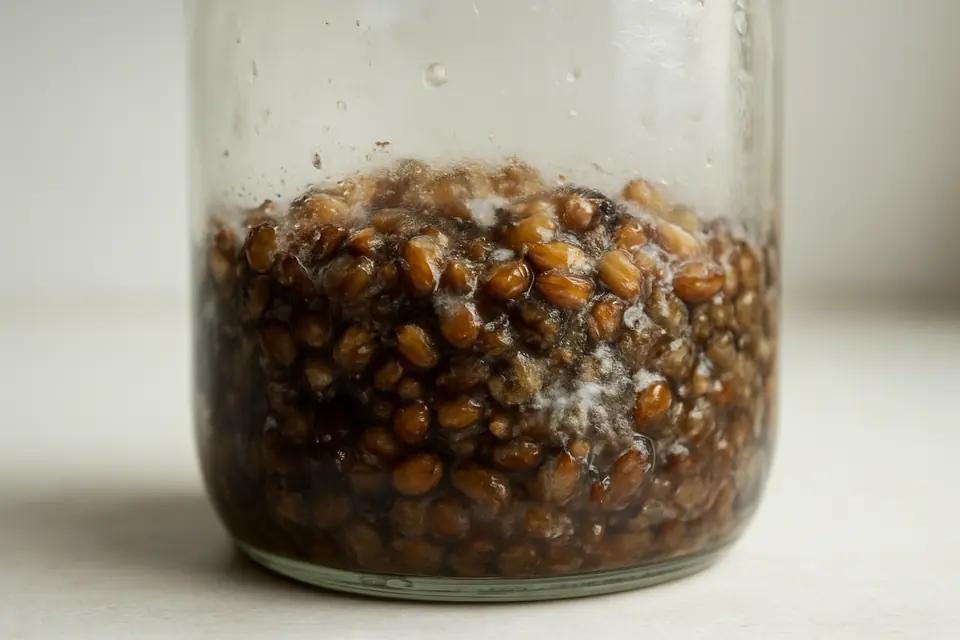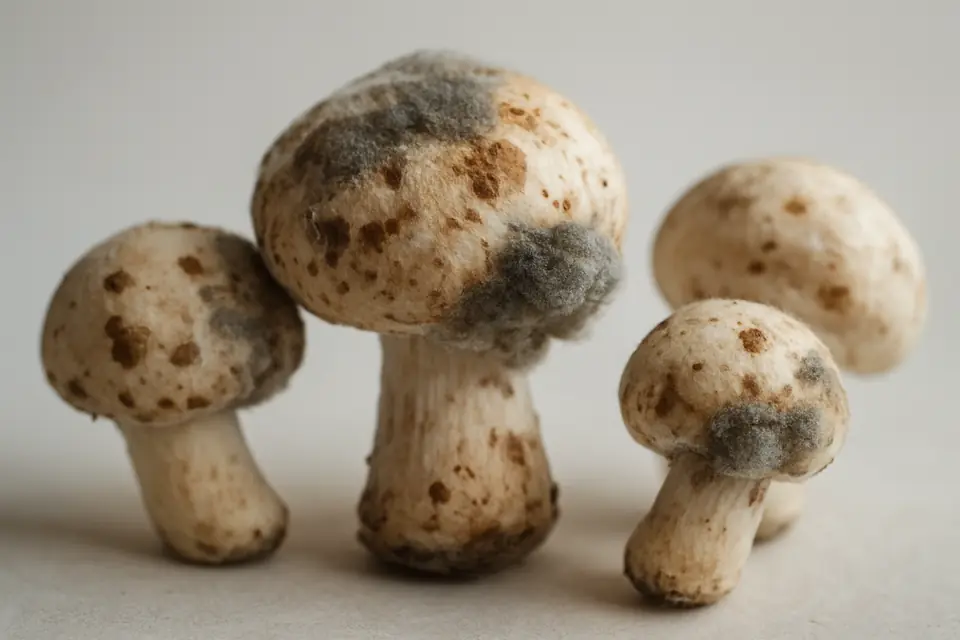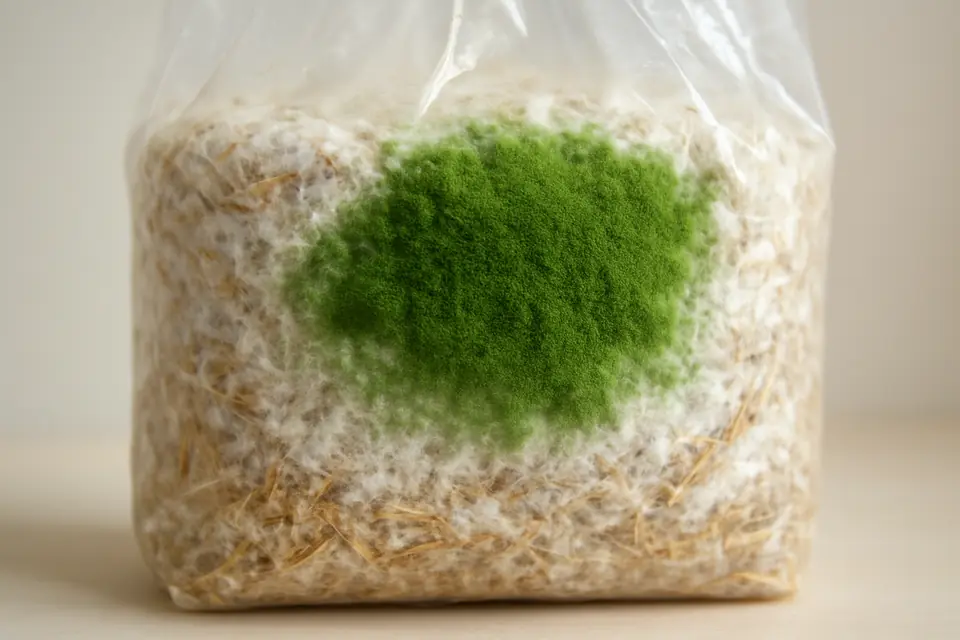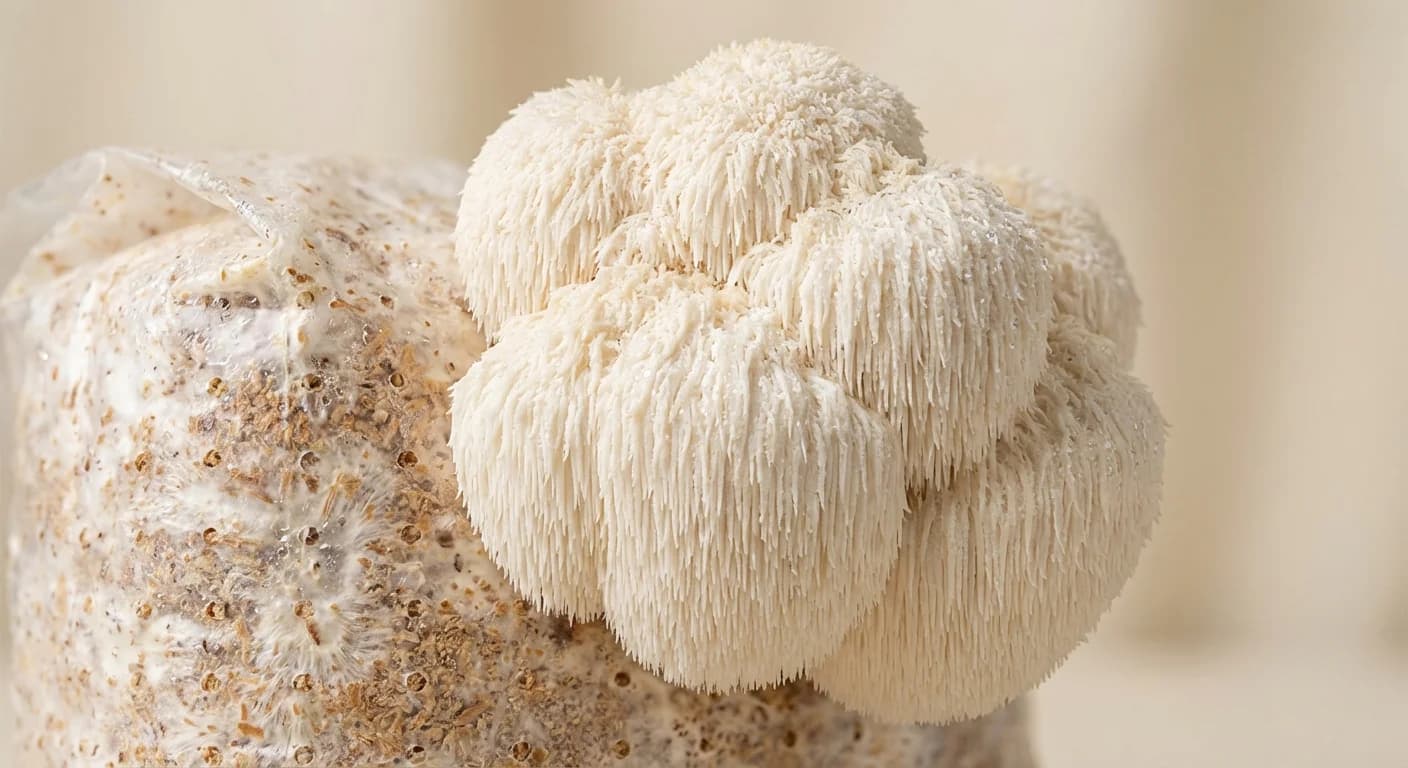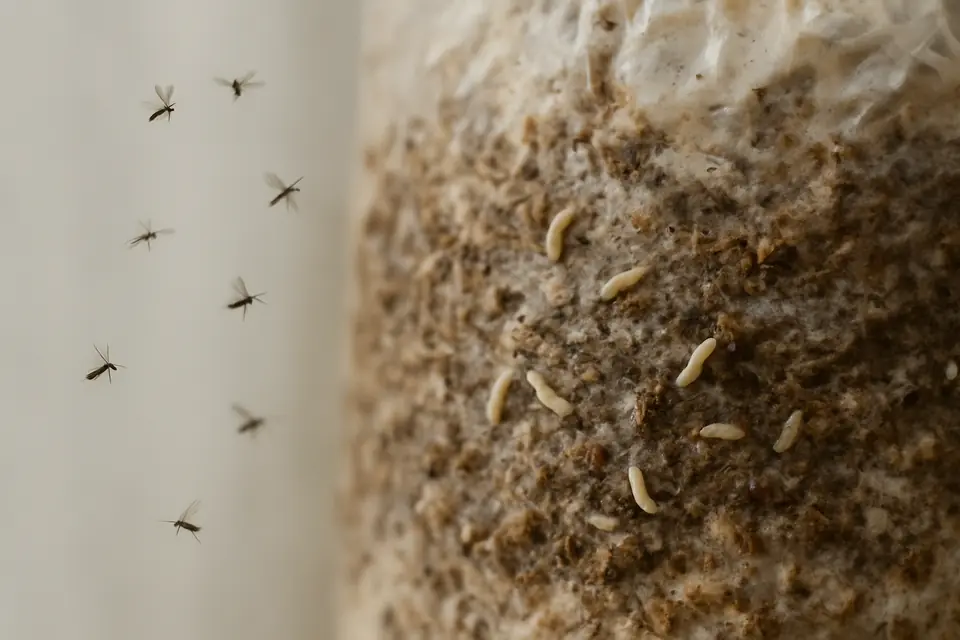
What does Mites & Insects look like?
Tiny flying insects (gnats/flies), microscopic mites visible as moving dots, small jumping insects (springtails). Larvae may be seen in substrate as small white worms. Tunnels in mushroom stems.
- Color
- Brown
- Texture
- Tunneled, damaged
- Smell
- None
- Growth speed
- Moderate
Why does Mites & Insects show up?
Open doors/windows without screens, spent substrate left too long, poor sanitation, nearby compost or decaying organic matter.
What do I do if I find Mites & Insects in my grow?
- Install or repair screens on air intakes.
- Deploy yellow sticky traps.
- Remove heavily infested blocks.
- Use Bacillus thuringiensis (BT) for fly larvae control.
- Consider beneficial nematodes for soil-dwelling pests.
- Clean and disinfect between crop cycles.
How do I prevent Mites & Insects?
- Screen all openings with fine mesh.
- Use yellow sticky traps to monitor insect populations.
- Maintain clean growing area.
- Remove spent substrate promptly.
- Pasteurize substrate properly.
At which stage does Mites & Insects appear?
| Stage | Risk | What happens | How to prevent it |
|---|---|---|---|
| Preparation | Low | Pests can be present in raw materials. | Pasteurize all substrate materials. |
| Inoculation | Low | Insects may be attracted to exposed substrate. | Work quickly. Screen openings. |
| Colonization | Moderate | Flies can lay eggs in bags. Mites can penetrate filter patches. | Use quality filter patches. Monitor with sticky traps. |
| Fruiting | High | Most vulnerable — mushrooms attract flies. Larvae damage developing fruit bodies. | Screen all openings. Use sticky traps. Remove damaged mushrooms. |
| Harvest | Moderate | Check mushrooms for larvae/mite damage before harvest. | Inspect mushrooms thoroughly. Discard damaged ones. |
Updated: February 24, 2026
This guide is for orientation. A reliable diagnosis needs a lab. If in doubt, ask an experienced mycologist.