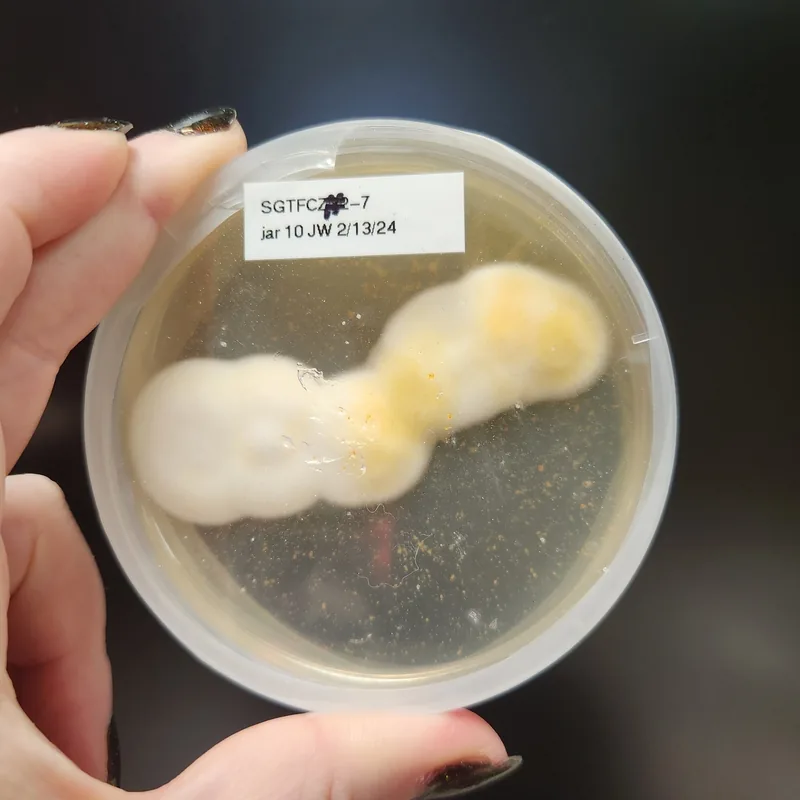
Scarlet caterpillar clubCordyceps militaris
cordyceps
Cordyceps militaris is an edible fungus that forms small orange clubs on parasitized insects. It grows from buried larvae and pupae, with records from forests in the State of Mexico. Researchers study its compounds and possible effects on immune markers and exercise performance.[2][3][7][9][11]
Edible. Eat it cooked. Never eat a wild mushroom identified only from photos.
- Season in Mexico
- HabitatBuried insects in forests
- GrowingHard
- FamilyCordycipitaceae
How do you identify scarlet caterpillar club?
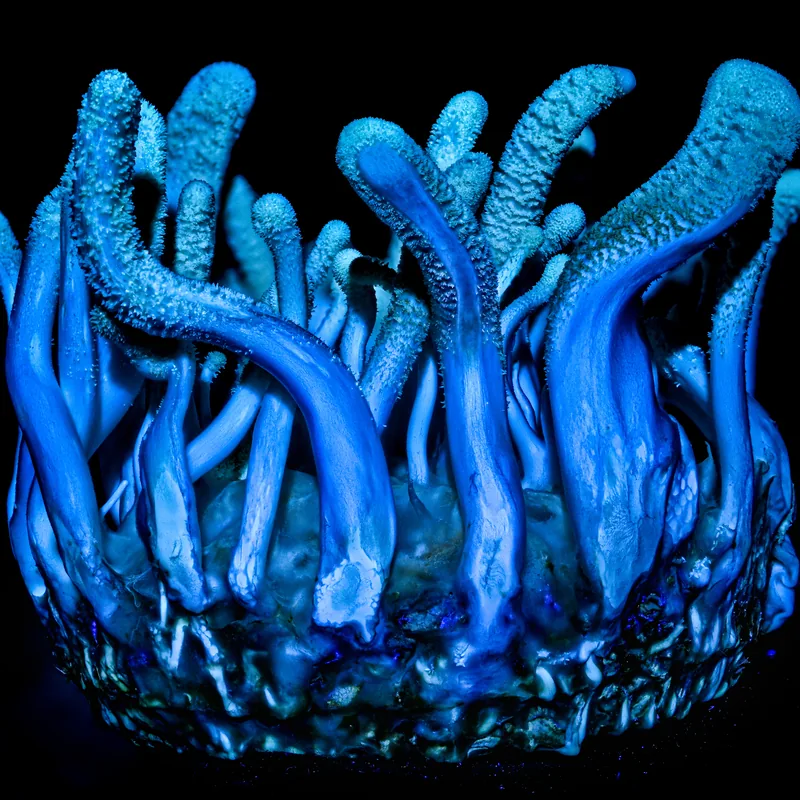

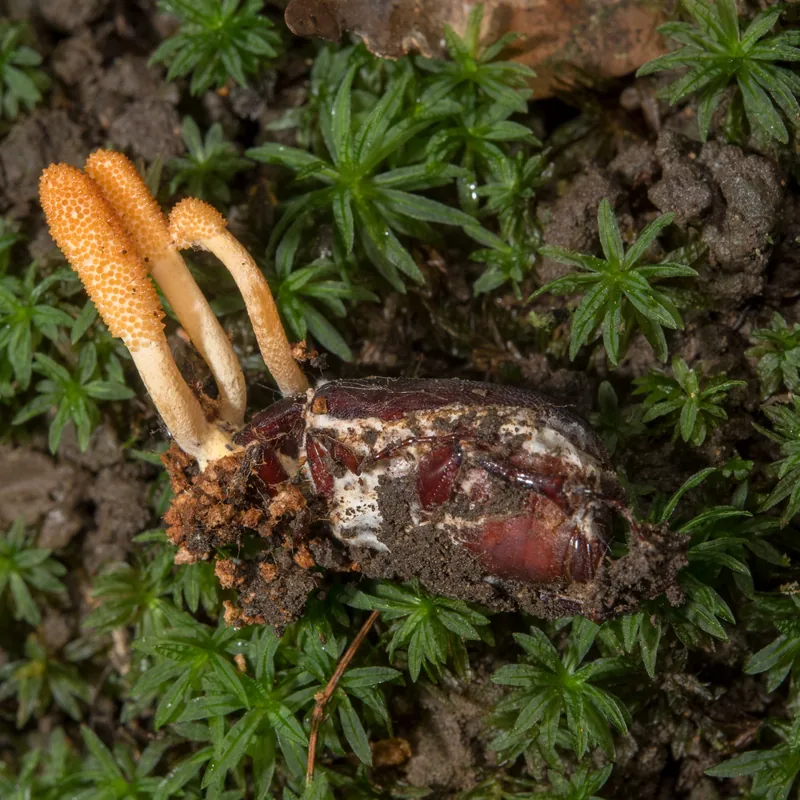
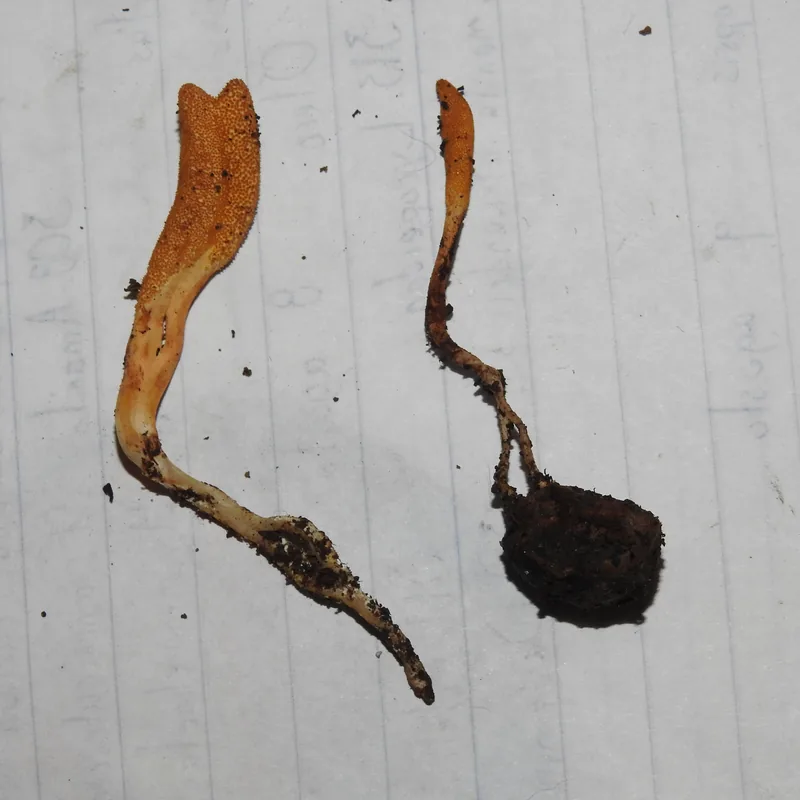
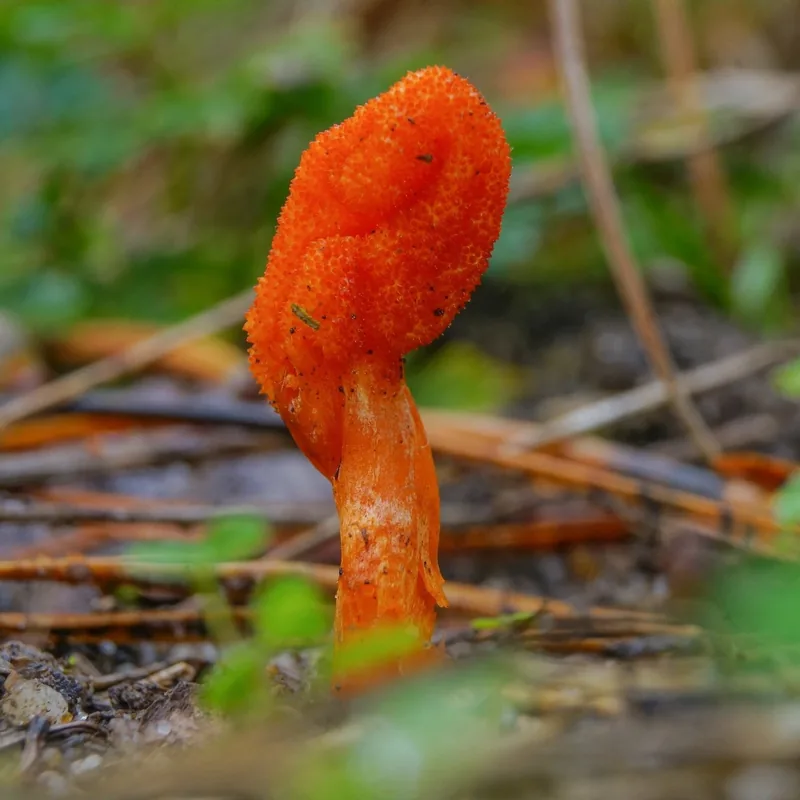
- Shape
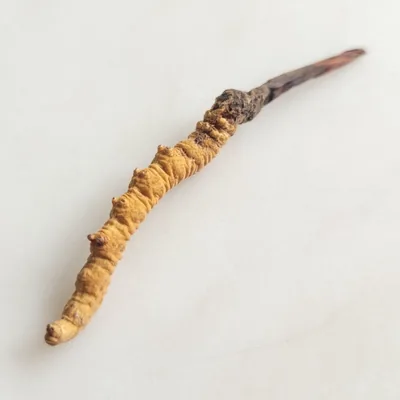
- Club-shaped, with the top wider than the base.[2]
- Size
- 2-8 cm long; up to about .5 cm wide.[2]
- Fertile surface
- Orange upper portion with small bumps.[2]
- Lower portion
- Smooth, orange to pale orange, often curved.[2]
- Flesh
- Pale watery orange, with an outer cortex.[2]
- Base
- Narrows and arises from a buried pupa or larva.[2]
Can you eat scarlet caterpillar club?
It is an edible fungus. The safety review states that heating deactivates a protein with cytotoxic activity observed in mouse cells. Some human studies reported mild gastrointestinal complaints.[6][11]
How do you grow scarlet caterpillar club?
Temperature
Colonization18–22 °C
Fruiting18–22 °C
Humidity
Colonization0–90 %
Fruiting0–88 %
Full cycle: 55 days
- Light
- Medium
Substrates
Log your batches, temperatures and harvests. The free plan needs no card.
What does research say about scarlet caterpillar club?
These findings describe research. None of them is a recommendation to use it. If you take medication or have a disease, talk to your doctor.
Where and when does scarlet caterpillar club grow?
It parasitizes insect larvae and pupae, primarily butterflies and moths. In the State of Mexico, researchers documented it on Paradirphia lasiocampina in oak-pine forests and secondary oak vegetation.[2][3]
Documented collections span July through October in the State of Mexico. These dates apply to the study sites.[3]
It is documented in the State of Mexico. Its worldwide range covers much of the Northern Hemisphere.[3][10]