Skip to content
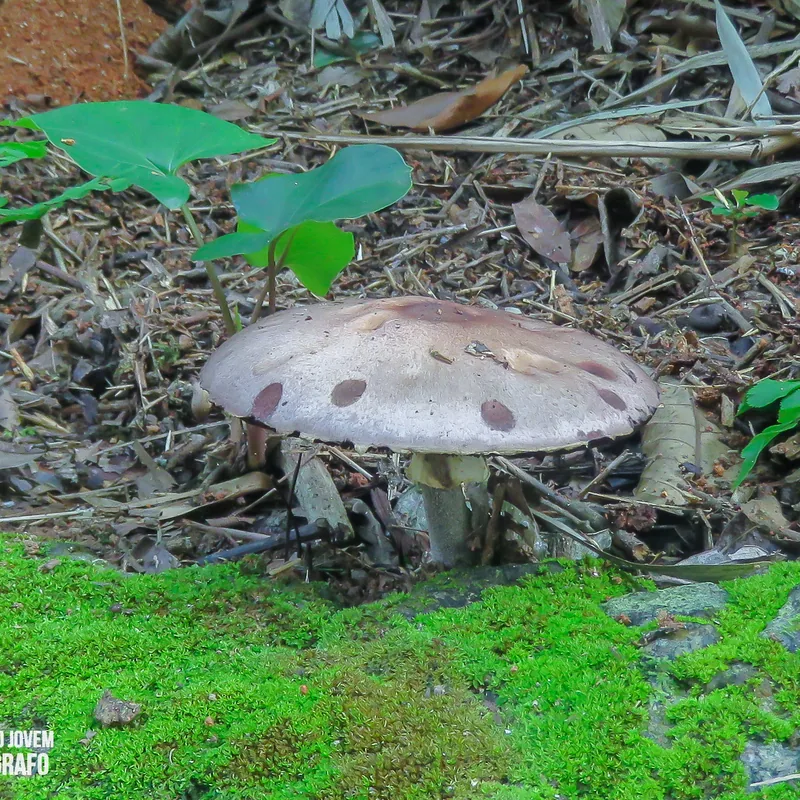
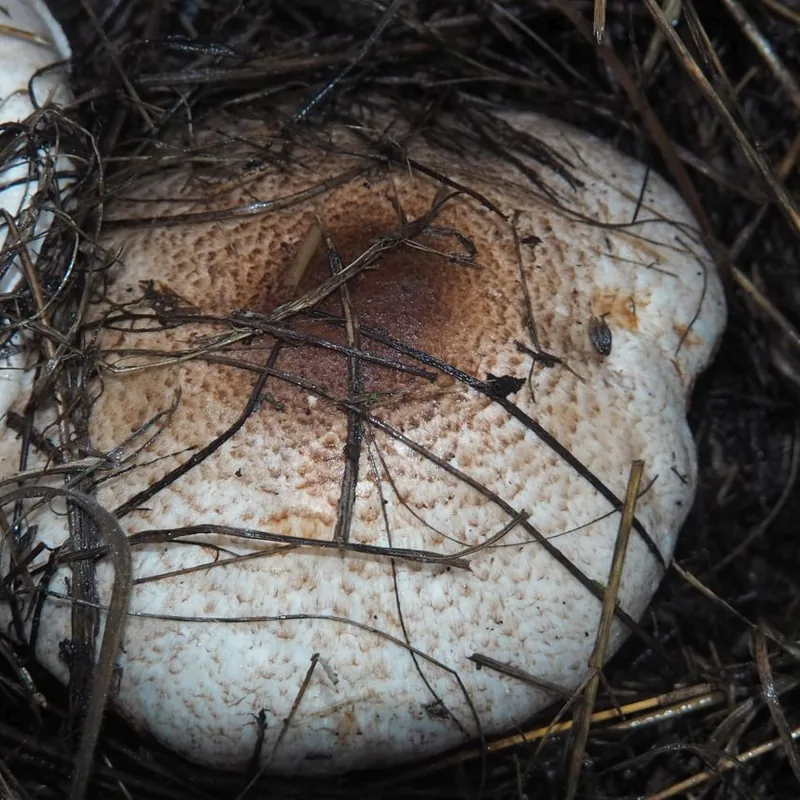
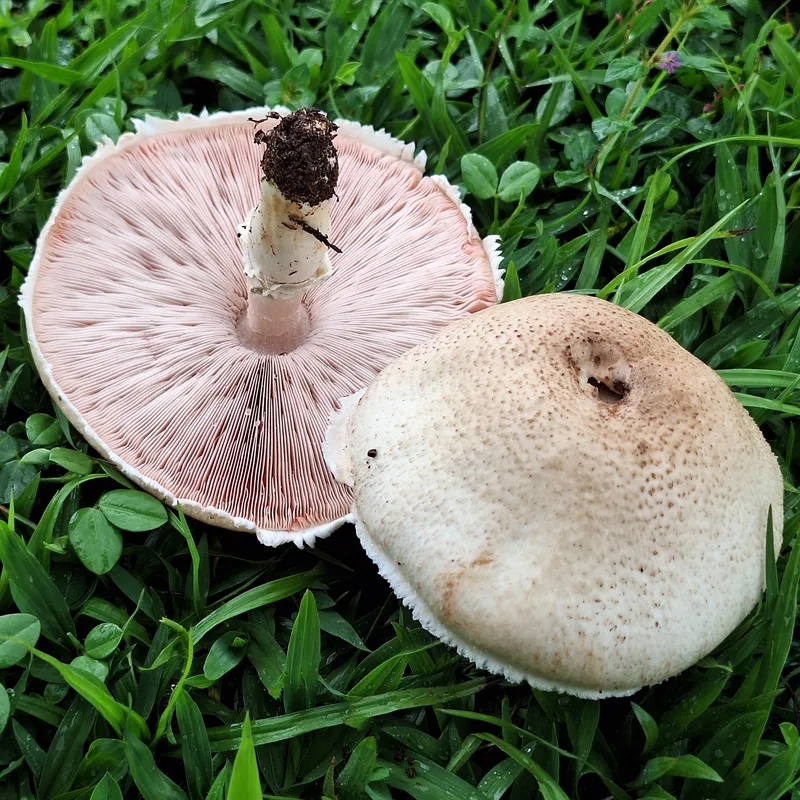
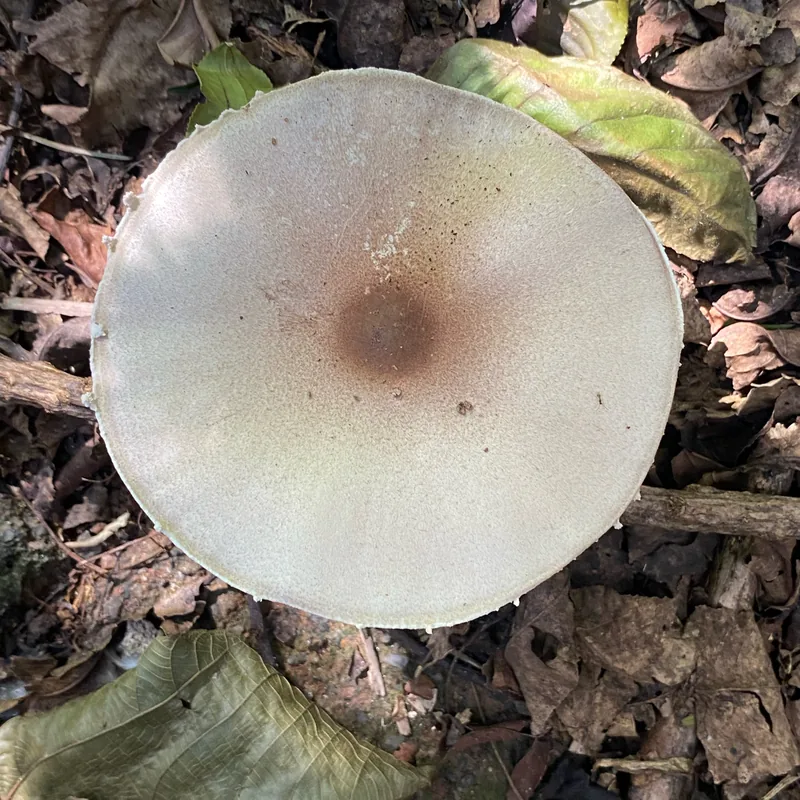
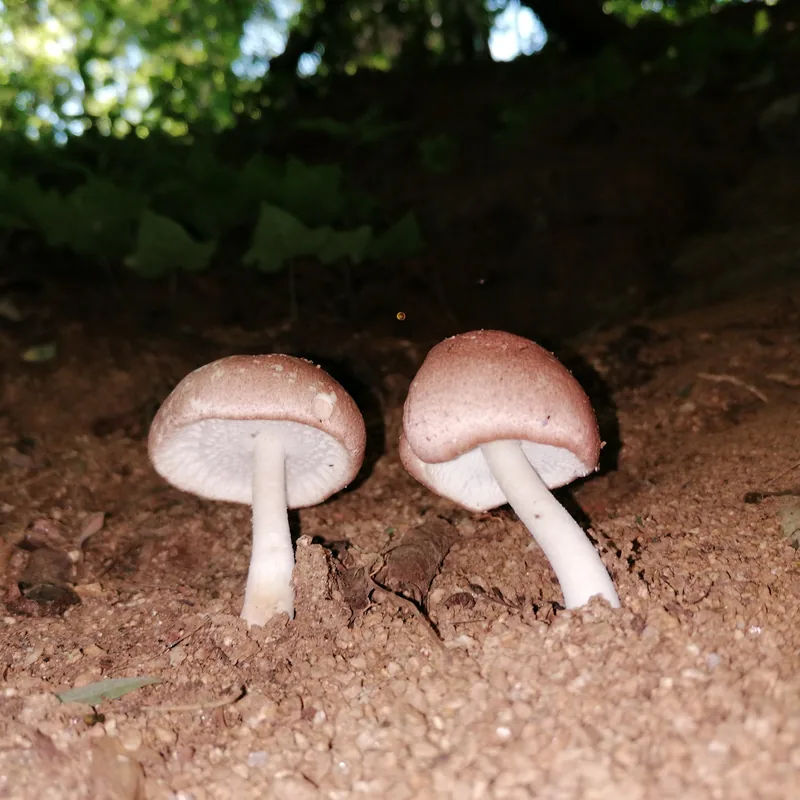
Almond mushroom (Agaricus subrufescens), photo
Photo
Medicinal

Almond mushroomAgaricus subrufescens

Sun mushroom

Agaricus subrufescens is an edible mushroom that decomposes leaf litter. It grows on rotting leaves, often at the borders between forests and parks; researchers study its extracts for their biological effects.[1][3][4][5][6]

Edible. Eat it cooked. Never eat a wild mushroom identified only from photos.

  • Season in Mexico
  • HabitatLeaf litter
  • FamilyAgaricaceae

How do you identify Almond mushroom?
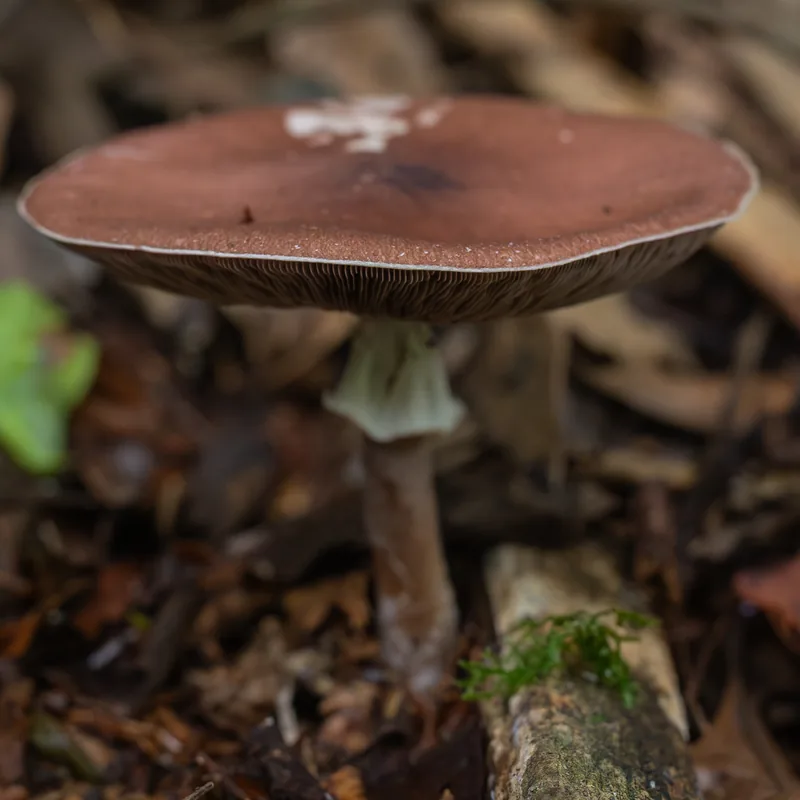
Cap
5.3–11 cm across; dry surface, whitish background and reddish-brown fibrils concentrated at the center.[2]
Gills
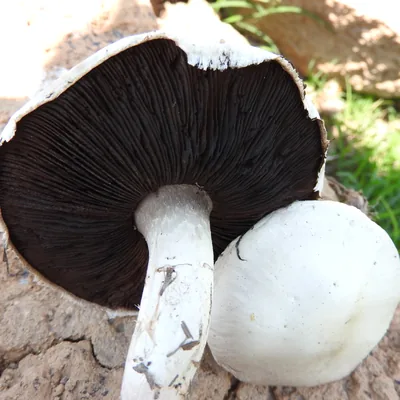
Free and crowded; initially white, then pale pink, becoming dark brown at maturity.[2]
Stem
White, cylindrical, 9–16 × 0.7–1.4 cm, with a bulbous base.[2]
Ring
White and double, with cottony patches on its underside.[2]
Flesh
Firm and white; may turn slightly yellow when cut.[2]
Smell
Almond-like.[1]
Spore print
Blackish reddish-brown.[1]

Can you eat Almond mushroom?

Edible. Check the full set of features when you identify it. Severe liver injury was reported in three cancer patients taking extracts labeled Agaricus blazei; the authors acknowledged possible additional causes.[1][2][7]

What does research say about Almond mushroom?

  • Trial in people[4]
  • Trial in people[5]
  • Small study in people[6]

These findings describe research. None of them is a recommendation to use it. If you take medication or have a disease, talk to your doctor.

Where and when does Almond mushroom grow?

It grows among rotting leaves, often at the borders between forests and parks.[3]

Mexican record: January. This documents a local collection; a national fruiting calendar requires additional records.[1]

Documented in Veracruz. The review reports the Americas, Europe, Hawaii and Thailand.[1][3]

Baja CaliforniaBCSonoraSONChihuahuaCHHCoahuilaCOANuevo LeónNLBaja California SurBCSSinaloaSINDurangoDURZacatecasZACSan Luis PotosíSLPTamaulipasTAMNayaritNAYJaliscoJALAguascalientesAGSGuanajuatoGTOQuerétaroQROHidalgoHGOColimaCOLMichoacánMICEstado de MéxicoMEXCiudad de MéxicoCDMXTlaxcalaTLXVeracruzVERYucatánYUCGuerreroGROMorelosMORPueblaPUETabascoTABCampecheCAMQuintana RooROOOaxacaOAXChiapasCHP
States with records (1/32): Veracruz

See the mushroom map

About the name

Agaricus subrufescens is the accepted name. Agaricus brasiliensis appears as a synonym in the literature, and the name Agaricus blazei was misapplied to it.[3][10]
Fun facts

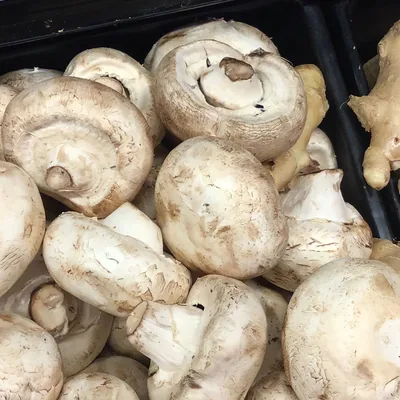
  • It was cultivated for food in the eastern United States during the late nineteenth and early twentieth centuries.[8]
  • Interfertility tests linked Brazilian and North American strains.[8]

Frequently asked questions

Sources

  1. Agaricus subrufescens en México: un recurso forestal no maderable, comestible, medicinal y potencialmente cultivable
  2. Agaricus macrochlamys, a New Species from the (Sub)tropical Cloud Forests of North America and the Caribbean, and Agaricus fiardii, a New Synonym of Agaricus subrufescens
  3. Agaricus subrufescens: A review
  4. The mushroom Agaricus Blazei Murill in combination with metformin and gliclazide improves insulin resistance in type 2 diabetes: a randomized, double-blinded, and placebo-controlled clinical trial
  5. Agaricus blazei-Based Mushroom Extract Supplementation to Birch Allergic Blood Donors: A Randomized Clinical Trial
  6. Natural killer cell activity and quality of life were improved by consumption of a mushroom extract, Agaricus blazei Murill Kyowa, in gynecological cancer patients undergoing chemotherapy
  7. An alternative medicine, Agaricus blazei, may have induced severe hepatic dysfunction in cancer patients
  8. Agaricus subrufescens
  9. Agaricus subrufescens - Wikipedia, la enciclopedia libre
  10. Agaricus subrufescens Peck

Written with AI help from the cited sources. A second model checked every fact against those sources and removed what they did not support.

Image credits

Photos are under free licenses (CC0, CC BY or CC BY-SA).

Related mushrooms