Skip to content
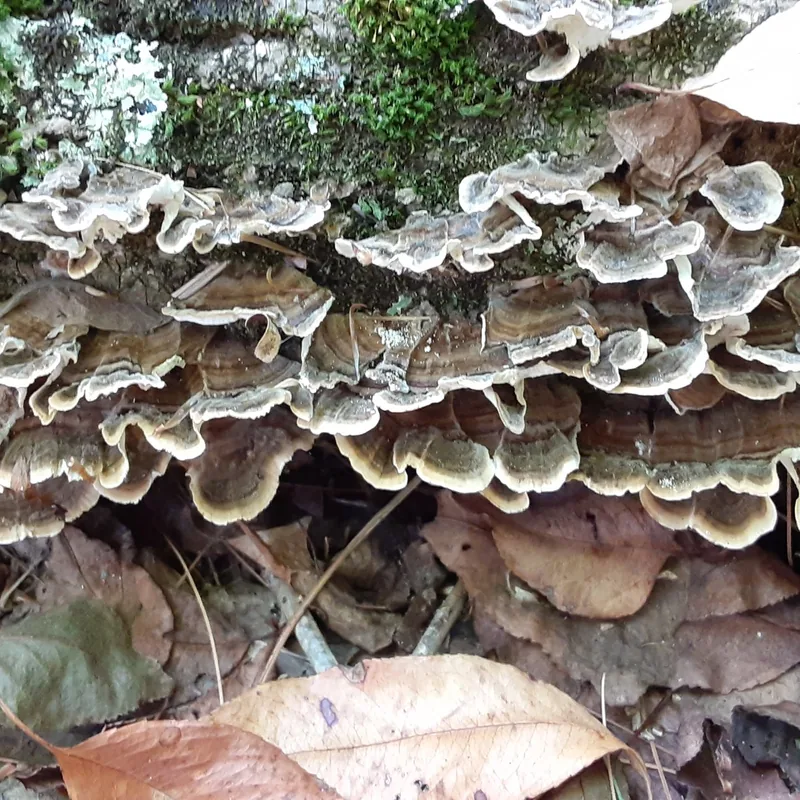
turkey tail (Trametes versicolor), photo
Photo
Medicinal

Turkey tailTrametes versicolor

Trametes versicolor is a bracket fungus with colored bands that grows on dead wood. People look it up for identification and research into its extracts.[10][9]

Not edible. Tough or woody; used as tea or extract. Never eat a wild mushroom identified only from photos.

  • Season in Mexico
  • HabitatOn dead wood
  • GrowingEasy
  • FamilyPolyporaceae

How do you identify turkey tail?
Surface
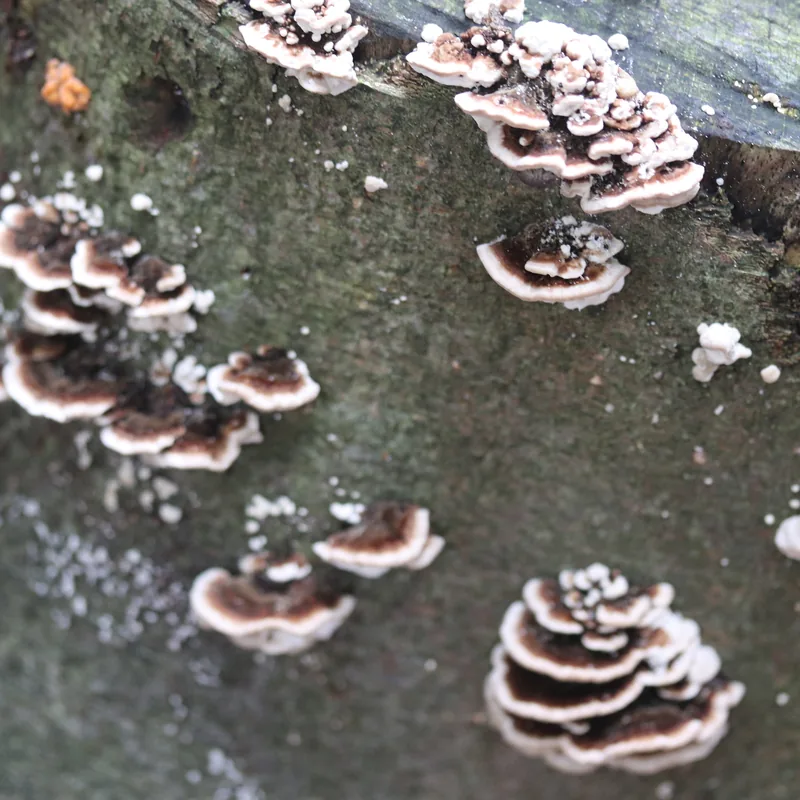
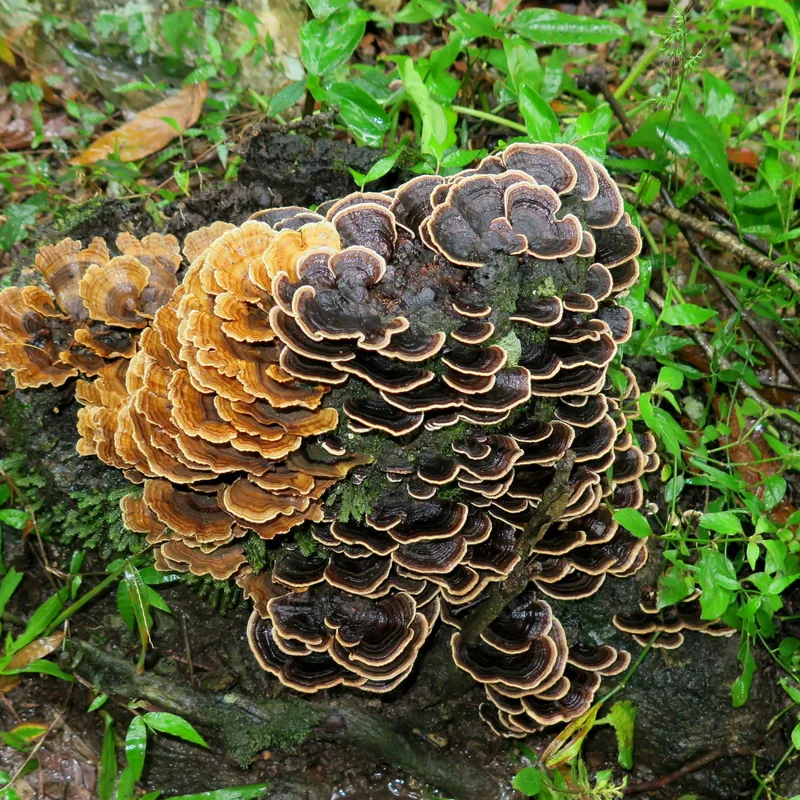
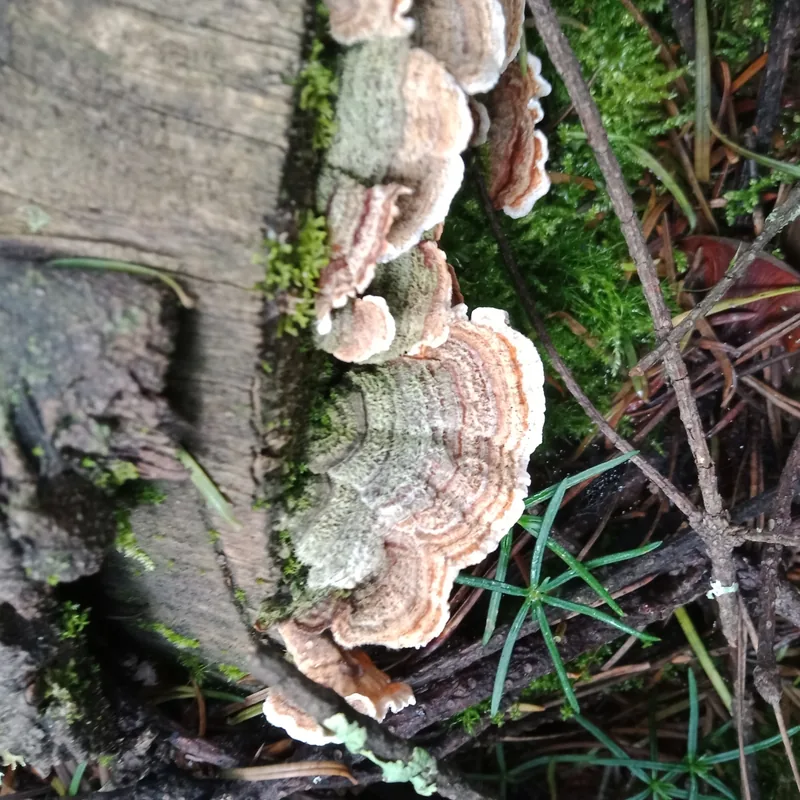
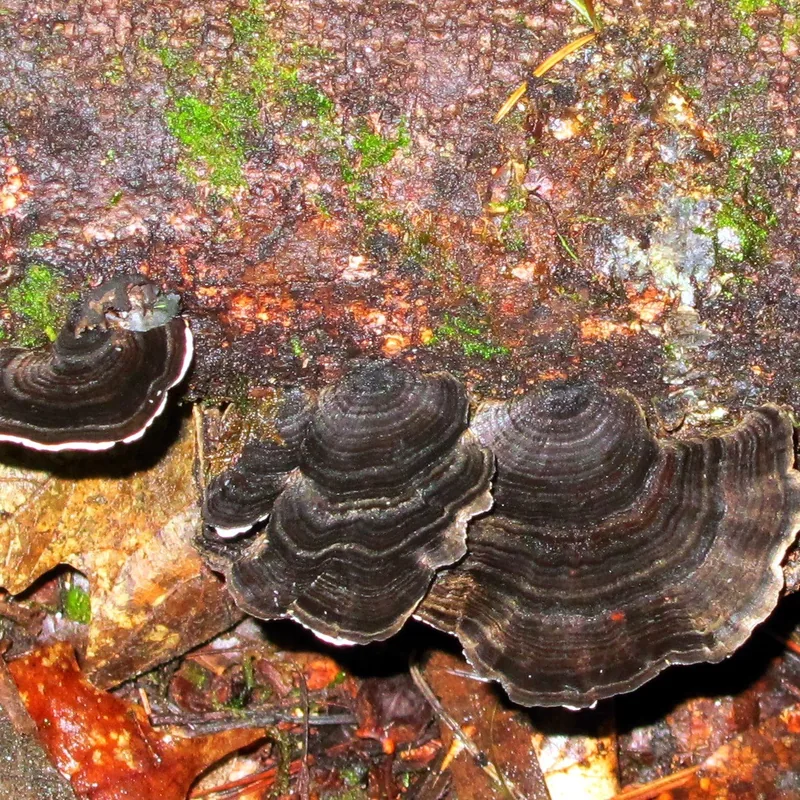
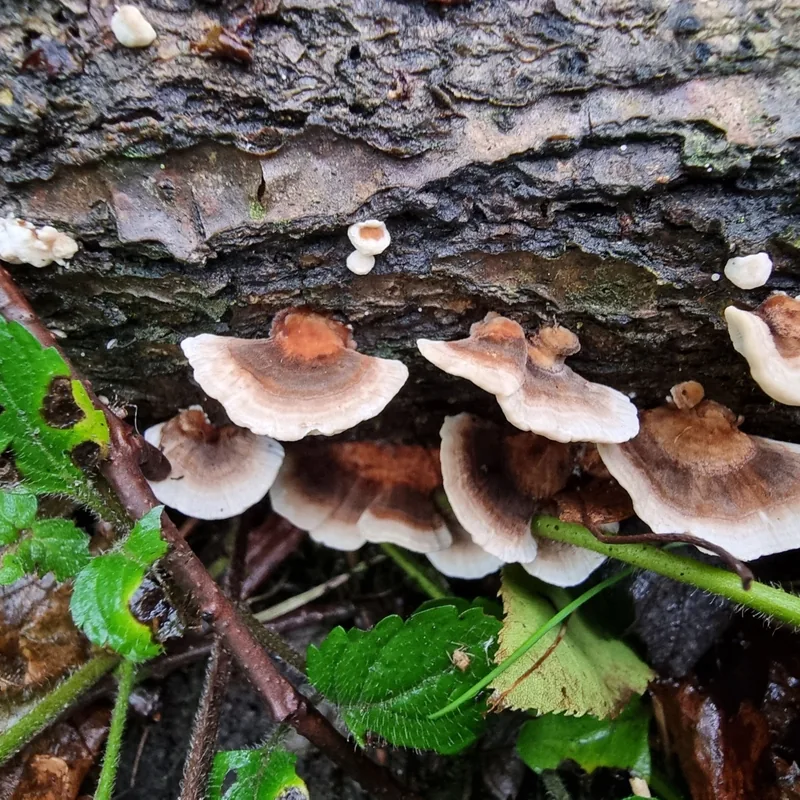
Concentric yellowish, orangish, grayish, bluish, blackish and reddish-brown bands. Velvety zones alternate with almost smooth zones.[10]
Size
Cap 2–8 cm across and 1–4 cm deep.[1]
Underside
White to yellowish, with small pores.[10]
Stem
Stemless; the flat caps overlap.[4]
Flesh
White, very tough, leathery and fibrous.[4]
Spore print
Whitish.[1]
Smell
No distinctive odor.[1]

Can you eat turkey tail?

This is an inedible fungus with very tough, leathery, fibrous flesh. The Cochrane review mentions a possible interaction with cyclophosphamide.[4][9]

How do you grow turkey tail?

Temperature

Colonization24–29 °C

Fruiting18–24 °C

Humidity

Colonization0–95 %

Fruiting0–88 %

Full cycle: 70 days

Light
Indirect

Substrates

  • Hardwood sawdust
  • Hardwood logs
Track this grow in SporeXpert

Log your batches, temperatures and harvests. The free plan needs no card.

Track this grow in SporeXpert

What does research say about turkey tail?

  • Small study in people[7]
  • Trial in people[8]
  • Review of studies[9]

These findings describe research. None of them is a recommendation to use it. If you take medication or have a disease, talk to your doctor.

Where and when does turkey tail grow?

Grows in overlapping clusters or rosettes on dead hardwood. It also occurs on dying trees and, rarely, on conifer wood.[10]

MushroomExpert records it year-round in North America. Fruiting months in Mexico remain unspecified by the cited sources.[1]

Widely distributed in North America. CONABIO records it as native to Mexico and documents the following states and federal entities.[1][3]

Baja CaliforniaBCSonoraSONChihuahuaCHHCoahuilaCOANuevo LeónNLBaja California SurBCSSinaloaSINDurangoDURZacatecasZACSan Luis PotosíSLPTamaulipasTAMNayaritNAYJaliscoJALAguascalientesAGSGuanajuatoGTOQuerétaroQROHidalgoHGOColimaCOLMichoacánMICEstado de MéxicoMEXCiudad de MéxicoCDMXTlaxcalaTLXVeracruzVERYucatánYUCGuerreroGROMorelosMORPueblaPUETabascoTABCampecheCAMQuintana RooROOOaxacaOAXChiapasCHP
States with records (23/32): Baja California, Sonora, Chihuahua, Coahuila, Nuevo León, Durango, Zacatecas, San Luis Potosí, Tamaulipas, Nayarit, Jalisco, Guanajuato, Querétaro, Hidalgo, Michoacán, Ciudad de México, Tlaxcala, Veracruz, Guerrero, Morelos, Puebla, Oaxaca, Chiapas

See the mushroom map

About the name

Coriolus versicolor is a synonym used in medical publications. CONABIO recognizes Trametes versicolor as the valid name.[3][9]
Fun facts

  • The epithet versicolor means “of various colors” and refers to the cap's bands.[10]
  • It causes white rot as it decomposes wood.[1]

Frequently asked questions

Sources

  1. Trametes versicolor: The Turkey Tail (MushroomExpert.Com)
  2. Cola de pavo (Trametes versicolor)
  3. Cola de pavo — Trametes versicolor
  4. Trametes versicolor - Arboretum | Universidad Francisco Marroquín
  5. Trametes hirsuta (MushroomExpert.Com)
  6. Trametes pubescens (MushroomExpert.Com)
  7. Phase 1 Clinical Trial of Trametes versicolor in Women with Breast Cancer
  8. Effects of polysaccharopeptide from Trametes versicolor and amoxicillin on the gut microbiome of healthy volunteers: a randomized clinical trial
  9. Coriolus (Trametes) versicolor mushroom to reduce adverse effects from chemotherapy or radiotherapy in people with colorectal cancer
  10. Trametes versicolor

Written with AI help from the cited sources. A second model checked every fact against those sources and removed what they did not support.

Image credits

Photos are under free licenses (CC0, CC BY or CC BY-SA).

Related mushrooms