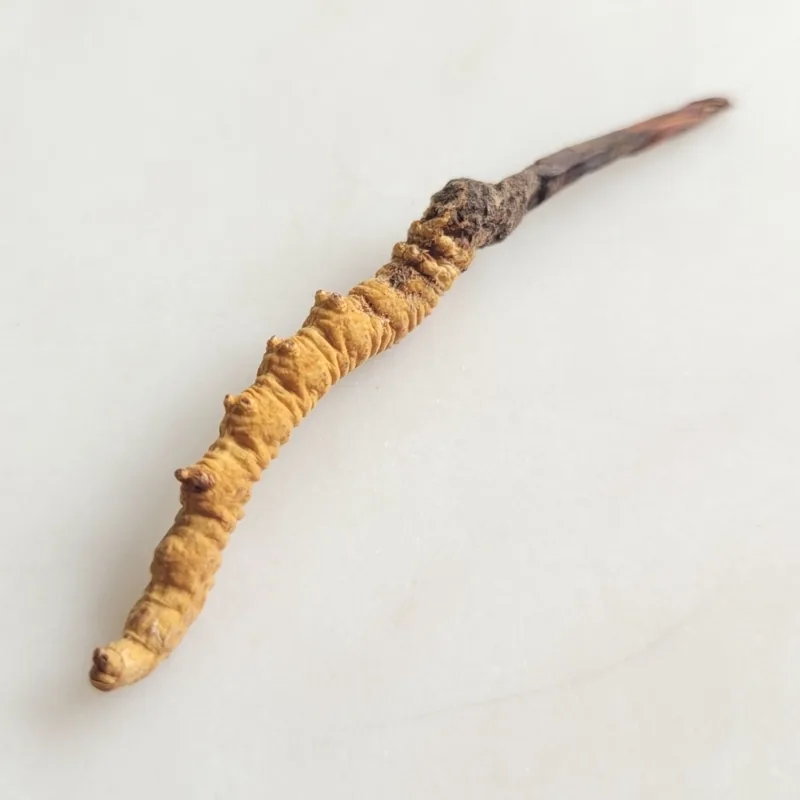
Caterpillar fungusOphiocordyceps sinensis
yartsa gunbu
Ophiocordyceps sinensis parasitizes and mummifies moth larvae; its reproductive structure emerges from the caterpillar's head. It grows in alpine meadows and shrublands on the Tibetan Plateau and in the Himalayas. People look it up for its traditional use and research on preparations called cordyceps.[3][4][10]
Edible. Eat it cooked. Never eat a wild mushroom identified only from photos.
- Season in Mexico
- HabitatAlpine meadows and shrublands
- FamilyOphiocordycipitaceae
How do you identify caterpillar fungus?
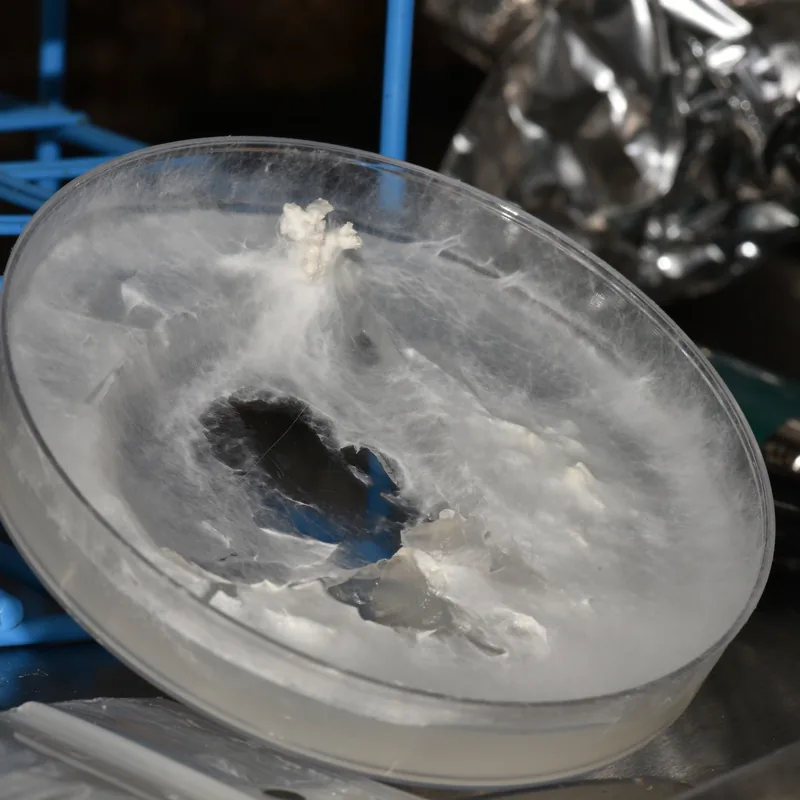
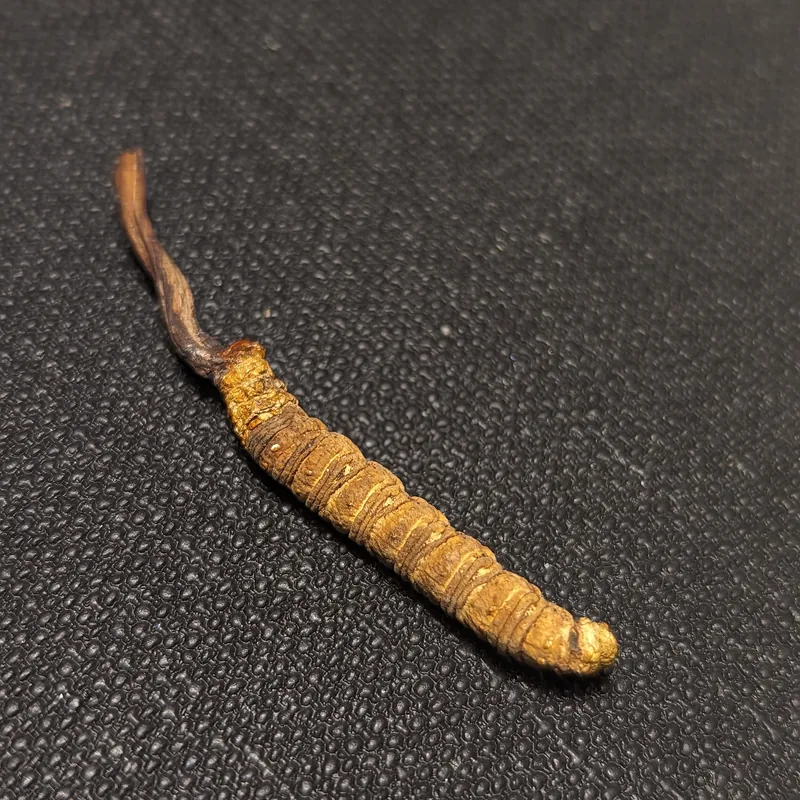
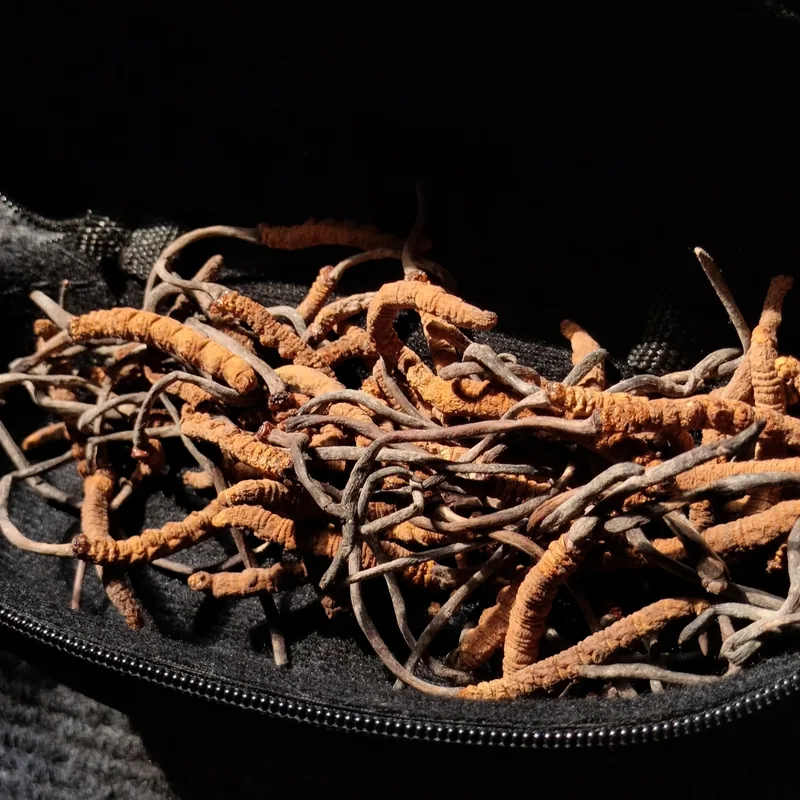
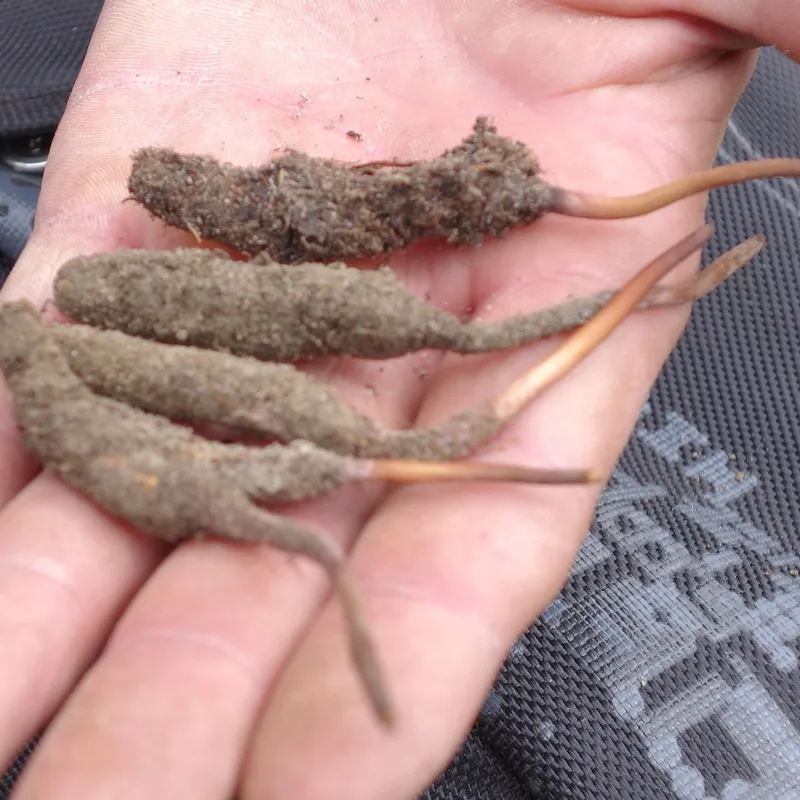
- Reproductive structure
- The stroma is dark brown or black and usually measures 4–10 cm.[2]
- Caterpillar
- The caterpillar is usually yellowish and measures 3.5–4 cm.[2]
- Stalk
- The basal portion is slender, with lengthwise grooves; it measures 2.5–8.5 cm long.[2]
- Fertile head
- The upper portion is slightly swollen and measures 1–2.5 cm long.[2]
- Surface
- The fertile head has a granular surface formed by perithecial openings.[2]
- Host body
- The caterpillar retains visible segments and legs.[2]
Can you eat caterpillar fungus?
It has traditional food use as a functional food. Wild specimens may contain arsenic, whose toxicity depends on its chemical form. A review also records prolonged bleeding after dental surgery and identifies a possible risk with anticoagulants. If you take these medicines or have surgery planned, tell your medical team about your consumption.[7][8]
What does research say about caterpillar fungus?
These findings describe research. None of them is a recommendation to use it. If you take medication or have a disease, talk to your doctor.
Where and when does caterpillar fungus grow?
It grows on moth larvae buried in the soil of alpine meadows and shrublands. Its natural distribution is tied to the Tibetan Plateau and surrounding regions.[3][4]
Sources describe stroma emergence in late spring or early summer in its native region. A season in Mexico remains undocumented in the sources consulted.[4]
Sources place its natural range in China, Nepal, Bhutan and India, on the Tibetan Plateau and in the Himalayas. Mexican states remain undocumented in the sources consulted.[3]
About the name
Cordyceps sinensis is the historical name used in many studies. The species is currently placed in Ophiocordyceps, within Ophiocordycipitaceae.[1][4]