Skip to content
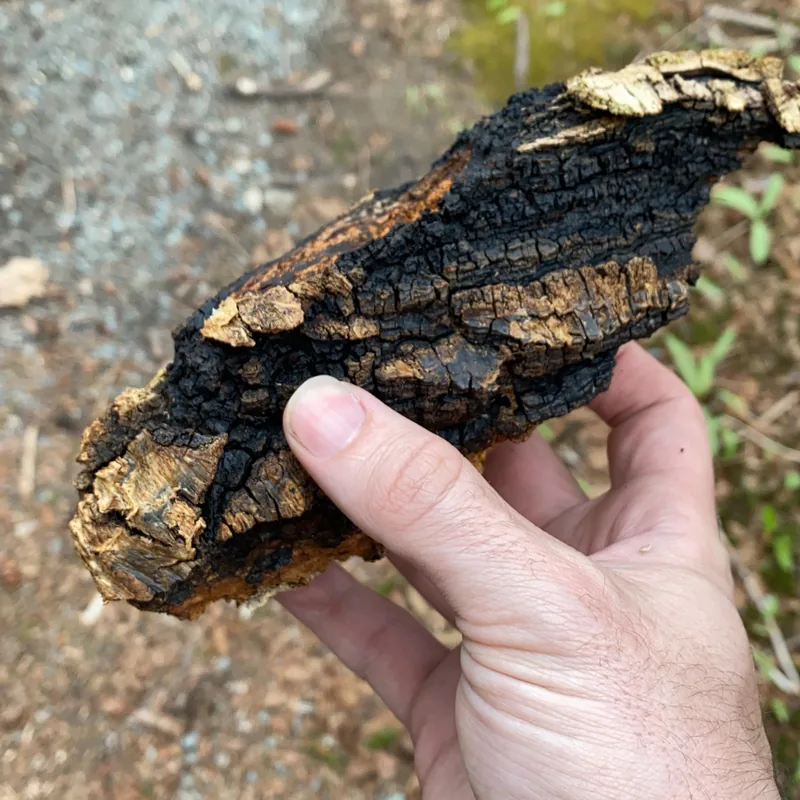
chaga (Inonotus obliquus), photo
Photo
Medicinal

ChagaInonotus obliquus

Inonotus obliquus is a parasitic fungus that forms black masses on living birch trunks. People look it up for its traditional use and research on its extracts.[2][3][10]

Not edible. Tough or woody; used as tea or extract. Never eat a wild mushroom identified only from photos.

  • Season in Mexico
  • HabitatBirch trunks
  • FamilyHymenochaetaceae

How do you identify chaga?
Visible form
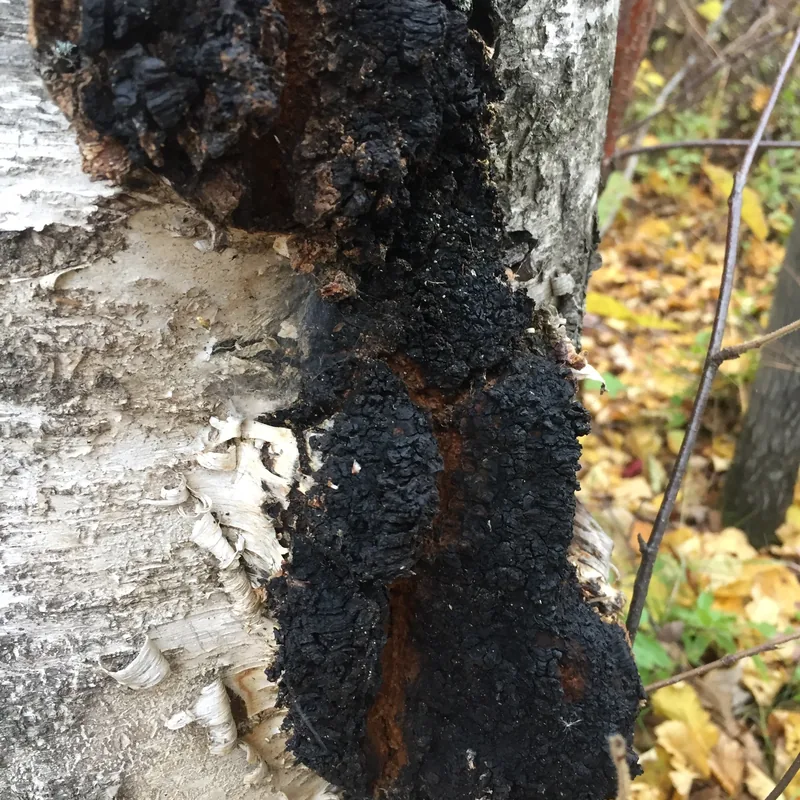
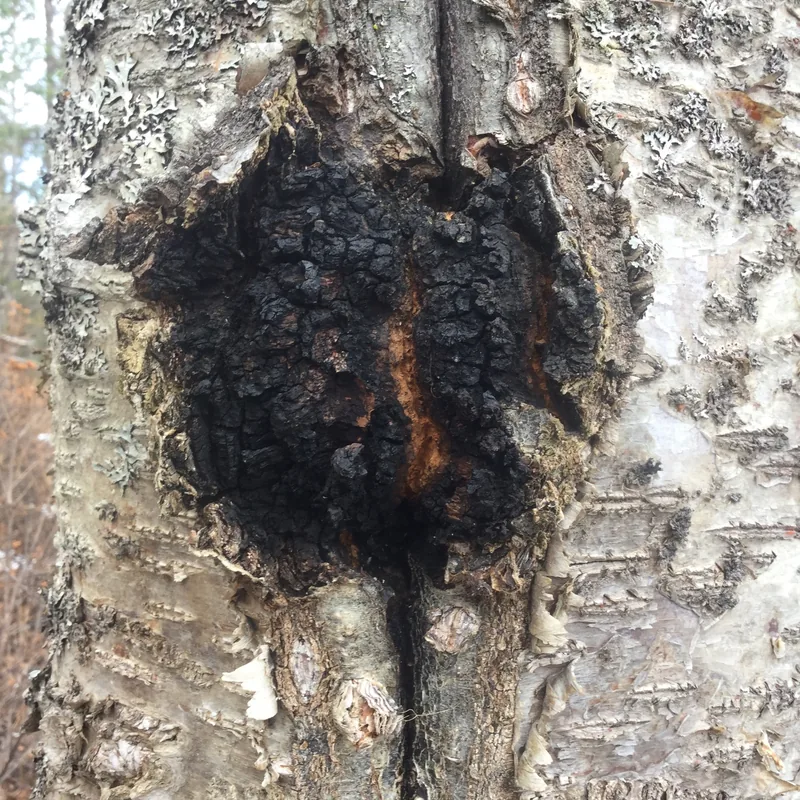
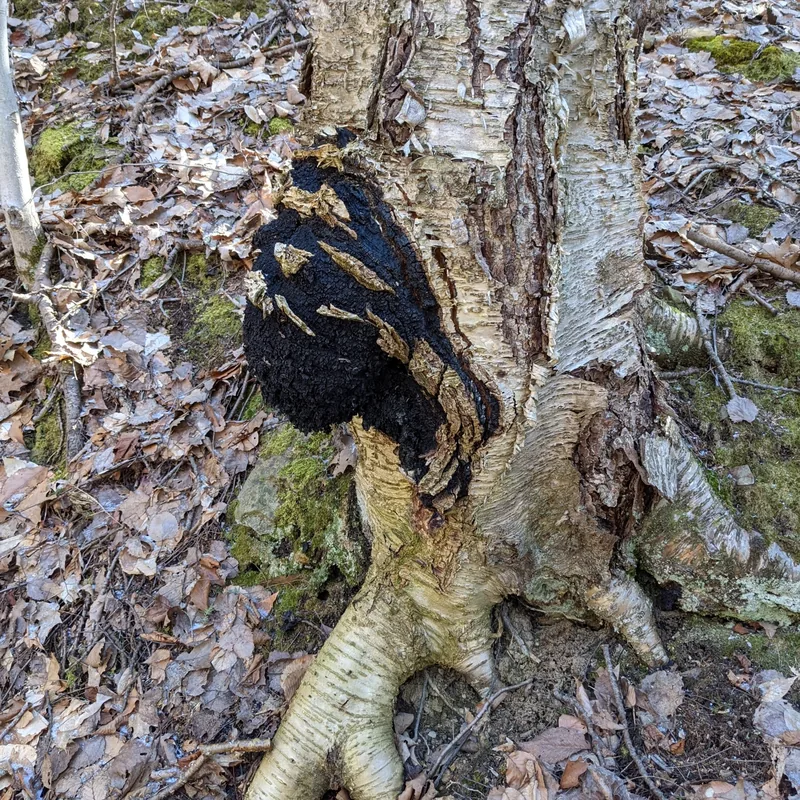
An irregular sterile mass resembling burnt charcoal.[2]
Size
10-40 cm across.[1]
Surface
Dark brown to black, hard and deeply cracked.[1]
Interior
Yellow to yellow-brown, with a corky texture.[1]
Structure
The visible mass consists of compacted hyphae.[1]
Fertile stage
The fertile fruiting body forms a layer of pores beneath the bark, usually after the tree dies.[1][3]

Can you eat chaga?

Editorial classification: inedible. Case reports describe oxalate nephropathy associated with chaga ingestion, including cases requiring hemodialysis. Oxalates can accumulate in the kidneys and cause damage.[4][5][6]

What does research say about chaga?

These findings describe research. None of them is a recommendation to use it. If you take medication or have a disease, talk to your doctor.

Where and when does chaga grow?

It mainly parasitizes living birch trunks (Betula). It causes white heart rot.[1][3]

Sterile masses can be observed year-round. Fruiting months in Mexico remain unconfirmed.[1]

It has a circumboreal distribution, with records in Russia, Scandinavia, Central Europe and Eastern Europe. Mexican states remain unconfirmed in the sources consulted.[3]
See the mushroom map

Fun facts

  • Melanin contributes to the black color of the sterile mass.[2]
  • The name chaga comes from the Russian word чага.[12]

Frequently asked questions

Sources

  1. Inonotus obliquus
  2. Chaga (Inonotus obliquus) · iNaturalist
  3. Introduction to Distribution and Ecology of Sterile Conks of Inonotus obliquus
  4. Chaga mushroom-induced oxalate nephropathy
  5. Development of End Stage Renal Disease after Long-Term Ingestion of Chaga Mushroom: Case Report and Review of Literature
  6. Chaga mushroom-induced oxalate nephropathy that clinically manifested as nephrotic syndrome: A case report
  7. Inhibitory effects of a polysaccharide extract from the Chaga medicinal mushroom, Inonotus obliquus (higher Basidiomycetes), on the proliferation of human neurogliocytoma cells.
  8. Triterpenoid acids from medicinal mushroom Inonotus obliquus (Chaga) alleviate hyperuricemia and inflammation in hyperuricemic mice: Possible inhibitory effects on xanthine oxidase activity
  9. Renal Protective Effects of Inonotus obliquus on High-Fat Diet/Streptozotocin-Induced Diabetic Kidney Disease Rats: Biochemical, Color Doppler Ultrasound and Histopathological Evidence
  10. Inonotus obliquus - from folk medicine to clinical use
  11. Key to Crust and Parchment Fungi (no pores, teeth, or gills)
  12. Inonotus obliquus - Wikipedia, la enciclopedia libre
  13. Scorias spongiosa

Written with AI help from the cited sources. A second model checked every fact against those sources and removed what they did not support.

Image credits

Photos are under free licenses (CC0, CC BY or CC BY-SA).

Related mushrooms