
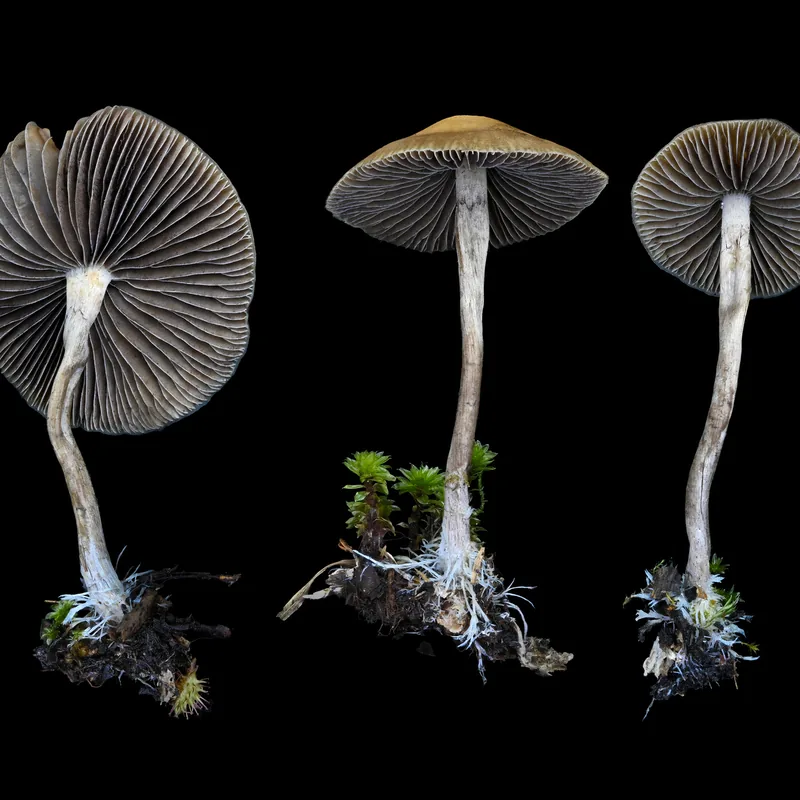
Niño de aguas (water child)Psilocybe aztecorum
Niñitos · Niño santo · Apipiltzin
Psilocybe aztecorum is a psilocybin-containing mushroom documented in the mountains of central Mexico. It grows on woody debris in meadows and open forests. Its identification and Nahua ceremonial history are central topics for understanding the species.[5][4]
Psychoactive: controlled substance in Mexico. For information only. Never eat a wild mushroom identified only from photos.
- Season in Mexico
- HabitatMountain meadows and forests
- FamilyHymenogastraceae
How do you identify Niño de aguas (water child)?
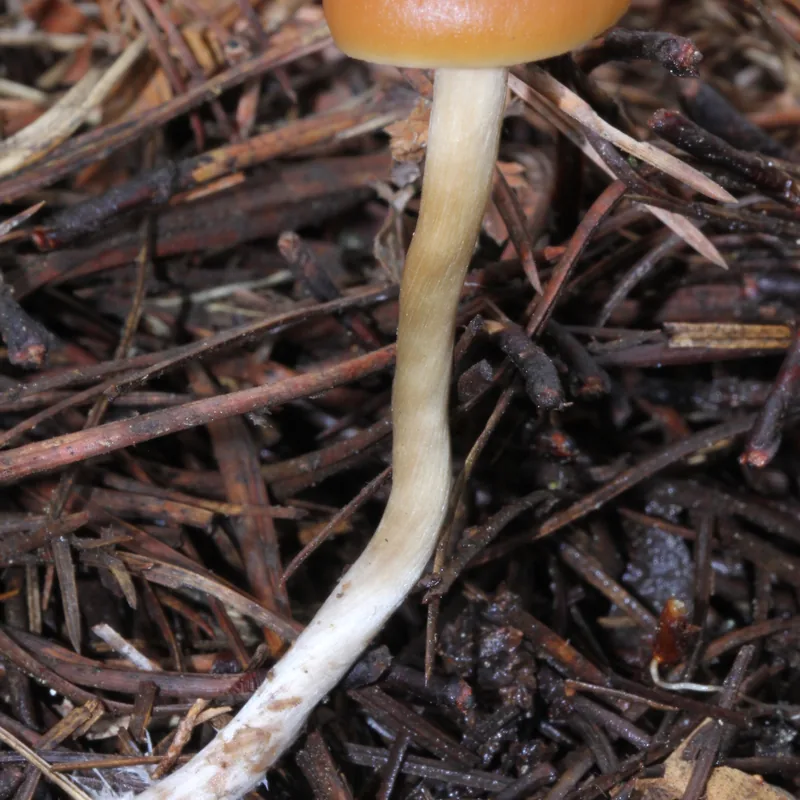
- Cap
- Convex to bell-shaped, measuring 1.5–2 cm across.[5]
- Stem
- Slender and cylindrical.[5]
- Overall shape
- Small, narrow fruiting body.[4]
- Blue bruising
- The cap barely bruises blue: only the margin stains slightly green-blue. The stem stains blue-green irregularly. Identification requires checking several features.[6]
- Microscopic features
- Has pleurocystidia, cells on the gill faces, with long or beak-like necks. You need a microscope to examine this feature.[6]
What happens if someone eats Niño de aguas (water child)?
Classified as a controlled psychoactive mushroom. Ingestion involves psychological risks and identification hazards; avoid eating wild specimens.[10][18][15]
Where and when does Niño de aguas (water child) grow?
Decomposes woody debris in mountain meadows and open forests. It has been documented in environments with Pinus hartwegii.[5]
Guzmán's revision documents records in Estado de México and Tlaxcala. A mycological interview with Alan Rockefeller describes a broad North American distribution; assessing the worldwide range requires considering differences between taxonomic treatments.[3][20][1]
History and traditional uses
Mexican sources document Nahua ceremonial use of P. aztecorum and the name apipiltzin. Mazatec history includes María Sabina in Huautla de Jiménez: Wasson joined a velada with her and published his account in Life in 1957. The UNAM source identifies P. caerulescens in that experience. Literature on Zapotec use highlights P. zapotecorum. Albert Hofmann isolated and synthesized the psychoactive compounds from P. mexicana material. Gastón Guzmán revised the description of P. aztecorum in 1978.[4][8][7][3]
Is it legal in Mexico?
In Mexico, Article 245, section I, of the Ley General de Salud lists psilocybin and hallucinogenic mushrooms. Article 248 prohibits the acts specified in Article 247 for this group; Article 249 provides for authorization for scientific research. The 1971 UN Convention places psilocybin and psilocin in Schedule I.[15][16]
About the name
GBIF places the species in Hymenogastraceae and lists Psilocybe quebecensis and P. aztecorum var. bonetii as synonyms. Historical publications may treat them separately.[1][3]
Fun facts
- Roger Heim described the species under the name Psilocybe aztecorum in 1957.[9]
- Wasson interpreted some figures on the Xochipilli sculpture as representations of P. aztecorum. This is an ethnomycological interpretation.[2][9]
- In his 1978 revision, Guzmán reduced Psilocybe bonetii to a variety of P. aztecorum.[3]
Frequently asked questions
Related mushrooms
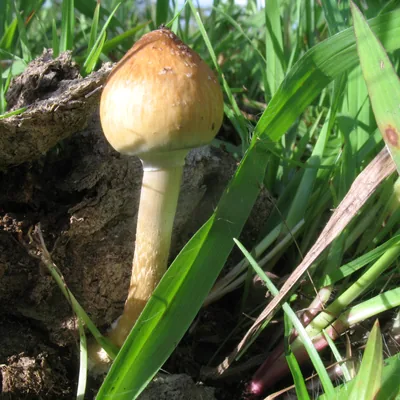 Magic mushroomPsilocybe cubensisPsychoactive: controlled substance in Mexico
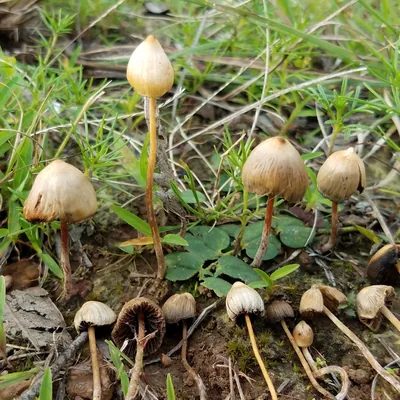 PajaritoPsilocybe mexicanaPsychoactive: controlled substance in Mexico
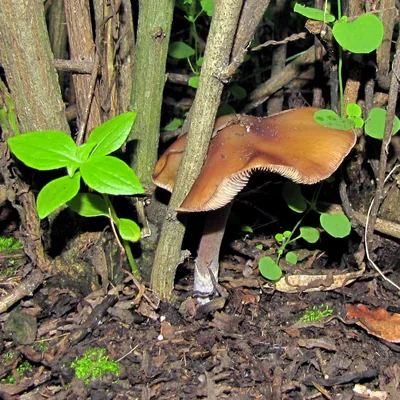 Landslide mushroomPsilocybe caerulescensPsychoactive: controlled substance in Mexico
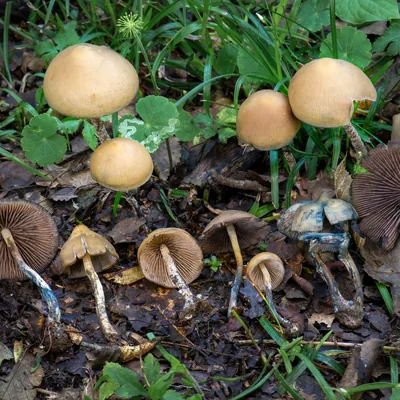 Drunken mushroomPsilocybe zapotecorumPsychoactive: controlled substance in Mexico
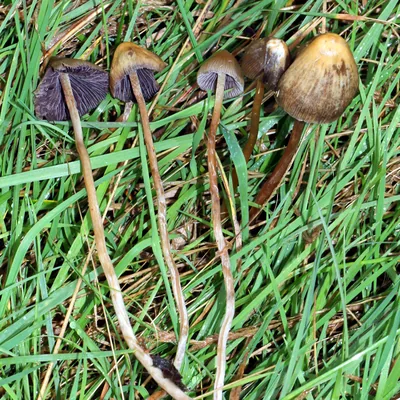 Liberty capPsilocybe semilanceataPsychoactive: controlled substance in Mexico