
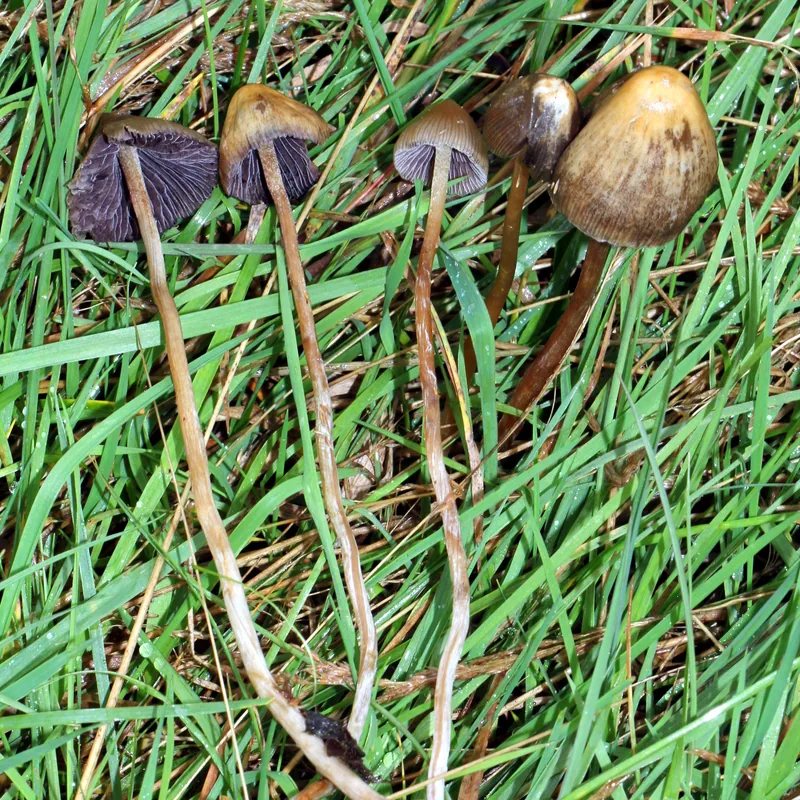
Psychoactive: controlled substance in Mexico. For information only. Never eat a wild mushroom identified only from photos.
- Season in Mexico
- HabitatCool, damp grasslands
- FamilyHymenogastraceae
How do you identify liberty cap?
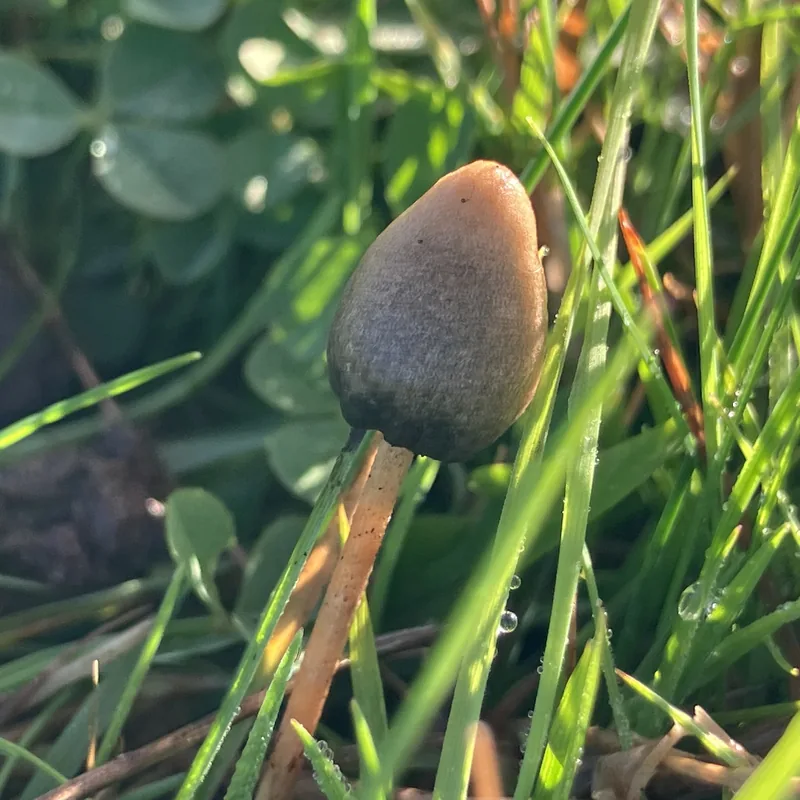
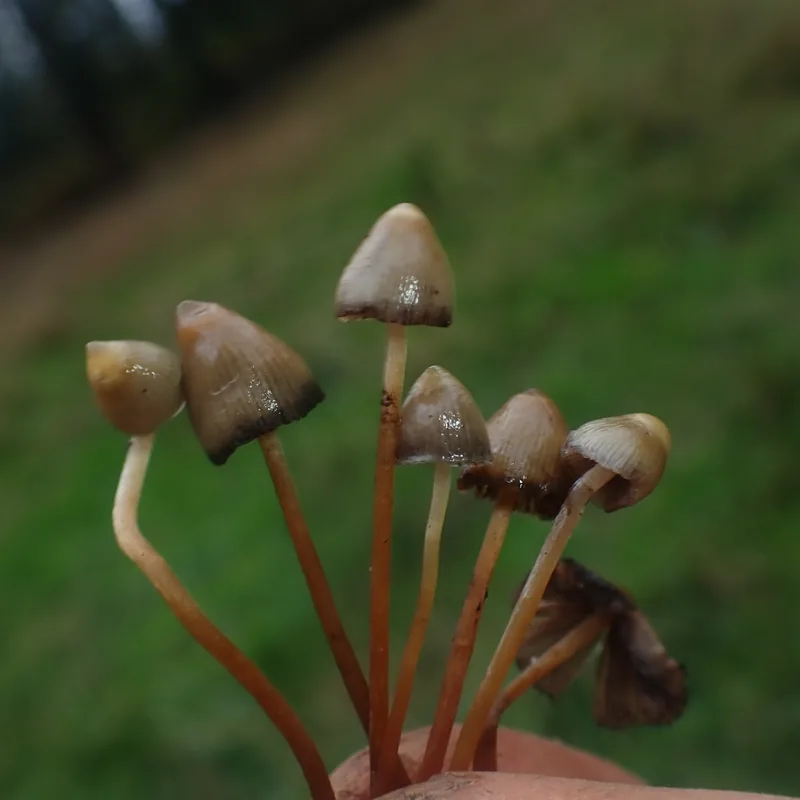
- Cap
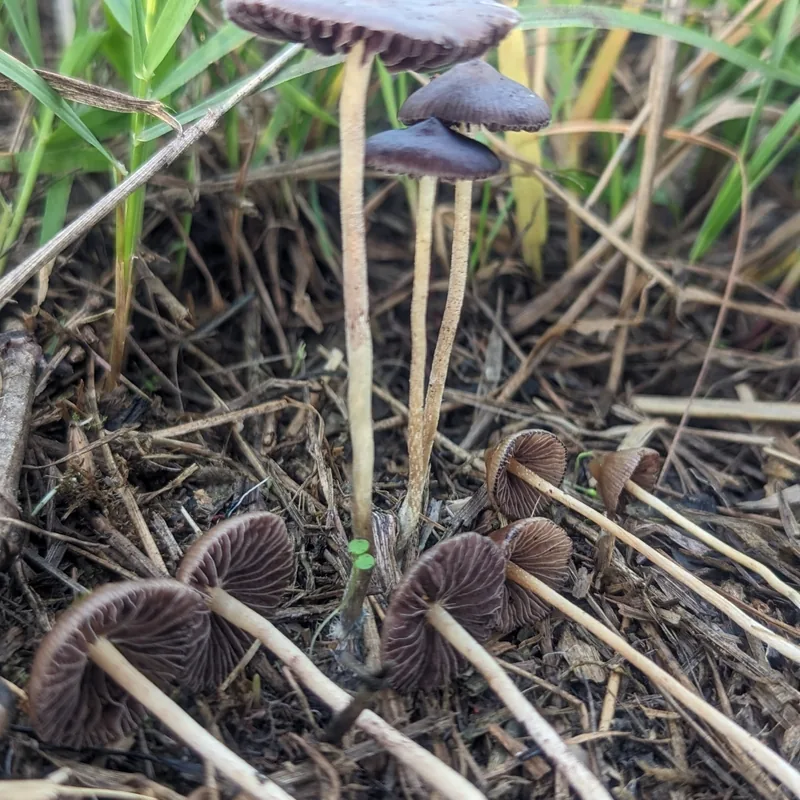
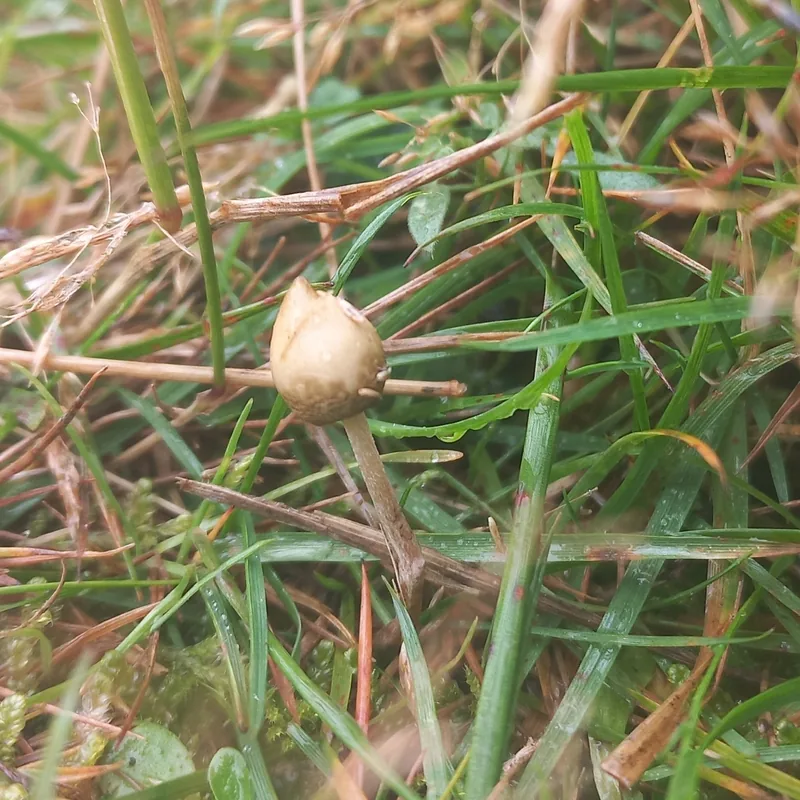
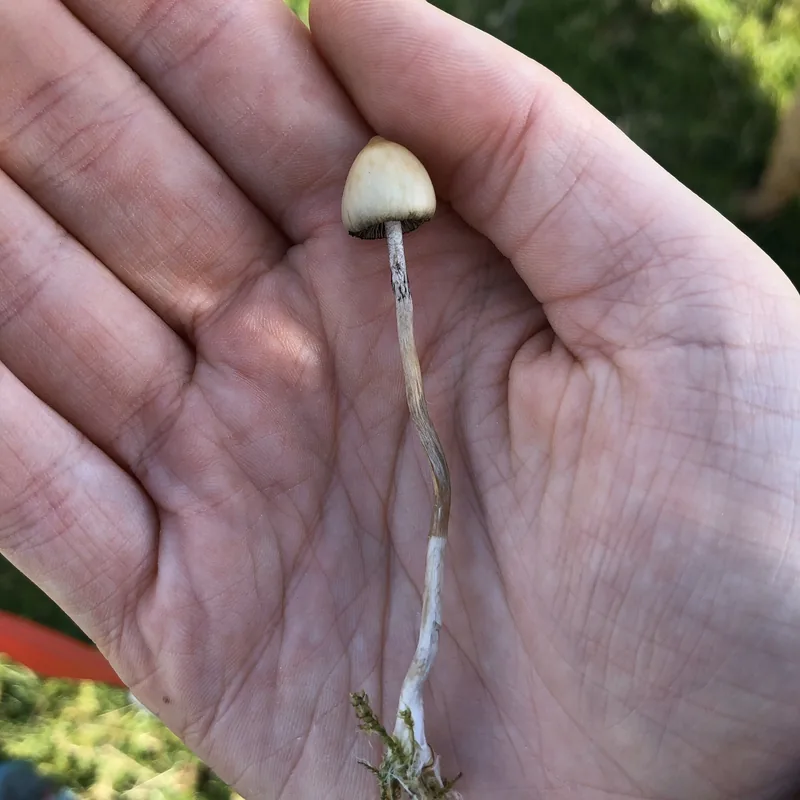
- Conical to bell-shaped, with a central point. Diameter 0.5–2.5 cm; the review gives this measurement as 5–25 mm.[2][5]
- Color and surface
- Light to dark chestnut brown and radially lined when wet; light yellow-brown when dry.[2]
- Gills
- Pale at first, becoming purple-black at maturity. They attach narrowly to the stem.[2]
- Stem
- Slender, yellowish-brown, 4.5–14 cm long and 1–3.5 mm thick.[5]
- Blue bruising
- It can develop blue discoloration after damage. The reaction is often faint in this species.[3]
What happens if someone eats liberty cap?
It is classified as a controlled psychoactive mushroom and excluded from culinary use. Ingestion can cause poisoning and psychological crises.[8][15]
Where and when does liberty cap grow?
It inhabits damp meadows and grasslands. It is saprobic, obtaining nutrients from decaying grass roots.[2][3]
The consulted sources do not establish a Mexican fruiting season. Norwegian records describe fruiting from mid-August to mid-October.[20]
It is of European origin. Its range includes cool temperate regions of Europe and North America. This page has no verified Mexican records.[2]
History and traditional uses
Ceremonial use of Psilocybe mushrooms in Mexico is documented among Mazatec, Zapotec and Nahua communities. These rituals serve divinatory purposes and traditional responses to illness. María Sabina was a Mazatec healer associated with the veladas of Huautla de Jiménez. R. Gordon Wasson publicized his ceremonial experience in the Life article “Seeking the Magic Mushroom,” published in 1957. Albert Hofmann and his team isolated and identified psilocybin and psilocin from P. mexicana and published their results in 1958. Gastón Guzmán developed the taxonomic revision of the genus in The Genus Psilocybe, published in 1983. This context concerns the history of the genus and Mexican ceremonial species; P. semilanceata is of European origin.[4][12][13][14][22]
Is it legal in Mexico?
Mexico’s Ley General de Salud includes psilocybin, hallucinogenic mushrooms and psilocin in Article 245, section I. Article 248 prohibits the acts described in Article 247 concerning those substances; Article 249 provides for authorization for scientific research. The 1971 UN Convention on Psychotropic Substances places psilocybin and psilocin in Schedule I.[15][16]
About the name
Psilocybe semilanceata is the conserved type species of Psilocybe following the separation of species into Deconica.[2]
Fun facts
Frequently asked questions
Related mushrooms
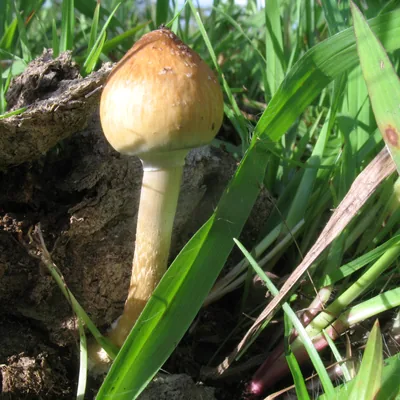 Magic mushroomPsilocybe cubensisPsychoactive: controlled substance in Mexico
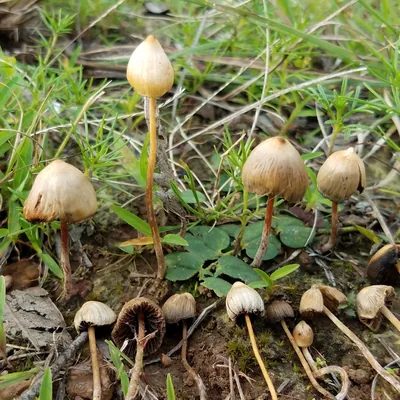 PajaritoPsilocybe mexicanaPsychoactive: controlled substance in Mexico
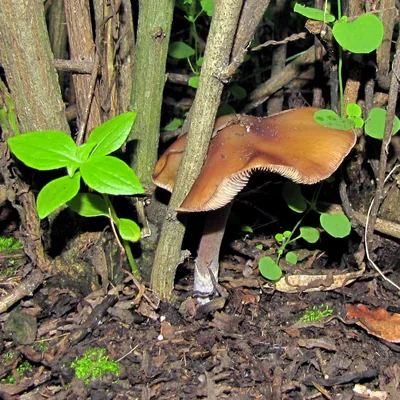 Landslide mushroomPsilocybe caerulescensPsychoactive: controlled substance in Mexico
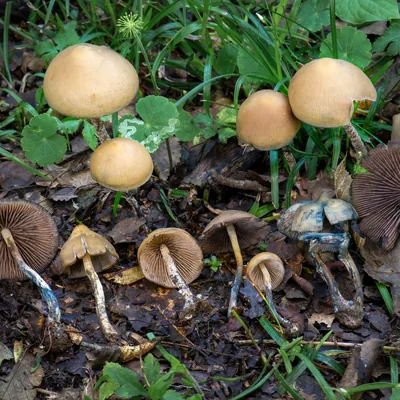 Drunken mushroomPsilocybe zapotecorumPsychoactive: controlled substance in Mexico
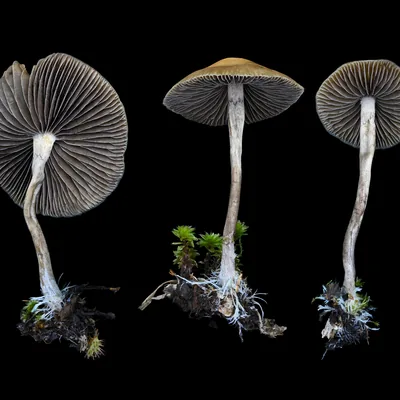 Niño de aguas (water child)Psilocybe aztecorumPsychoactive: controlled substance in Mexico