Field mushroomAgaricus campestris
Meadow mushroom · Llanero · Hongo de pasto · Llanerito · Totolita
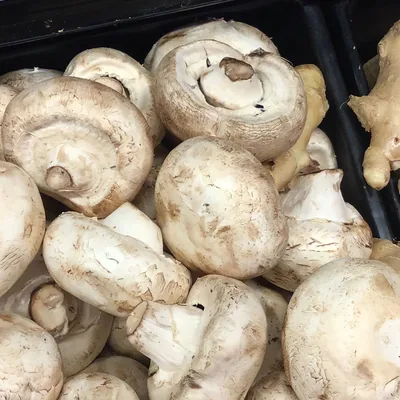
The field mushroom is a wild edible mushroom recorded in Mexico. It grows among grass and is sold in markets; identification needs care because poisonous mushrooms resemble it.[1][3][6][7]
Edible. Eat it cooked. Never eat a wild mushroom identified only from photos.
- Season in Mexico
- HabitatGrasslands and gardens
- FamilyAgaricaceae
How do you identify Field mushroom?
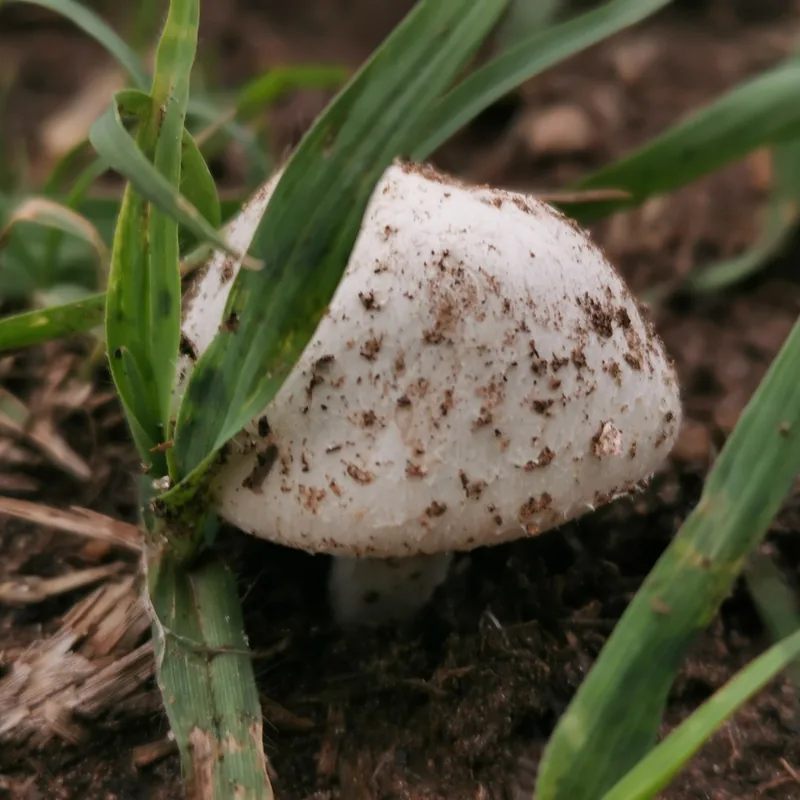
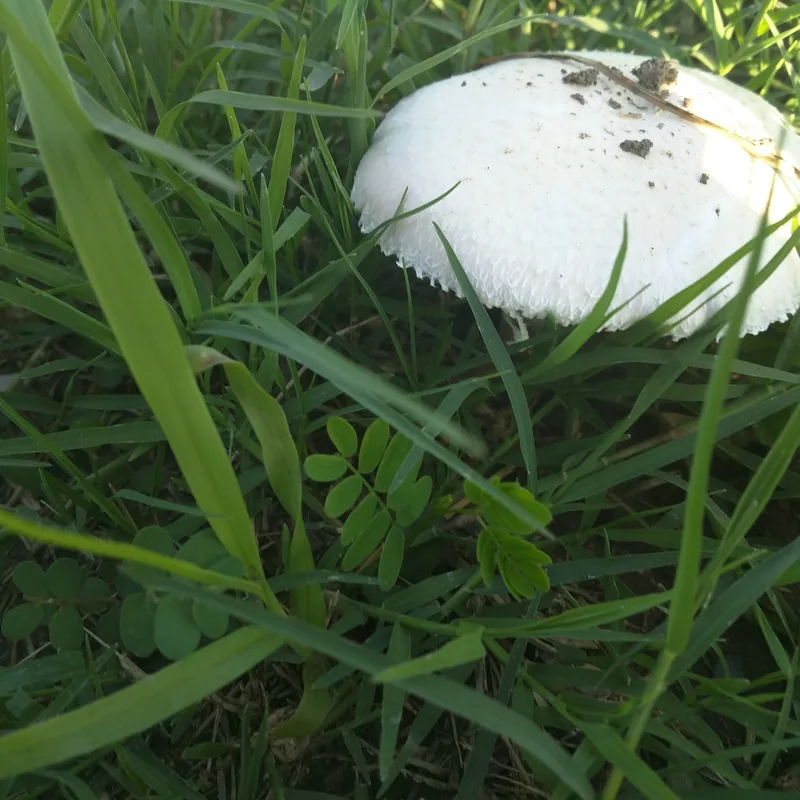
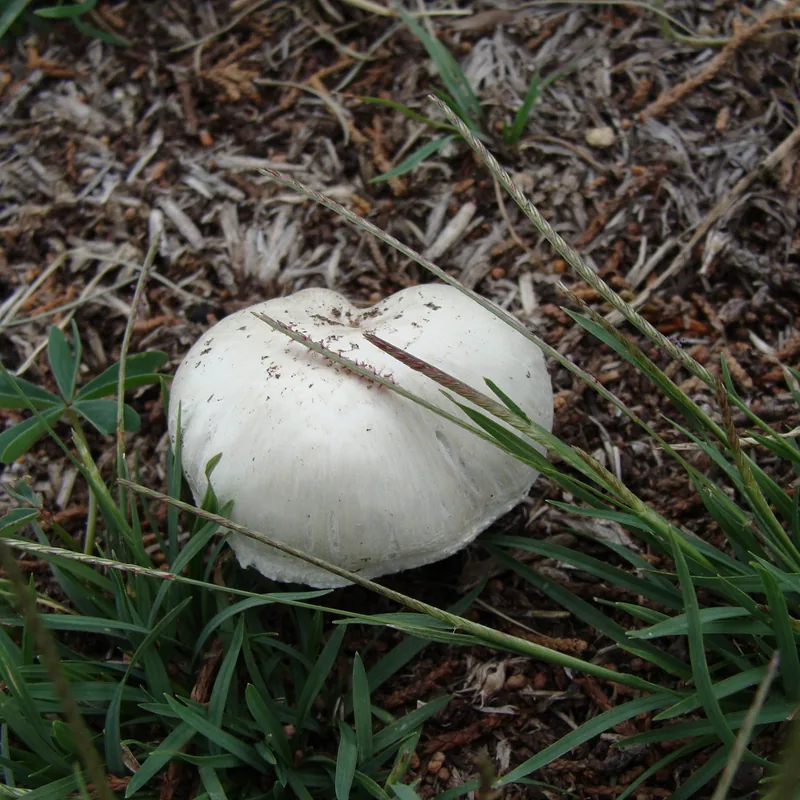
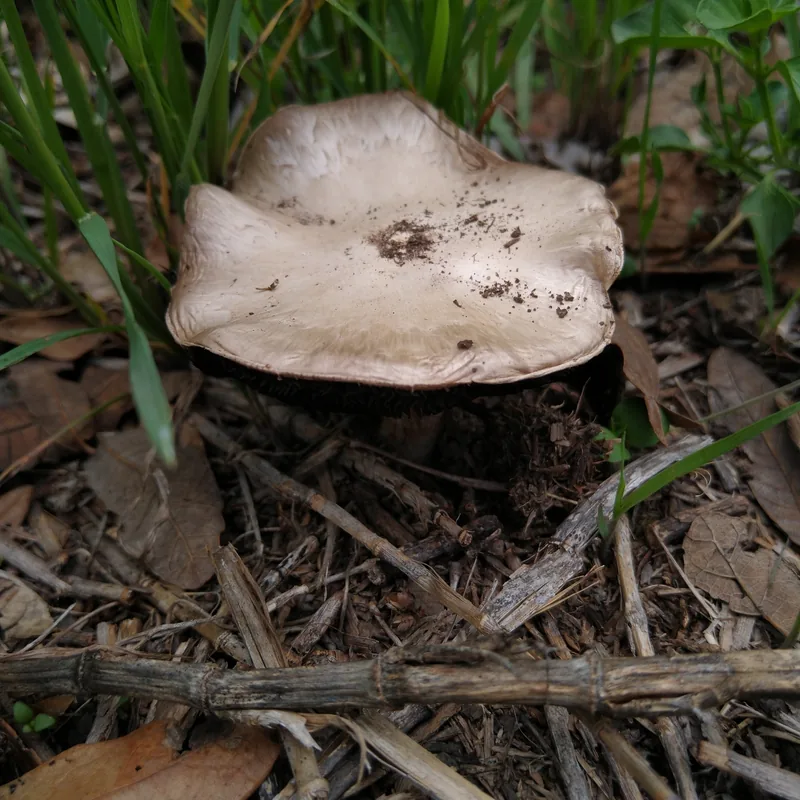
- Cap
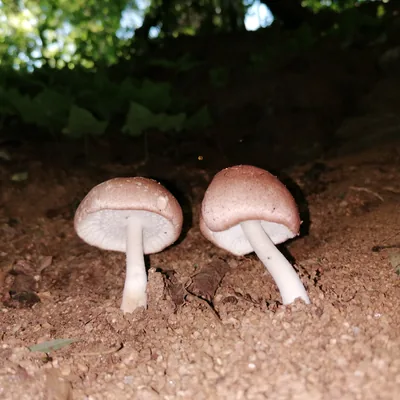
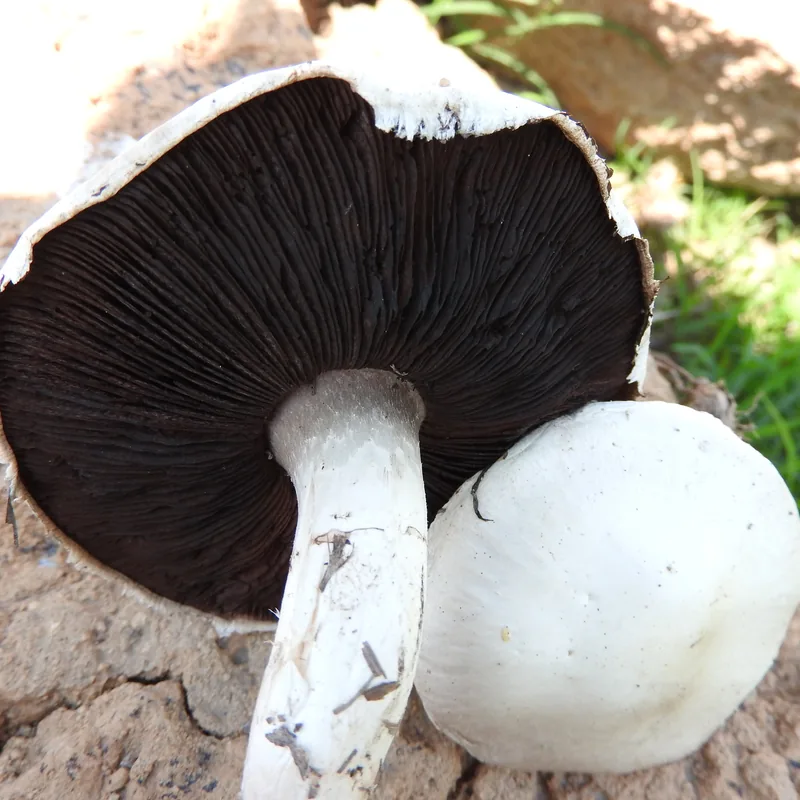
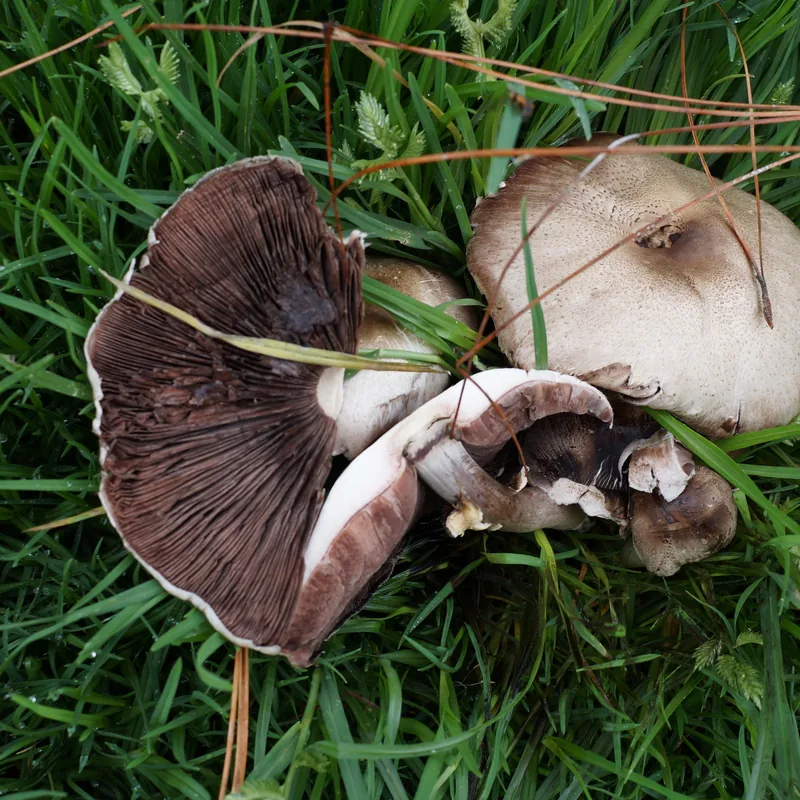
- White, 5 to 10 cm across. Initially hemispherical, then flattening; fine scales may be present.[11]
- Gills
- Initially pink, then reddish brown and finally dark brown.[11]
- Stem
- Mostly white, 3 to 10 cm tall.[11]
- Ring
- A single thin ring surrounds the stem.[11]
- Flesh
- White; may bruise slightly reddish.[11]
- Spore print
- Dark brown.[11]
Can you eat Field mushroom?
Edible. Eat it only after an expert confirms its identity. Cook it thoroughly and avoid eating it raw. Accurate identification requires examining the complete specimen.[1][8][10]
Where and when does Field mushroom grow?
It grows on soil in grasslands and gardens. It is saprobic, obtaining nutrients from decaying organic matter.[1][3][11]
April and May are documented in Ixtenco, Tlaxcala. These months describe the local record, and the season varies across regions.[3]
UNAM compiles records from Mexico, Europe, Guatemala, Bangladesh, Tanzania, Ethiopia, Argentina and India. MushroomExpert notes uncertainty about applying the name in North America.[1][2]
Names in Mexico
About the name
MushroomExpert notes uncertainty about the identity of North American records called Agaricus campestris. Reviewing this group may require microscopy or DNA sequencing.[2]