Skip to content
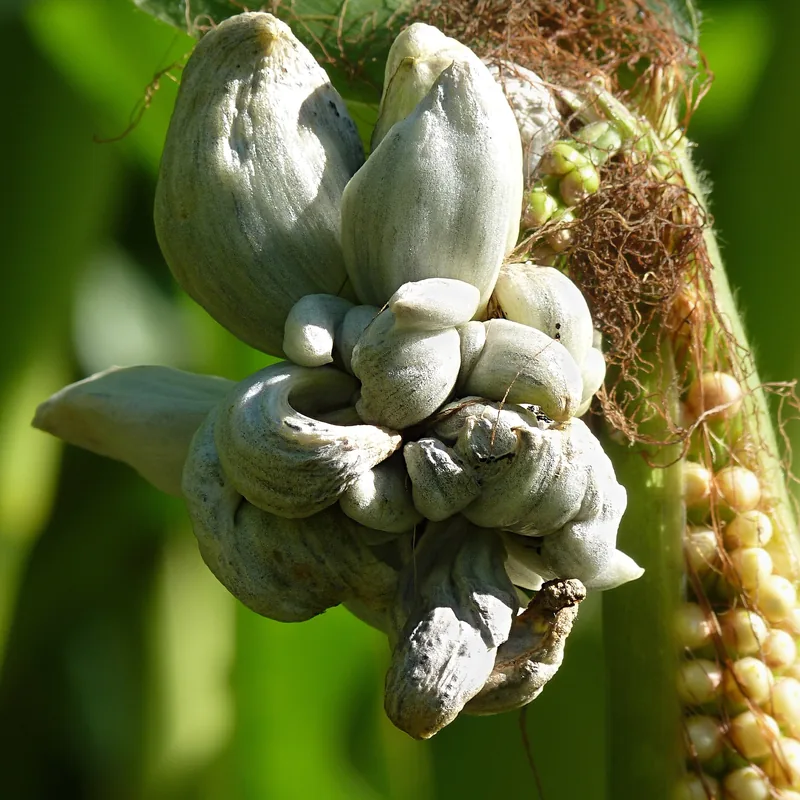
corn smut (Ustilago maydis), photo
Photo
Wild in Mexico

Corn smutUstilago maydis

huitlacoche · cuitlacoche · Hongo del elote (Xochimilco, Mexico City) · Kuchichikua terékua (Michoacán) · Kjú tha (Estado de México) · Donthä jo (Tlaxcala)

Ustilago maydis is an edible smut fungus that parasitizes corn and forms swollen galls known as huitlacoche. It grows on ears and other parts of the plant; people seek it out for Mexican cooking and to recognize galls suitable for the kitchen.[3][4][5]

Edible. Eat it cooked. Never eat a wild mushroom identified only from photos.

  • Season in Mexico
  • HabitatMilpas and corn fields
  • FamilyUstilaginaceae

How do you identify corn smut?
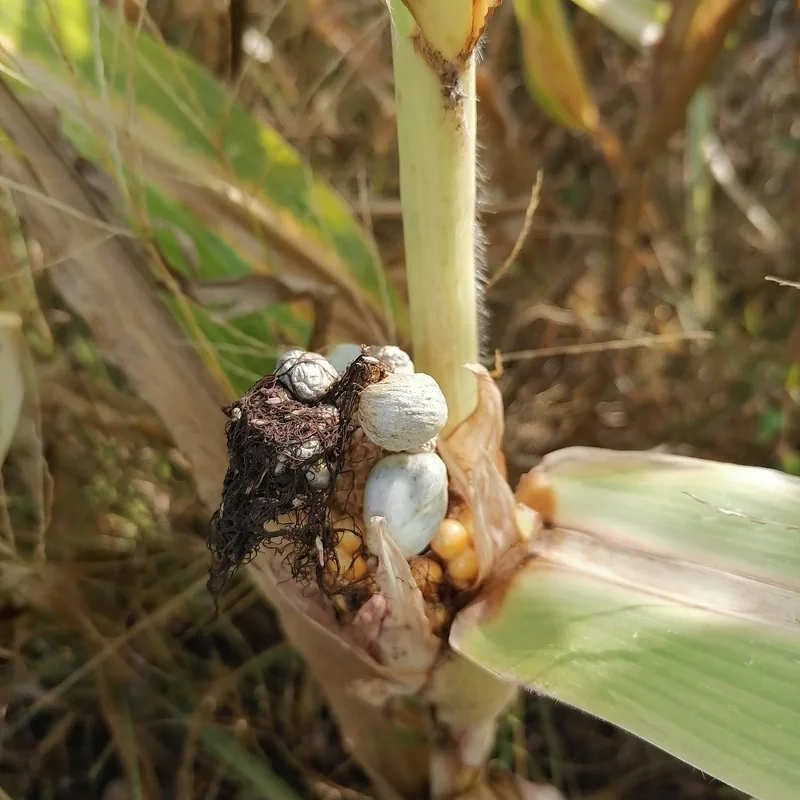
Galls
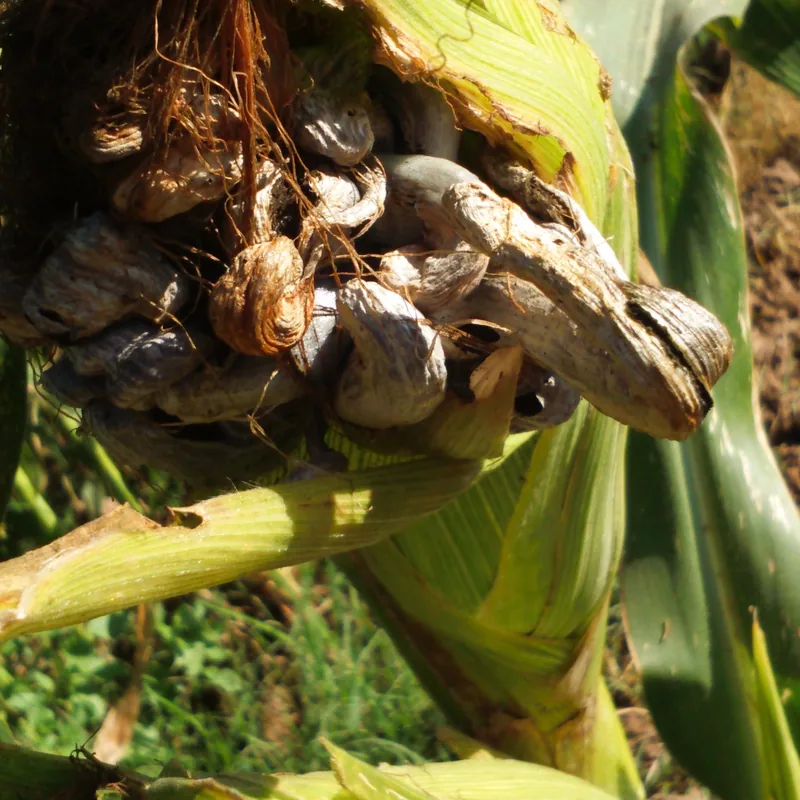
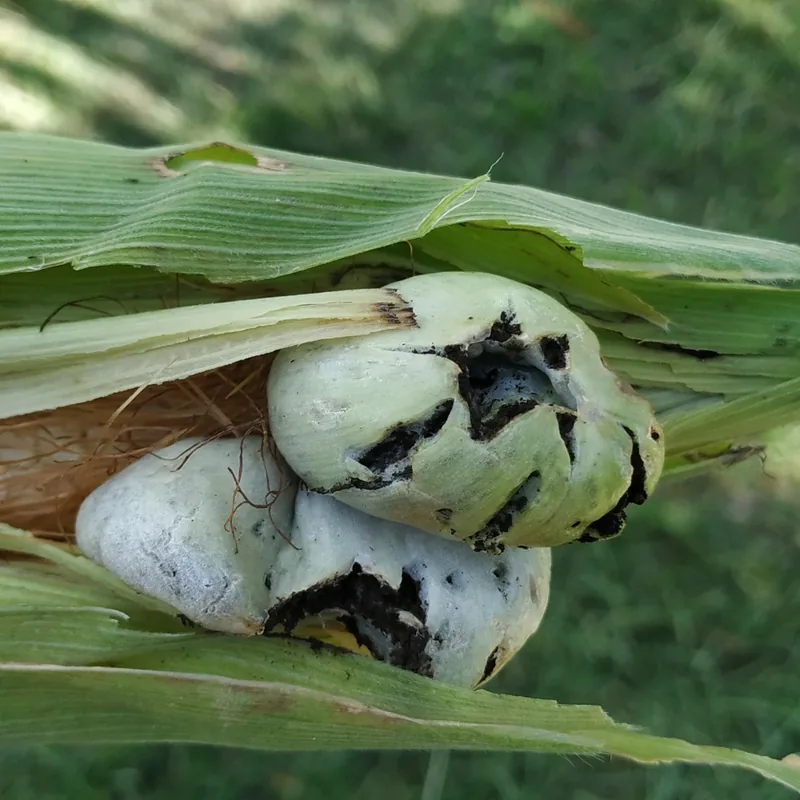
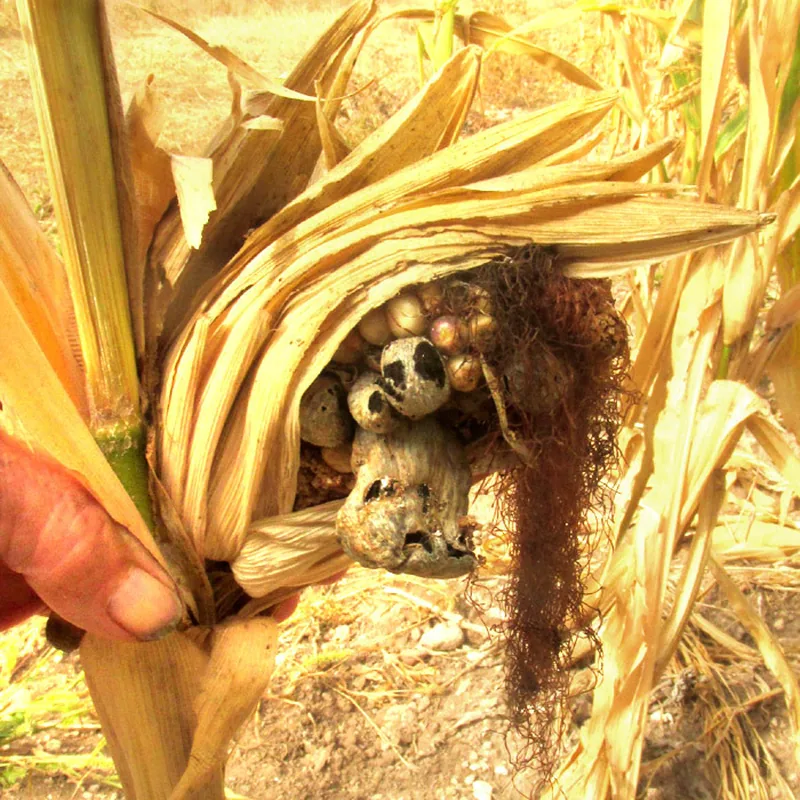
It forms irregular swellings on corn tissue, often on the ears.[3][4]
Young color
Young galls are grayish white.[3][4]
Surface
The smooth gray surface dries and darkens as the gall matures.[4]
Young interior
The interior stays moist before the spores mature; young galls have a spongy texture.[3][5]
Mature spores
Mature galls contain fine black spores called teliospores. The galls split open and release this powder.[3][4]

Can you eat corn smut?

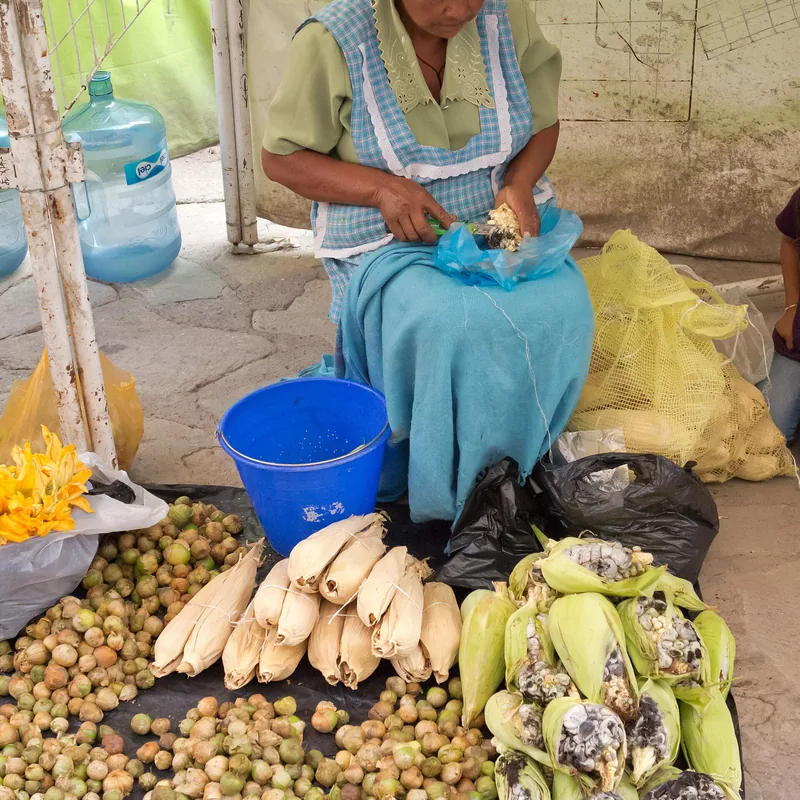
Young huitlacoche galls are edible. Eat them cooked and collect them for food only after an experienced identifier confirms their identity. Choose moist, tender galls; discard those with powdery interiors or those that have split open to release spores.[3][4][11]

How do you cook corn smut?

In Mexico, huitlacoche is sold fresh, preserved, dried, or freeze-dried. It is sautéed in oil with onion, garlic, chili, and epazote. The cooked mixture is used in quesadillas, tacos, tlacoyos, huaraches, and sopes; it also appears in soups.[6]

Where and when does corn smut grow?

It parasitizes corn (Zea mays) and teosinte. Galls can develop on ears, leaves, stalks, and flowering structures.[1][3]

UNAM reports that market supply in Mexico City peaks in July and August.[1]

The cited studies document natural production in Aguascalientes and strains originating in Estado de México. This list contains the state records verified for this page. Its worldwide distribution follows corn cultivation.[8][9][1]

Baja CaliforniaBCSonoraSONChihuahuaCHHCoahuilaCOANuevo LeónNLBaja California SurBCSSinaloaSINDurangoDURZacatecasZACSan Luis PotosíSLPTamaulipasTAMNayaritNAYJaliscoJALAguascalientesAGSGuanajuatoGTOQuerétaroQROHidalgoHGOColimaCOLMichoacánMICEstado de MéxicoMEXCiudad de MéxicoCDMXTlaxcalaTLXVeracruzVERYucatánYUCGuerreroGROMorelosMORPueblaPUETabascoTABCampecheCAMQuintana RooROOOaxacaOAXChiapasCHP
States with records (2/32): Aguascalientes, Estado de México

See the mushroom map

Names in Mexico

  • Hongo del elote · Xochimilco, Mexico City[1]
  • Kuchichikua terékua · Michoacán[1]
  • Kjú tha · Estado de México[1]
  • Donthä jo · Tlaxcala[1]
  • Xanat kuxi · Papantla, Veracruz[1]

About the name

Mycosarcoma maydis is the name resulting from its transfer to the genus Mycosarcoma. Ustilago maydis remains in the literature and Mexican species accounts; both names refer to the fungus on this page.[7][2][4]
Fun facts

  • UNAM documents the use of infected corn ears in Mexican cooking since pre-Columbian times.[1]
  • Each gall combines corn cells and fungal cells.[5]
  • In laboratory culture, it can grow as a yeast, which makes it easier to study.[5]

Frequently asked questions

Sources

  1. Hongos de México: Ustilago maydis
  2. Huitlacoche (Ustilago maydis)
  3. Corn Smut
  4. Smut in the garden
  5. Tom Volk's Fungus of the Month for March 1998: Ustilago maydis
  6. Huitlacoche (Ustilago maydis), an Iconic Mexican Fungal Resource: Biocultural Importance, Nutritional Content, Bioactive Compounds, and Potential Biotechnological Applications
  7. Mycosarcoma (Ustilaginaceae), a resurrected generic name for corn smut (Ustilago maydis) and its close relatives with hypertrophied, tubular sori
  8. Producción natural de huitlacoche [Ustilago maydis (DC) Corda] en el estado de Aguascalientes
  9. Patogenicidad de cepas de Ustilago maydis para la producción en condiciones controladas
  10. Corn — Texas Plant Disease Handbook
  11. Una mirada al conocimiento tradicional sobre los hongos tóxicos en México

Written with AI help from the cited sources. A second model checked every fact against those sources and removed what they did not support.

Image credits

Photos are under free licenses (CC0, CC BY or CC BY-SA).

Related mushrooms