Skip to content
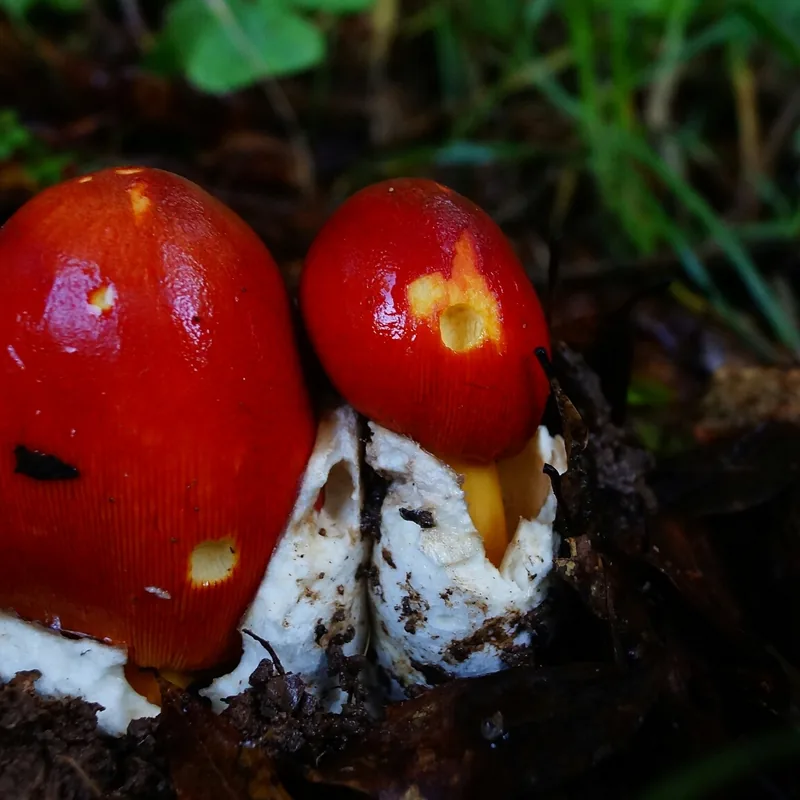
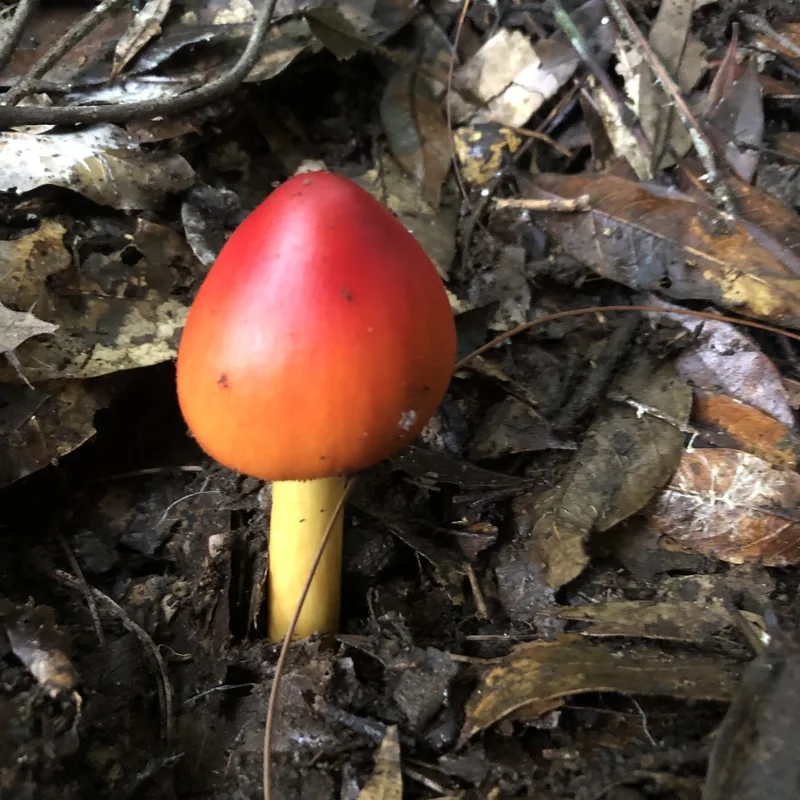
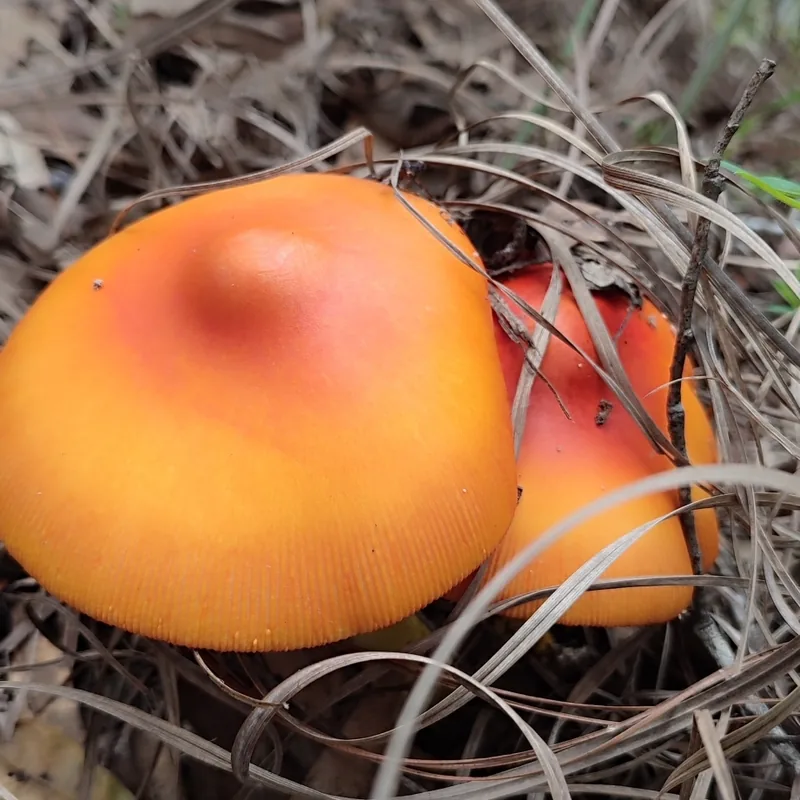
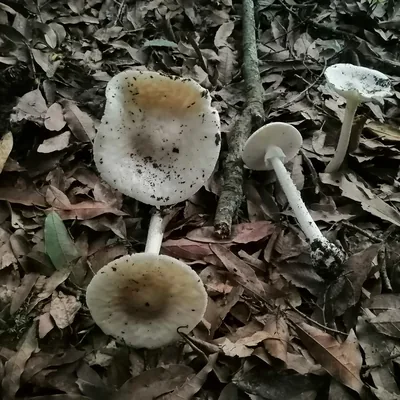
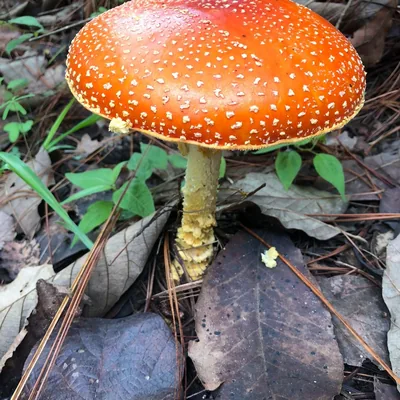
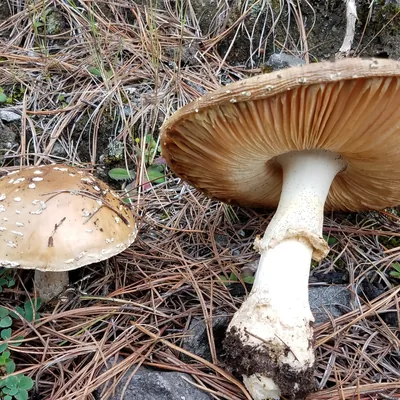
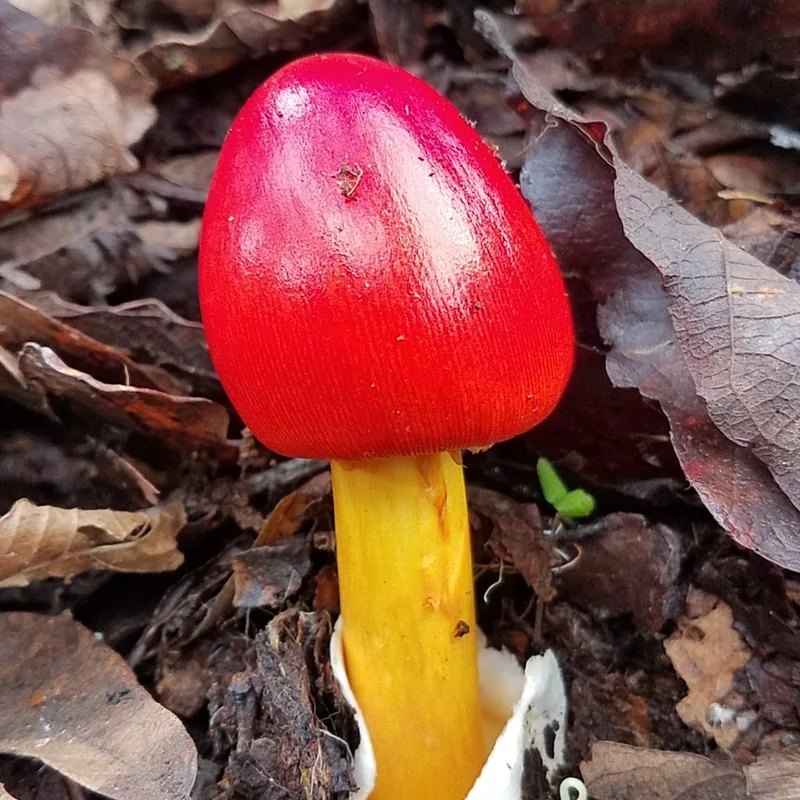
Jackson's slender amanita (Amanita jacksonii), photo
Photo
Wild in Mexico

Jackson's slender amanitaAmanita jacksonii

American slender Caesar · Yema (Mexico) · K’antsu (Chamula) · Níẗ kua´ yöö (Santiago Comaltepec) · Hongo amarillo (Tziscao)

Amanita jacksonii, known in Mexico as yema, is a wild edible mushroom in the Amanita caesarea complex with documented traditional consumption in Mexico. Its Mexican records and resemblance to toxic Amanitas make expert identification essential before eating it.[2][3][7][18]

Edible with caution. Eat it only well cooked and with a sure ID. Never eat a wild mushroom identified only from photos.

  • Season in Mexico
  • HabitatOak and pine forests
  • FamilyAmanitaceae

How do you identify Jackson's slender amanita?
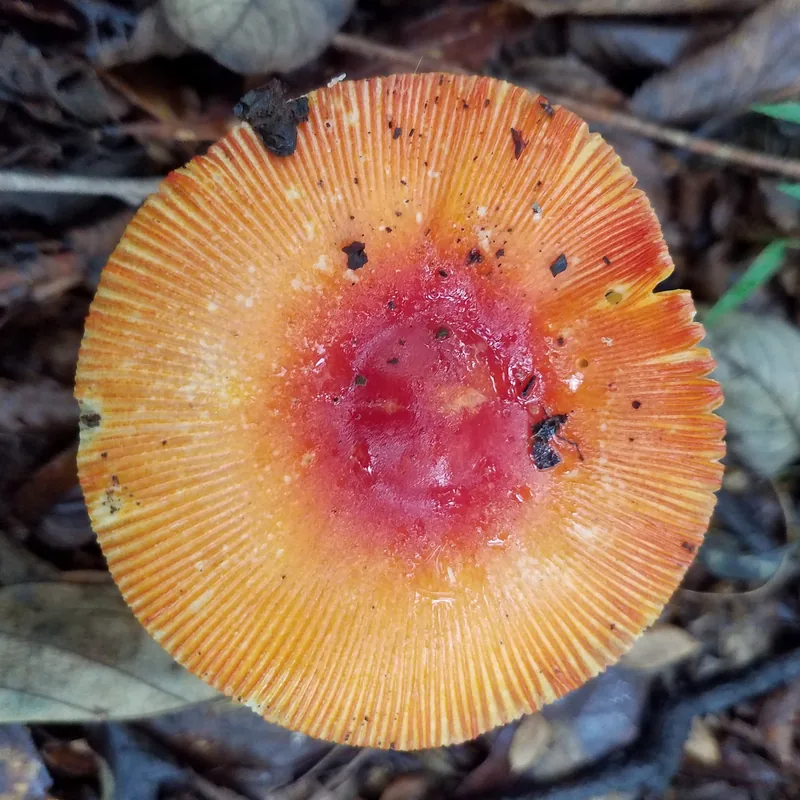
Cap
Convex with a central bump. Smooth, slightly sticky surface, deep reddish orange at the center and orange toward the lined margin.[3]
Diameter
Cap 5–12 cm across.[1]
Gills
Yellow gills.[5]
Stem
8–15 cm long and 1–2 cm thick; yellow with orange to reddish fibers.[1]
Ring and volva
Yellow to orange ring. White, sacklike volva, 4–8 cm high.[1]
Flesh
Whitish to pale yellow; stays the same color when cut.[1]
Spore print
White.[1]

Can you eat Jackson's slender amanita?

Traditional consumption is documented in Mexico. Eat it only after an expert identifies the specimens. Cook it thoroughly and avoid eating it raw, following general guidance for wild mushrooms. Pay special attention to deadly white Amanitas such as Amanita bisporigera. Toxins in dangerous species can remain active after cooking.[7][12][13][16]

Where and when does Jackson's slender amanita grow?

Forms mycorrhizal associations with oaks and pines. A Guerrero specimen was recorded in montane cloud forest.[1][19]

In Chamula, Chiapas, it is reported from late May through June and part of July. This calendar applies to that locality.[6]

Published records under this name cover these states. Its range extends to at least the State of Hidalgo, Mexico.[1][3][6][19]

Baja CaliforniaBCSonoraSONChihuahuaCHHCoahuilaCOANuevo LeónNLBaja California SurBCSSinaloaSINDurangoDURZacatecasZACSan Luis PotosíSLPTamaulipasTAMNayaritNAYJaliscoJALAguascalientesAGSGuanajuatoGTOQuerétaroQROHidalgoHGOColimaCOLMichoacánMICEstado de MéxicoMEXCiudad de MéxicoCDMXTlaxcalaTLXVeracruzVERYucatánYUCGuerreroGROMorelosMORPueblaPUETabascoTABCampecheCAMQuintana RooROOOaxacaOAXChiapasCHP
States with records (9/32): San Luis Potosí, Jalisco, Hidalgo, Michoacán, Veracruz, Guerrero, Morelos, Oaxaca, Chiapas

See the mushroom map

Names in Mexico

  • Yema · Mexico[2]
  • K’antsu · Chamula[6]
  • Níẗ kua´ yöö · Santiago Comaltepec[5]
  • Hongo amarillo · Tziscao[8]

About the name

It belongs to the Amanita caesarea complex. MushroomExpert notes that Mexico has cryptic species with nearly identical appearances; records under Amanita jacksonii need to be understood in that taxonomic context.[1][3]
Fun facts

  • The name honors Henry A. C. Jackson, a Canadian watercolorist and mycological illustrator.[4]
  • In Chamula, its appearance is associated with the feast of Saint John on June 24.[6]

Frequently asked questions

Sources

  1. Amanita jacksonii (MushroomExpert.Com)
  2. Yema (Amanita jacksonii)
  3. Nuevos registros de Basidiomycota para Jalisco, México
  4. Amanita jacksonii
  5. Conocimiento tradicional de hongos de importancia biocultural en siete comunidades de la región chinanteca del estado de Oaxaca, México
  6. Recolección de hongos comestibles silvestres y estrategias para el reconocimiento de especies tóxicas entre los tsotsiles de Chamula, Chiapas, México
  7. Hongos de México: listado de hongos consumidos tradicionalmente en México
  8. Conocimiento micológico tradicional en dos comunidades aledañas al Parque Nacional Lagunas de Montebello, Chiapas, México
  9. Actividad inhibitoria de extractos alcohólicos de hongos comestibles contra Rhizoctonia solani
  10. Hongos Tóxicos de México: Amanita muscaria
  11. Amanita phalloides (MushroomExpert.Com)
  12. Amanita bisporigera at Indiana Mushrooms
  13. Health Care Utilization and Outcomes Associated with Accidental Poisonous Mushroom Ingestions — United States, 2016–2018
  14. Notes from the Field: Acute Intoxications from Consumption of Amanita muscaria Mushrooms — Minnesota, 2018
  15. Amanita phalloides Mushroom Poisonings — Northern California, December 2016
  16. White paper on strategies to reduce risks and expand appreciation of foraged wild mushrooms
  17. Wild Mushroom Safety: Identification, Cooking, and Poison Awareness
  18. Distribution changes of the toxic mushroom Amanita phalloides under climate change scenarios and its potential risk over indigenous communities in Mexico
  19. Amanita jacksonii Pomerl. 1984 — ejemplar FCME-HO:5443

Written with AI help from the cited sources. A second model checked every fact against those sources and removed what they did not support.

Image credits

Photos are under free licenses (CC0, CC BY or CC BY-SA).

Related mushrooms