ChanterelleCantharellus
Golden chanterelle · Duraznillo · Flor de durazno
Cantharellus includes edible wild mushrooms that grow in soil and associate with tree roots. Mexico has species from pine and oak forests that people gather for food and sell in local markets. Identification requires examining the underside of the cap and checking for toxic lookalikes.[4][5][7][11]
Edible. Eat it cooked. Never eat a wild mushroom identified only from photos.
- Season in Mexico
- HabitatPine and oak forests
- FamilyHydnaceae
How do you identify Chanterelle?
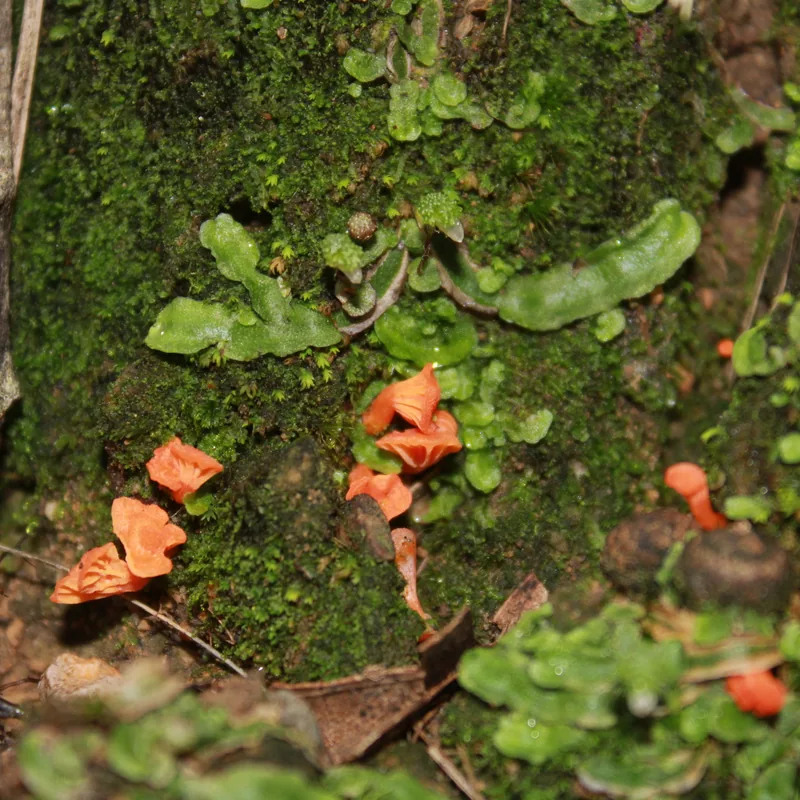
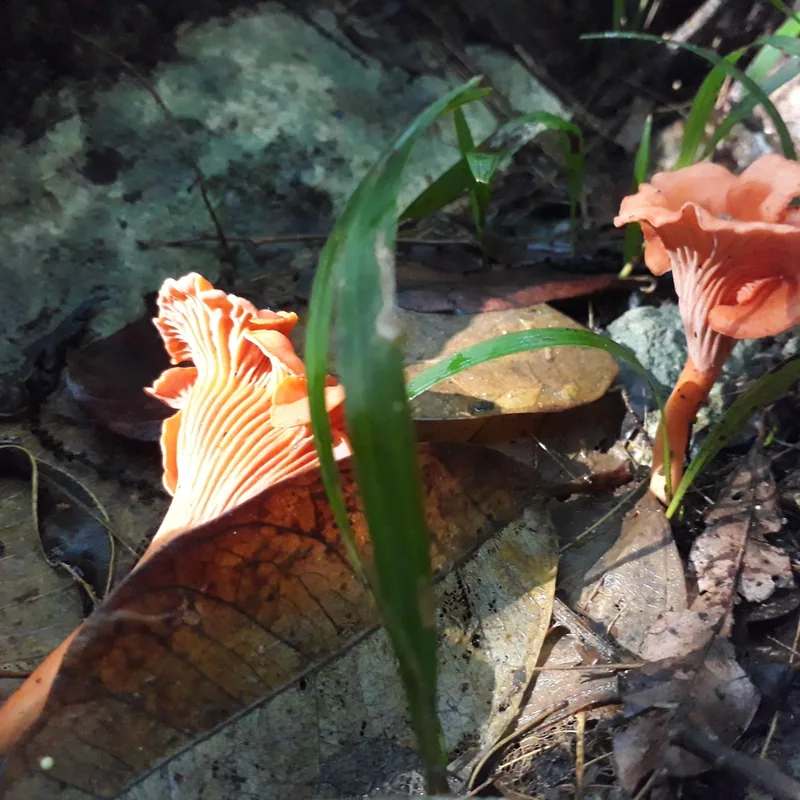
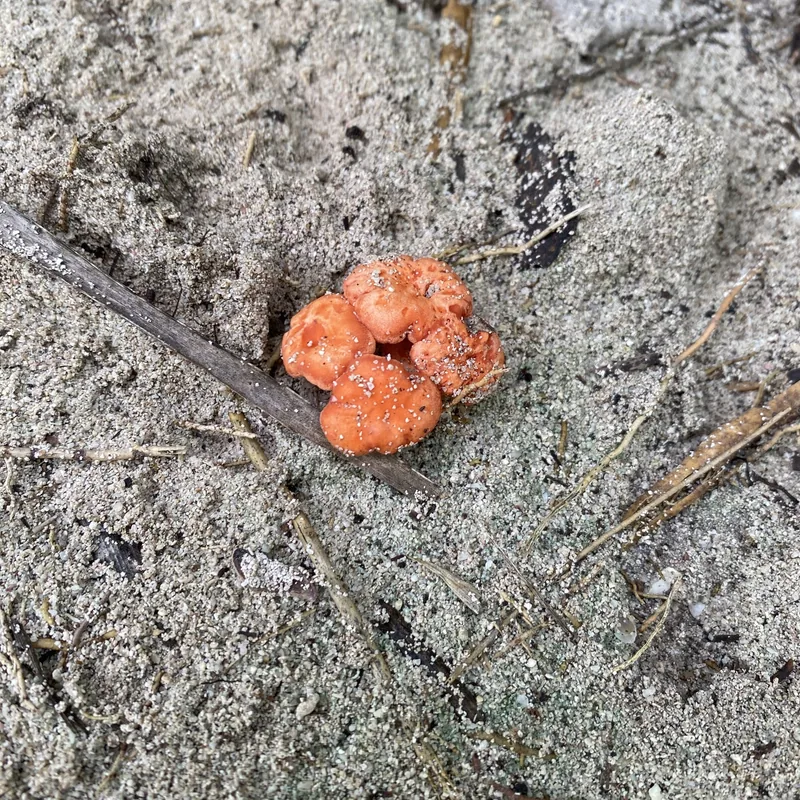
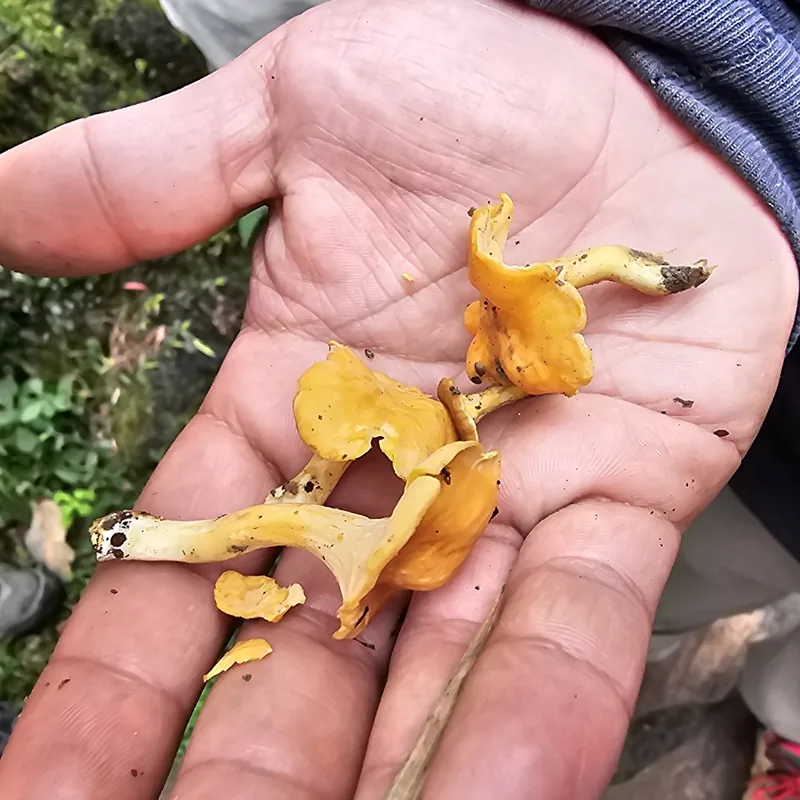
- Cap
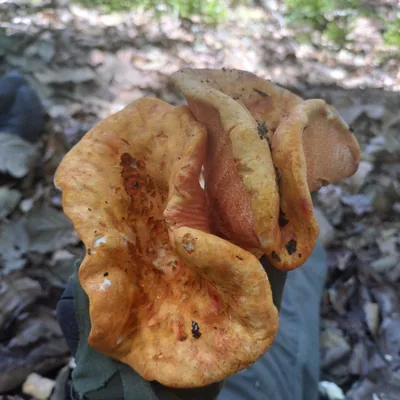
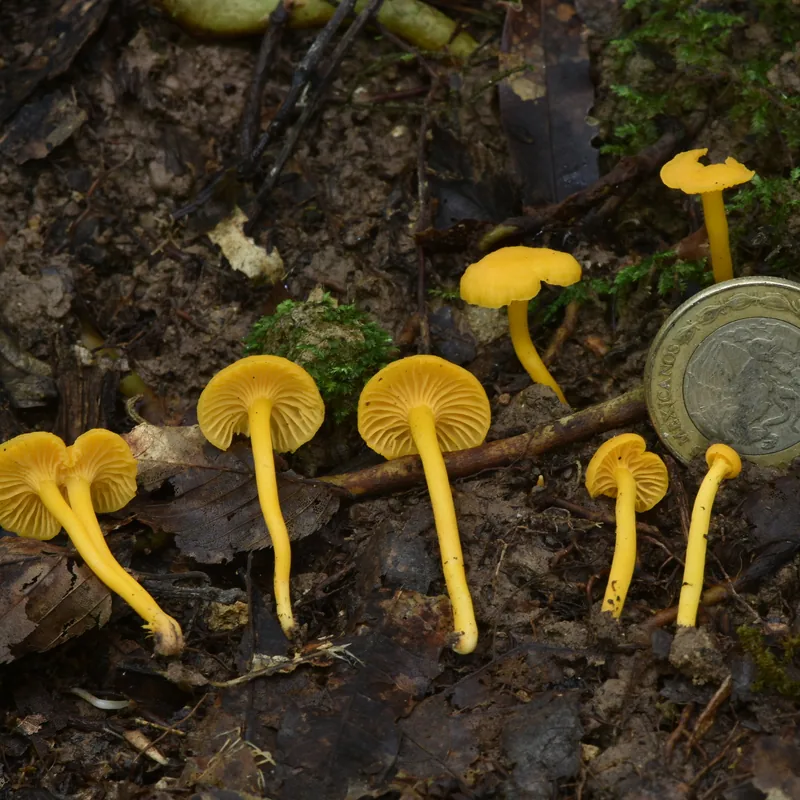
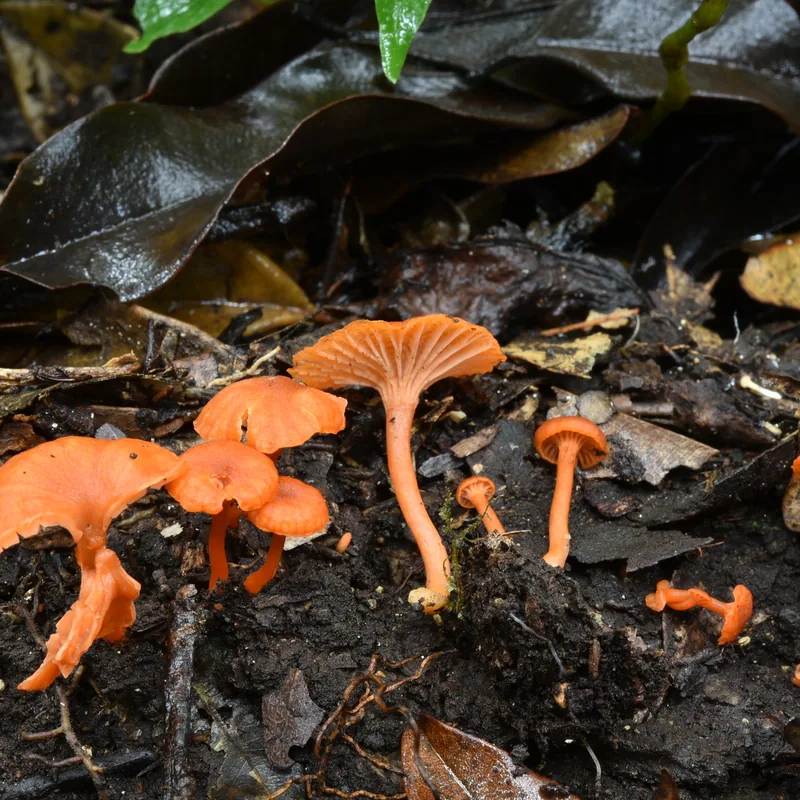
- In the group called C. cibarius sensu lato, the cap is yellow, orange-yellow, or orange. It may be convex, flat, or shallowly depressed.[3]
- Underside
- The underside ranges from smooth to wrinkled, or has ridges so deep they look like gills. These are false gills, joined to the rest of the cap.[2]
- Stem
- The C. cibarius sensu lato group has a central, fleshy stem.[3]
- Flesh
- Mexican specimens of C. roseocanus have whitish, solid flesh that slowly turns brownish when bruised.[4]
- Smell
- The C. cibarius sensu lato group may have a fruity, apricot-like smell.[3]
- Spore print
- North American species in the C. cibarius group produce white, cream, yellow, or pinkish prints, including deep salmon pink.[3]
- Size by species
- In Veracruz, C. roseocanus has a cap 2.5 to 10 cm across; C. flavus has a cap 6 to 9 cm across.[4]
Can you eat Chanterelle?
Cantharellus includes edible mushrooms traditionally eaten in Mexico. Eat only specimens identified by an expert and cook them thoroughly; avoid undercooked or spoiled specimens. Identification should also account for other toxic mushrooms, including Cortinarius orellanus.[10][11][13][17][14]
Where and when does Chanterelle grow?
These mushrooms grow in soil and form ectomycorrhizal relationships with trees. In Veracruz, C. roseocanus was recorded in Pinus hartwegii forest and C. flavus in forests with P. montezumae and P. pseudostrobus. Other Mexican species live in tropical oak forests.[4][5]
The season depends on the species and location. In Chiapas, C. lateritius is included among mushrooms occurring from May through October. At Pico de Orizaba, C. roseocanus and C. flavus fruit in August and September.[6][4]
This list includes records documented in the consulted sources. Cantharellus has species in North America and Europe; Mexican records published as C. cibarius need taxonomic review.[6][7][9][8][4][3]
Names in Mexico
About the name
C. cibarius sensu lato means the name is used broadly for similar mushrooms. Mexican records under that name still need review; C. cibarius in the strict sense is a European species. This page covers the genus and identifies information that applies to individual species.[3][4]