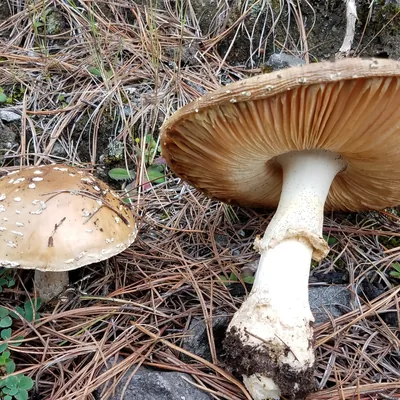
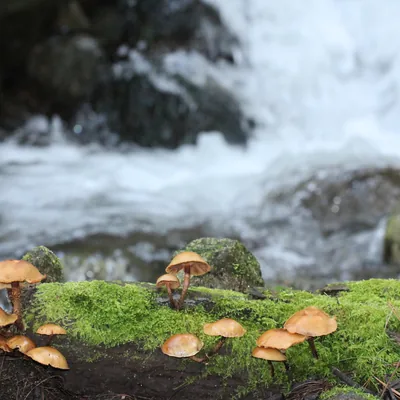
Deadly. A single serving can kill. Never eat a wild mushroom identified only from photos.
- Season in Mexico
- HabitatOak and cloud forests
- FamilyAmanitaceae
What happens if someone eats death cap?
Did someone eat a wild mushroom and feel sick? Call emergency services and bring a sample of the mushroom.
- Toxins
- Amatoxins inhibit RNA polymerase II and primarily damage the liver and kidneys. Phallotoxins stabilize actin filaments and have little toxicity after oral ingestion.
- When symptoms start
- Symptoms usually begin 6 to 24 hours after ingestion. Organ damage can occur during the symptom-free interval.
- Symptoms
- Vomiting, abdominal pain, and diarrhea may begin 6 to 24 hours after ingestion. Apparent improvement may follow at 24 to 36 hours. Severe cases can develop liver and multiorgan failure, typically at 3 to 5 days.
- What to do
- Seek urgent medical care and contact a poison control center after suspected ingestion, even if the person feels well.
How do you identify death cap?
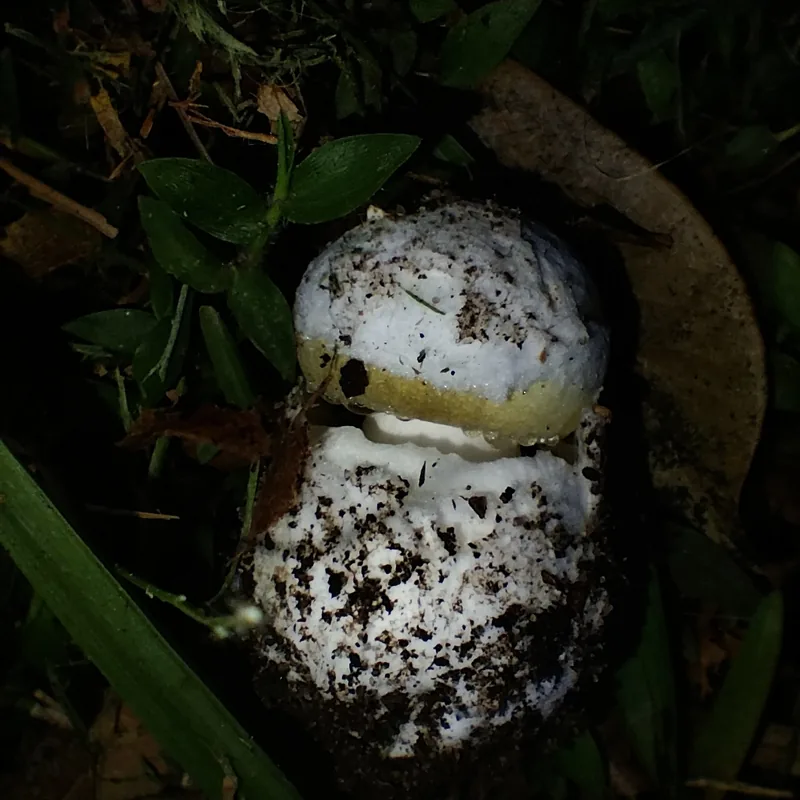
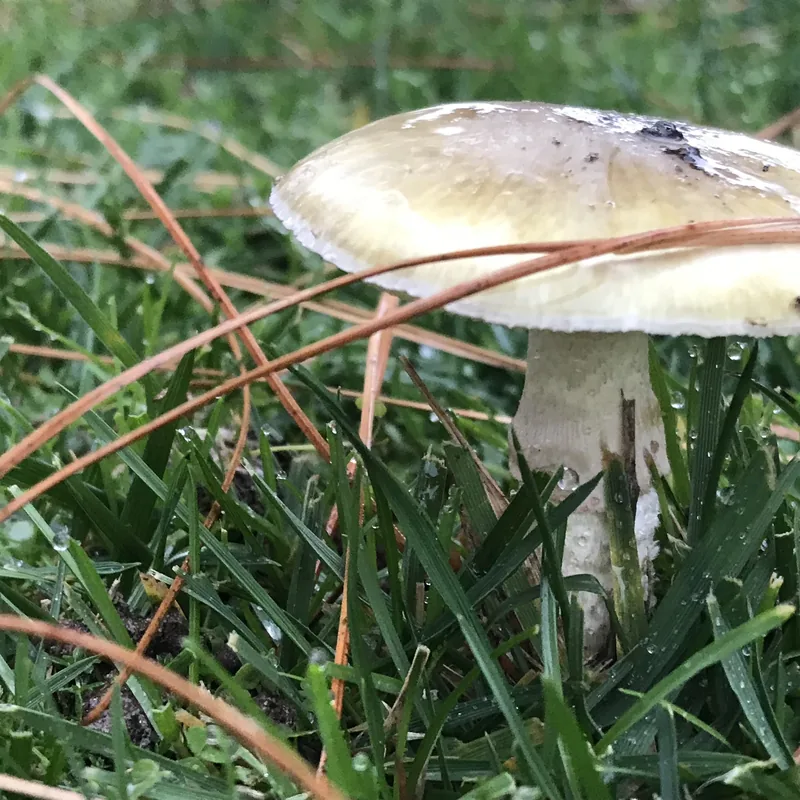
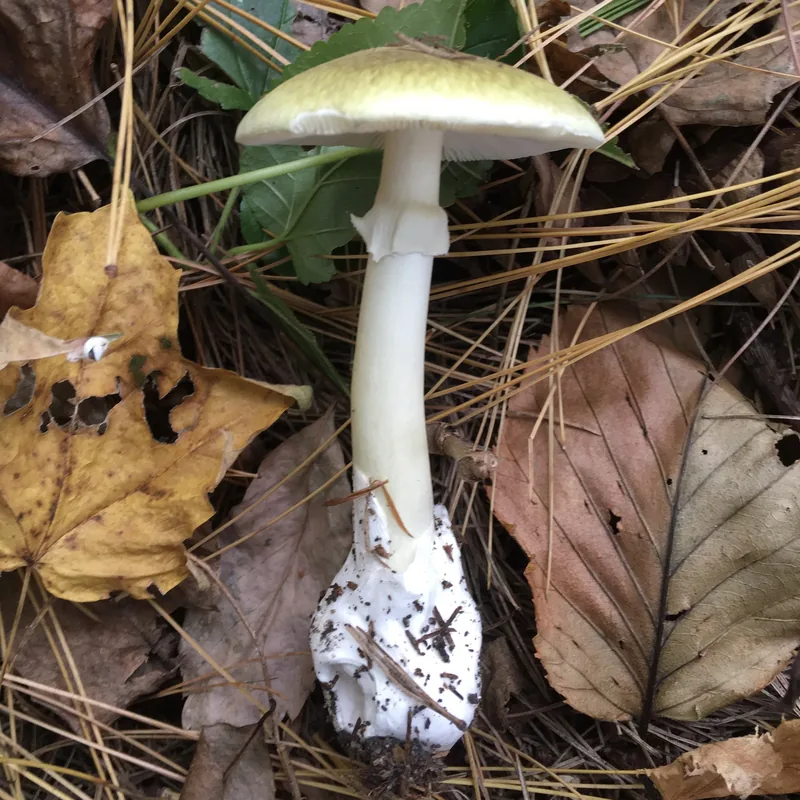
- Cap
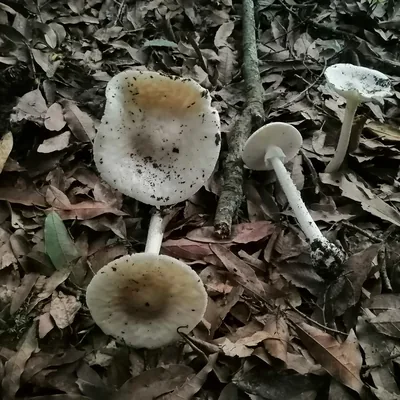
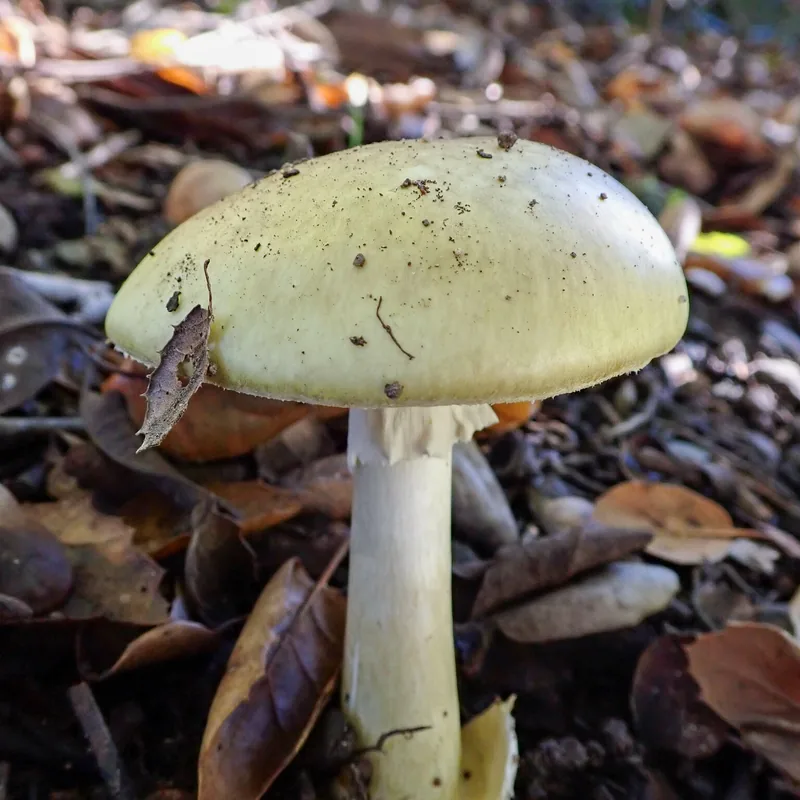
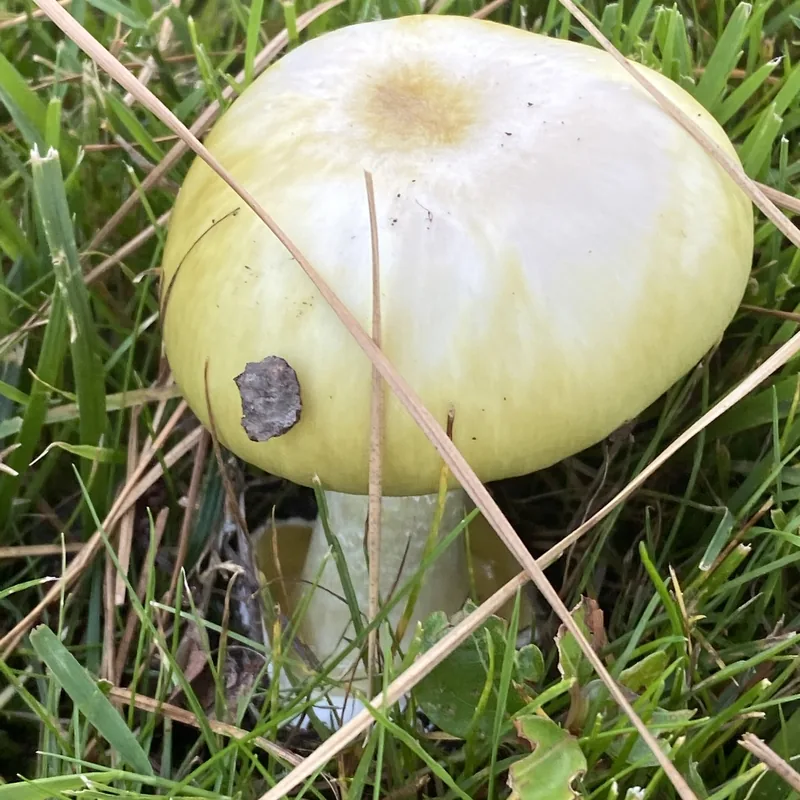
- Cap 4 to 16 cm across, initially round or oval, then convex to flat; margin usually unlined.[1]
- Stem
- Stem 5 to 18 cm long and 1 to 2.5 cm thick, white or cap-tinted, with a swollen base.[1]
- Ring and volva
- White hanging ring, sometimes lost; white sack-like volva, sometimes buried or broken.[1][14]
- Flesh
- Flesh white, unchanged when sliced.[1]
- Spore print and spores
- White spore print. Spores 7–12 × 6–9 micrometers, smooth, ellipsoid, amyloid.[1]
What can death cap be confused with?
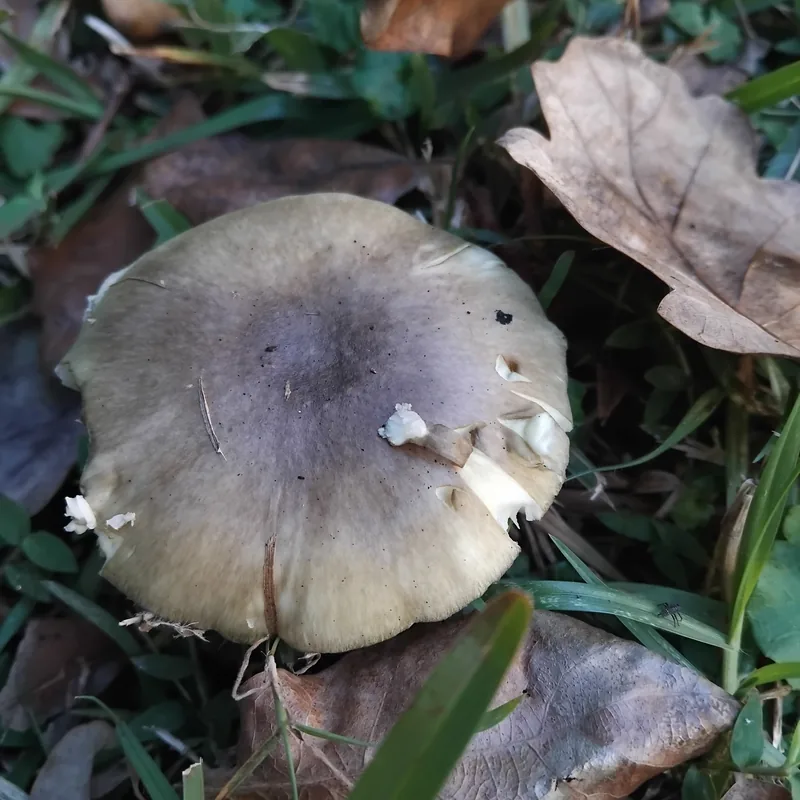 Death cap
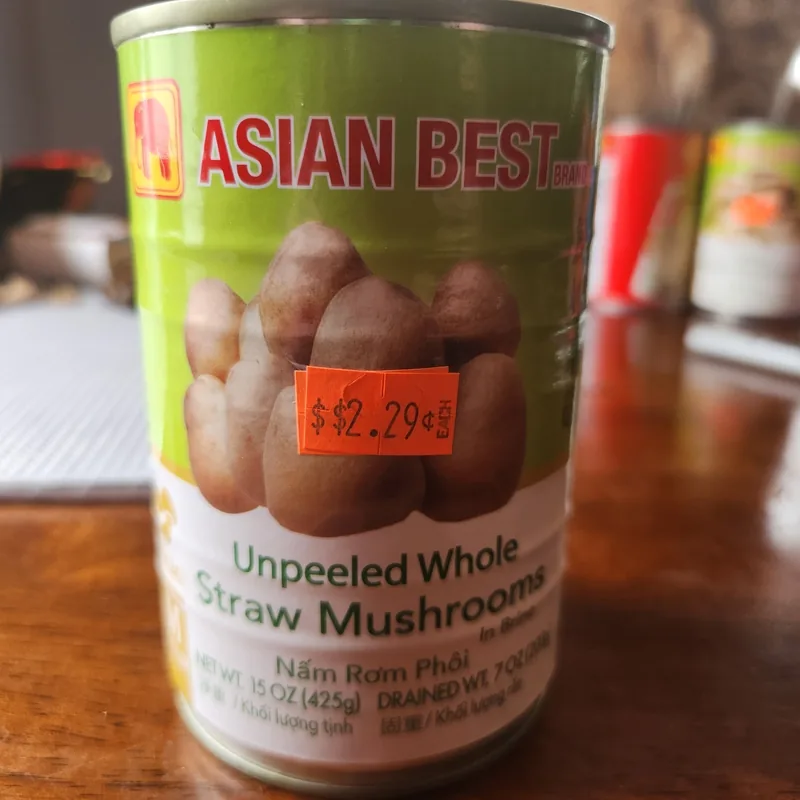 Paddy straw mushroom
Volvariella volvacea
Key difference: Volvariella volvacea is edible and can be mistaken for Amanita phalloides.[8][15]
See pageDeath cap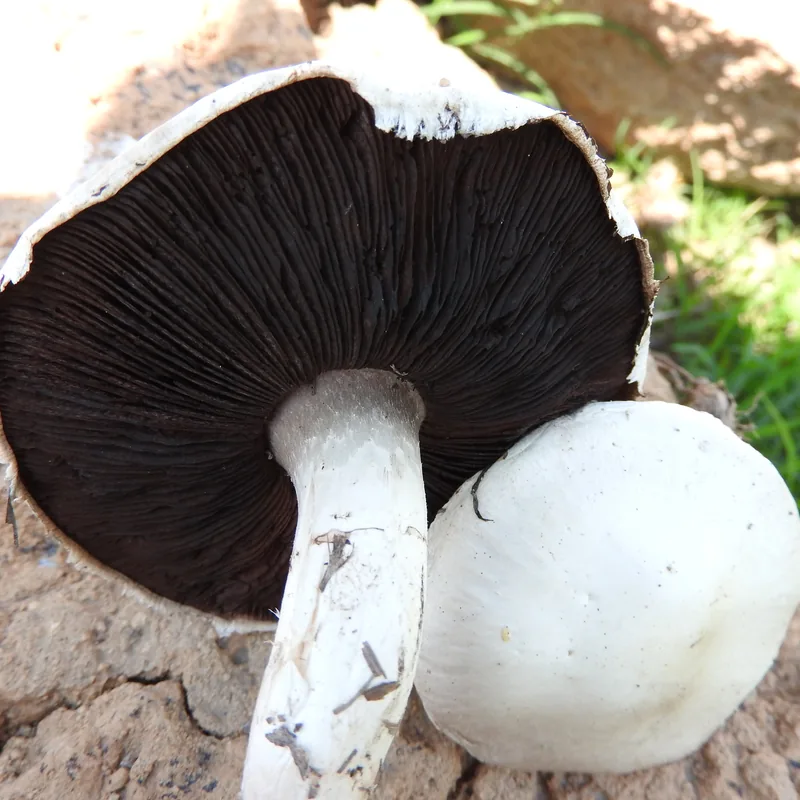 Field mushroom
Agaricus campestris
Key difference: Agaricus campestris has a brown spore print; Amanita phalloides has a white spore print.[1][8]
See pageDeath cap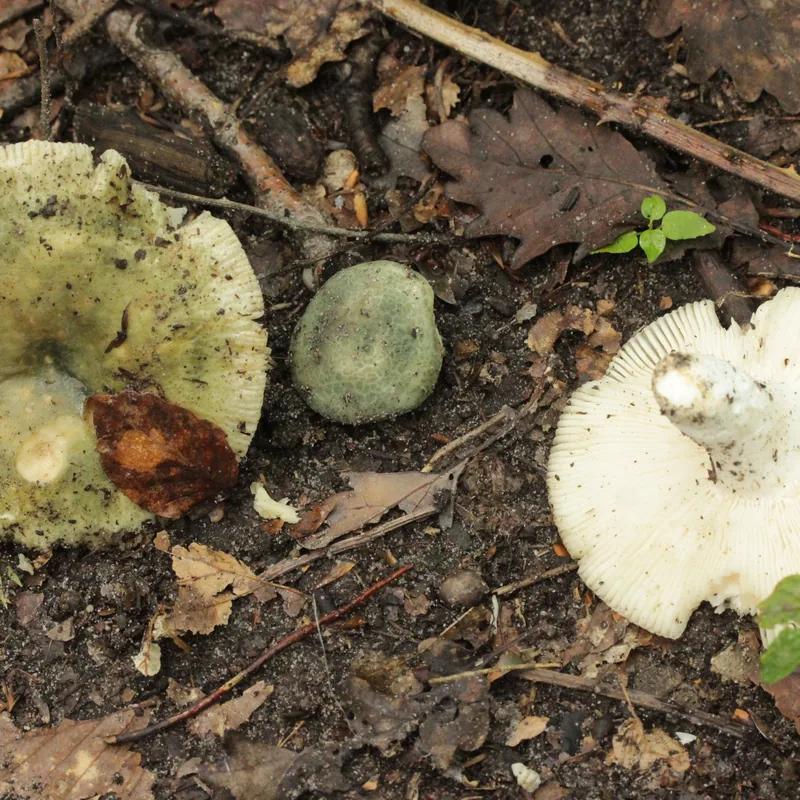 Russula virescens
Russula virescens
Key difference: Russula virescens has brittle flesh and lacks both a ring and a volva.[1]
Where and when does death cap grow?
Forms mycorrhizal associations with oaks and other trees. A 1984 Mexican study recorded specimens in cloud forest beneath Quercus crassifolia, Quercus candicans, Alnus jorullensis, and Clethra mexicana.[1][12]
At Mexican sites studied in 1984, fruiting occurred from late summer through autumn, with abundance in late September.[1][11]
Native to Europe and spread to other regions with introduced trees. A 1984 study examined specimens identified as Amanita phalloides from Puebla, Hidalgo, and Veracruz, deposited in the ENCB and FCME herbaria.[1][12]
About the name
Vaillant described it in 1727, Fries named it Agaricus phalloides in 1821, and Link established Amanita phalloides in 1833.[1][2]
Fun facts
- Amatoxins cause more than 90% of deaths from mushroom poisoning worldwide.[4][8][10]
- A 2023 study documented unisexual and bisexual reproduction in invasive Californian populations. These strategies likely help the fungus spread.[12]
- Amanita phalloides has been proposed as a possible cause of the deaths of Claudius in AD 54 and Charles VI in 1740.[2][3][8]
Frequently asked questions
How do you identify a death cap (Amanita phalloides)?
You identify a death cap (Amanita phalloides) by its olive-green or yellowish-green cap with fine radial streaks, free white gills, hanging skirt-like stem ring, sack-like white volva around the base, and white spore print. Carefully dig out the entire base from the ground to check for the volva hidden beneath leaf litter.[1][2][14]