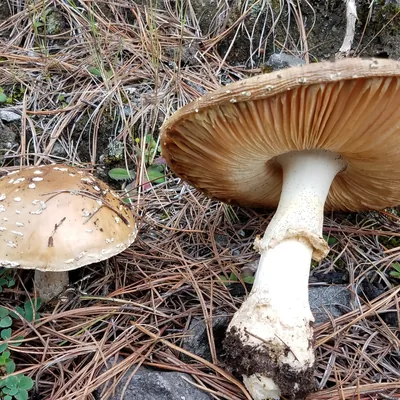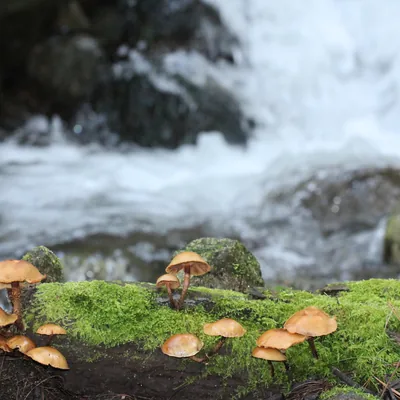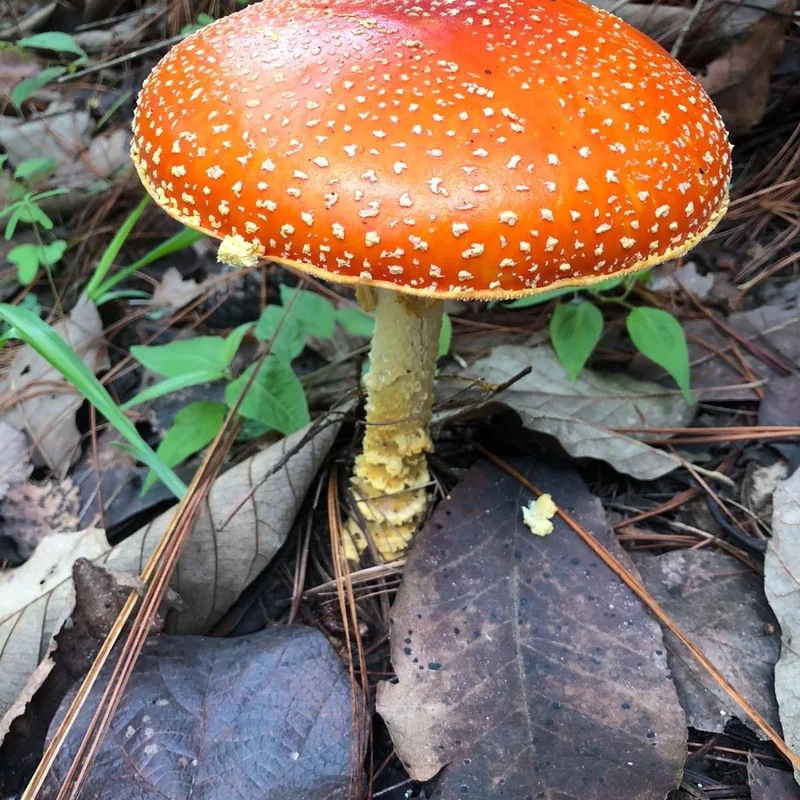
Poisonous. Causes poisoning. Never eat a wild mushroom identified only from photos.
- Season in Mexico
- HabitatMountain forests
- FamilyAmanitaceae
What happens if someone eats Fly agaric?
Did someone eat a wild mushroom and feel sick? Call emergency services and bring a sample of the mushroom.
- Toxins
- Ibotenic acid: A neuroactive compound involved in poisoning. Muscimol: A neuroactive compound involved in poisoning, with effects on the central nervous system.
- When symptoms start
- The first symptoms typically appear between 30 minutes and 2-3 hours after ingestion.
- What to do
- If you or someone else ate this mushroom, call a poison center or emergency services immediately. Do not wait for symptoms. After requesting help, keep a mushroom sample and bring it to assist identification.
How do you identify Fly agaric?
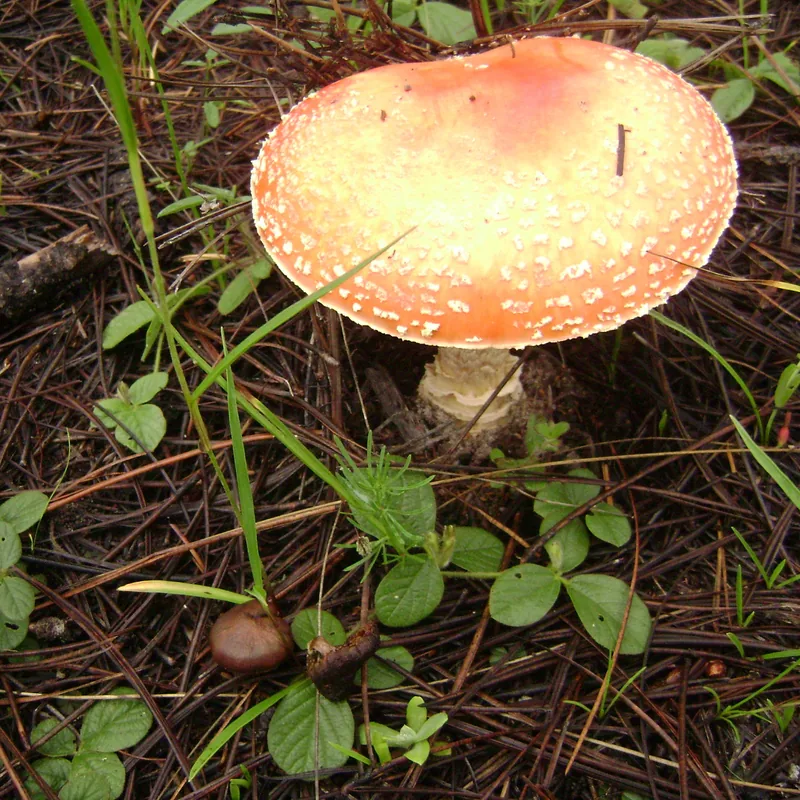
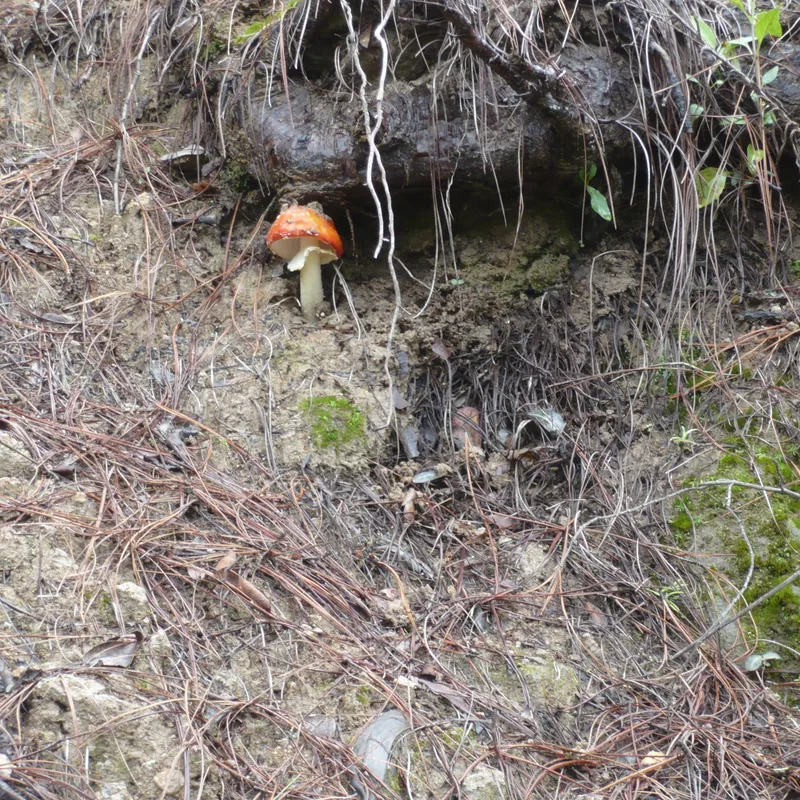
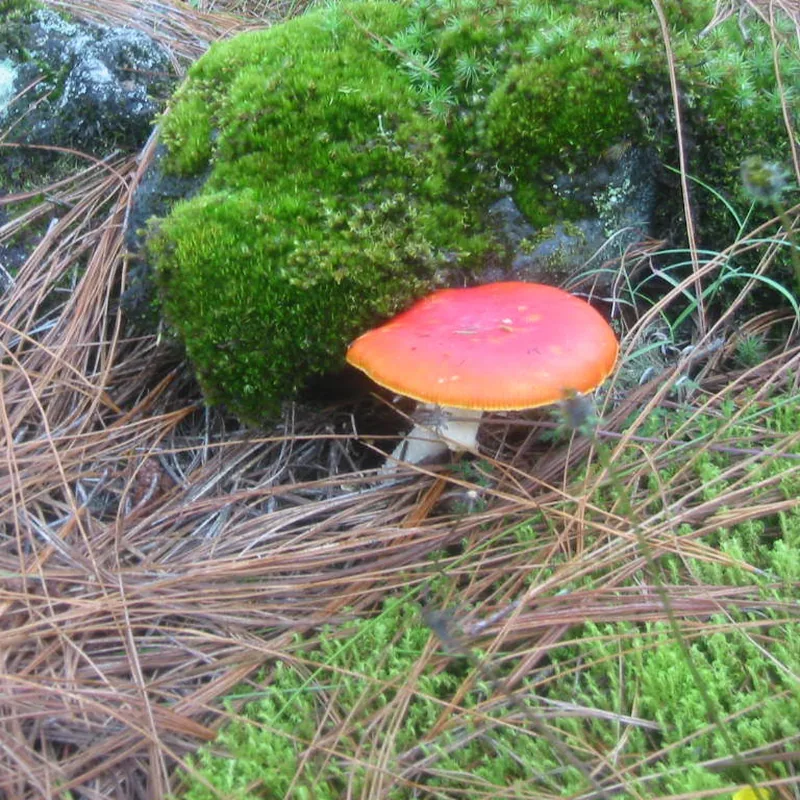
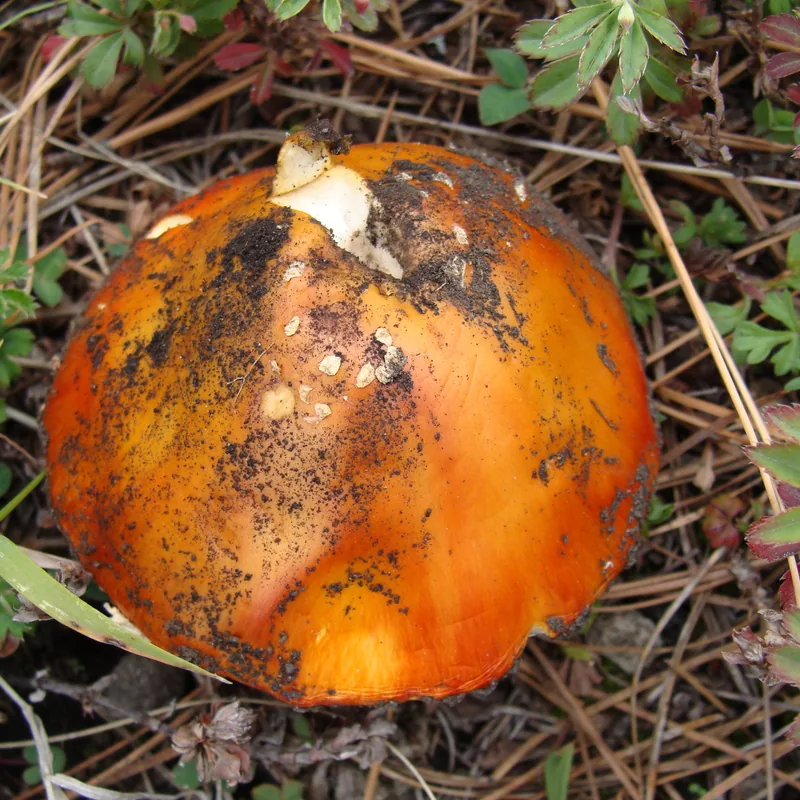
- Cap
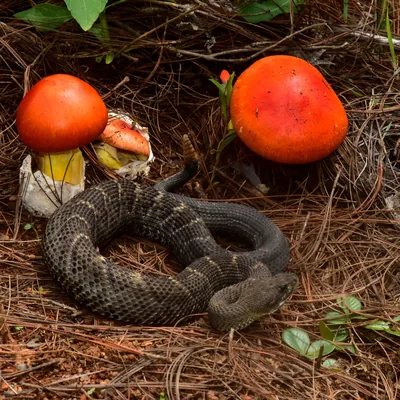
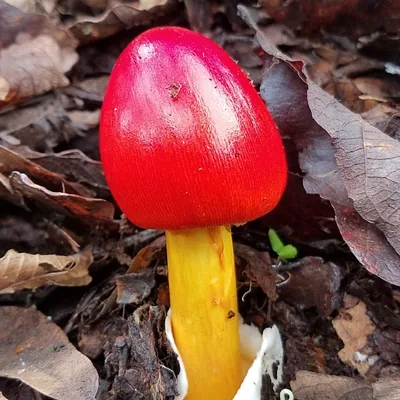
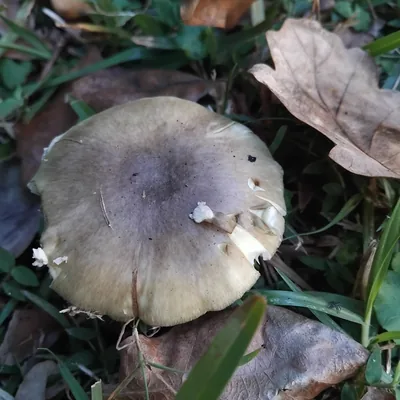
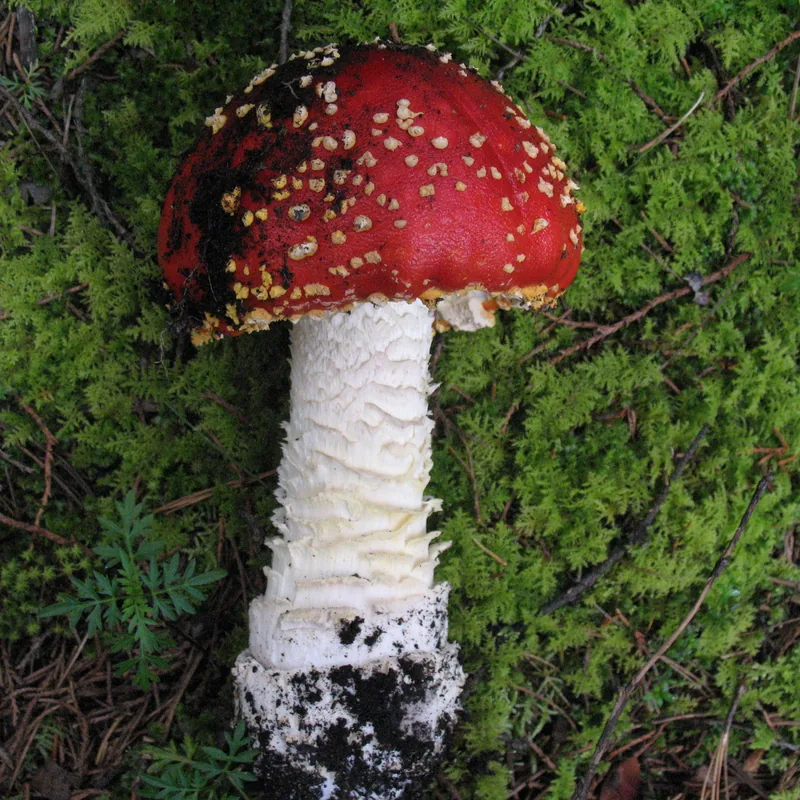
- In the American form flavivolvata, it measures 5-25 cm. Deep to bright red, sometimes fading to pale orange or yellow.[3]
- Warts
- Small and cottony; in flavivolvata they begin yellow and quickly turn white.[3]
- Gills
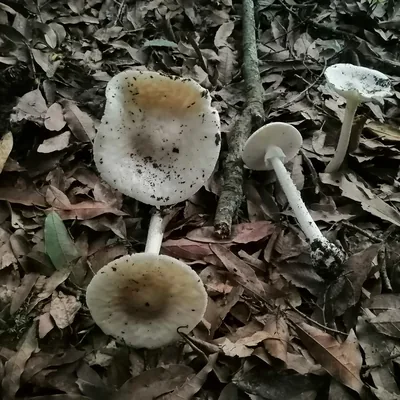
- White, closely spaced, free from the stem or narrowly attached.[3]
- Stem
- In flavivolvata, it measures 5-18 cm long and 1-3 cm thick. White, with a swollen base.[3]
- Ring and base
- A high, hanging ring. Veil remnants form concentric bands on the bulb or lower stem.[3]
- Flesh
- White; its color stays unchanged when cut.[3]
- Spore print
- White.[3]
Can you eat Fly agaric?
It is toxic. Avoid eating it, and have any wild mushroom you intend to eat identified by an expert.[6][9]
Where and when does Fly agaric grow?
In Mexico, it grows on soil in Pinus, Quercus and Abies forests and in mountain cloud forests. It forms mycorrhizal associations with trees.[1][3]
The consulted sources do not specify a monthly fruiting season for Mexico.[1]
UNAM records these Mexican entities using these names. It also reports occurrences in Europe, Asia, Africa, Australia, New Zealand and the Americas.[1]
About the name
Amanita muscaria encompasses a genetically diverse group with infraspecific names. This page's identification measurements refer to flavivolvata, the American form described by MushroomExpert.[3]