Poisonous. Causes poisoning. Never eat a wild mushroom identified only from photos.
- Season in Mexico
- HabitatConifer and oak forests
- FamilyAmanitaceae
What happens if someone eats panther cap?
Did someone eat a wild mushroom and feel sick? Call emergency services and bring a sample of the mushroom.
- Toxins
- Ibotenic acid: It is an active toxin and is rapidly absorbed through the digestive tract. Muscimol: It is an active toxin involved in the effects on the central nervous system.
- When symptoms start
- The ibotenic acid and muscimol syndrome usually begins between 30 minutes and 2 hours after ingestion.
- What to do
- If you or someone else ate this mushroom, call a poison center or emergency services immediately. Do not wait for symptoms. Keep a mushroom sample if you can and bring it for identification. If the person is unconscious or has difficulty breathing, request an ambulance immediately.
How do you identify panther cap?
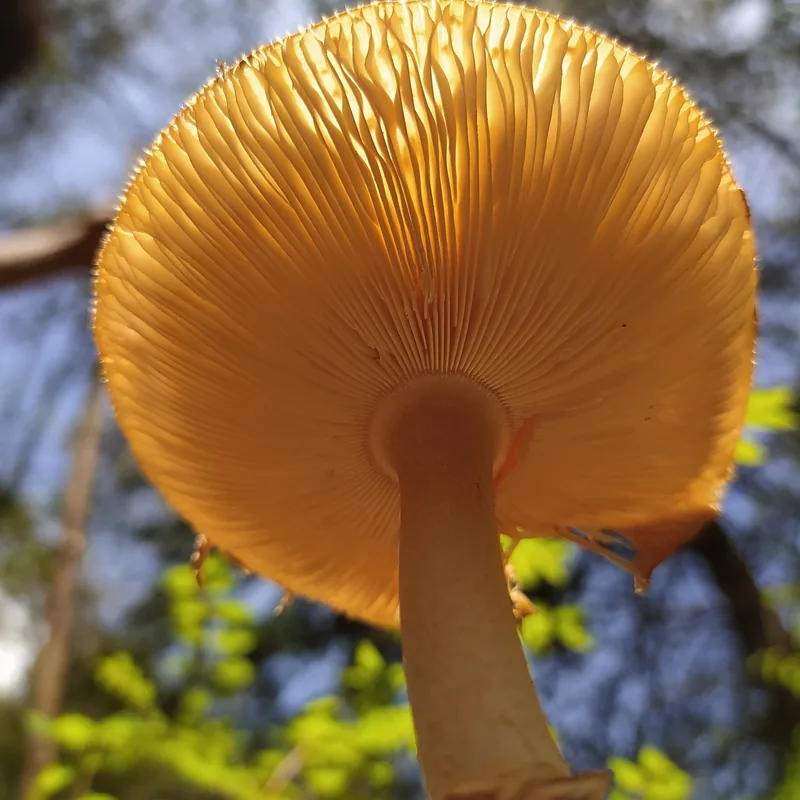
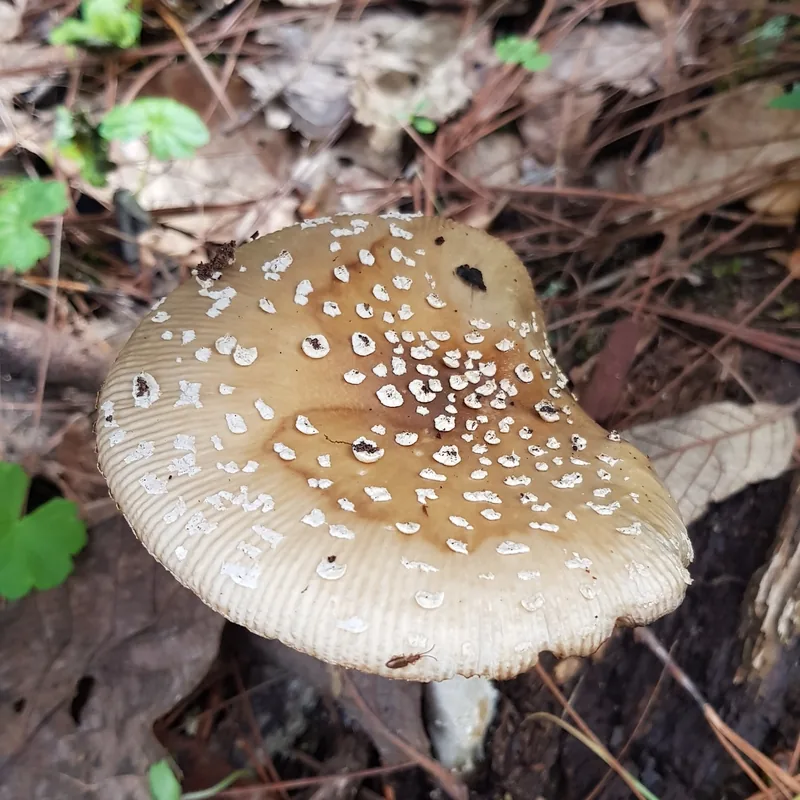
- Cap
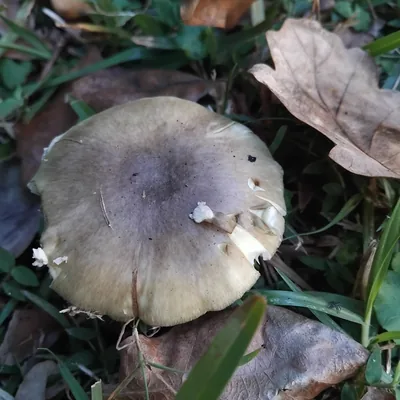
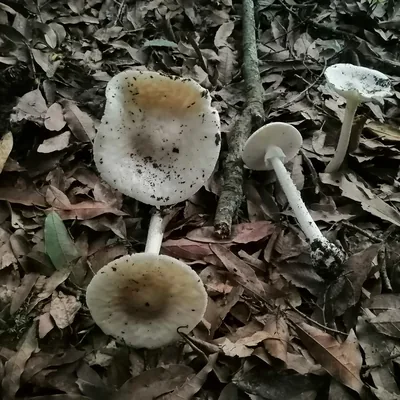
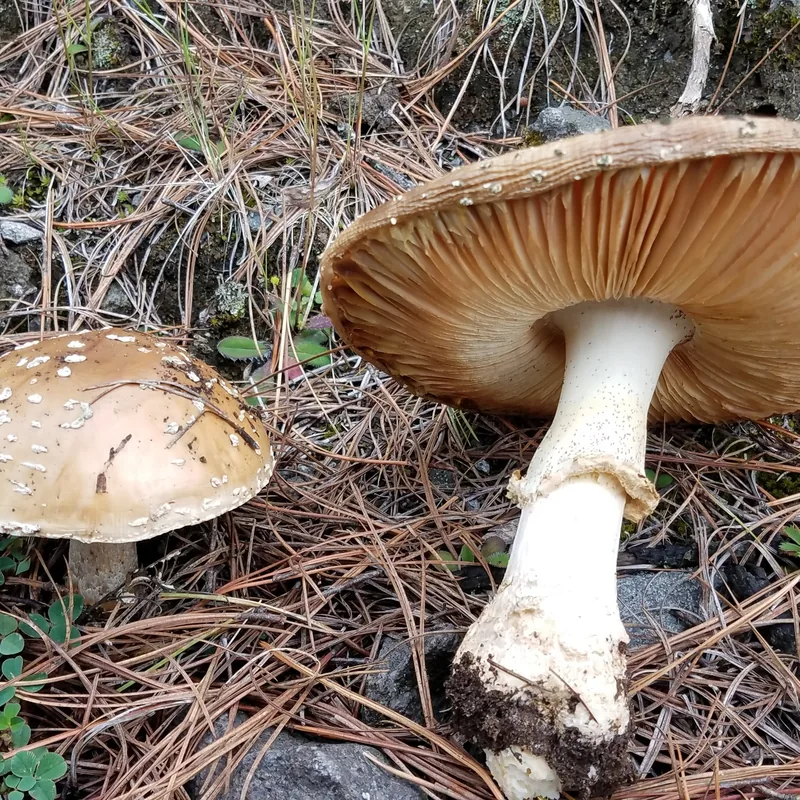
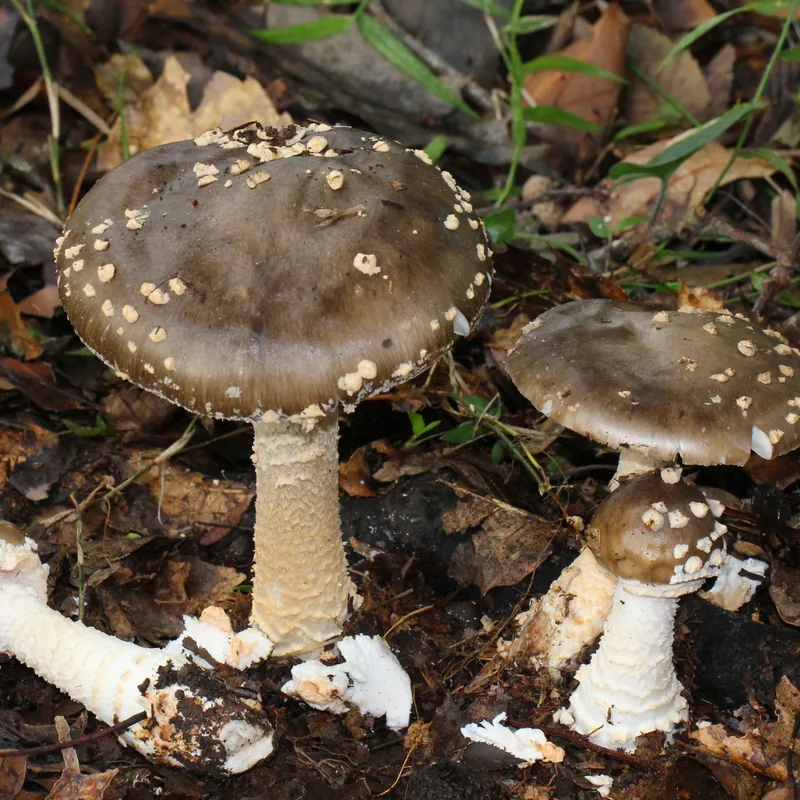
- Brown with white patches; sticky when wet. Cornell describes a diameter of 2.5-15 cm.[3]
- Gills
- White, crowded, and free or nearly free from the stem.[4]
- Stem
- Whitish, sometimes with a rounded basal bulb. Cornell describes a length of 5-17.5 cm and a width of 1-2.5 cm.[3]
- Ring and volva
- A whitish, skirtlike ring. The volva forms a collar around the upper edge of the basal bulb.[4]
- Flesh
- White; retains its color when cut.[1]
- Spore print
- White.[3]
Can you eat panther cap?
It is poisonous and can cause severe poisoning. Avoid eating it. Wild mushroom identification requires an experienced mycologist.[7]
Where and when does panther cap grow?
It grows on soil and forms mycorrhizae with trees. Mexican records include conifer forests and Quercus elliptica forest in Chiapas.[1][7]
A specimen from Sonora was collected in August. This record documents one month of occurrence.[15]
UNAM lists records from these Mexican entities under Amanita pantherina in the broad sense. It also describes a wide European distribution and reports in the Americas from Canada to Uruguay and Argentina.[1]
About the name
UNAM's Mexican account uses Amanita pantherina s.l., meaning “in the broad sense.” MushroomExpert cautions that North American specimens published under this name may represent distinct species.[1][3][4][13]