Deadly. A single serving can kill. Never eat a wild mushroom identified only from photos.
- Season in Mexico
- HabitatDecaying wood
- FamilyHymenogastraceae
What happens if someone eats Funeral bell?
Did someone eat a wild mushroom and feel sick? Call emergency services and bring a sample of the mushroom.
- Toxins
- α-amanitin, β-amanitin: Both were detected in Galerina marginata specimens studied in Turkey. Amatoxins inhibit RNA polymerase II and block protein synthesis, damaging cells.
- When symptoms start
- Amatoxin symptoms usually begin 6 to 12 hours after eating the mushroom, at most 24 hours.
- What to do
- If you ate this mushroom or suspect you did, call a poison center or emergency services immediately. Seek medical care without waiting for symptoms. Bring a mushroom sample to help with identification; secure medical help first. Keep the sample in a paper bag and record where it was collected.
How do you identify Funeral bell?
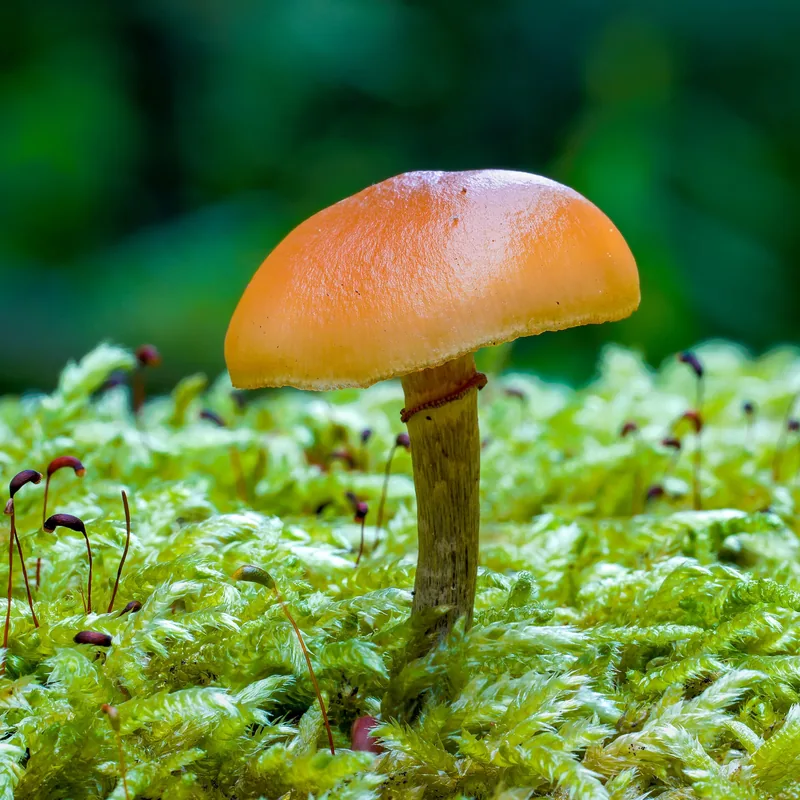
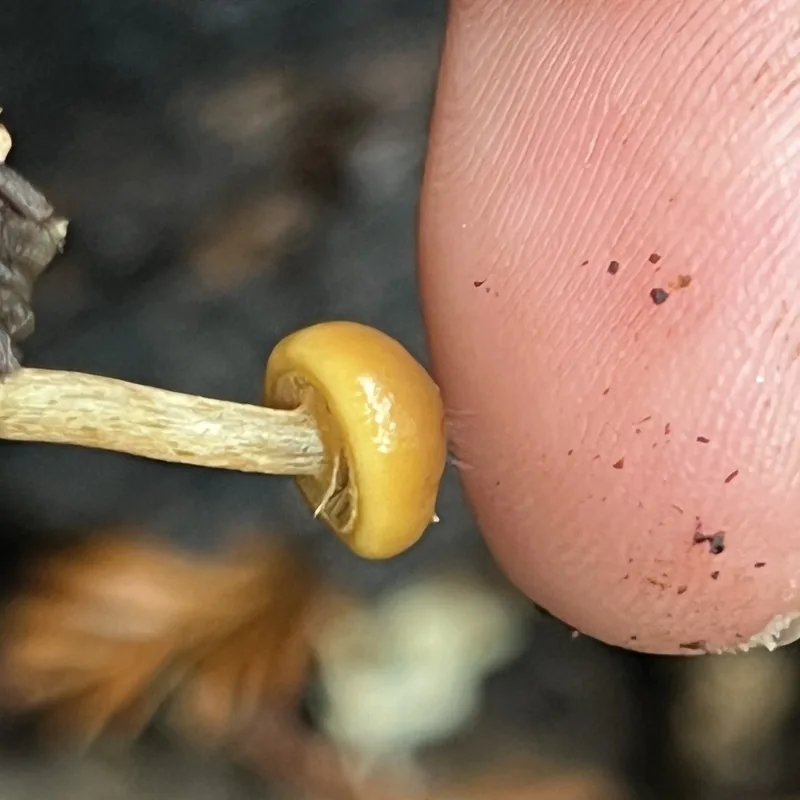
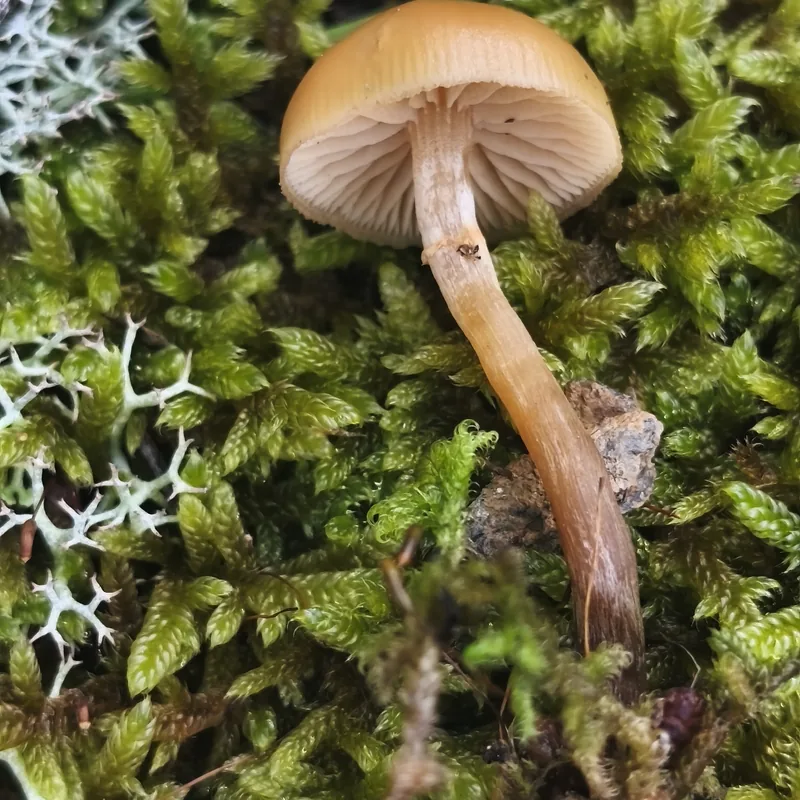
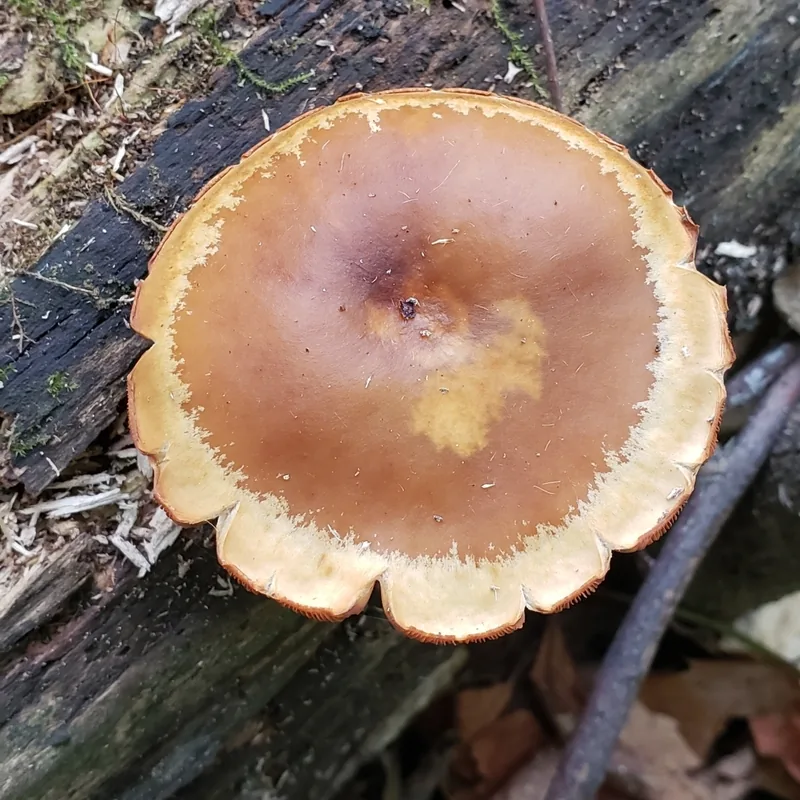
- Cap
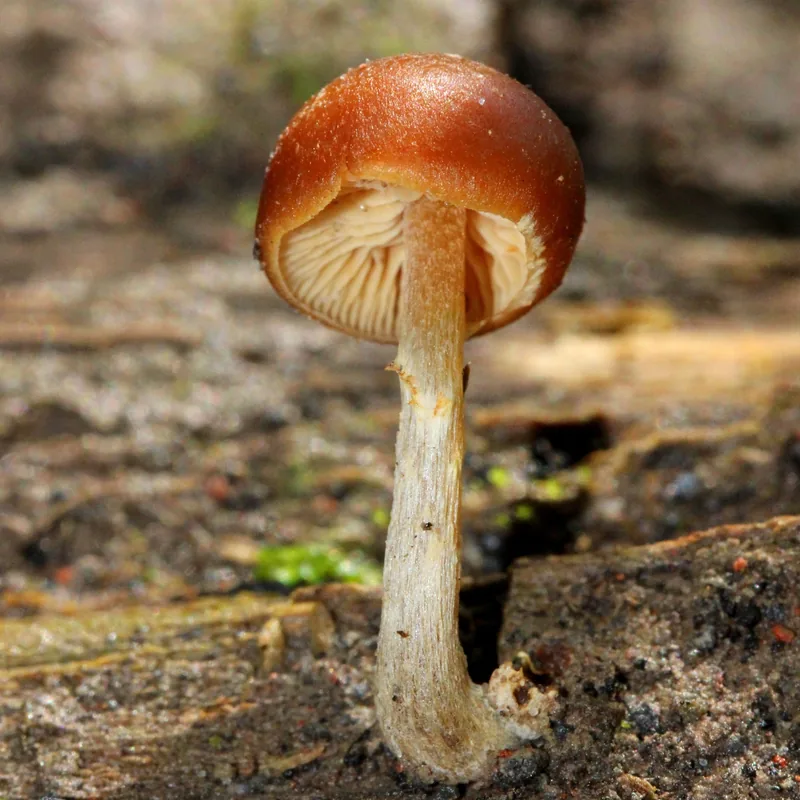
- 1.5–5 cm, rarely up to 8 cm. Convex at first, becoming nearly flat. Honey yellow with an orange tint, then cinnamon to brownish orange.[1]
- Gills
- Attached to the stem. Yellowish at first, becoming rust colored.[2]
- Stem
- 2–7.5 cm long. Whitish to brownish, darkening from the base upward.[1]
- Ring
- Membranous and white; deposited spores may turn it brown. It deteriorates and may disappear.[2]
- Flesh
- Thin, yellowish to watery brownish. Color stays unchanged when cut.[1]
- Spore print
- Rusty brown.[2]
Can you eat Funeral bell?
Galerina marginata is deadly. Avoid eating it. Cooking a poisonous mushroom can leave its toxicity intact; have an expert identify wild mushrooms before you eat them.[2][12]
Where and when does Funeral bell grow?
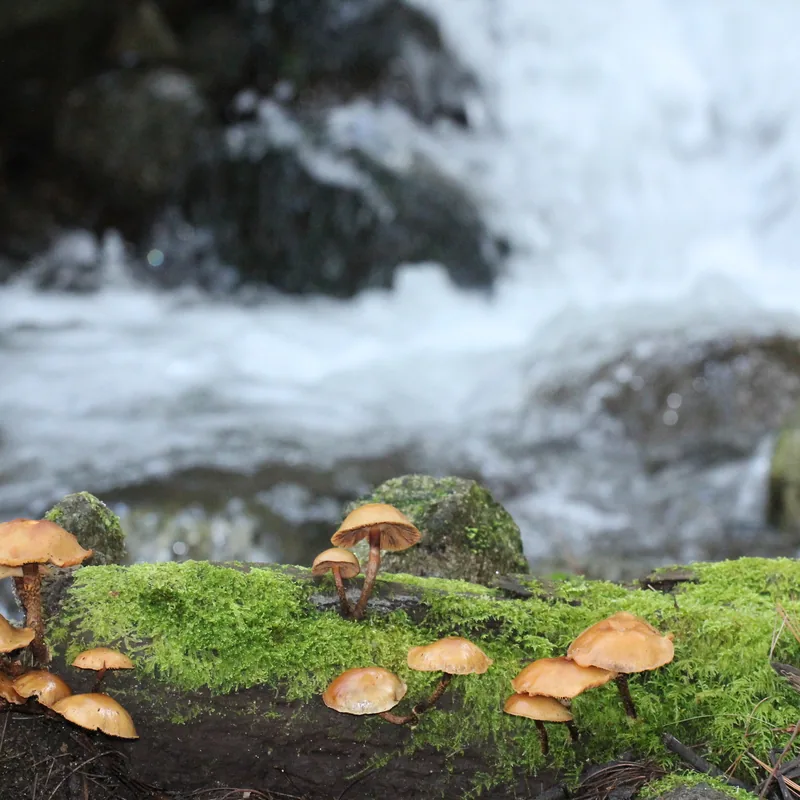
It decomposes hardwood and conifer wood. It grows on logs, stumps, and buried wood in small groups or clusters.[2]
Fruiting months in Mexico remain unspecified. In North America it appears year-round, most often in spring and fall.[1]
Documented in Chamula, Chiapas. The species is widely distributed in North America; a study also examined specimens collected in France.[3][1][8]
About the name
Galerina autumnalis, Galerina oregonensis, Galerina unicolor, and Galerina venenata were treated as separate species. DNA studies supported bringing them together in the Galerina marginata complex. You may find these names in older literature.[8][1]