Wood earAuricularia auricula-judae
Jelly ear
Wood ear is an edible, gelatinous fungus that grows on wood in Europe.[5][7]
Edible. Eat it cooked. Never eat a wild mushroom identified only from photos.
- Season in Mexico
- HabitatOn broadleaf wood
- FlavorMild, barely noticeable
- GrowingMedium
- FamilyAuriculariaceae
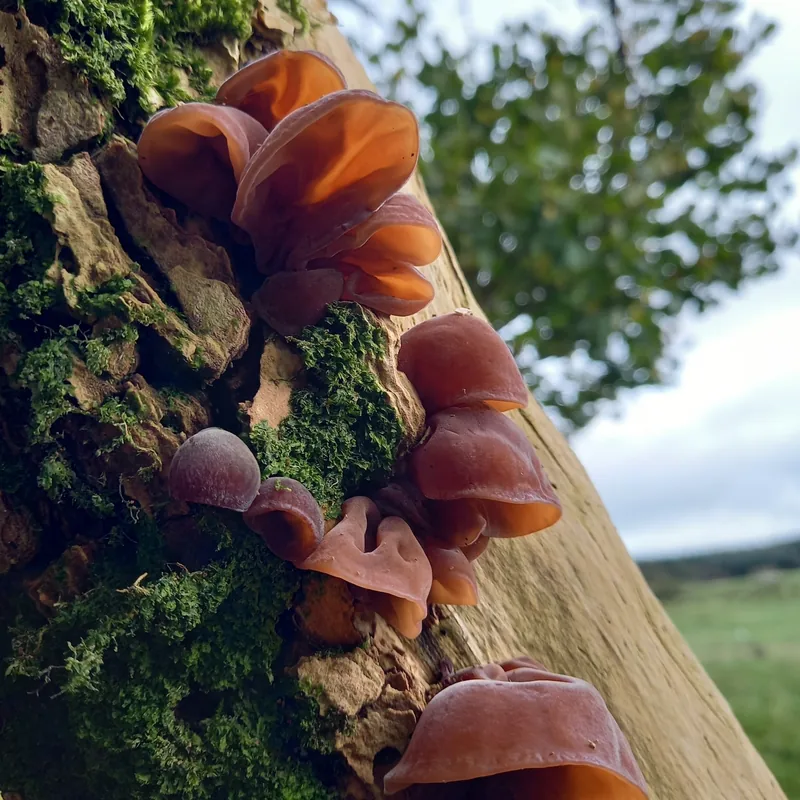
How do you identify Wood ear?
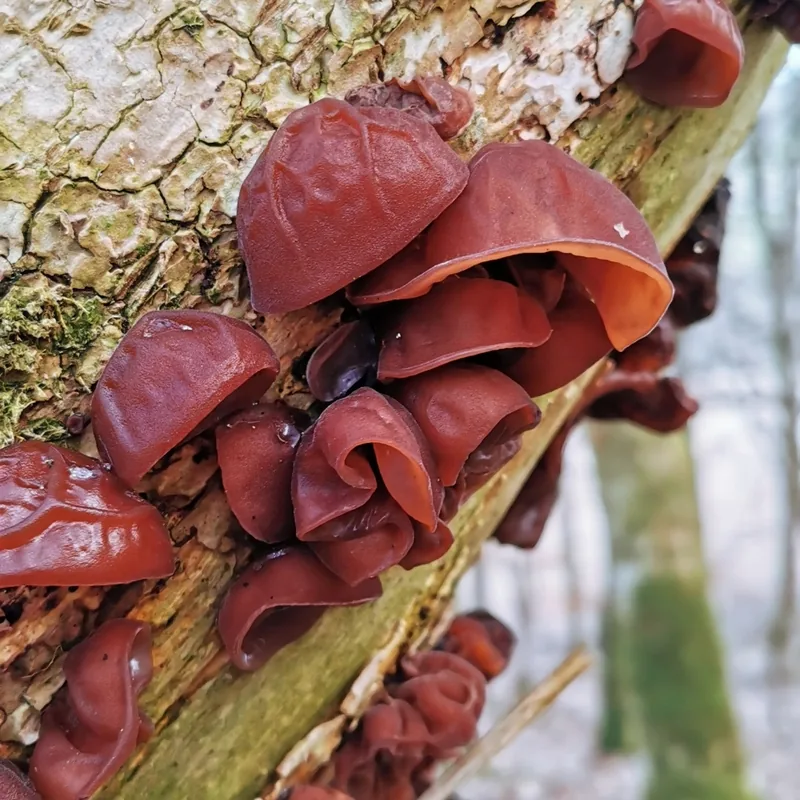
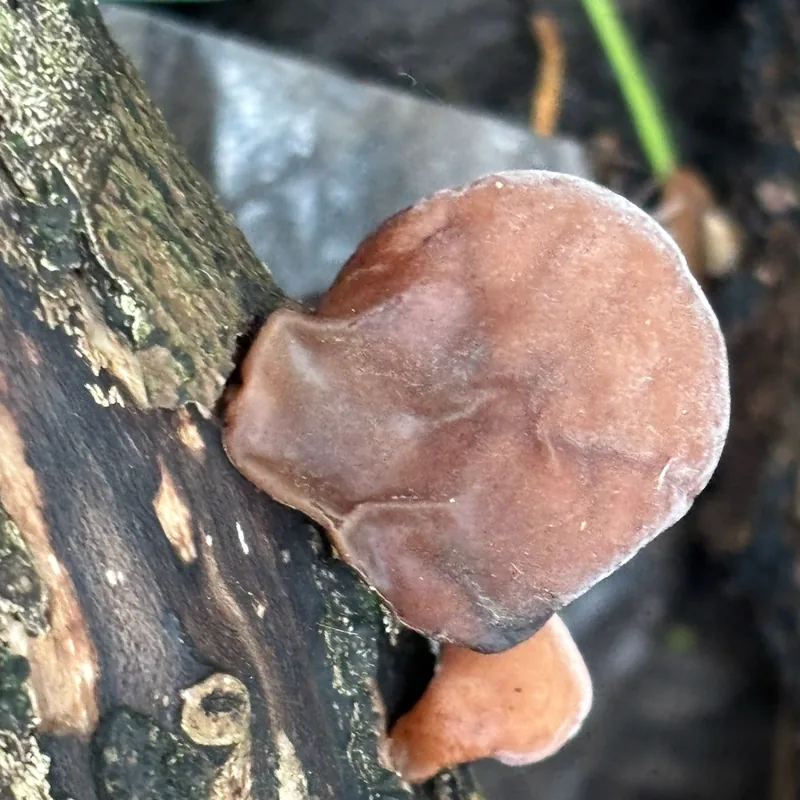
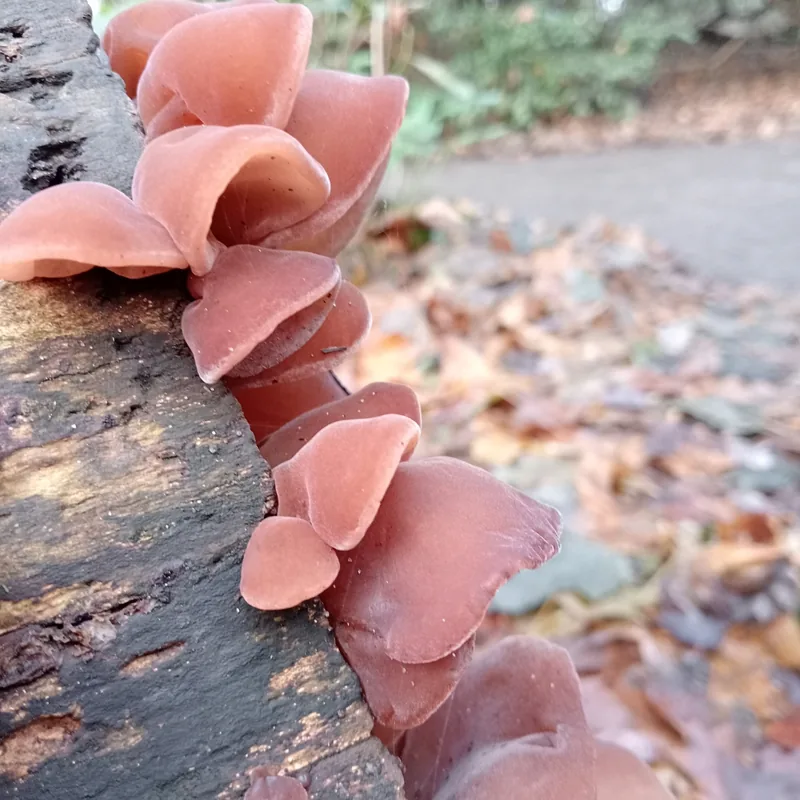
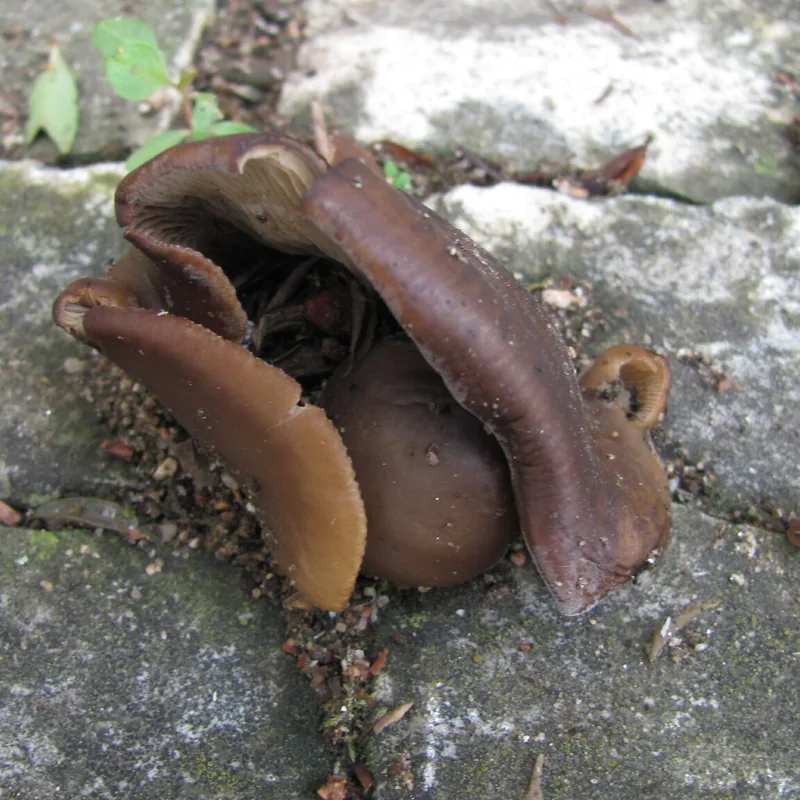
Can you eat Wood ear?
Edible. Cook it thoroughly. Before eating wild specimens, have an experienced identifier confirm them; several species look alike.[8][9][11]
How do you grow Wood ear?
Temperature
Colonization24–28 °C
Fruiting18–25 °C
Humidity
Colonization0–90 %
Fruiting0–90 %
Full cycle: 60 days
- Light
- Indirect
Substrates
Log your batches, temperatures and harvests. The free plan needs no card.
How do you cook Wood ear?
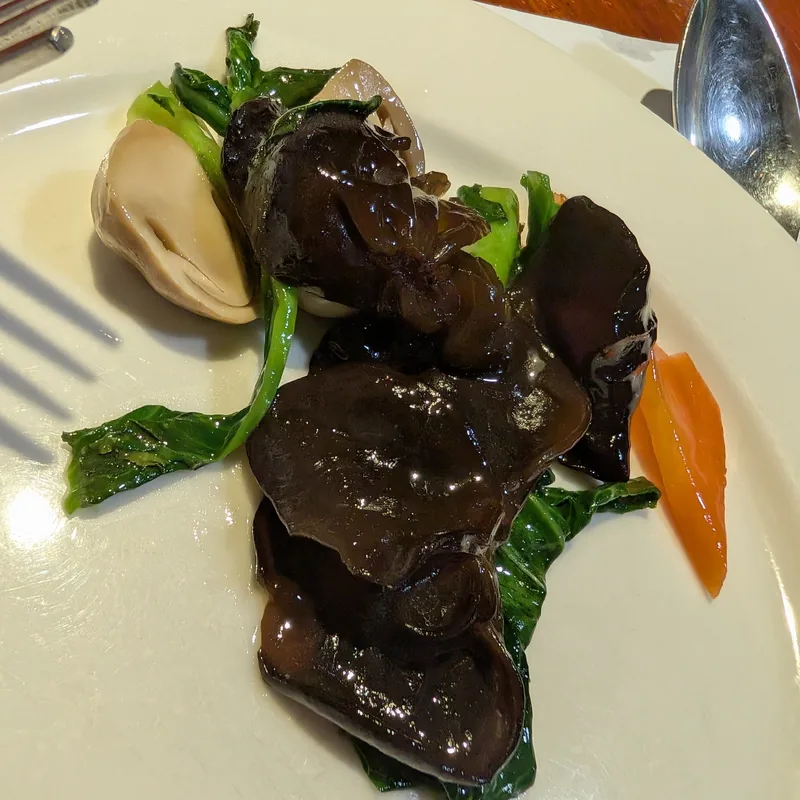
You can dry it, rehydrate it and cook it thoroughly. Its texture is soft and gelatinous. Ground dried mushrooms absorb liquid in soups and stews. Cultivated Auricularia heimuer appears in hot and sour soup and in salads after cooking.[7][10]
Where and when does Wood ear grow?
It grows on broadleaf wood, including elder. It decomposes wood.[5][6]
A Mexican fruiting season awaits confirmed records using the current species boundaries.[4]
The species in its strict sense occurs in Europe. A Mexican revision left its presence in Mexico unconfirmed and reassigned earlier specimens to Auricularia americana and Auricularia angiospermarum.[4][5]
About the name
DNA studies separated several species formerly grouped under Auricularia auricula-judae. In its strict sense, the name applies to the European species; Auricularia heimuer is the cultivated Asian wood ear frequently labeled with that name.[5][7]