Golden oyster mushroomPleurotus citrinopileatus
yellow oyster mushroom · Tamogitake (Japan) · Il'mak (Russian Far East)
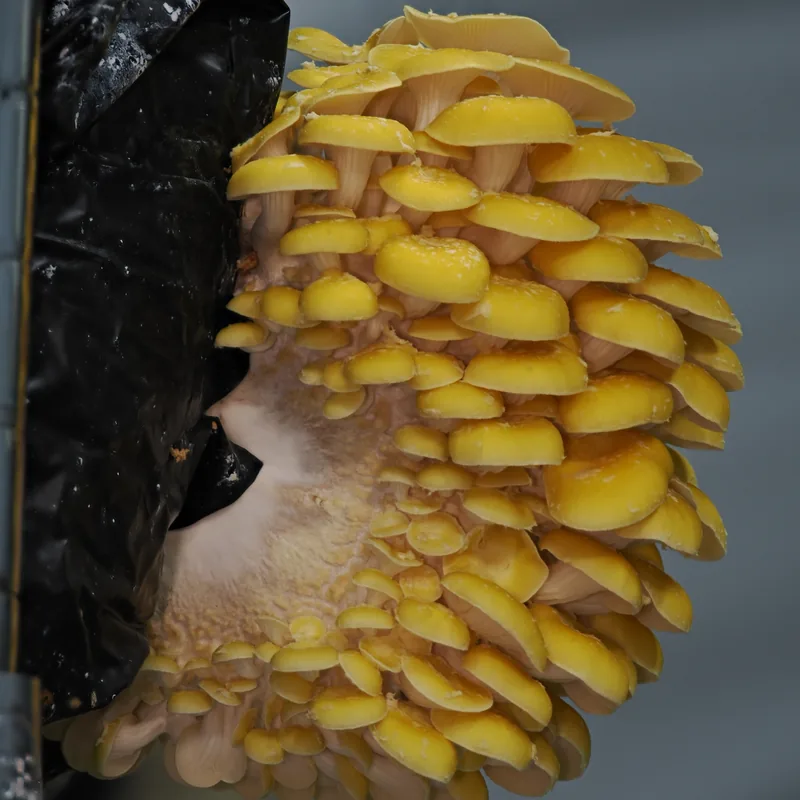
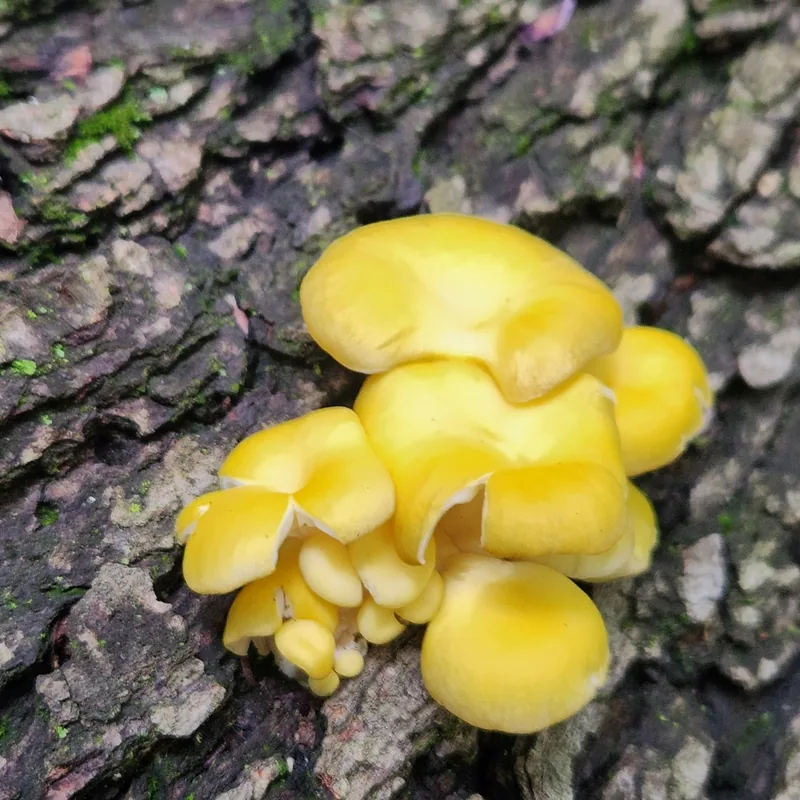
Pleurotus citrinopileatus is an edible mushroom in the family Pleurotaceae. It is known for its bright yellow caps, which grow in clusters on dead hardwood. It is native to eastern Asia and the Russian Far East, with naturalized wild populations in North America on elm wood.[1][2]
Edible. Eat it cooked. Never eat a wild mushroom identified only from photos.
- Season in Mexico
- HabitatDead hardwood logs
- FlavorNutty and umami
- GrowingEasy
- FamilyPleurotaceae
How do you identify golden oyster mushroom?
- Cap
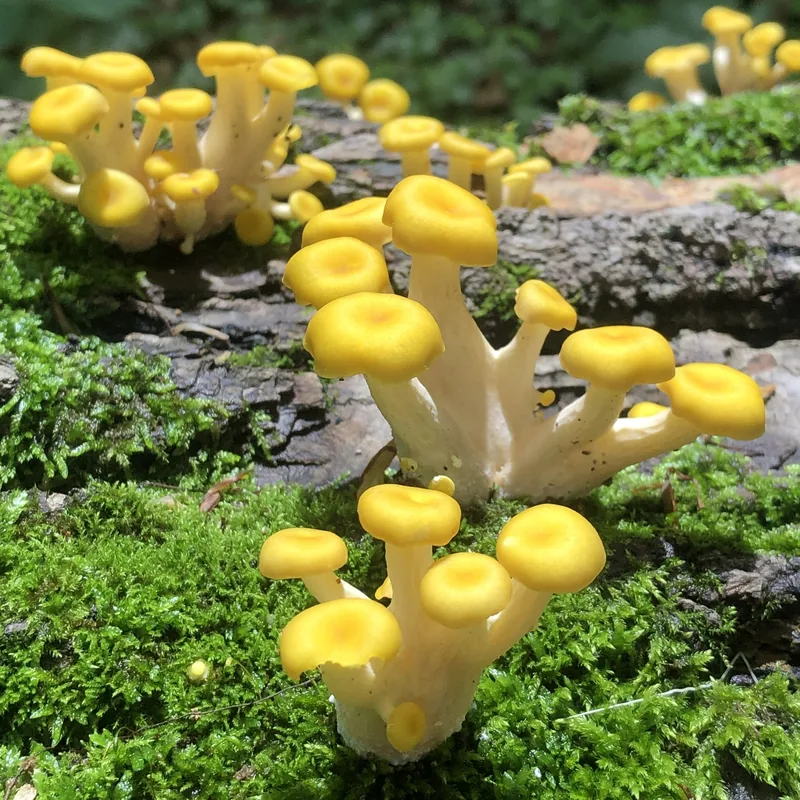
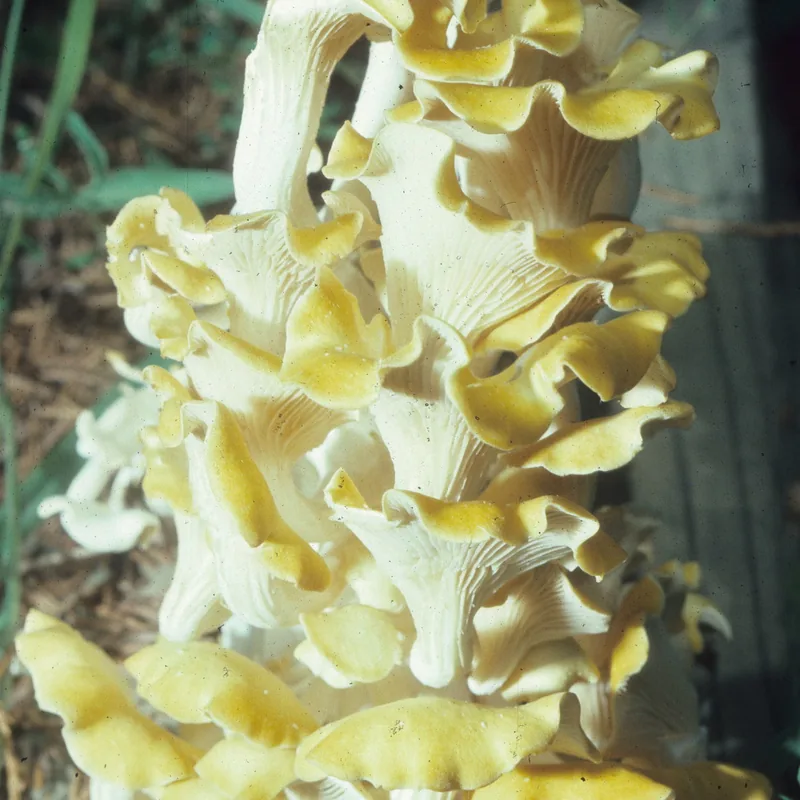
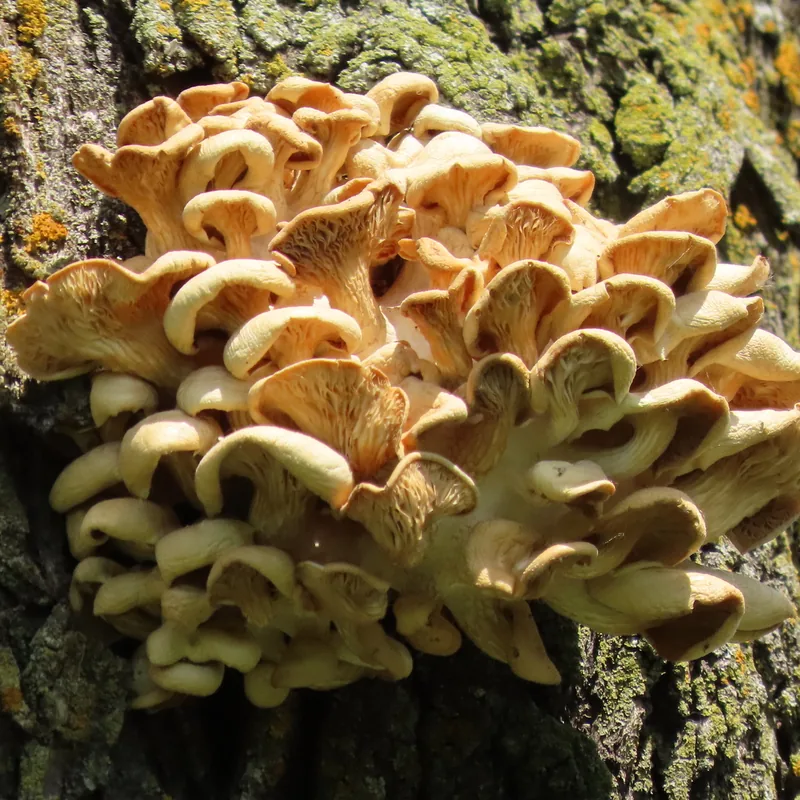
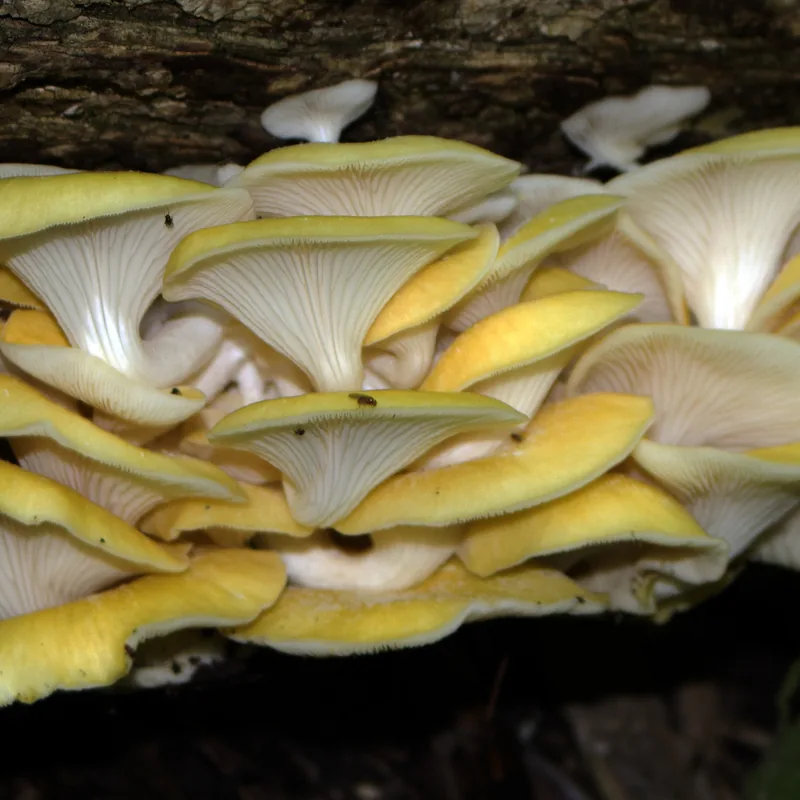
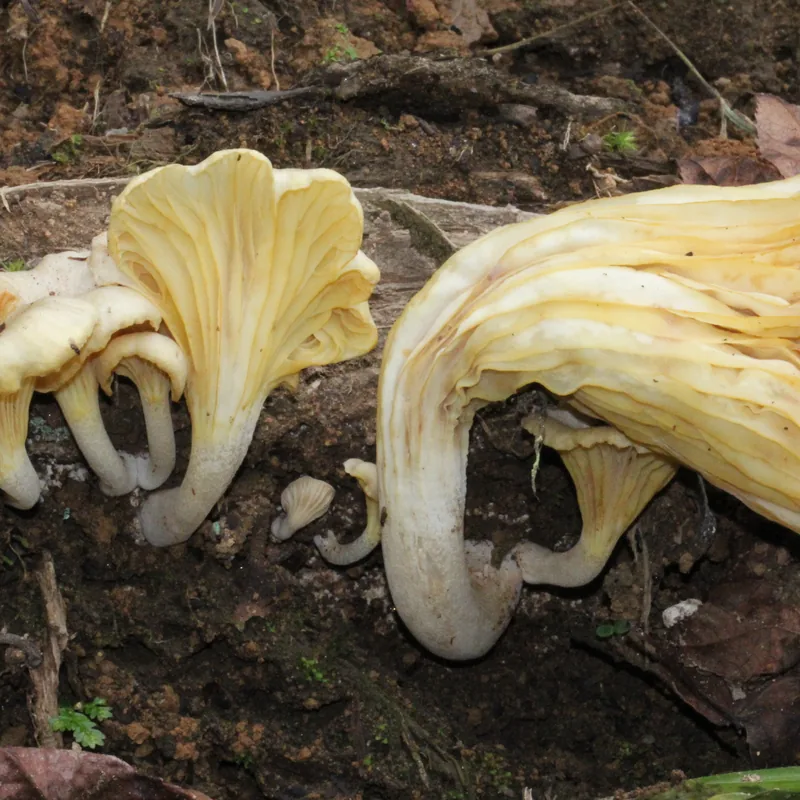
- Measures 3-8 cm across. It is convex with a shallow central depression. The surface is bald and moist when young, bright to medium yellow. The whitish margin starts incurved and becomes arched with age.[1]
- Gills
- Gills run deeply down the stem almost to the base. They are whitish to ivory in color, with frequent short-gills and spacing ranging from close to distant.[1]
- Stem
- Measures 2-8 cm long and 1-2 cm thick (2-5 cm long and 2-8 mm thick in slender cultivated basidiocarps). It is white to grayish, central or slightly off-center, frequently curved, finely mealy below the gills, and fused at the base with other stems into a shared whitish mass.[1]
- Flesh
- Thin and white flesh, unchanging when sliced.[1]
- Spore print
- Spore print is pale lilac to light pink.[1]
- Odor
- Odor is strong and sweetish in fresh wild collections; fresh basidiocarps give off woody and seafood notes, developing toasted nutty and umami aromas when cooked.[1][3]
- Ring and volva
- Lacks a ring and lacks a volva; the stem is bare.[1]
What can golden oyster mushroom be confused with?
Golden oyster mushroom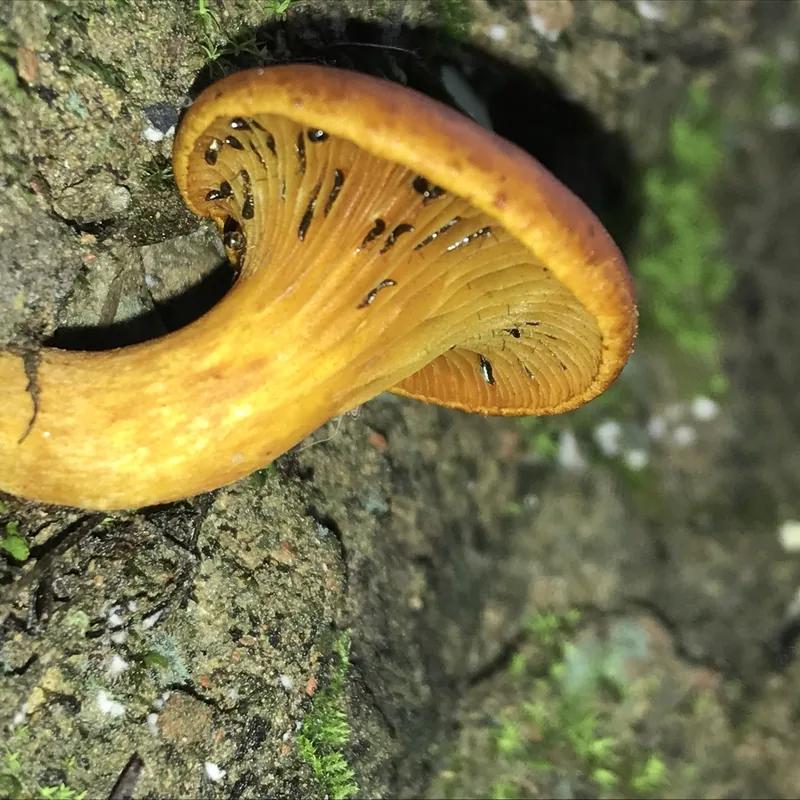 Jack-o-lantern mushroom
Omphalotus illudens
Key difference: Omphalotus illudens has orange caps and gills, pale orange flesh, and a white to pale yellow spore print. It contains illudins that cause gastrointestinal illness.[8][9]
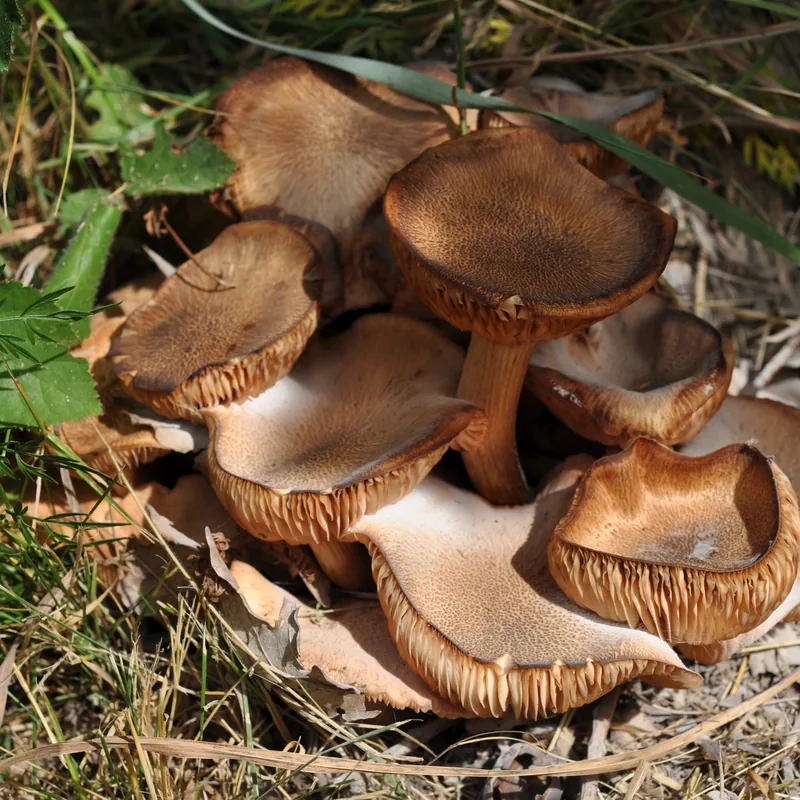
Can you eat golden oyster mushroom?
How do you grow golden oyster mushroom?
Temperature
Colonization24–29 °C
Fruiting21–29 °C
Humidity
Colonization0–90 %
Fruiting0–92 %
Full cycle: 24 days
- Light
- Indirect
Substrates
Woods it likes
Log your batches, temperatures and harvests. The free plan needs no card.
How do you cook golden oyster mushroom?
Cooking releases flavor compounds and brings out nutty and umami aromas.[2][3]
What does research say about golden oyster mushroom?
- Review of studiesPolysaccharide extracts exhibited antioxidant activities and lowered blood glucose concentrations in induced diabetic murine models.[5]
- Small study in peopleConsumption of fruiting bodies treated with pulsed ultraviolet light elevated serum 25-hydroxyvitamin D concentrations in healthy adults.[6]
- Cell studyFractions extracted from the fruiting body inhibited inflammatory mediators in RAW 264.7 macrophage cell lines stimulated with lipopolysaccharide.[7]
These findings describe research. None of them is a recommendation to use it. If you take medication or have a disease, talk to your doctor.
Where and when does golden oyster mushroom grow?
Grows in clusters on dead hardwood, especially elm.[1]
Fruits in summer and fall.[1][13]
Native to the Russian Far East, northern China, and Japan. It is naturalized in the eastern United States, from Iowa and the Great Lakes states to New York and Massachusetts.[1][13][14]
Names in Mexico
History and traditional uses
In the Russian Far East it is called il'mak and ranks among the most popular wild edible mushrooms.[2]
Is it legal in Mexico?
It does not appear on the psychotropic substance lists of Articles 245 and 247 of Mexico's General Health Law.[12]
About the name
Rolf Singer described the species in 1943. It is very closely related to Pleurotus cornucopiae, and some authors treat it as a subspecies of that species.[1][2]
Fun facts
- In the Russian Far East, people call this mushroom il'mak and treat it as one of the most widely gathered traditional wild edible mushrooms.[2]
- It was first observed growing wild in the United States in 2012 and has since been found in about 10 states.[1][2]
- The fruiting bodies contain ergothioneine, an antioxidant amino acid. One study extracted up to 4.03 mg per gram of dry weight.[4]
Frequently asked questions
Is the mushroom Pleurotus citrinopileatus edible?
Yes, Pleurotus citrinopileatus is an edible mushroom, rated edible to choice.[1][2][3]
What does the golden oyster mushroom taste like?
Fresh, it has a seafood smell. Cooked, it develops nutty and umami aromas.[3]