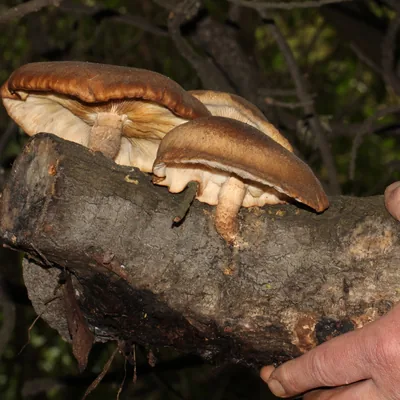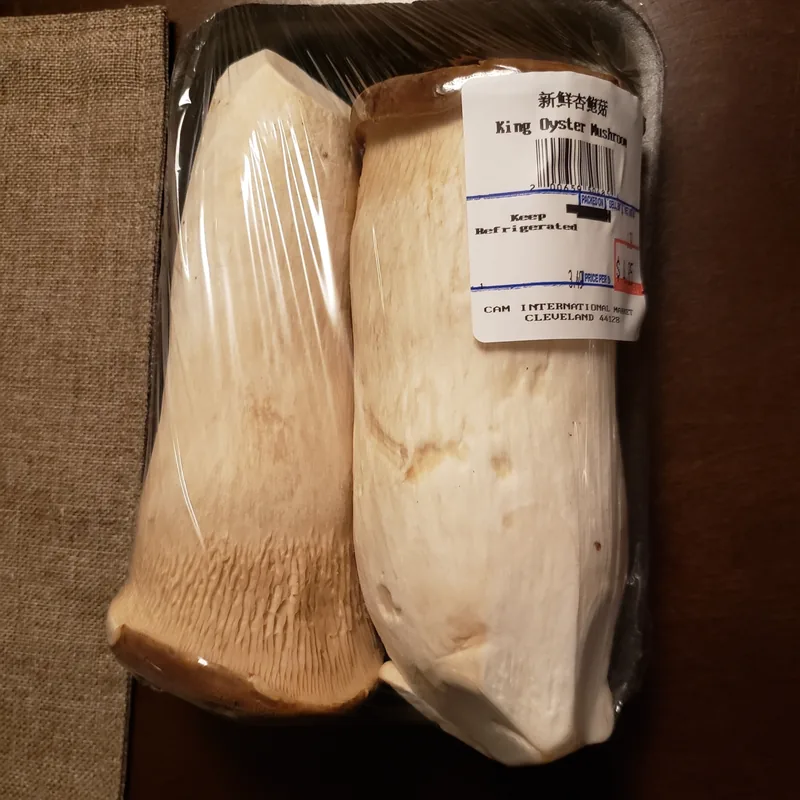
King oyster mushroomPleurotus eryngii
King trumpet mushroom
Pleurotus eryngii is an edible gourmet mushroom with a characteristic thick stem in its cultivated form. In the wild, it grows in association with roots of plants in the Apiaceae family across Europe, Asia, and Africa. People seek it out for its umami flavor and meaty texture when cooked.[4][6][8]
Edible. Eat it cooked. Never eat a wild mushroom identified only from photos.
- Season in Mexico
- HabitatRoots of Apiaceae
- FlavorRich umami
- GrowingMedium
- FamilyPleurotaceae
How do you identify King oyster mushroom?
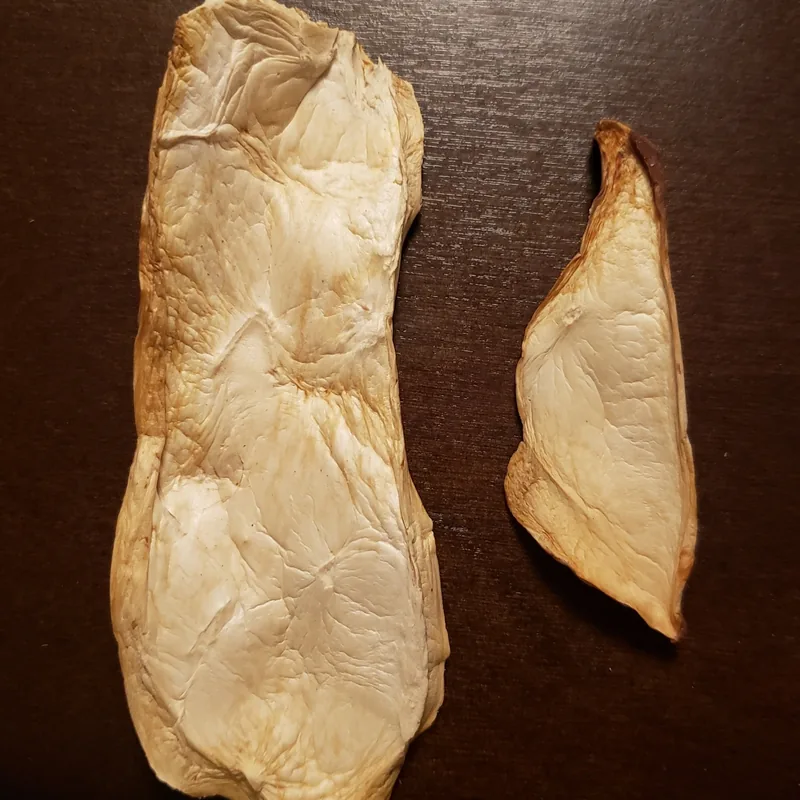
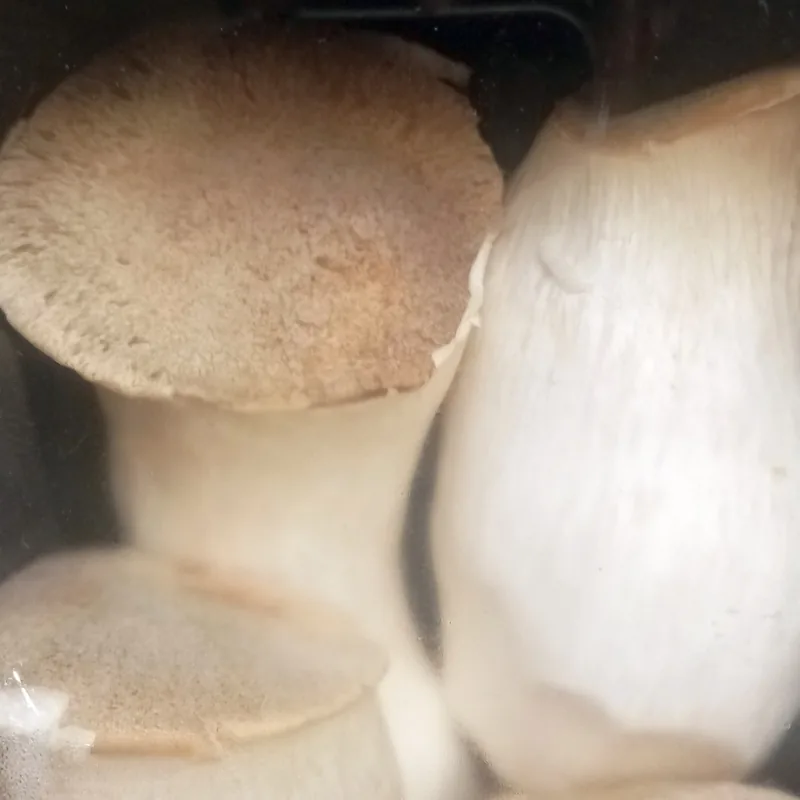
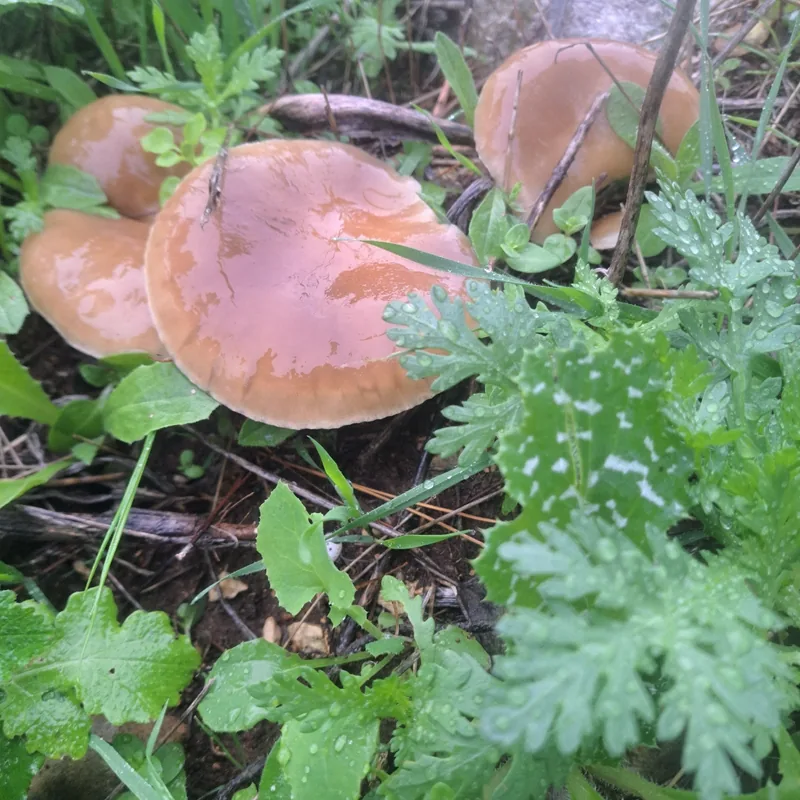
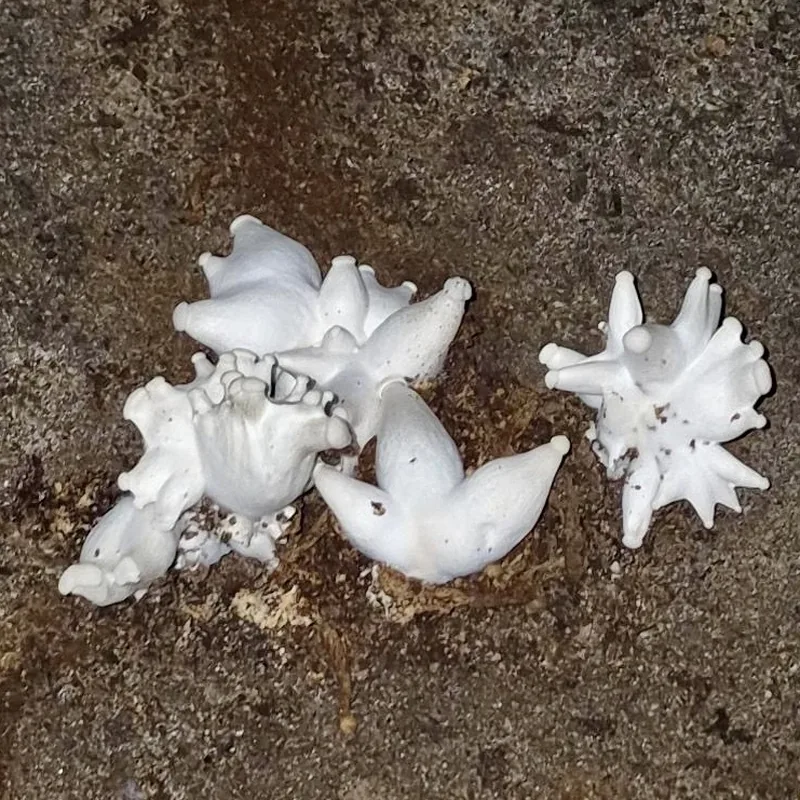
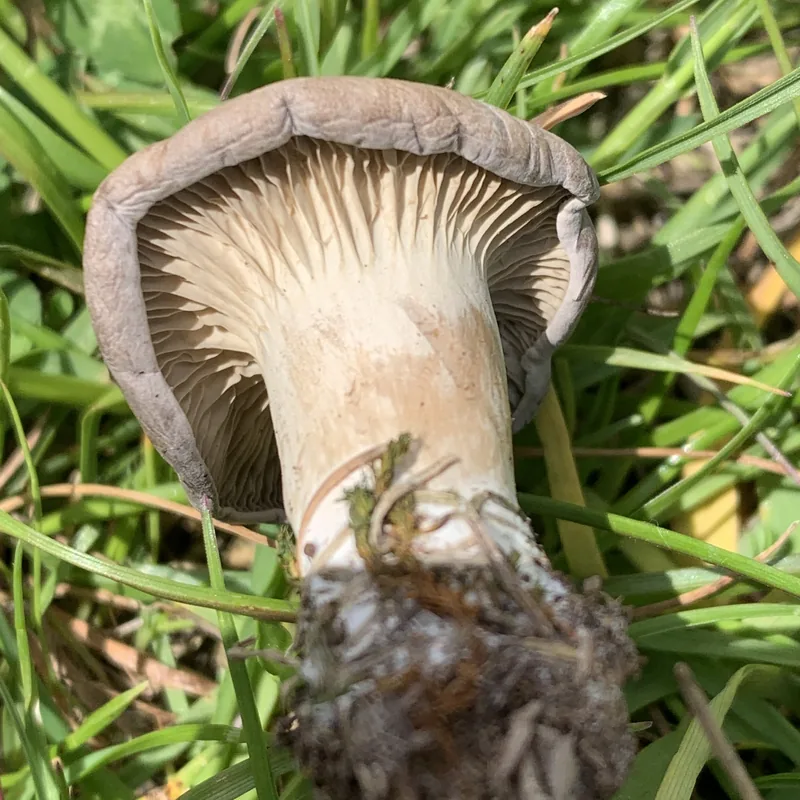
- Cap
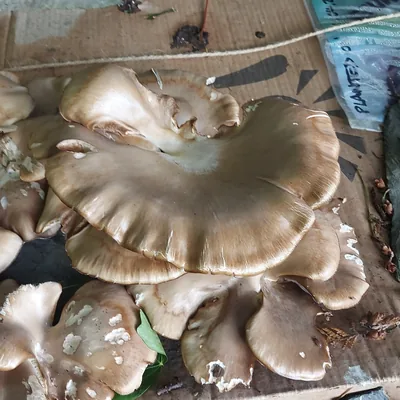
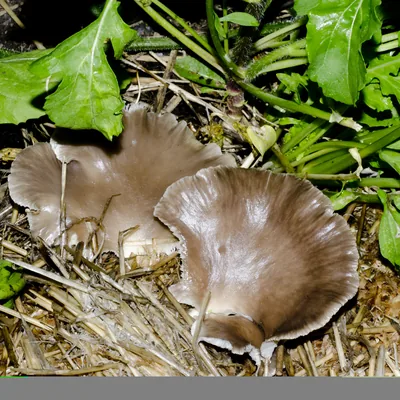
- Variety eryngii has a brown cap; variety ferulae ranges from white to brown.[4]
- Gills
- Thick, whitish, and decurrent: they run down the stem. They turn cream with age.[3]
- Stem
- White, cylindrical, and central to slightly off-center. The general description records 3-6 cm long and 0.5-3 cm wide.[3]
- Flesh
- White, firm, thick, and slightly elastic.[3]
- Smell
- Faint and barely noticeable.[3]
- Cultivated form
- Commercial specimens characteristically have a thick stem and a small cap.[8]
Can you eat King oyster mushroom?
It is edible. Cook it before eating and discard rotting specimens. Eat wild specimens only when their identity is certain.[4][5]
How do you grow King oyster mushroom?
Temperature
Colonization21–24 °C
Fruiting15–21 °C
Humidity
Colonization0–90 %
Fruiting0–88 %
Full cycle: 35 days
- Light
- Indirect
Substrates
Log your batches, temperatures and harvests. The free plan needs no card.
How do you cook King oyster mushroom?
You can boil it or cook it in a microwave. Cooking develops a meaty texture and umami flavor. In Apulian cuisine, it is served over orecchiette pasta.[6][7]
Where and when does King oyster mushroom grow?
In the wild, it grows on roots of plants in the Apiaceae family, including the genera Eryngium and Ferula. The complex includes fungi that act as weak parasites of these plants.[4]
The consulted sources lack a confirmed wild fruiting calendar for Mexico.[1][3]
Its natural distribution includes Europe, Asia, and Africa. Mexican states with confirmed wild populations remain unresolved in the consulted sources.[1][4]
About the name
Pleurotus eryngii belongs to a complex with varieties that differ in their associated plants, distribution, and morphology. GBIF places it in the family Pleurotaceae.[2][4]