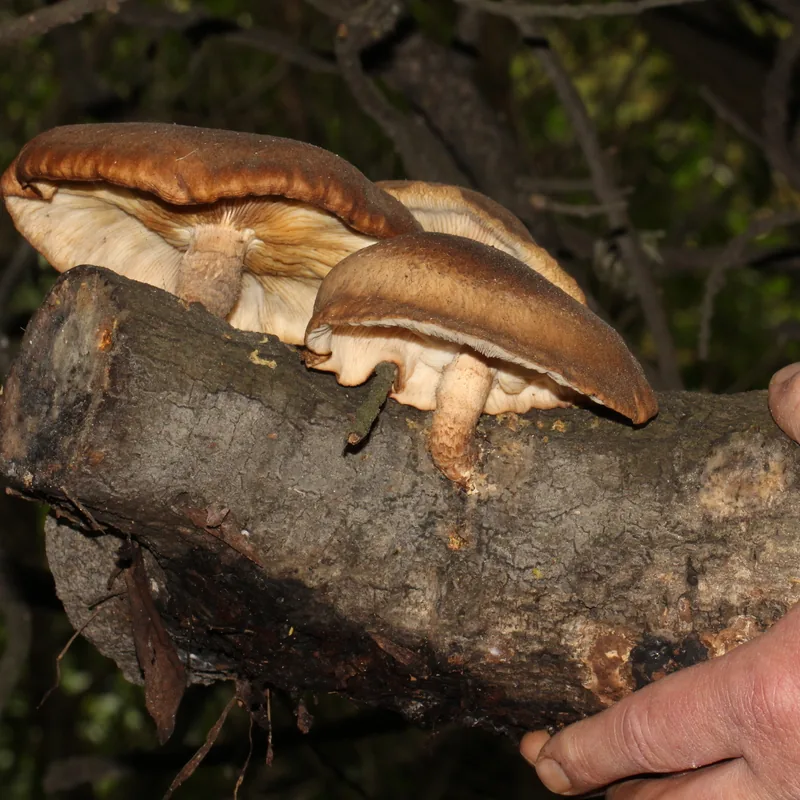
ShiitakeLentinula edodes
Shiitake (Lentinula edodes) is an edible mushroom grown for cooking. It grows wild on dead wood in Asia and attracts interest for its meaty texture and its uses in soups and stir-fries.[3][6][7][8]
Edible. Eat it cooked. Never eat a wild mushroom identified only from photos.
- Season in Mexico
- HabitatDead tree wood
- FlavorRich, smoky
- GrowingMedium
- FamilyOmphalotaceae
How do you identify shiitake?
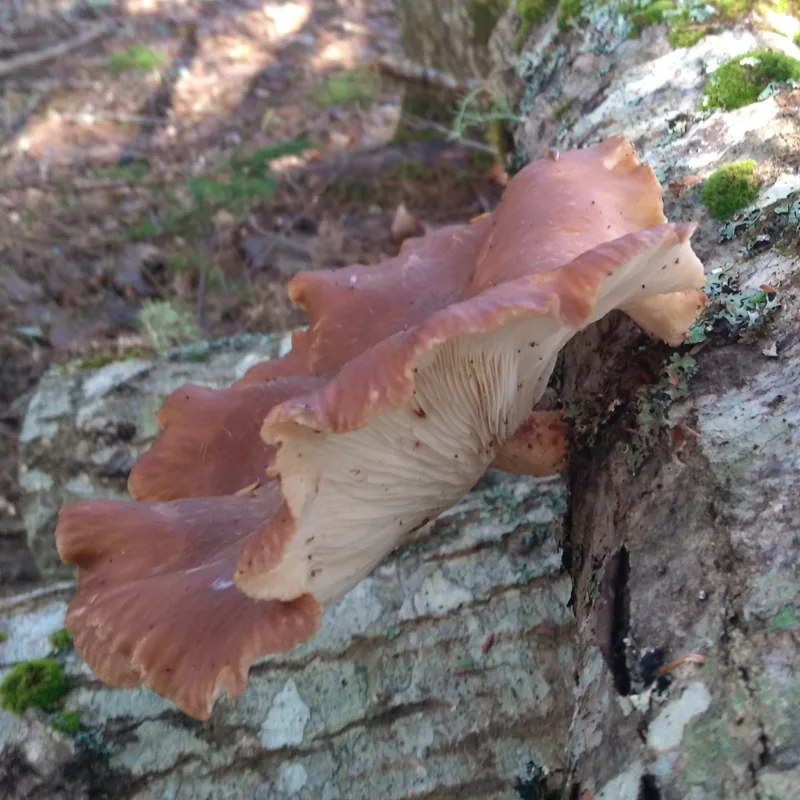
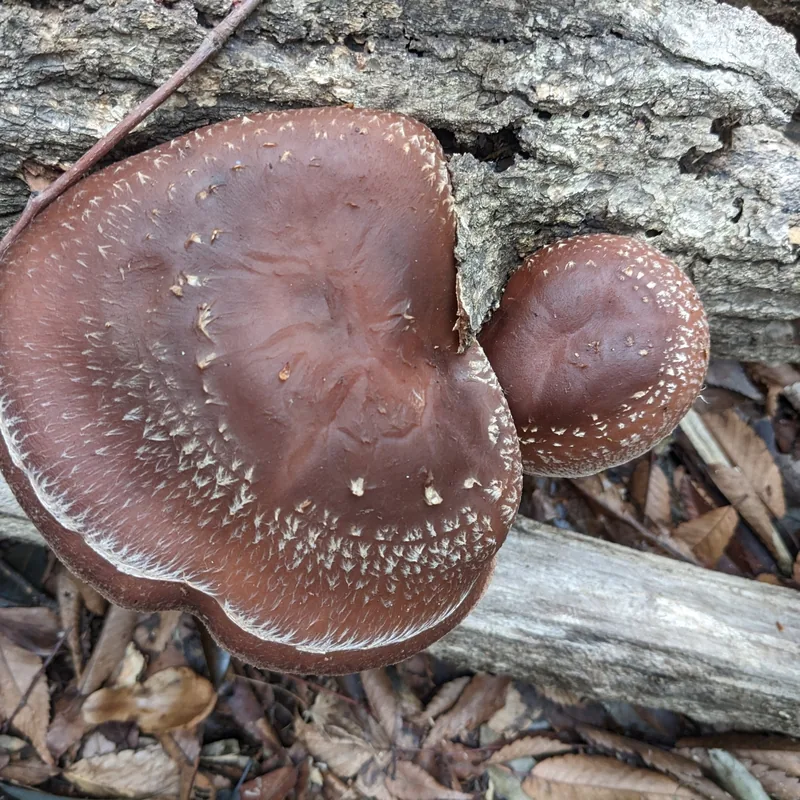
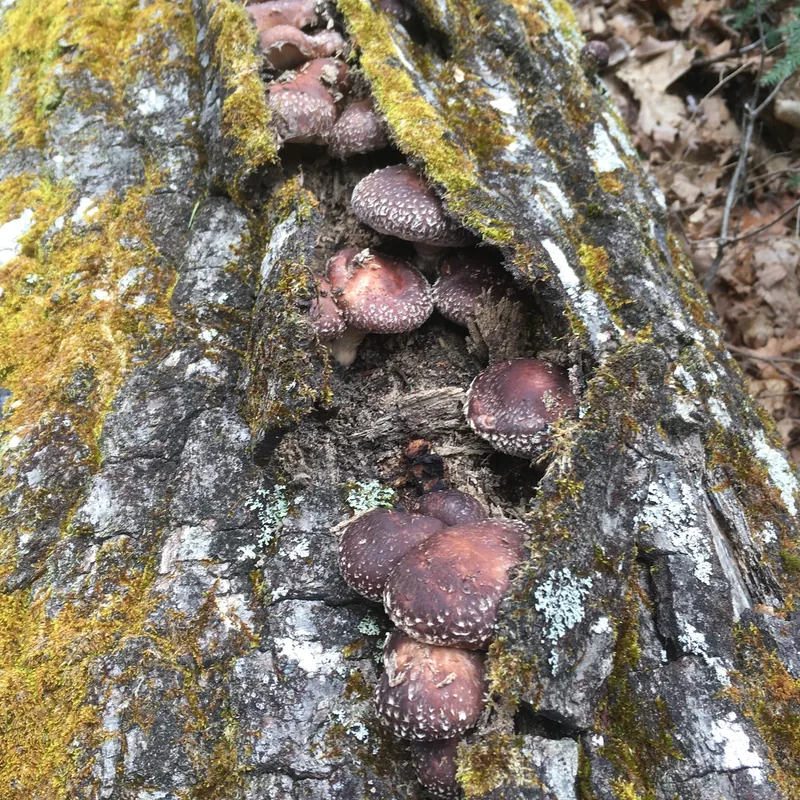
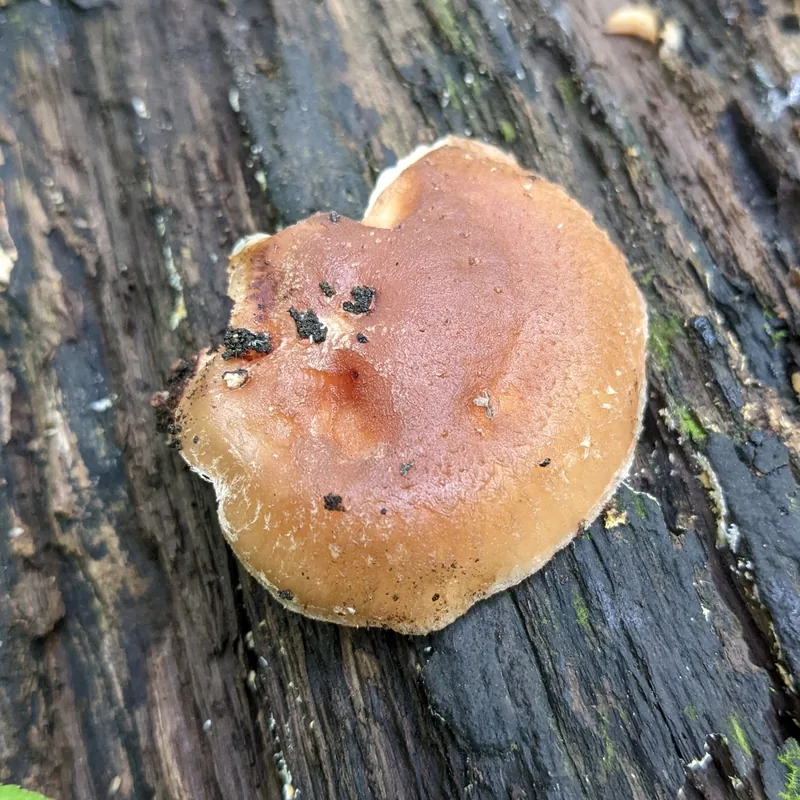
- Cap
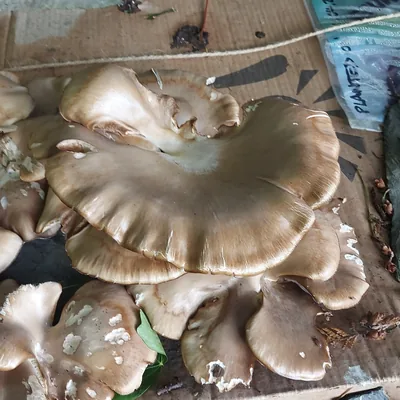
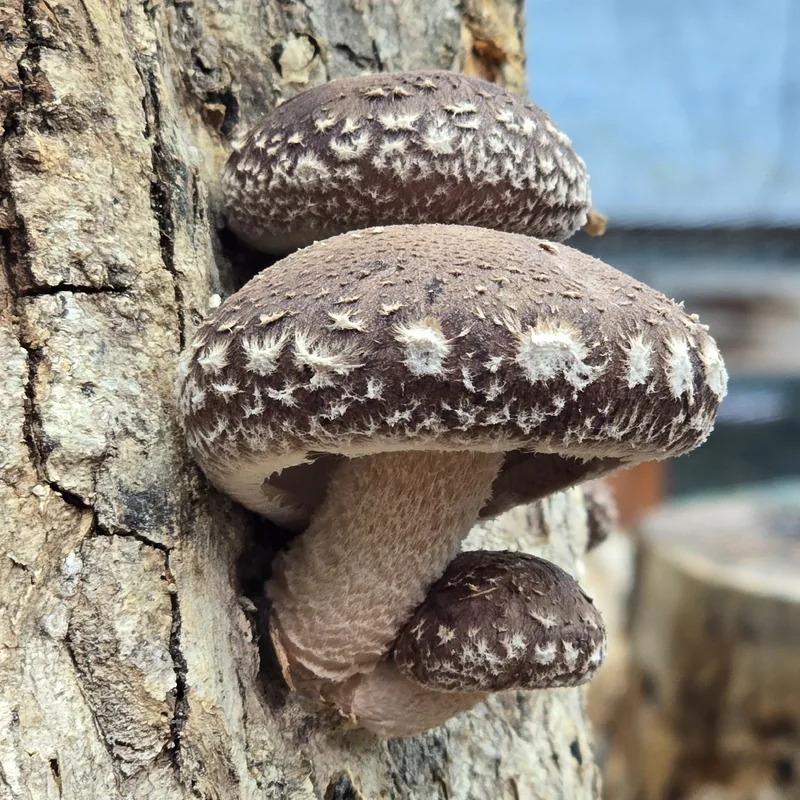
- Fleshy cap with small fibrous scales or cracks. Cultivated specimens have light to dark brown caps, often with white specks.[4][5]
- Gills
- White to very light brown gills.[4]
- Stem
- Solid, leathery stem, 3 to 5 cm long. Cultivated specimens have white to very light brown stems.[3][4]
- Ring and volva
- Ring and volva absent.[3]
- Flesh
- Thick flesh in the cap.[5]
- Spore print
- White spore print.[4]
Can you eat shiitake?
Edible. Cook it thoroughly: eating it raw or undercooked can cause shiitake dermatitis, a red, itchy rash with streaks.[6][11]
How do you grow shiitake?
Temperature
Colonization21–27 °C
Fruiting16–21 °C
Humidity
Colonization0–95 %
Fruiting0–80 %
Full cycle: 75 days
- Light
- Indirect
Substrates
Woods it likes
Log your batches, temperatures and harvests. The free plan needs no card.
How do you cook shiitake?
Cook it in soups, braises or vegetable stir-fries. It has a meaty texture and is used in miso soup and vegetarian dashi. You can use the stem to flavor stock.[7][8]
Where and when does shiitake grow?
It grows wild on dead tree trunks. It is associated with wood of Quercus, Castanopsis and Lithocarpus.[3][5]
Fruiting months in Mexico remain unconfirmed.[2]
Its natural range is in Asia, with populations in East and Southeast Asia. It is widely cultivated worldwide.[6]
About the name
The accepted name is Lentinula edodes, in the family Omphalotaceae. Lentinus edodes is an earlier name that still appears in publications.[1][5]