Skip to content
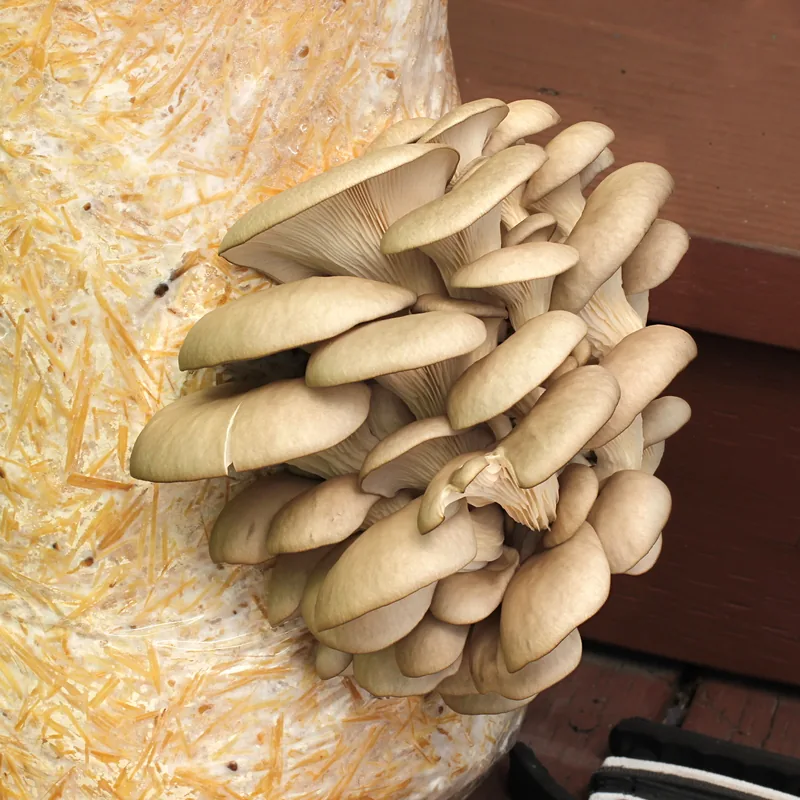
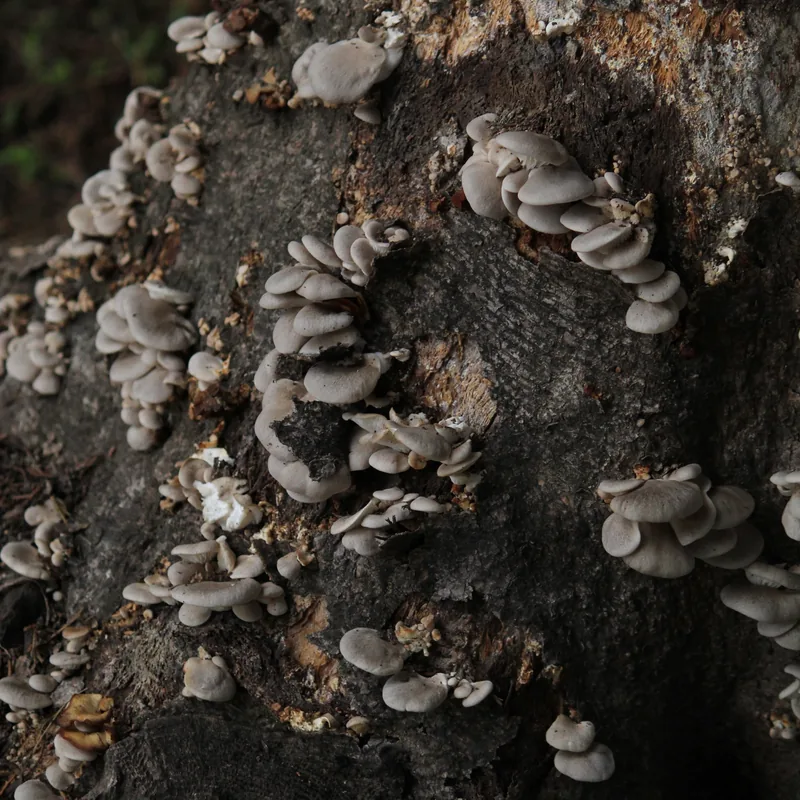
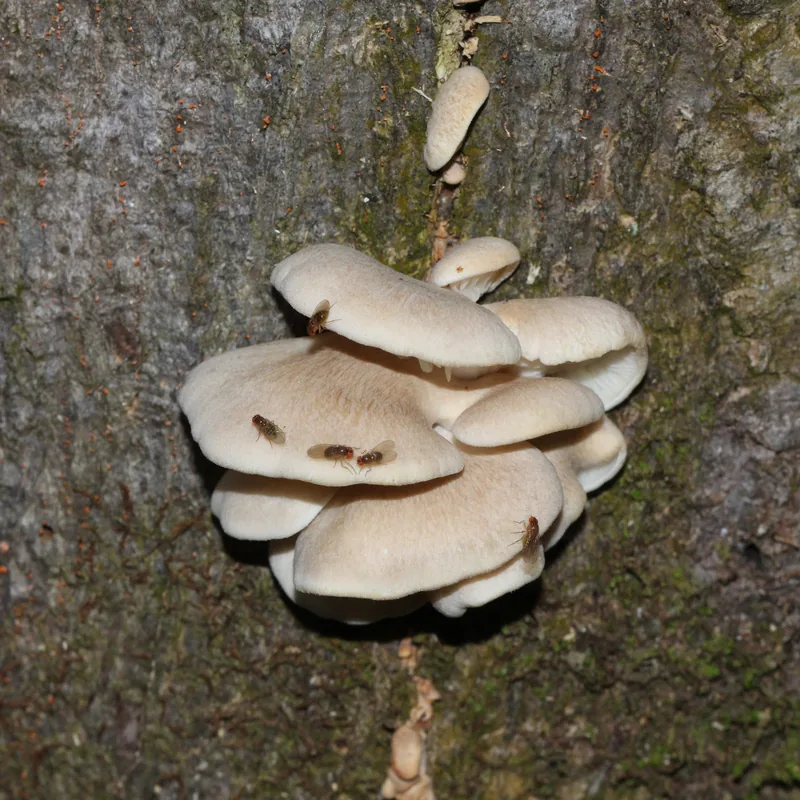
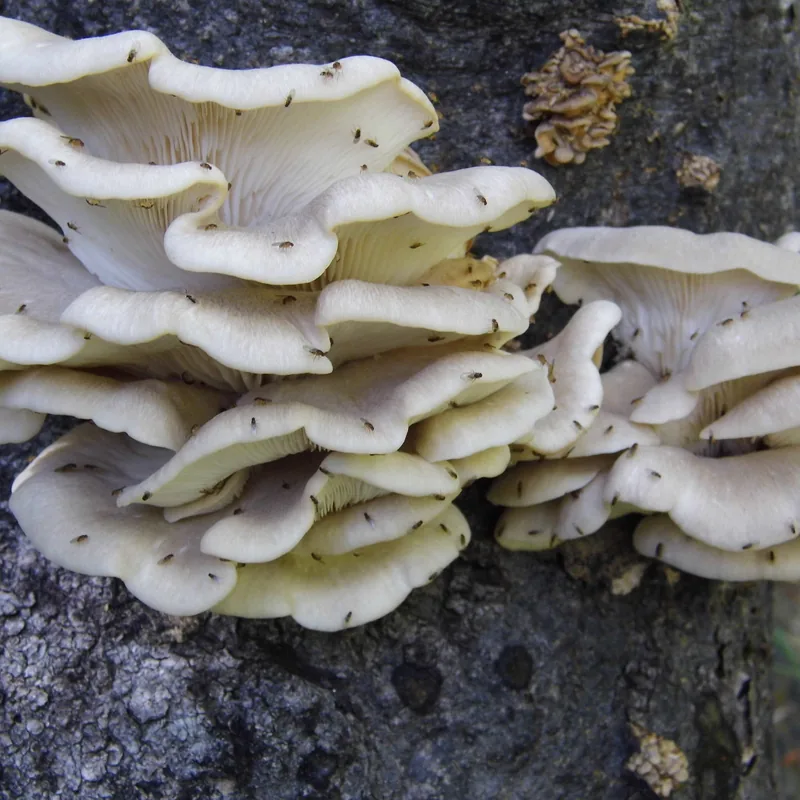
oyster mushroom (Pleurotus ostreatus), photo
Photo
Cultivated

Oyster mushroomPleurotus ostreatus

pearl oyster mushroom · grey oyster mushroom · Hongo de cazahuate · Oreja de izote · Iztacnanácatl · Seta tasnara

Pleurotus ostreatus is an edible wood-decay fungus with a fan-shaped or oyster-shaped cap. It grows in overlapping shelf-like clusters on fallen hardwood logs and weakened trees in temperate forests. Foragers and cooks prize it for its tender, meaty texture in culinary dishes.[1][2][3][4]

Edible. Eat it cooked. Never eat a wild mushroom identified only from photos.

  • Season in Mexico
  • HabitatDeciduous hardwood logs
  • FlavorMild
  • GrowingEasy
  • FamilyPleurotaceae

How do you identify oyster mushroom?
Cap
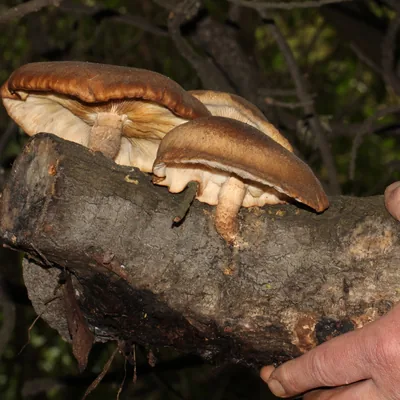
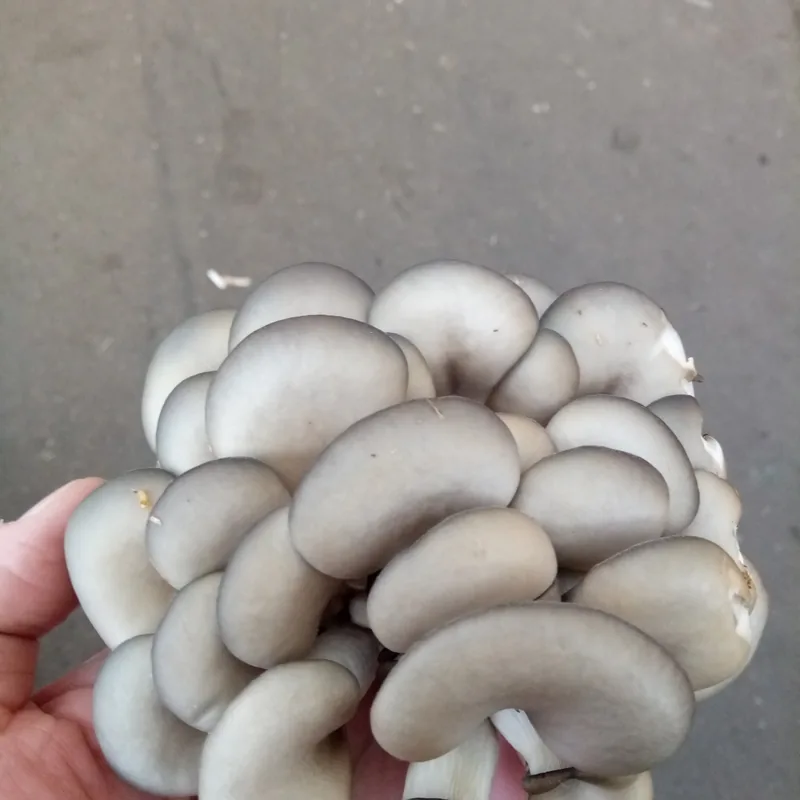
Cap 3–15 cm across, pale to dark brown, kidney-shaped or fan-shaped.[1][4]
Gills
Gills are thin, close to crowded, and decurrent, running down the stem or point of wood attachment. They are white to creamy white, turning faintly yellowish in older specimens.[1]
Stem
Stem 1–7 × 1–3 cm; lateral, sometimes central, or nearly absent.[1]
Flesh
Thick, tender in young specimens, and fibrous or tough in the stem of older specimens. It is white and retains its color without changing when sliced.[1]
Spore print
Spore print white, faintly yellowish, or lilac.[1]
Odor
Distinctive odor, difficult to describe.[1]
Fruiting habit
It grows in shelf-like clusters on wood.[1][4]

What can oyster mushroom be confused with?

oyster mushroom (Pleurotus ostreatus), photoOyster mushroom
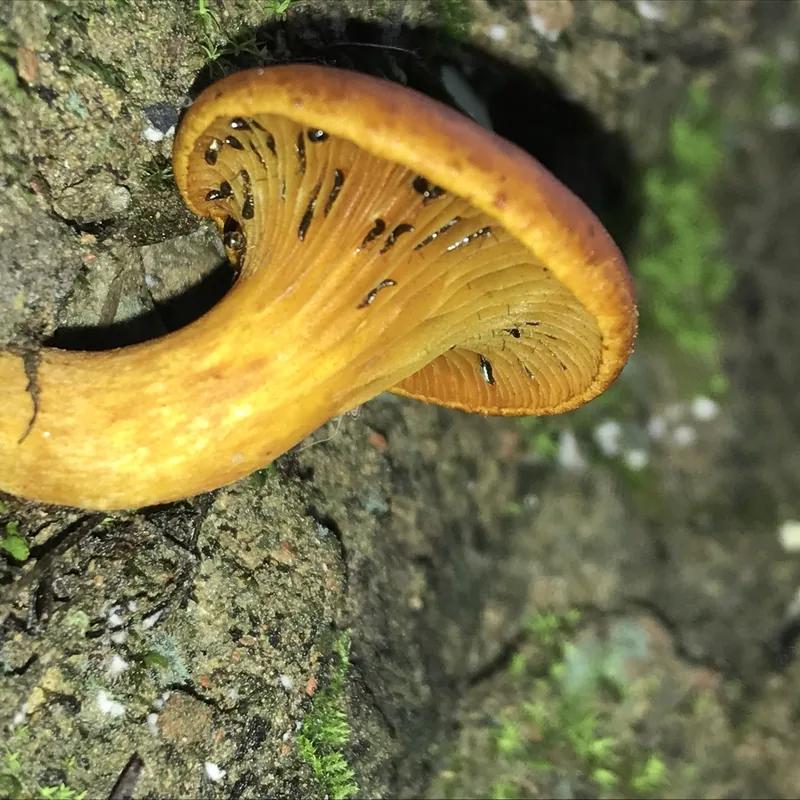
Omphalotus illudensJack-o'-lantern mushroom
Dangerous

Omphalotus illudens

Key difference: Orange caps and gills, pale orange flesh, and gills that are luminescent when fresh.[1][10]

oyster mushroom (Pleurotus ostreatus), photoOyster mushroom
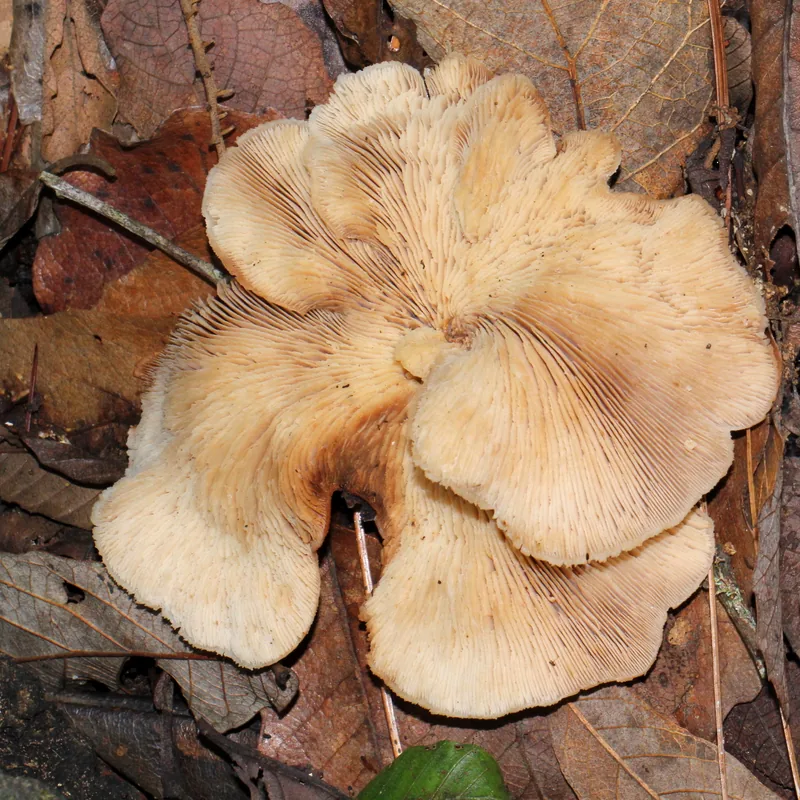
Lentinellus ursinusBear lentinellus

Lentinellus ursinus

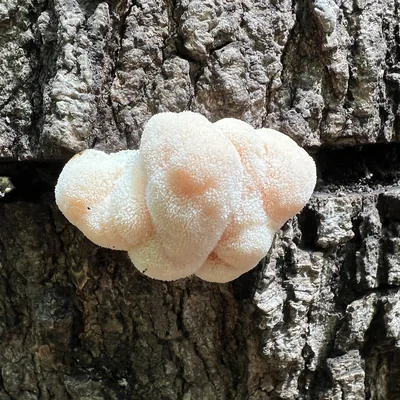
Key difference: Features distinctly saw-toothed (serrated) gill edges, a fuzzy cap base, and an intensely peppery, acrid taste.[13]
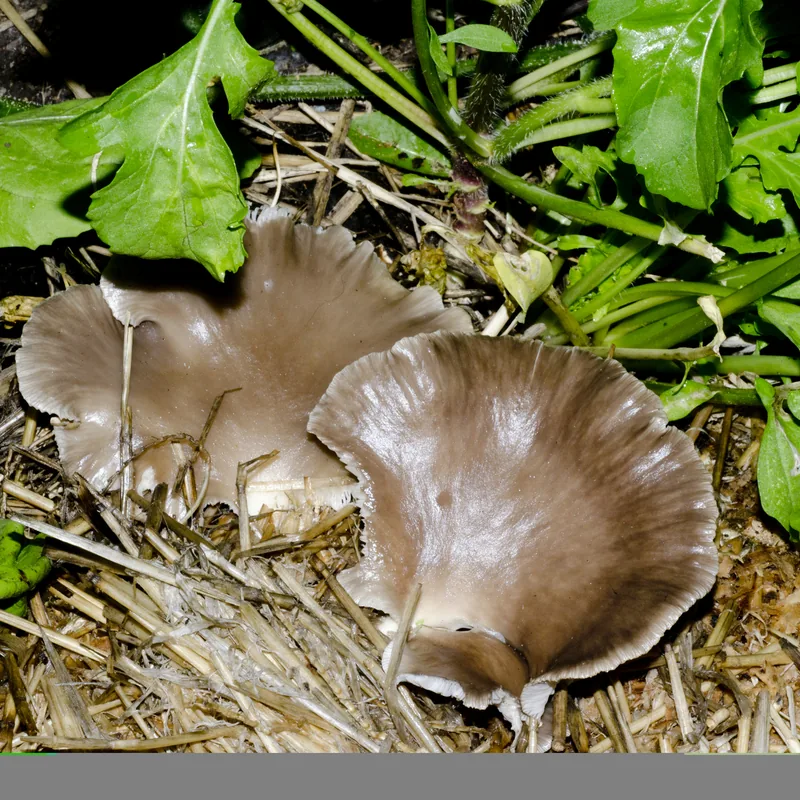
oyster mushroom (Pleurotus ostreatus), photoOyster mushroom
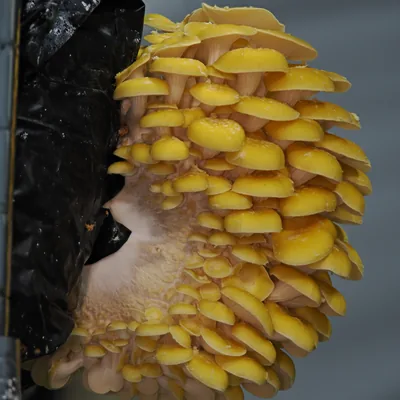
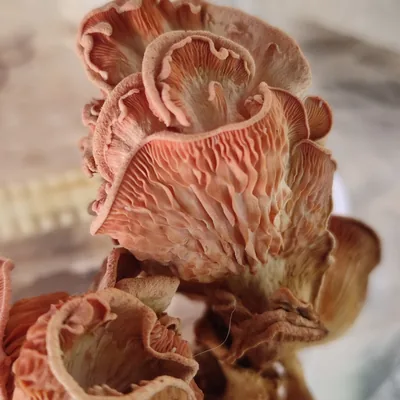
Phoenix oyster (Pleurotus pulmonarius), photoSummer oyster mushroom

Pleurotus pulmonarius

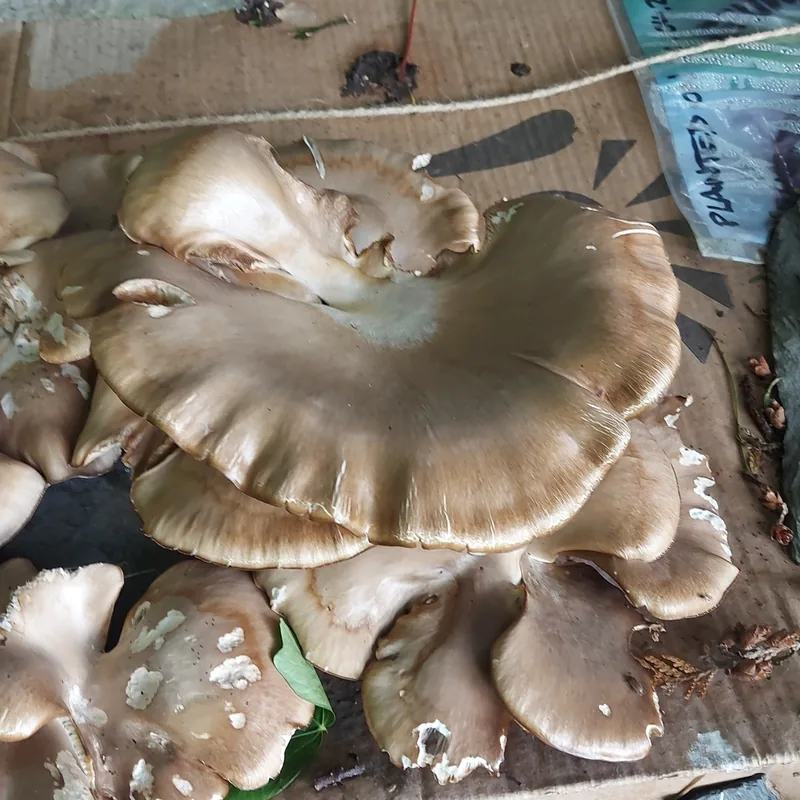
Key difference: It is often paler and smaller, develops a stem more frequently, and fruits in warmer weather.[1][11]

See page

Can you eat oyster mushroom?

Pleurotus ostreatus is an edible mushroom valued in cooking.[1][6]

How do you grow oyster mushroom?

Temperature

Colonization21–27 °C

Fruiting10–21 °C

Humidity

Colonization0–90 %

Fruiting0–90 %

Full cycle: 28 days

Light
Indirect

Substrates

  • Straw
  • Hardwood sawdust
  • Coffee grounds
Track this grow in SporeXpert

Log your batches, temperatures and harvests. The free plan needs no card.

Track this grow in SporeXpert

How do you cook oyster mushroom?

It is used in soups, stews, breaded dishes, and stir-fries with soy sauce.[2][3][8]

What does research say about oyster mushroom?

  • Review of studiesA review of eight trials reported reductions in glucose and some blood lipids with mushroom preparations. Risk of bias was mostly high or unclear.[5]

These findings describe research. None of them is a recommendation to use it. If you take medication or have a disease, talk to your doctor.

Where and when does oyster mushroom grow?

It decomposes wood, mainly hardwoods, and causes white rot.[1][4]

It occurs in temperate and subtropical forests in many parts of the world.[1][4]

Baja CaliforniaBCSonoraSONChihuahuaCHHCoahuilaCOANuevo LeónNLBaja California SurBCSSinaloaSINDurangoDURZacatecasZACSan Luis PotosíSLPTamaulipasTAMNayaritNAYJaliscoJALAguascalientesAGSGuanajuatoGTOQuerétaroQROHidalgoHGOColimaCOLMichoacánMICEstado de MéxicoMEXCiudad de MéxicoCDMXTlaxcalaTLXVeracruzVERYucatánYUCGuerreroGROMorelosMORPueblaPUETabascoTABCampecheCAMQuintana RooROOOaxacaOAXChiapasCHP
States with records (14/32): Sonora, Durango, Nayarit, Jalisco, Michoacán, Estado de México, Ciudad de México, Tlaxcala, Veracruz, Morelos, Puebla, Quintana Roo, Oaxaca, Chiapas

See the mushroom map

Names in Mexico

  • Hongo de cazahuate[4]
  • Oreja de izote[4]
  • Iztacnanácatl[4]
  • Seta tasnara[4]
  • Sak itaj · Tseltal[4]

History and traditional uses

S8 describes Pleurotus ostreatus as a pre-Hispanic food consumed in Mexico.[4][8]

About the name

Pleurotus ostreatus forms a cryptic species complex alongside Pleurotus pulmonarius and Pleurotus populinus, separated through DNA sequencing, fruiting temperatures, and host tree preferences.[1][2]
Fun facts

  • Its mycelium kills and digests nematodes, which may supply nitrogen.[1][2]
  • Commercial cultivation of this fungus began in Germany during World War I to supply emergency subsistence food.[2]
  • Several Erotylidae beetles eat this mushroom. Some species require it as larval food.[2]

Frequently asked questions

How do you cook oyster mushrooms?

It is used in soups, stews, and stir-fries with soy sauce.[1][2][6]

Where do oyster mushrooms grow in the wild?

It grows on dead or dying hardwood trees.[1][2][4]

What nutrients do oyster mushrooms provide?

It provides protein, fiber, and beta-glucans.[2][5][8]

Sources

  1. Pleurotus ostreatus (MushroomExpert.Com)
  2. Pleurotus ostreatus - Wikipedia
  3. Pleurotus ostreatus - Wikipedia, la enciclopedia libre
  4. Pleurotus ostreatus (Gírgola Común) - EncicloVida
  5. Effect of the Intake of Oyster Mushrooms (Pleurotus ostreatus) on Cardiometabolic Parameters—A Systematic Review of Clinical Trials - PMC
  6. Ostreolysin A/Pleurotolysin B and Equinatoxins: Structure, Function and Pathophysiological Effects of These Pore-Forming Proteins - PMC
  7. Efficacy of Pleuran (β-Glucan from Pleurotus ostreatus) in the Management of Herpes Simplex Virus Type 1 Infection - PMC
  8. Pre-Hispanic Foods Oyster Mushroom (Pleurotus ostreatus), Nopal (Opuntia ficus-indica) and Amaranth (Amaranthus sp.) as New Alternative Ingredients for Developing Functional Cookies - PMC
  9. Mushroom Poisoning Syndromes - North American Mycological Association
  10. Omphalotus illudens (MushroomExpert.Com)
  11. Pleurotus pulmonarius (MushroomExpert.Com)
  12. Pleurotus populinus (MushroomExpert.Com)
  13. Lentinellus ursinus (MushroomExpert.Com)

Written with AI help from the cited sources. A second model checked every fact against those sources and removed what they did not support.

Image credits

Photos are under free licenses (CC0, CC BY or CC BY-SA).

Related mushrooms