King boleteBoletus edulis
Porcini · Cep · Cemas — mestizo people of Amanalco, Estado de México (S3). (Amanalco, Estado de México) · Hongos de panza (Amanalco, Estado de México) · Cemas (Amanalco, Estado de México) · Cemita (San Pedro Arriba, Temoaya, Estado de México)
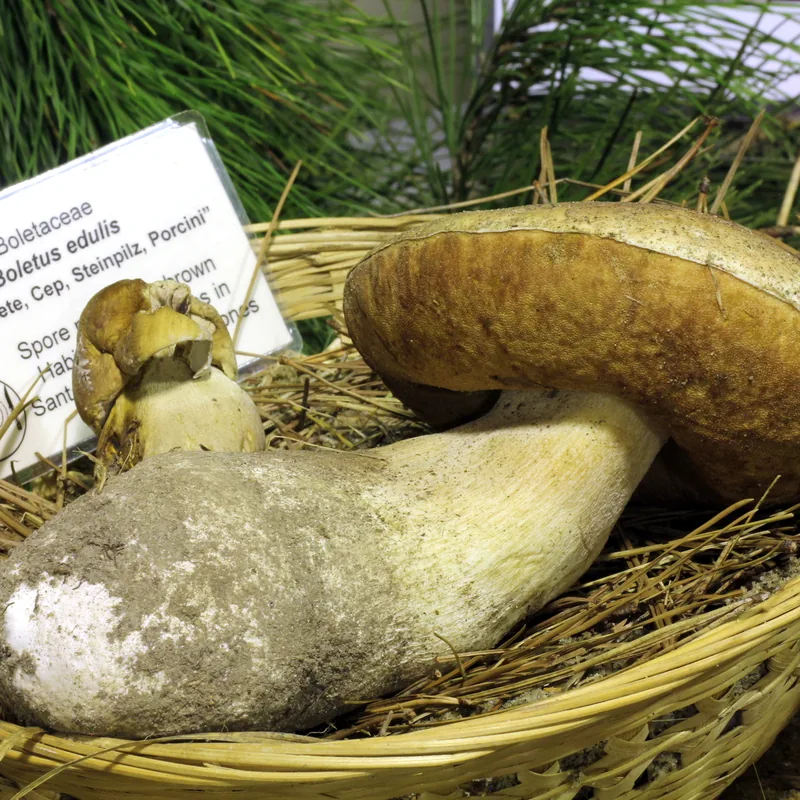
Boletus edulis is an edible bolete with a brown cap, pores, and a thick stem. It grows on woodland soil and can be confused with Tylopilus felleus.[1][2][7]
Edible. Eat it cooked. Never eat a wild mushroom identified only from photos.
- Season in Mexico
- HabitatPine-oak forests
- FamilyBoletaceae
How do you identify King bolete?
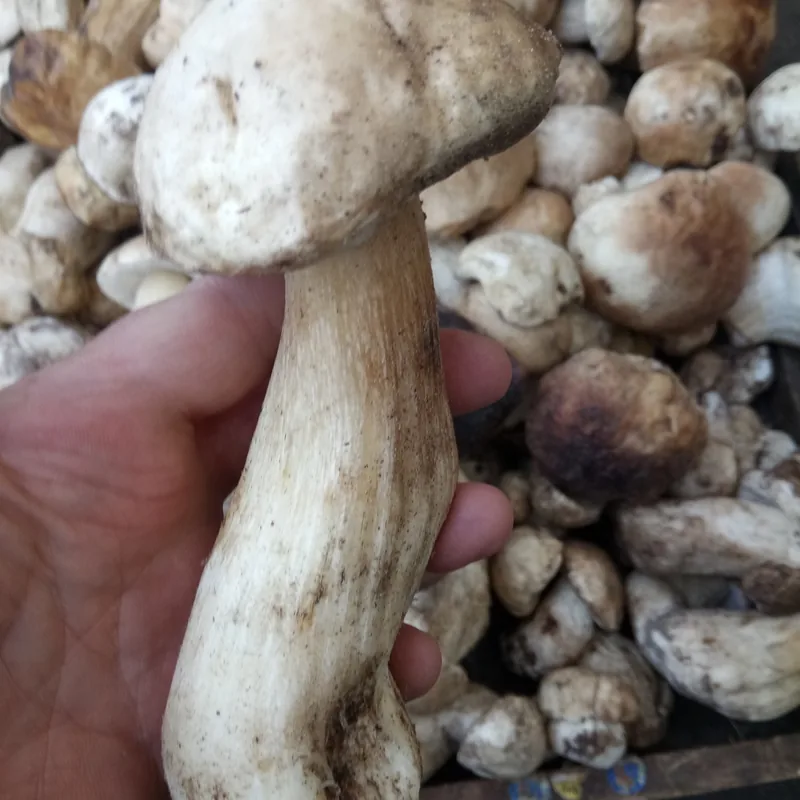
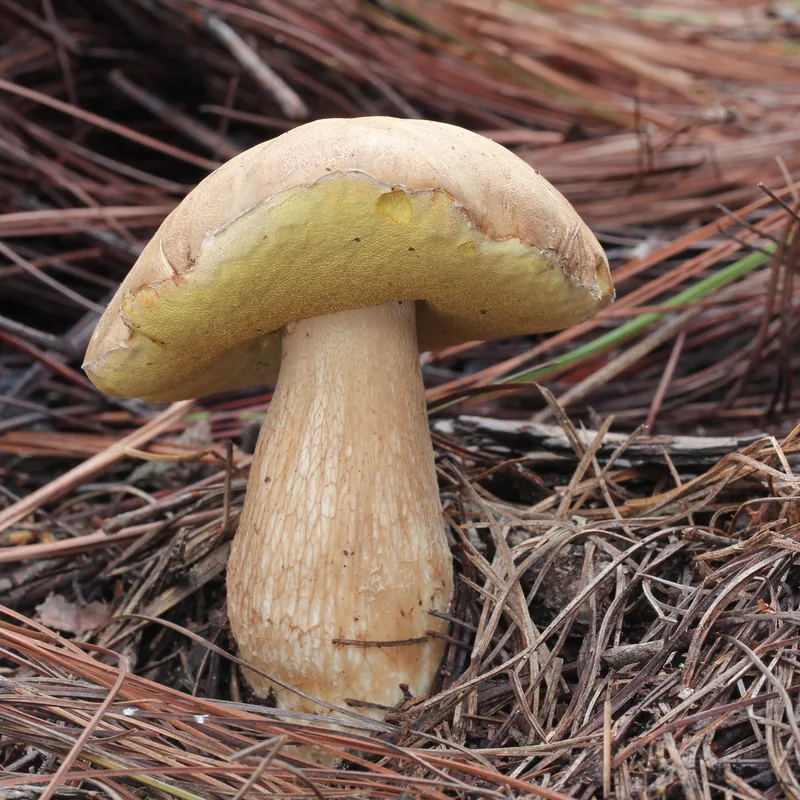
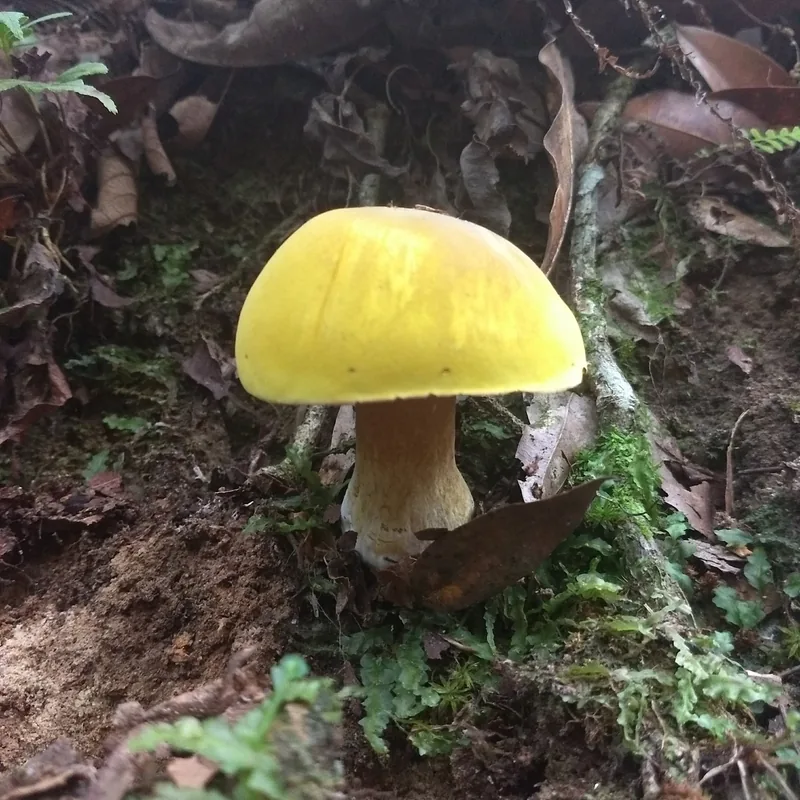
- Cap
- 4.5-25.5 cm across; convex to nearly flat, brown to reddish brown, sticky when wet.[2]
- Pores
- Initially white; becoming yellow to olive-yellow as they mature.[2]
- Stem
- 5-25.5 cm long and 2-7.5 cm thick; white or pale brown, with a whitish network on the upper portion.[2]
- Ring
- Ring and partial veil absent.[2]
- Flesh
- Keeps its color when sliced.[1]
- Spore print
- Olive-brown.[2]
- Smell
- Not distinctive.[2]
Can you eat King bolete?
Edible. Eat it only after an expert has identified it. Cook it thoroughly and avoid eating it raw. You still need to identify every specimen before cooking.[2][12][13][9]
How do you cook King bolete?
In Amanalco, Estado de México, Boletus edulis is among the most valued food mushrooms. In Ixtenco, Tlaxcala, mushrooms identified as Boletus aff. edulis are roasted, fried in lard with salt, or cooked with eggs as an egg cake.[15][5]
Where and when does King bolete grow?
It grows on soil and forms ectomycorrhizal associations with trees. Records include pine-oak forests in Ixtlán de Juárez, Oaxaca.[3][4]
September and October are documented in Ixtlán de Juárez, Oaxaca. This local record has limited scope for describing the season across Mexico.[4]
UNAM groups these records within the Boletus edulis complex. The group has a broad distribution in North America, Europe, and Asia.[3]
Names in Mexico
About the name
The complex in Mexico: UNAM treats Mexican records as a complex of species closely related to Boletus edulis. The identity of Boletus edulis in the strict sense in North America remains debated. The regional names and culinary uses cited here may refer to members of the complex.[3][1]