Skip to content
indigo milk cap (Lactarius indigo), photo
Photo
Wild in Mexico

Indigo milk capLactarius indigo

blue milk mushroom · indigo lactarius · oreja azul · hongo azul · K’anje jo

Lactarius indigo is a wild edible mushroom that releases blue latex when cut. It grows in association with pine and oak roots and is sold in Mexican markets.[2][3][4][10]

Edible. Eat it cooked. Never eat a wild mushroom identified only from photos.

  • Season in Mexico
  • HabitatPine and oak forests
  • FamilyRussulaceae

How do you identify indigo milk cap?
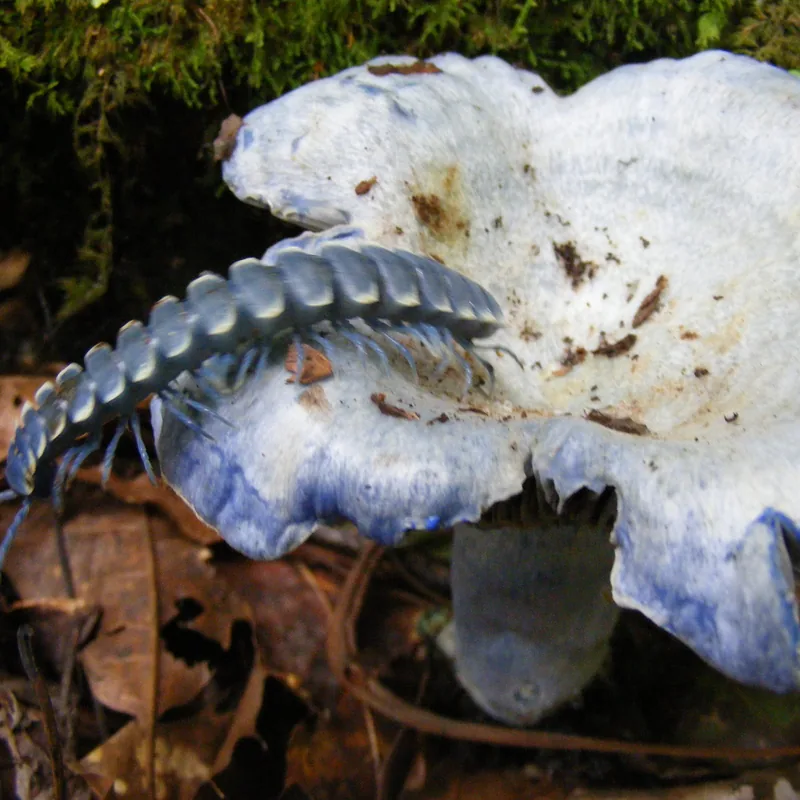
Cap
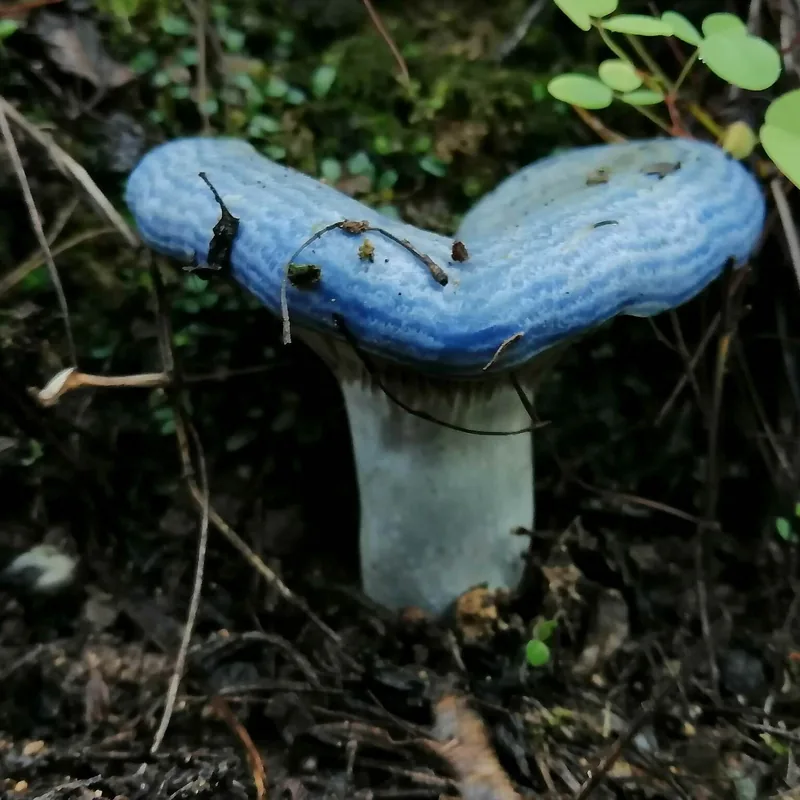
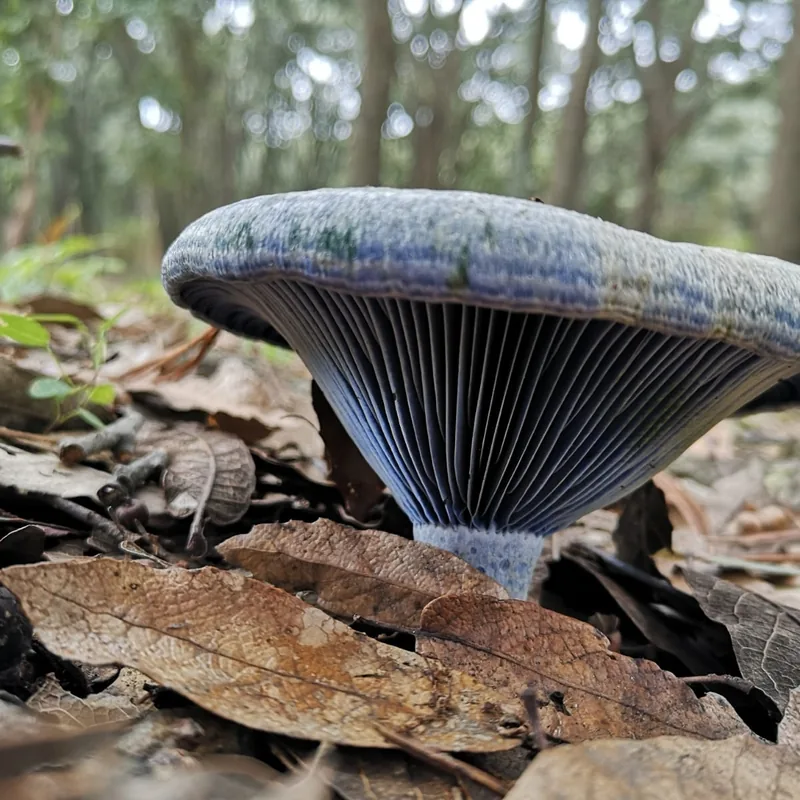
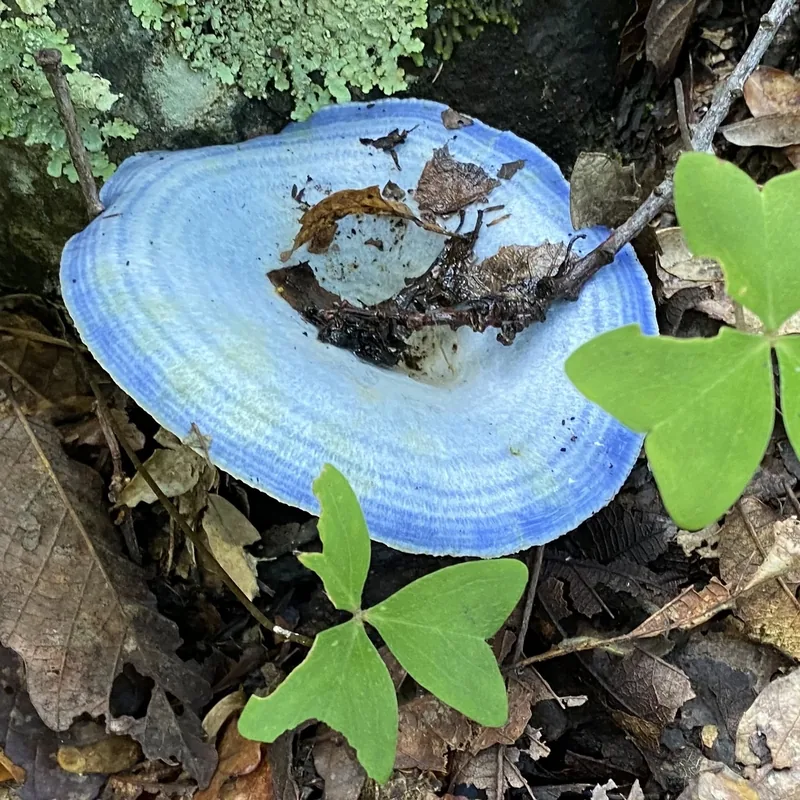
Measures 5-15 cm. Blue, with concentric zones; initially convex, later flat or funnel-shaped.[3]
Gills
Numerous and blue; they fade with age.[2]
Stem
Measures 2-8 cm long and 1-2.5 cm thick. Usually bears small pits.[3]
Flesh
Pale blue; slowly turns greenish when exposed to air.[2]
Latex
Cutting or breaking the mushroom releases indigo-blue latex that turns green on exposure to air.[2]
Spore print
Cream.[3]

Can you eat indigo milk cap?

Edible. Eat it only after an expert confirms its identity, and cook it thoroughly; never eat it raw or lightly cooked. These precautions follow NAMA's general guidance for wild mushrooms.[2][8][9]

Where and when does indigo milk cap grow?

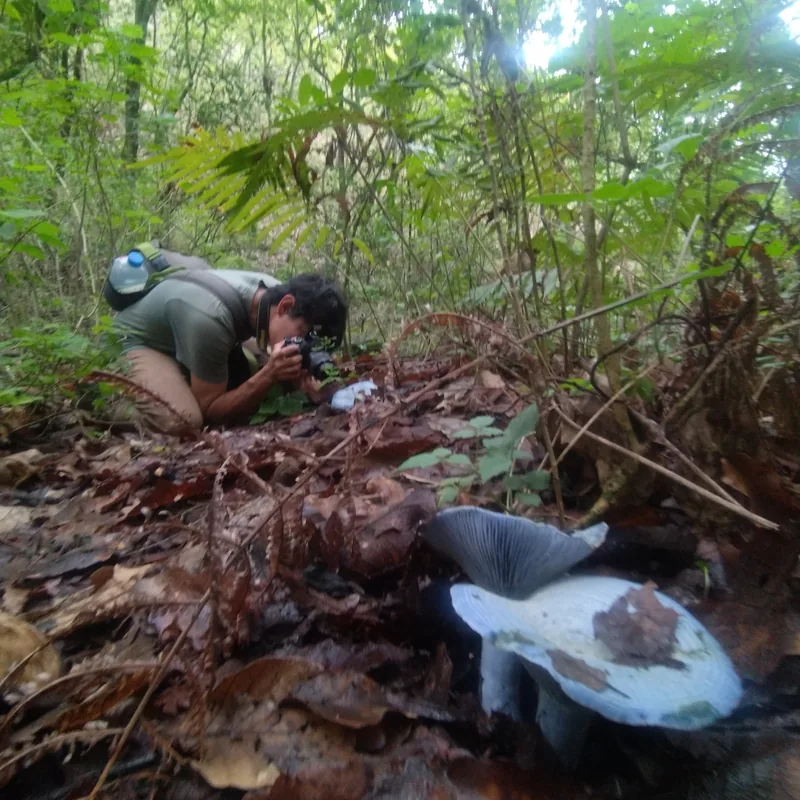
Grows on the ground and forms mycorrhizal associations with pines and oaks. Mexican records also include montane cloud forest.[2][3][4]

In Xalapa, Veracruz, fruiting was documented from May through October, with greater abundance in June, July, and September. This record describes a local season.[4]

Widely distributed in North America and Central America. The listed Mexican states have documented records in the consulted sources; this is a partial list.[2][4][5][6][7]
Baja CaliforniaBCSonoraSONChihuahuaCHHCoahuilaCOANuevo LeónNLBaja California SurBCSSinaloaSINDurangoDURZacatecasZACSan Luis PotosíSLPTamaulipasTAMNayaritNAYJaliscoJALAguascalientesAGSGuanajuatoGTOQuerétaroQROHidalgoHGOColimaCOLMichoacánMICEstado de MéxicoMEXCiudad de MéxicoCDMXTlaxcalaTLXVeracruzVERYucatánYUCGuerreroGROMorelosMORPueblaPUETabascoTABCampecheCAMQuintana RooROOOaxacaOAXChiapasCHP
States with records (4/32): Michoacán, Estado de México, Tlaxcala, Veracruz

See the mushroom map

Names in Mexico

Fun facts

  • In the Ñuhmu language of Ixtenco, K’anje jo means “blue mushroom.”[6]
  • An azulene derivative isolated from this mushroom has been studied as a candidate blue colorant.[13]

Frequently asked questions

Sources

  1. Hongo azul (Lactarius indigo)
  2. Hongo azul: Lactarius indigo — ficha CONABIO
  3. Lactarius indigo (MushroomExpert.Com)
  4. Los hongos que crecen en el Jardín Botánico Francisco J. Clavijero y áreas circunvecinas, Xalapa, Ver.
  5. Caracterización morfológica y molecular de basidiomicetos de Villa del Carbón, Estado de México: detección de compuestos activos de los taxa medicinales
  6. Los hongos conocidos por la comunidad Yuhmu de Ixtenco, Tlaxcala, México
  7. Disponibilidad de macromicetos silvestres comestibles en dos unidades del paisaje en un Parque Nacional en el eje Neovolcánico
  8. 2011 NAMA Toxicology Committee Report
  9. Wild Mushroom Safety: Identification, Cooking, and Poison Awareness
  10. Lactarius indigo
  11. Lactarius indigo, the indigo milk mushroom, Tom Volk's Fungus of the Month for June 2000
  12. Clitocybe nuda (MushroomExpert.Com)
  13. Total Synthesis of Azulene Derivative, a Blue Pigment Isolated from Lactarius indigo, and Colorant Application of Its Aqueous Dispersion

Written with AI help from the cited sources. A second model checked every fact against those sources and removed what they did not support.

Image credits

Photos are under free licenses (CC0, CC BY or CC BY-SA).

Related mushrooms