Lobster mushroomHypomyces lactifluorum
Oreja roja · Chichil · Xintazcal · Enchilado
Hypomyces lactifluorum parasitizes Russula and Lactarius mushrooms, covering them with an orange crust. It grows in Mexican forests and is sold at traditional markets; eating it requires expert identification and thorough cooking.[1][4][6][12]
Edible with caution. Eat it only well cooked and with a sure ID. Never eat a wild mushroom identified only from photos.
- Season in Mexico
- HabitatPine forests
- FamilyHypocreaceae
How do you identify Lobster mushroom?
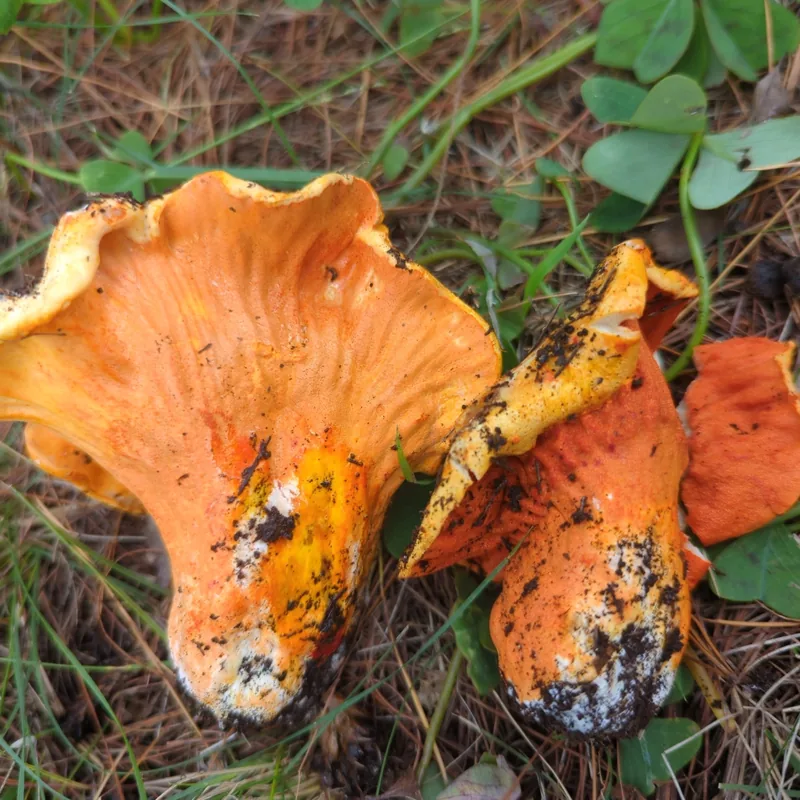
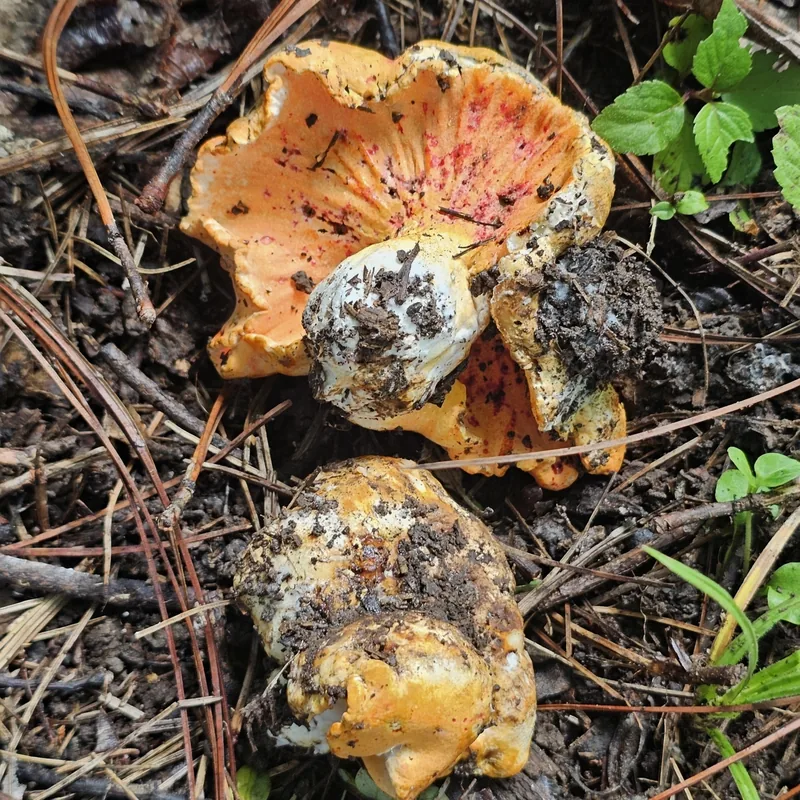
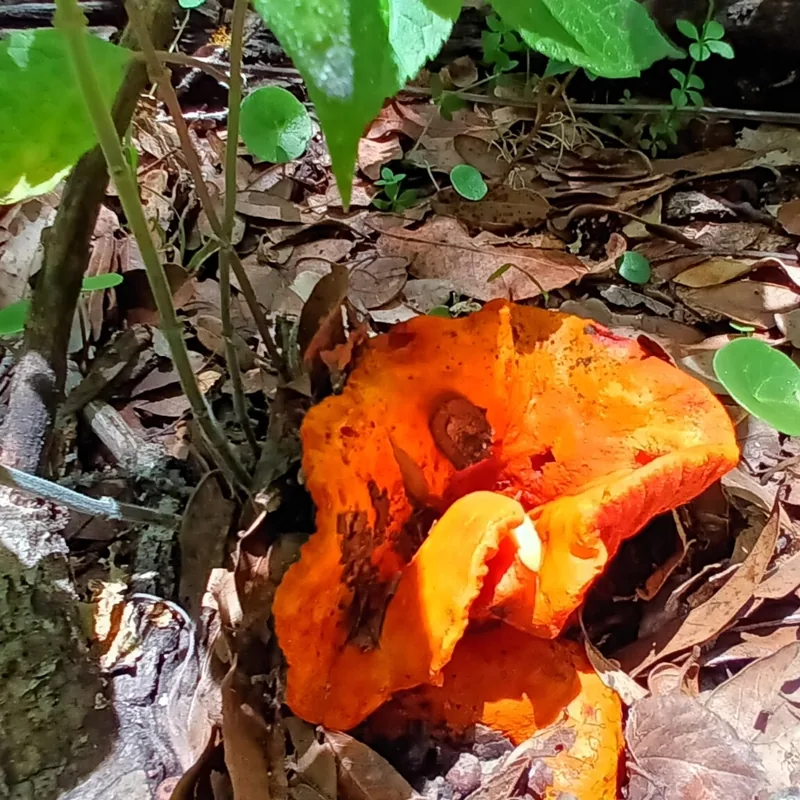
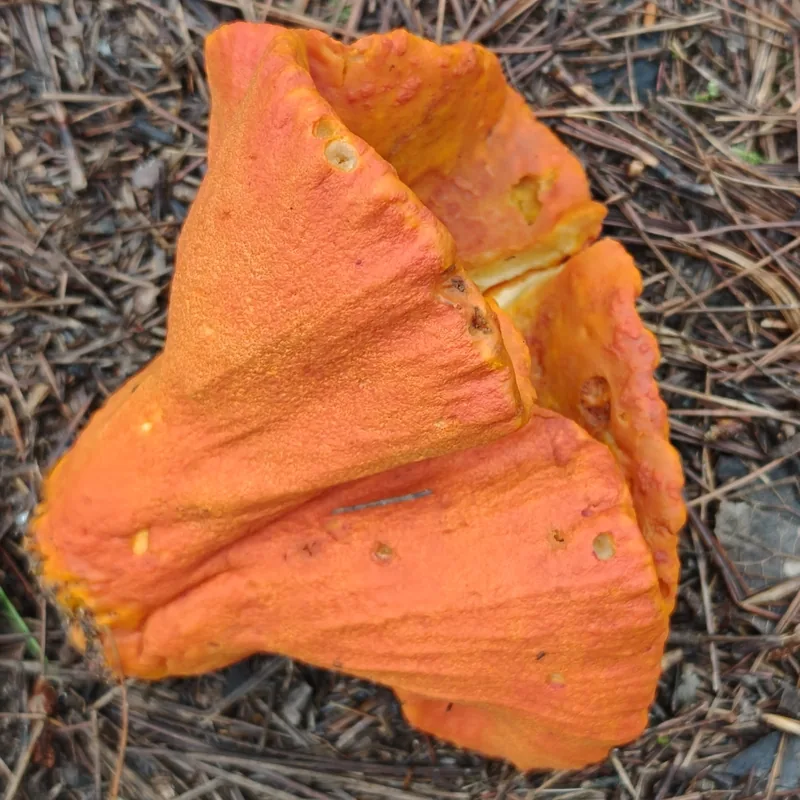
- Shape
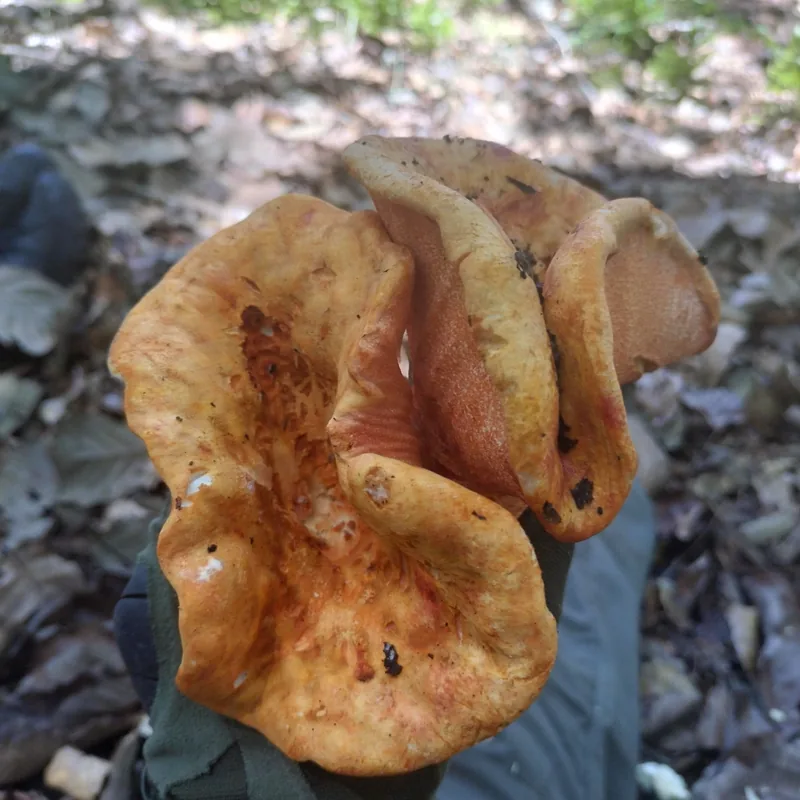
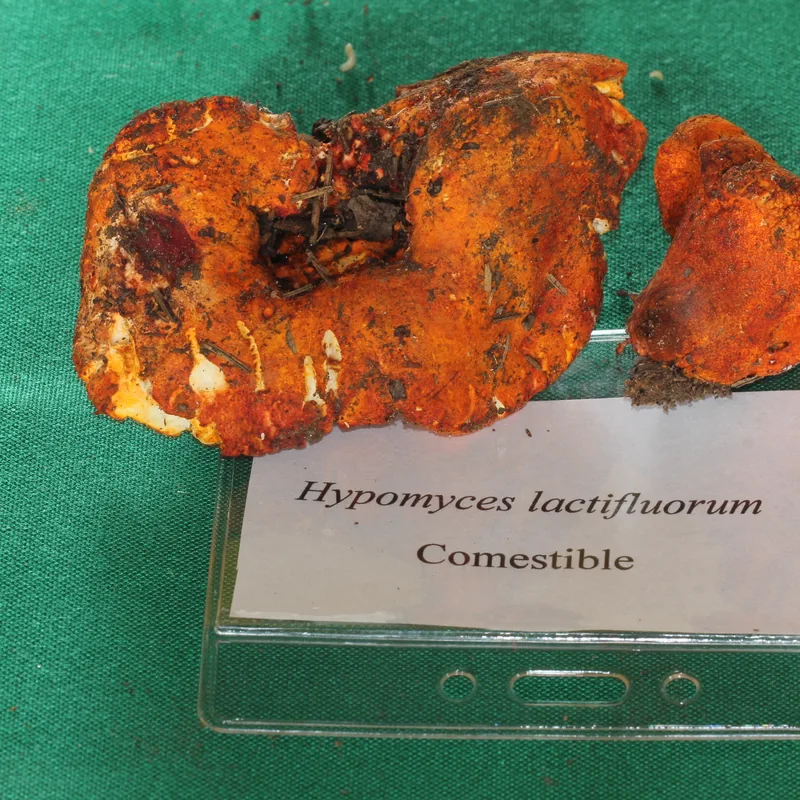
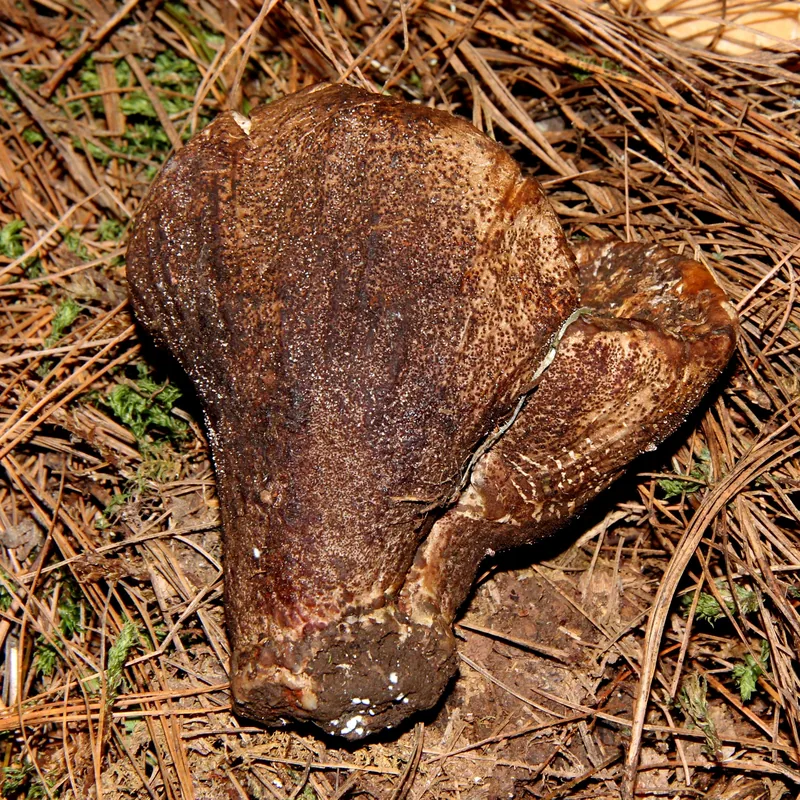
- The infected mushroom becomes twisted and irregular.[1]
- Cap
- A reddish-orange crust covers the cap, sometimes with white patches.[5]
- Surface
- The coating is hard and dotted with tiny bumps.[1]
- Underside
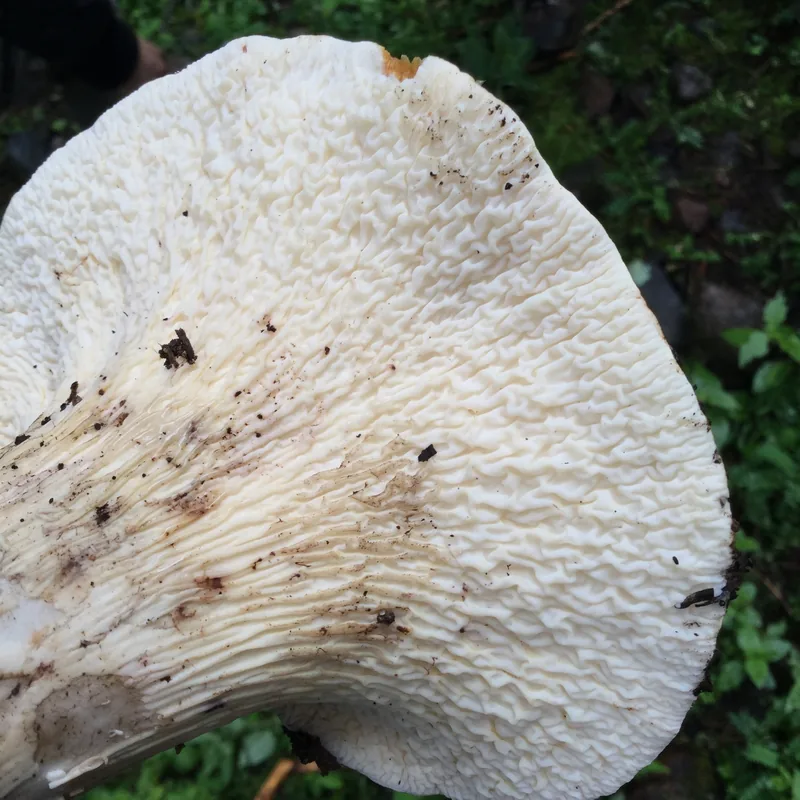
- The host's gills become distorted and fold together.[5]
- Flesh
- The interior is white and firm.[5]
- Spore print
- The spore print is white.[5]
What can Lobster mushroom be confused with?
Can you eat Lobster mushroom?
It is edible with precautions. Eat it only after expert identification and thorough cooking. Never eat it raw: gastrointestinal problems have been reported. At maturity the crust fully covers the host and distorts its gills.[5][6][12]
How do you cook Lobster mushroom?
Nanakateras sell it at the Sunday market in Acaxochitlán, Hidalgo, displaying it on plastic sheets. The UAEH cookbook includes ocotlapa in chipotle sauce and riccioli pasta with oreja roja.[3][4]
Where and when does Lobster mushroom grow?
It parasitizes Russula, Lactarius, and Lactifluus. Mexican records include temperate pine forest and a forest with Quercus acutifolia, Juniperus flaccida, and Pinus michoacana.[1][4][9]
The UAEH cookbook lists June through October for Hidalgo. These months are documented regionally.[4]
It is widespread in North America: Canada, the United States, and Mexico. The listed Mexican states have verified records in the consulted sources; this is a partial list.[1][5][9][10][14][15]
Names in Mexico
About the name
Hypomyces lactifluorum is the parasitic species. The harvested mushroom consists of the parasite and its host's fruiting body.[8][13]