Green-spored parasolChlorophyllum molybdites
False parasol
Chlorophyllum molybdites is a toxic mushroom in the family Agaricaceae that grows in meadows and urban areas. Its resemblance to edible mushrooms causes poisonings; a review identifies it as the most common cause of mushroom poisoning in North America.[2][5]
Poisonous. Causes poisoning. Never eat a wild mushroom identified only from photos.
- Season in Mexico
- HabitatMeadows and urban areas
- FamilyAgaricaceae
What happens if someone eats Green-spored parasol?
Did someone eat a wild mushroom and feel sick? Call emergency services and bring a sample of the mushroom.
- Toxins
- Researchers have isolated molybdophyllysin, a toxic protein belonging to the zinc metalloproteases. Its toxicity was studied in mice; that experiment must be distinguished from clinical evidence in people.
- When symptoms start
- The first symptoms usually appear within 1–3 hours after eating it.
- What to do
- If you ate it or suspect someone ate it, call a poison center or emergency services right away. Do not wait for symptoms. Keep a mushroom sample and take it with you to help identification; also save photographs if you have them.
How do you identify Green-spored parasol?
- Cap
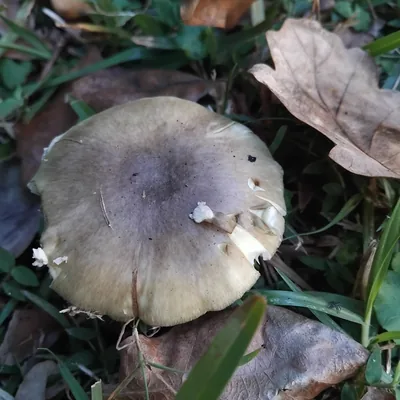
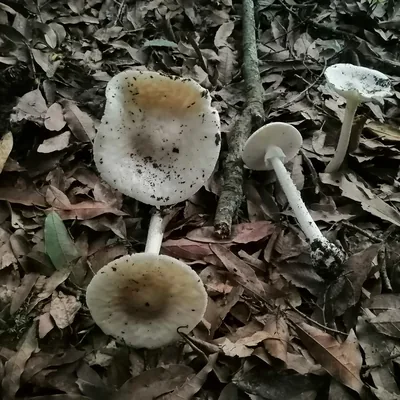
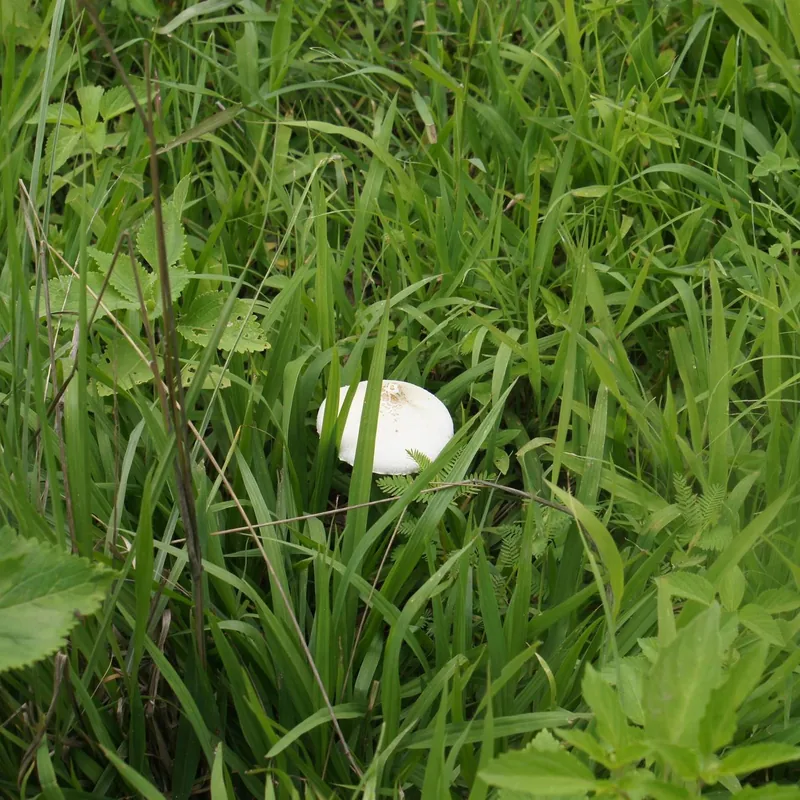
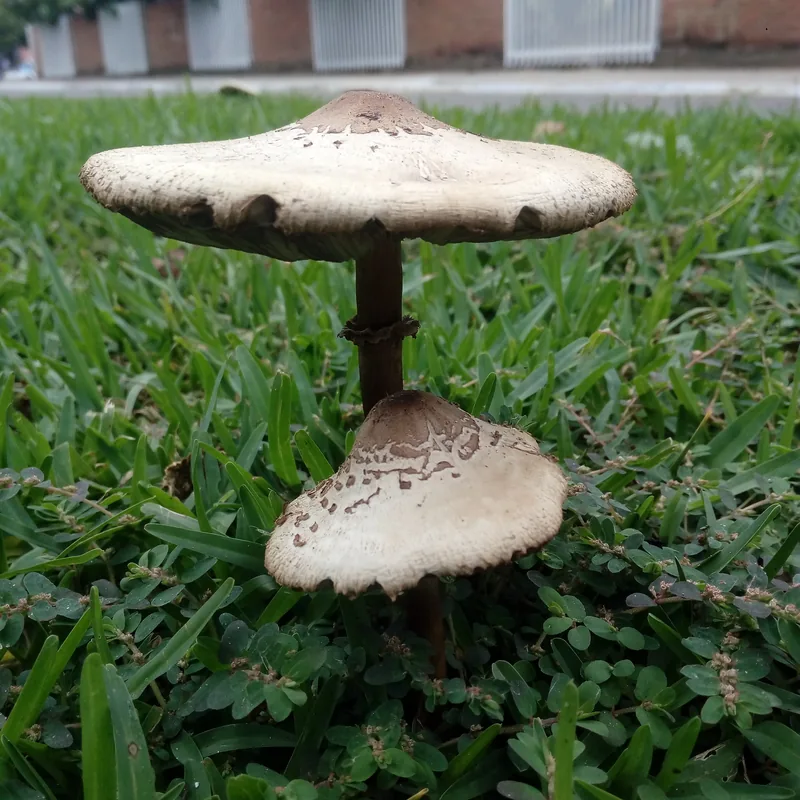
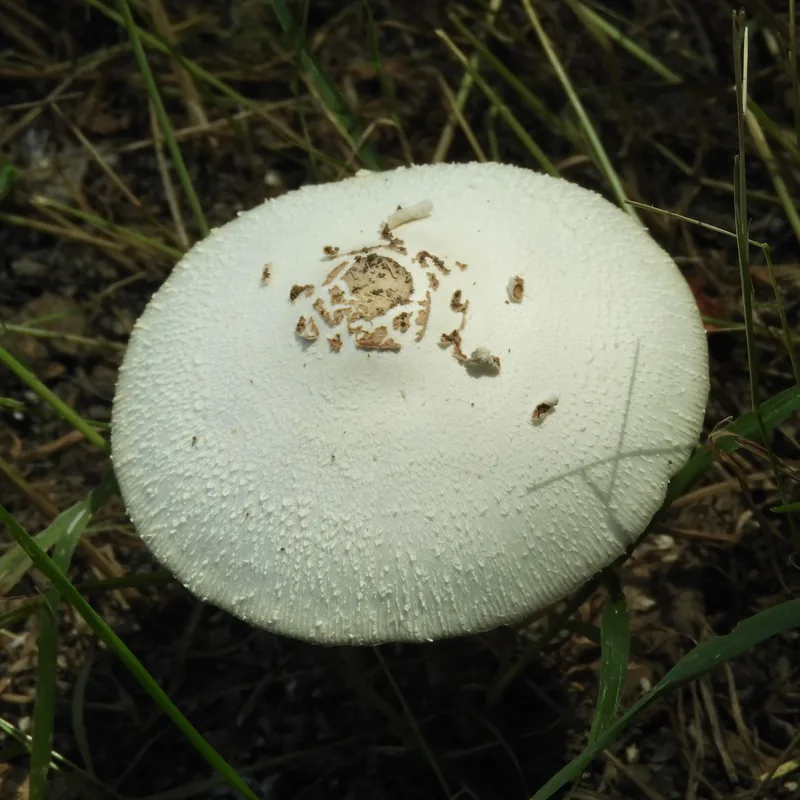
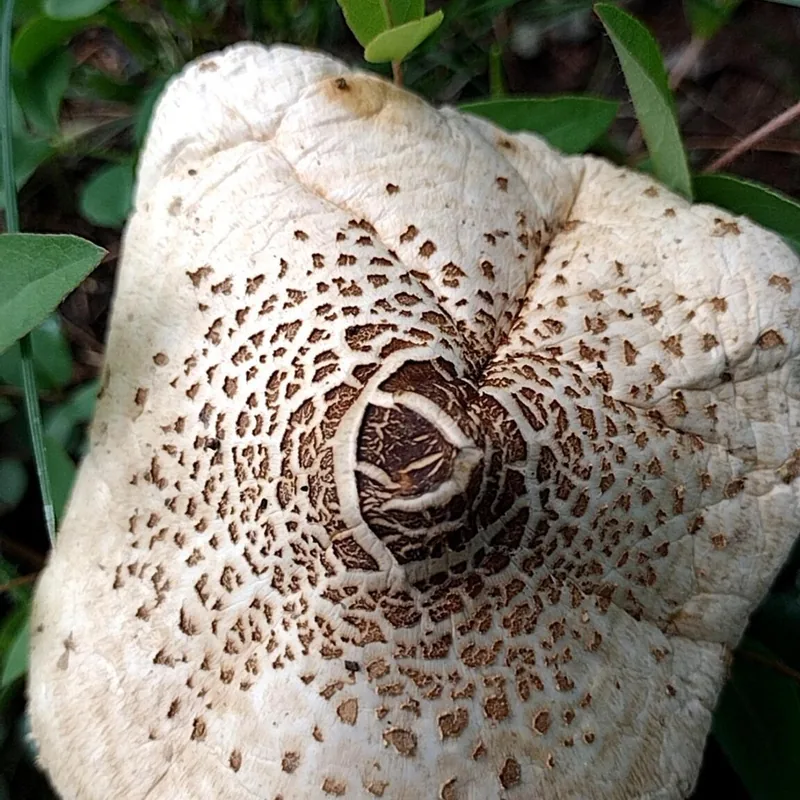
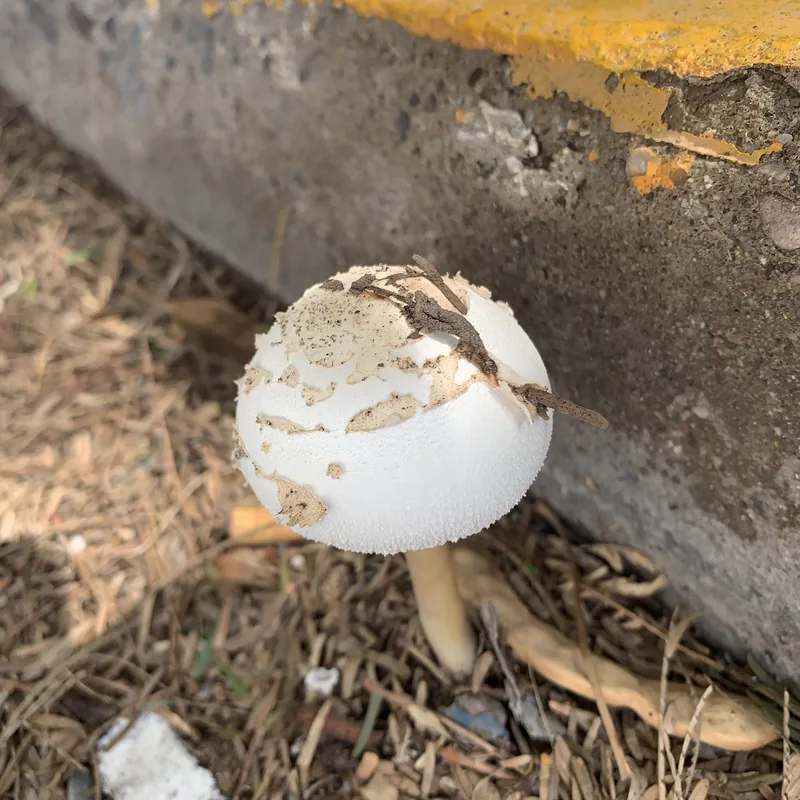
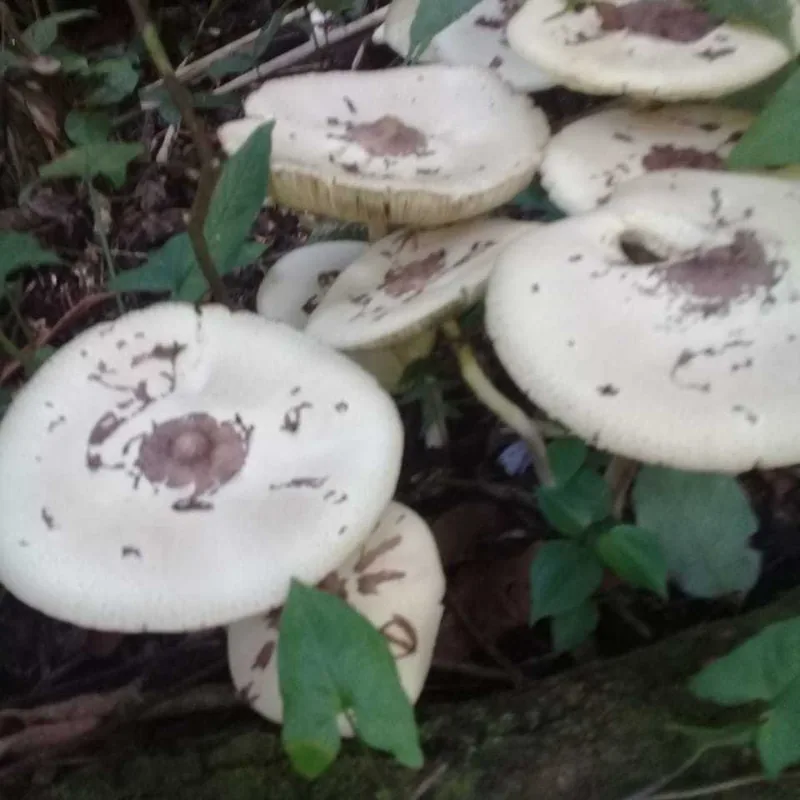
- Measures 10–22 cm. It changes from convex or spherical to nearly flat. Brown or pinkish brown scales cover a whitish background.[1]
- Gills
- The gills are crowded and free from the stem. They are creamy white when young and become greenish at maturity.[2]
- Stem
- Measures 8–20 cm long and 1.5–3 cm thick. It is white to brownish, with a slightly enlarged base.[1]
- Ring
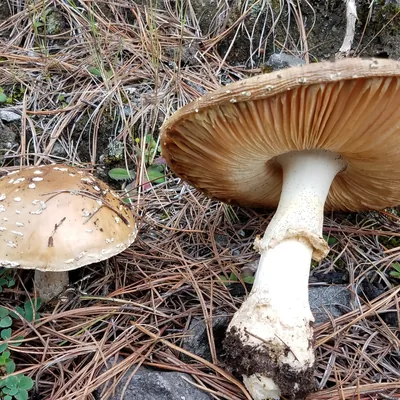
- The thick ring is white to brownish and can become orange or brownish with age.[4]
- Flesh
- The flesh is firm and white. Some specimens slowly stain reddish or brownish.[4]
- Spore print
- The spore print is dull grayish green.[1]
- Odor
- It has no distinctive odor.[4]
Can you eat Green-spored parasol?
It is toxic and you should avoid eating it. Cooking a poisonous mushroom does not guarantee safety.[4][8]
Where and when does Green-spored parasol grow?
It grows on soil as a saprobe. Mexican records include urban areas, meadows, cultivated land, and open woodland.[2]
MushroomExpert describes summer through fall fruiting in North America. The Mexican sources consulted provide no monthly calendar.[1][2]
UNAM records it in Mexico and in Africa, China, India, Japan, Australia, Canada, the United States, and several Latin American countries.[2]
About the name
Older publications use Lepiota molybdites or Macrolepiota molybdites. Enciclovida also lists the synonym Lepiota morganii.[2][3]