Deadly. A single serving can kill. Never eat a wild mushroom identified only from photos.
- Season in Mexico
- HabitatPine and fir forest
- FamilyDiscinaceae
What happens if someone eats False morel?
Did someone eat a wild mushroom and feel sick? Call emergency services and bring a sample of the mushroom.
- Toxins
- It contains gyromitrin and related compounds. Your body converts gyromitrin into N-methyl-N-formylhydrazine and then monomethylhydrazine (MMH). MMH damages the liver and kidneys; it reduces GABA synthesis and promotes seizures.
- When symptoms start
- Symptoms usually begin 5 to 12 hours after eating it. NAMA describes a range of 2 to 24 hours.
- What to do
- If you or someone else ate it, call a poison center or emergency services immediately. Do not wait for symptoms. Keep and bring a mushroom sample to help with identification.
How do you identify False morel?
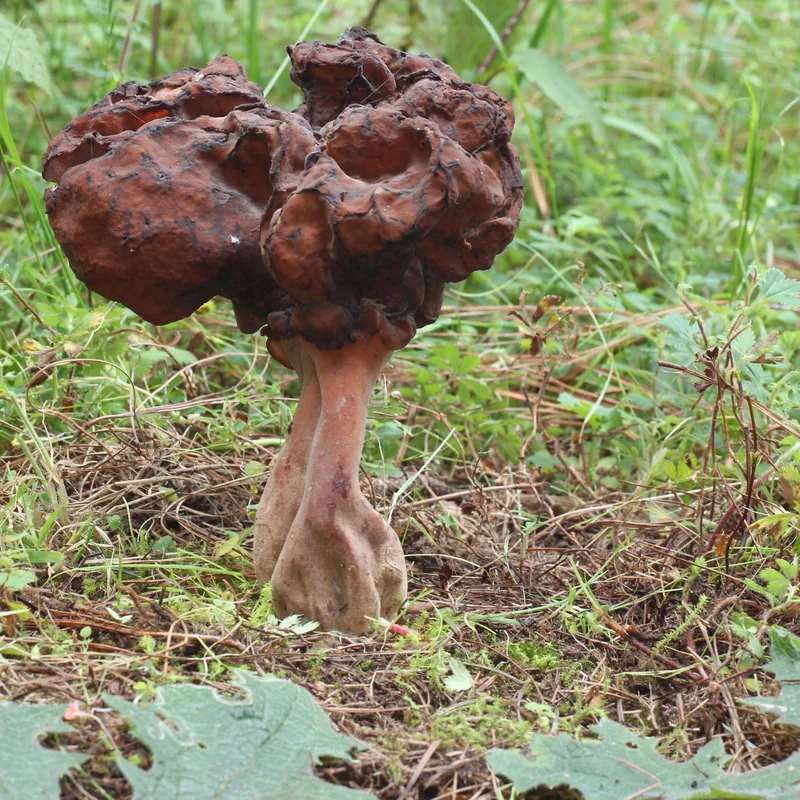
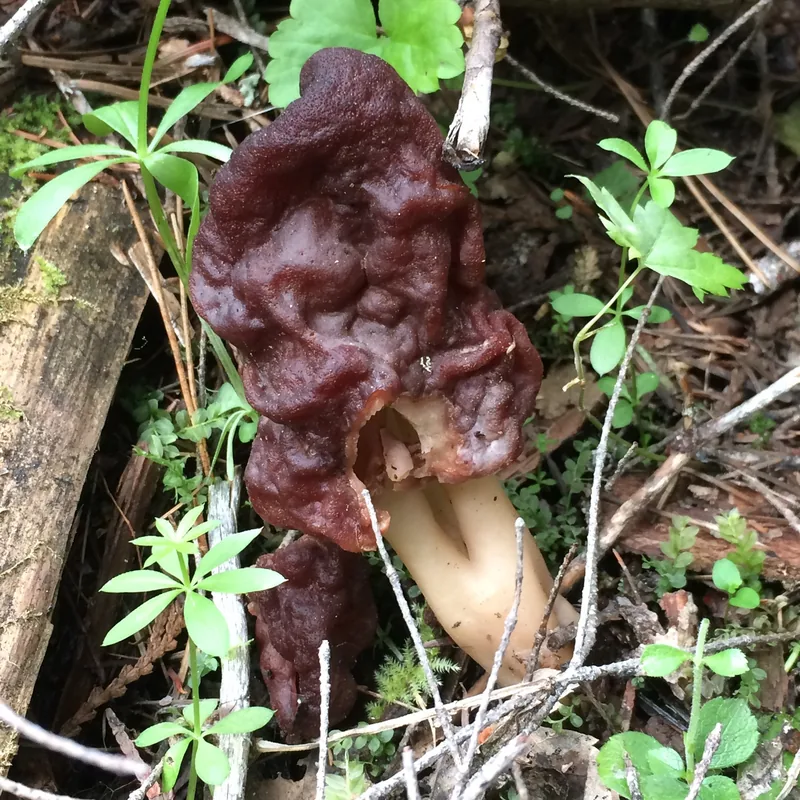
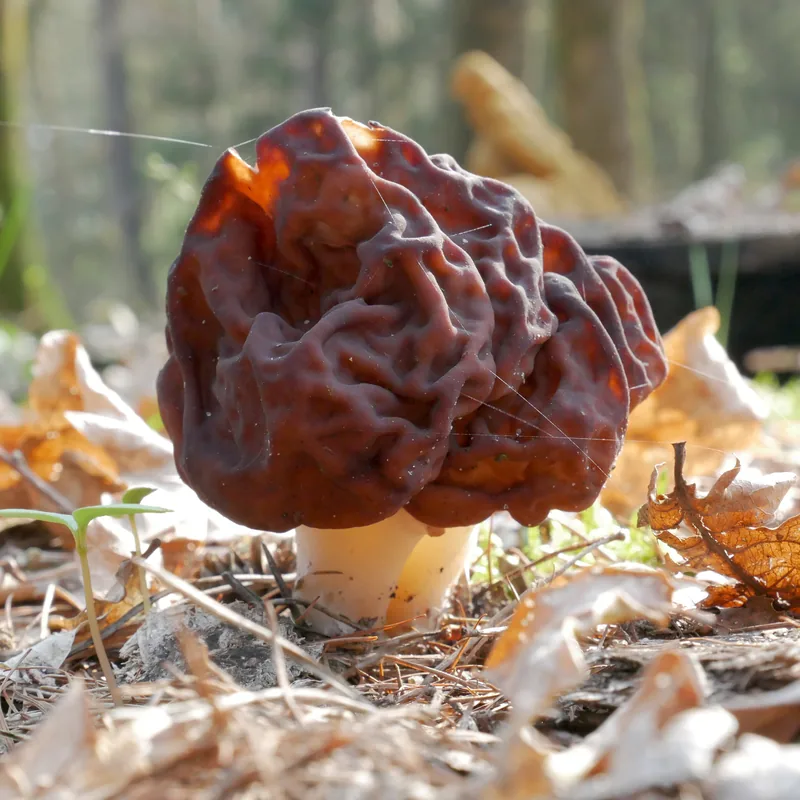
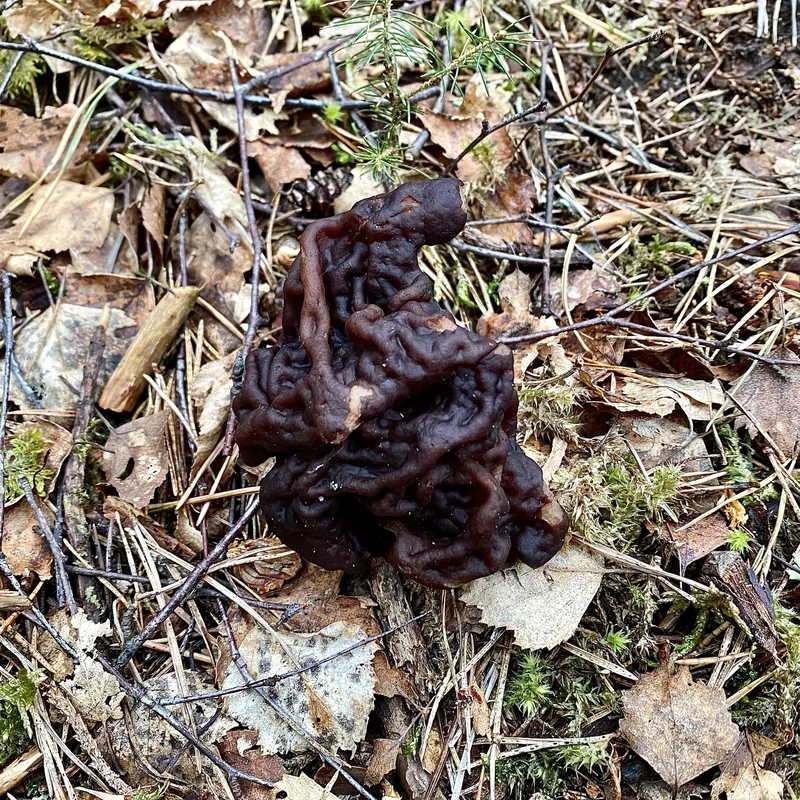
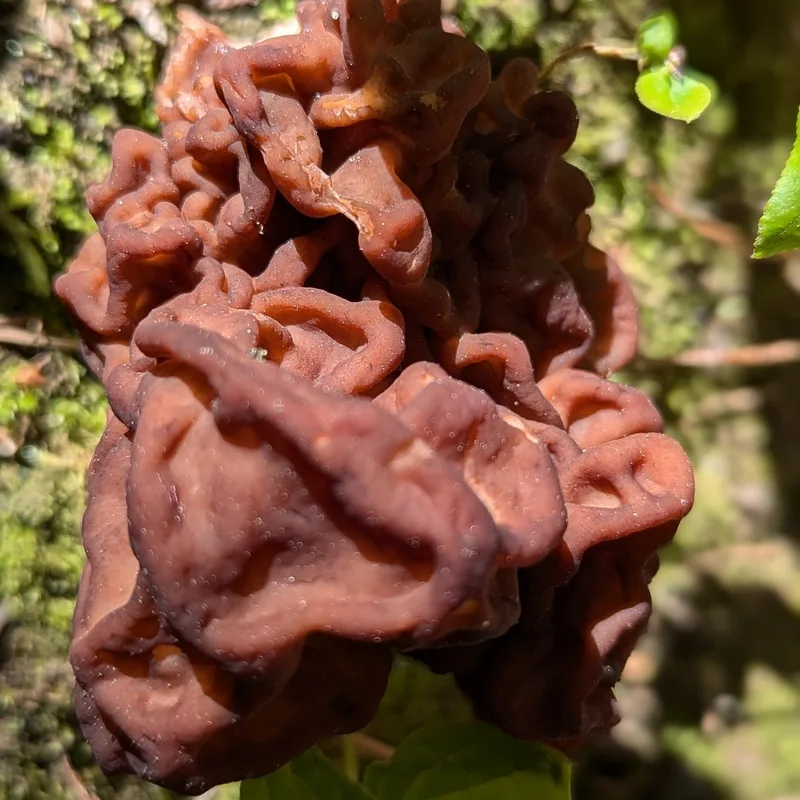
- Cap shape
- Irregular and wrinkled, with brainlike folds.[2]
- Cap color
- Pinkish tan to reddish brown; may darken to nearly black.[2]
- Cap size
- 4-8 cm high and 3-12 cm wide.[2]
- Underside
- Tan to whitish, finely mealy.[2]
- Stem
- 3-9 cm long and 1-3.5 cm thick; pale yellowish tan to rose.[2]
- Flesh
- Thin, brittle, whitish to tan.[2]
Can you eat False morel?
It can cause fatal poisoning. Cooking does not make it safe, and breathing its cooking fumes can poison you.[4][6][8]
Where and when does False morel grow?
In Mexico, it was documented growing alone on humus in Pinus-Abies forest at Cofre de Perote.[3]
It fruits in spring in North America. Fruiting months in Mexico remain unspecified.[2]
It is widely recorded in northern and mountainous North America. Mexico has a published record from Los Gallos, Xico municipality, at Cofre de Perote in Veracruz.[2][3]