Shaggy maneCoprinus comatus
lawyer's wig
Coprinus comatus is an edible mushroom also cultivated for food. It grows wild on lawns and disturbed ground. Its shaggy cap and rapid breakdown into black ink make identification and prompt cooking important.[1][4][12]
Edible. Eat it cooked. Never eat a wild mushroom identified only from photos.
- Season in Mexico
- HabitatLawns and disturbed ground
- FlavorMild flavor
- GrowingHard
- FamilyAgaricaceae
How do you identify shaggy mane?
- Cap
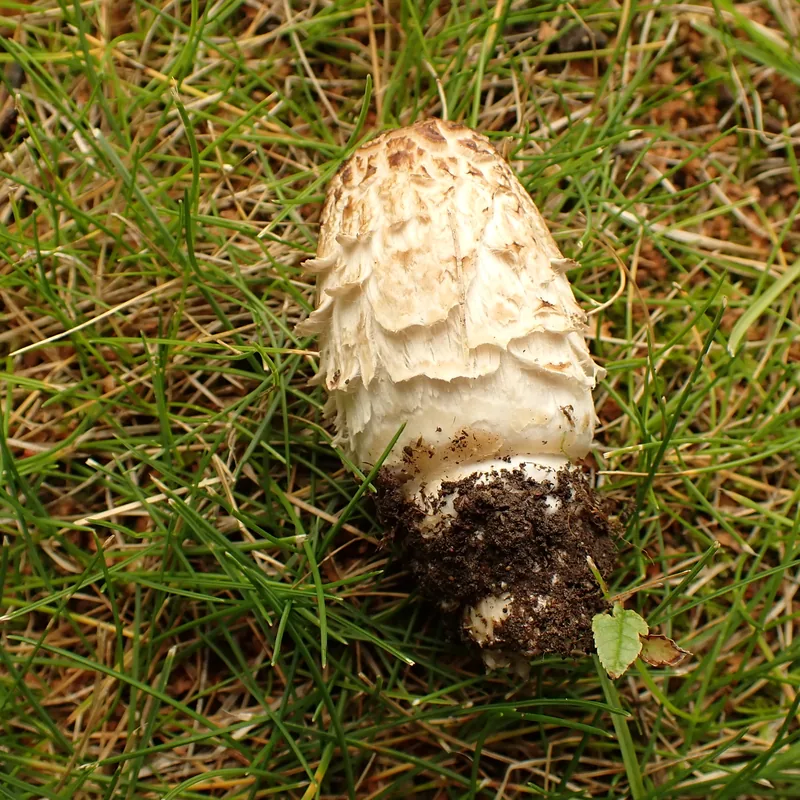
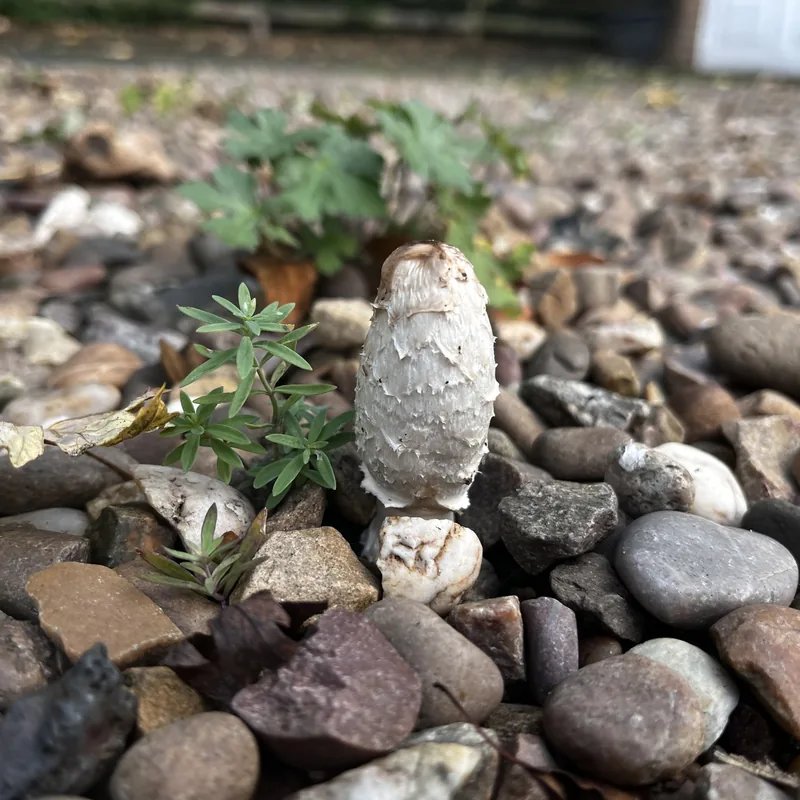
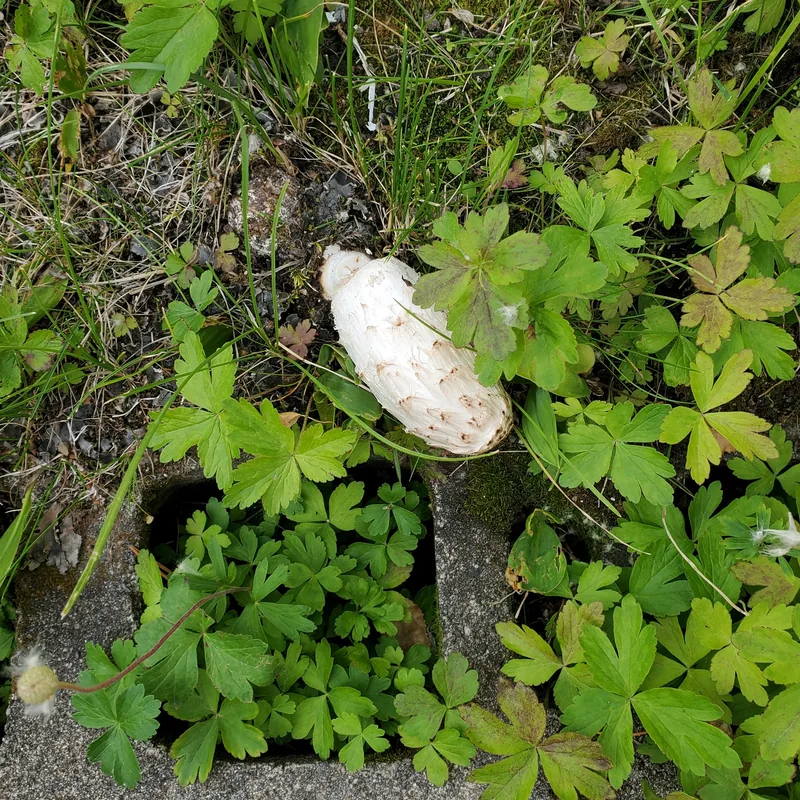
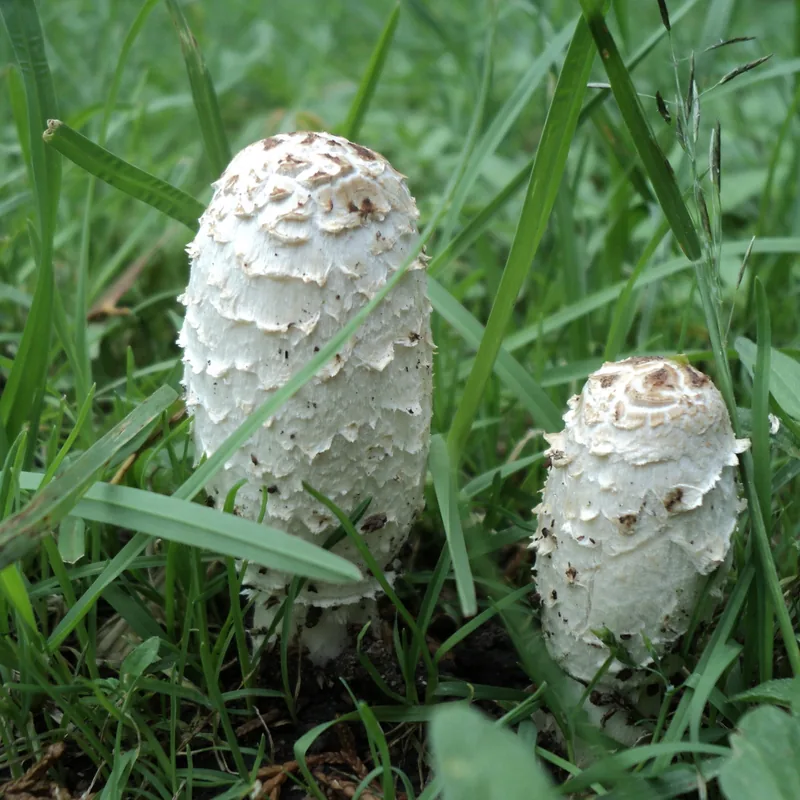
- Measures 3-15 cm. Young caps are oval or nearly cylindrical, then expand into a bell shape. The surface is whitish with a brownish center and large, shaggy scales.[1]
- Gills
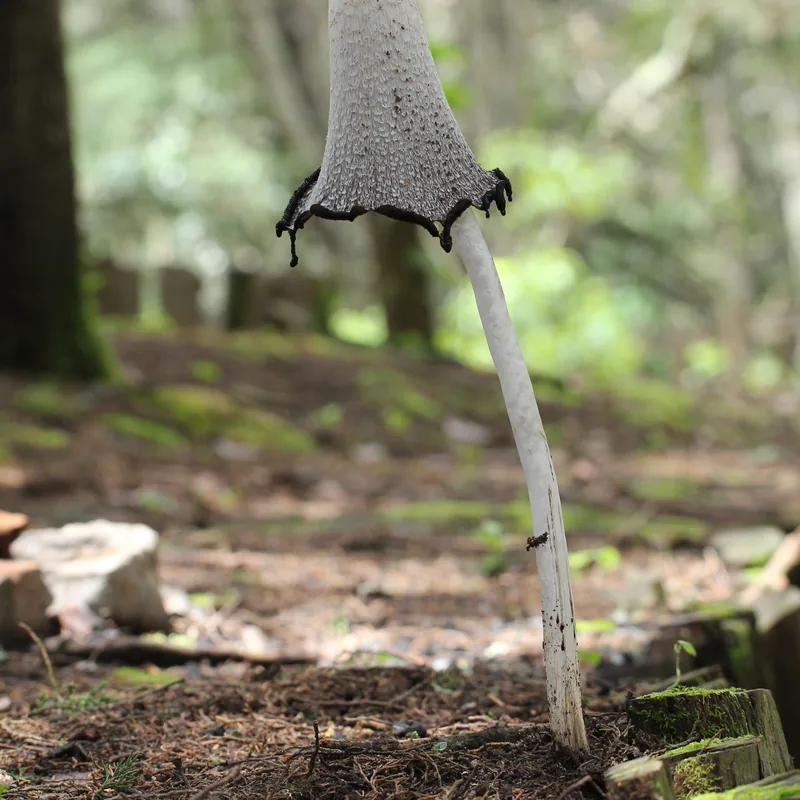
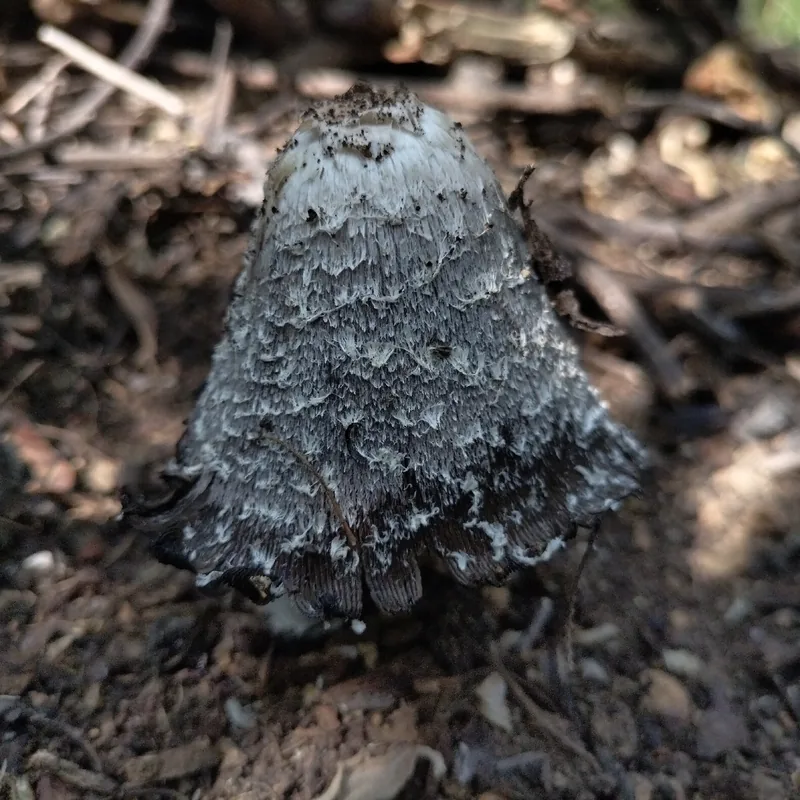
- Very crowded and free from the stem. They change from white to pinkish and black, then liquefy as they mature.[1]
- Stem
- Measures 5-20 cm long and 1-2 cm thick. White, smooth and hollow, with a string-like strand of fibers inside.[1]
- Flesh
- White and soft.[1]
- Spore print
- The spore deposit is black.[1]
- Cultivated form
- Cultivated specimens also pass through growth, discoloration and autolysis stages: the fruiting body eventually breaks down.[13]
Can you eat shaggy mane?
Edible only when young: within hours of harvest it turns into a black liquid. Prepare it soon after picking. It can cause digestive upset when eaten with alcohol. When foraging, eat only specimens with a confirmed identification. If you suspect mushroom poisoning, contact a physician or a poison center.[4][8][9]
How do you grow shaggy mane?
Temperature
Colonization21–27 °C
Fruiting18–24 °C
Humidity
Colonization0–95 %
Fruiting0–88 %
Full cycle: 35 days
- Light
- Indirect
Substrates
Log your batches, temperatures and harvests. The free plan needs no card.
How do you cook shaggy mane?
Its flesh is soft. It is used in mushroom soup. Microwaved and frozen, it yields a liquid that can serve as a base for risotto. Prepare it soon after picking: the black parts quickly turn bitter.[1][3][4]
Where and when does shaggy mane grow?
It decomposes organic matter. It grows on lawns, wood chips and compacted soil, alone or in groups.[1]
North American descriptions report summer and fall. The consulted sources provide Mexican records but do not establish a nationwide fruiting calendar.[1][10]
It is widely distributed in North America and documented worldwide. Mexican records include the listed entities; the list combines cited localities and is not a complete inventory.[1][10][11][14]
About the name
Coprinus comatus belongs to Agaricaceae and retains the genus name Coprinus. DNA studies led to many mushrooms formerly placed in that genus being reassigned to Coprinopsis, Coprinellus and Parasola.[2][5]