Fool's webcapCortinarius orellanus
Cortinarius orellanus is a deadly mushroom that contains orellanine, a toxin that damages the kidneys. It grows on the ground in European forests, associated with oak, beech and hazel. Its identification matters because people mistake it for edible mushrooms and symptoms appear late.[2][3][4]
Deadly. A single serving can kill. Never eat a wild mushroom identified only from photos.
- Season in Mexico
- HabitatOak woodland
- FamilyCortinariaceae
What happens if someone eats Fool's webcap?
Did someone eat a wild mushroom and feel sick? Call emergency services and bring a sample of the mushroom.
- Toxins
- Contains orellanine, a bipyridine toxin that concentrates in the kidneys and primarily damages the lining of the renal tubules.
- When symptoms start
- Symptoms typically begin 1-2 weeks after eating it. Another review reports a clinical latency of 36 hours to 21 days for orellanus syndrome.
- What to do
- If you ate it or suspect someone ate it, call a poison center or emergency services immediately. Do not wait for symptoms. Take a mushroom sample, including the base if available, to the emergency department to help identify it.
How do you identify Fool's webcap?
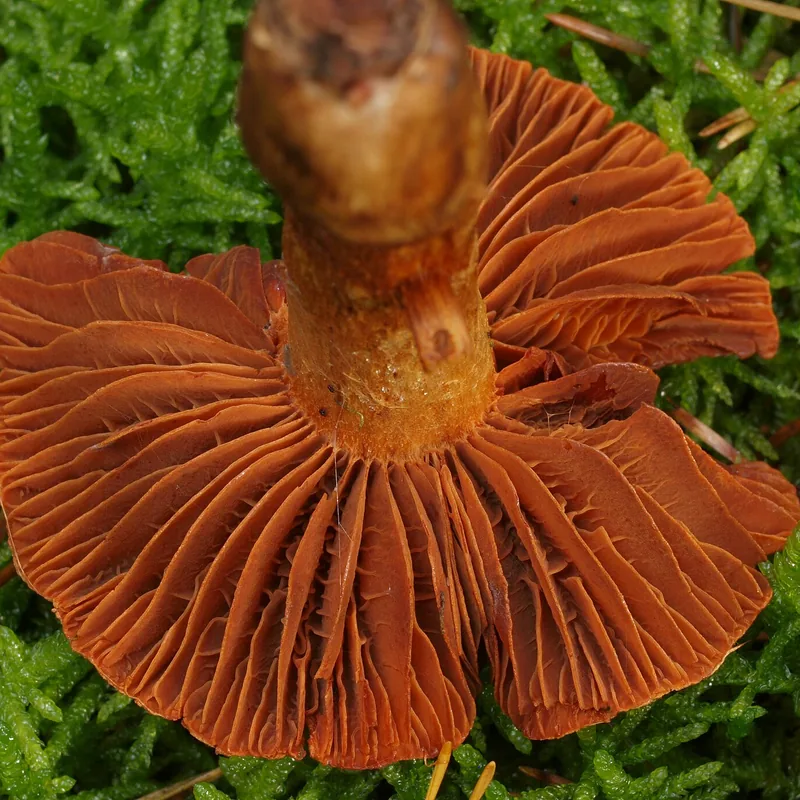
- Cap
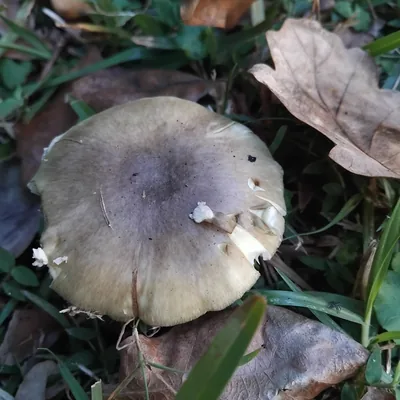
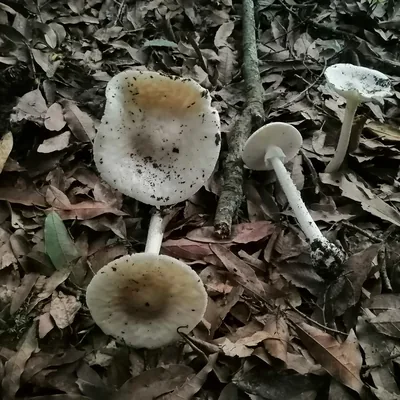
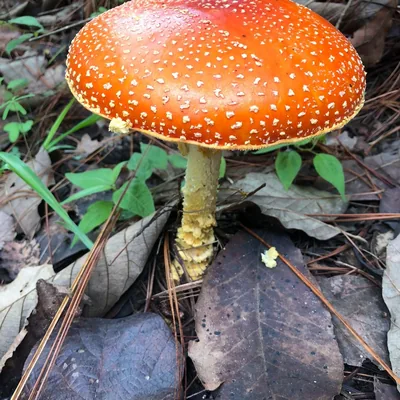
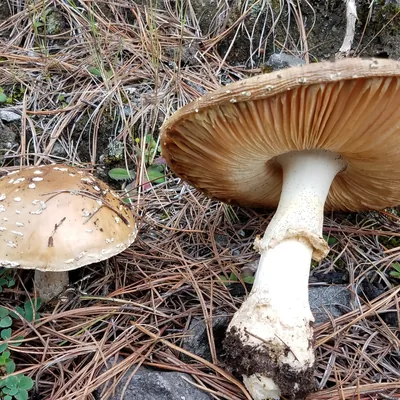
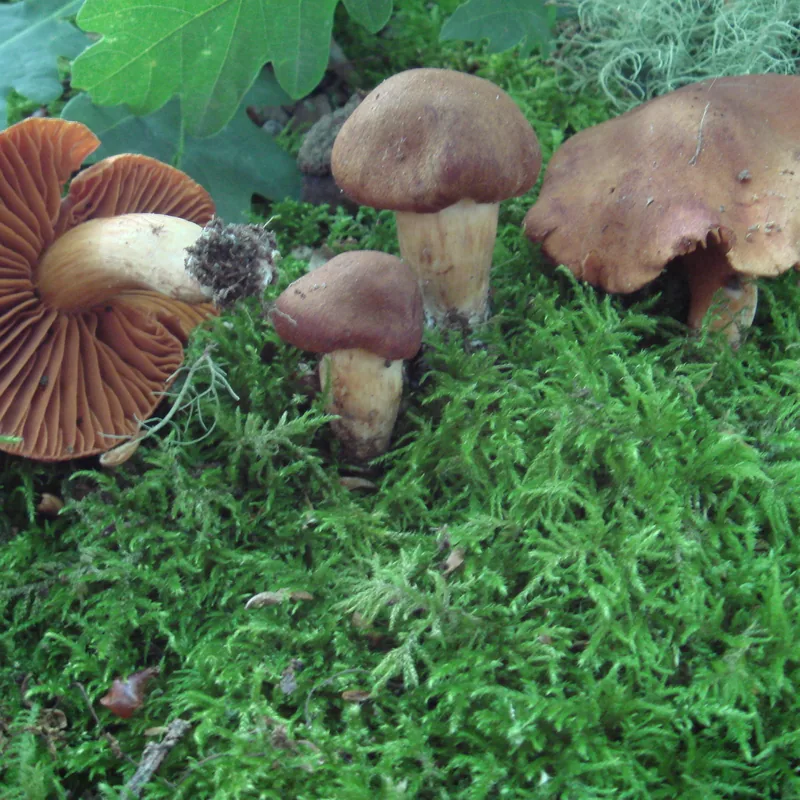
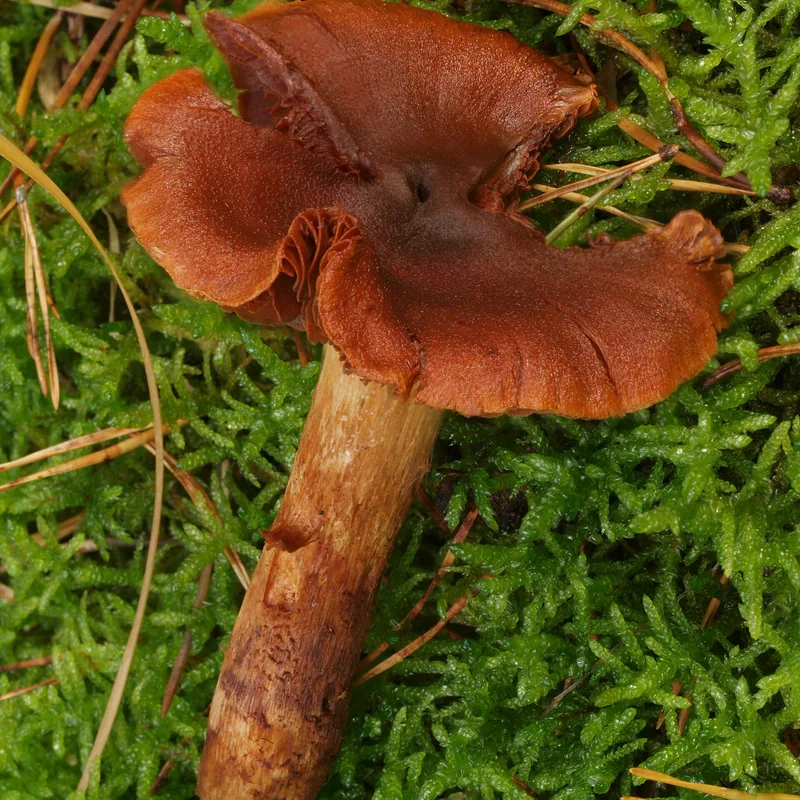
- 3 to 8 cm across; convex or bell-shaped, then spreading. Surface dry and velvety, orange-red to copper-brown.[1]
- Gills
- Thick, spaced and notched; initially cinnamon-colored, becoming rust-red.[1]
- Stem
- 6-10 × 1-1.5 cm; cylindrical, tapering toward the base, yellowish, with darker lengthwise fibers.[1]
- Cortina
- Yellow veil, sparse and short-lived.[1]
- Flesh
- Compact and firm, golden yellow; faint radish smell.[1]
Can you eat Fool's webcap?
Eating it can cause kidney failure and death. Avoid eating it and obtain expert identification for any wild mushroom intended for food.[1][2][5]
Where and when does Fool's webcap grow?
Grows on the ground, associated with oak, beech and hazel.[2]
The guide to the Selva region in Spain lists September, October and November. Its season in Mexico remains unconfirmed.[1]
The literature consulted describes C. orellanus as a European species. Its presence and state-level distribution in Mexico remain unconfirmed.[2]