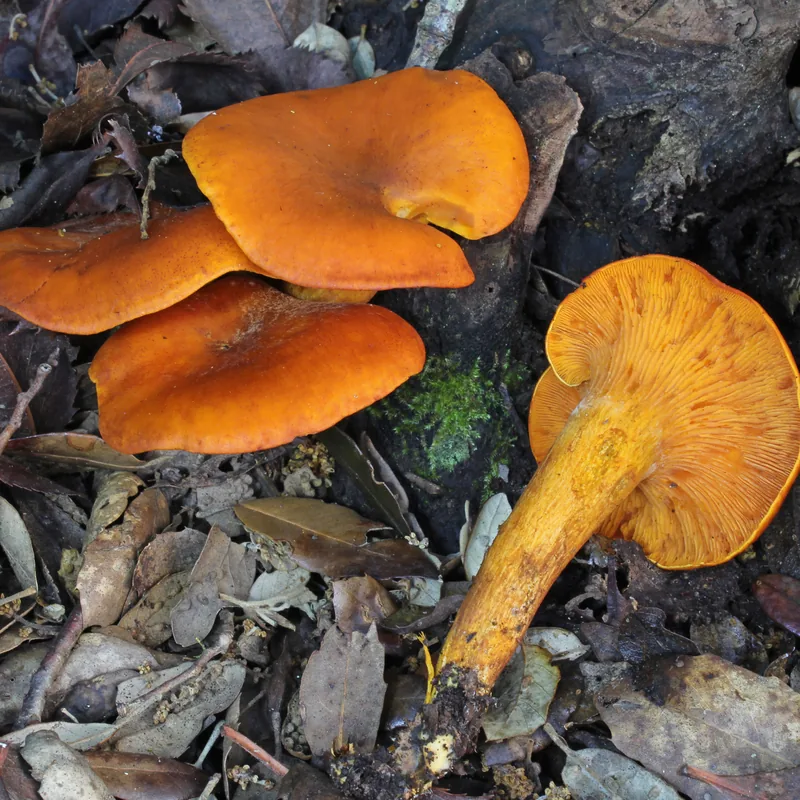
Poisonous. Causes poisoning. Never eat a wild mushroom identified only from photos.
- Season in Mexico
- HabitatStumps and buried roots
- FamilyOmphalotaceae
What happens if someone eats Jack-o'-lantern mushroom?
Did someone eat a wild mushroom and feel sick? Call emergency services and bring a sample of the mushroom.
- Toxins
- The toxins include the sesquiterpenes illudin M and illudin S. Both compounds have been documented in O. olearius; NAMA identifies them among the toxins of North American Omphalotus, including O. illudens.
- When symptoms start
- For North American Omphalotus, including O. illudens, NAMA places the usual onset of symptoms at 1 to 3 hours after eating. A clinical series involving O. olearius in South Sardinia recorded a mean latency of 3.5 hours; this average describes the cases studied.
- What to do
- Call a poison center or emergency services immediately if you or someone else ate it or may have eaten it. Do not wait for symptoms. Bring a mushroom sample for identification and take photographs of the cap, underside, and stem. If the person collapses, has a seizure, has trouble breathing, or cannot be awakened, call emergency services immediately.
How do you identify Jack-o'-lantern mushroom?
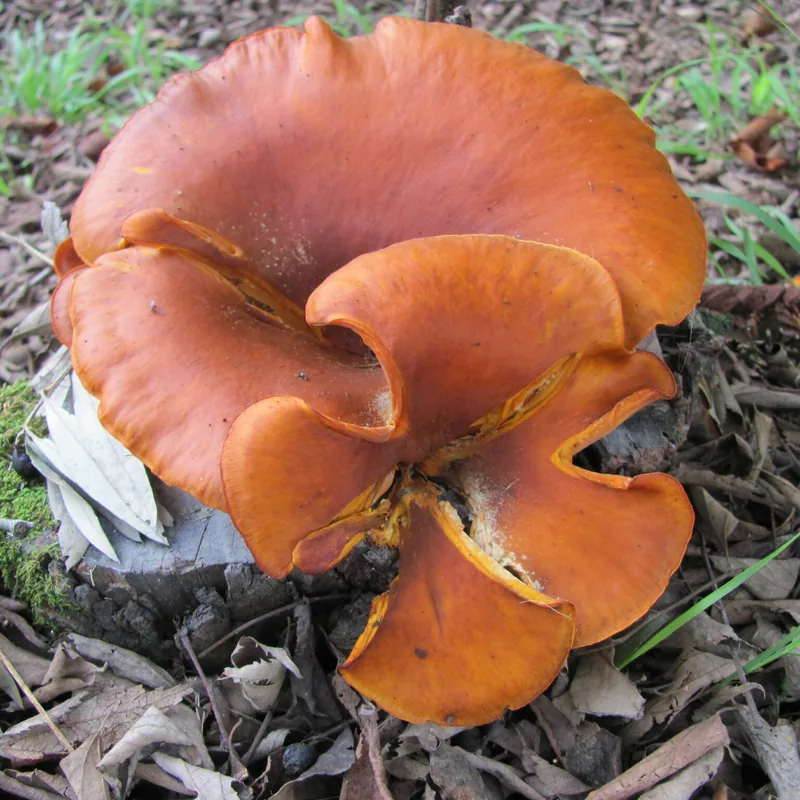
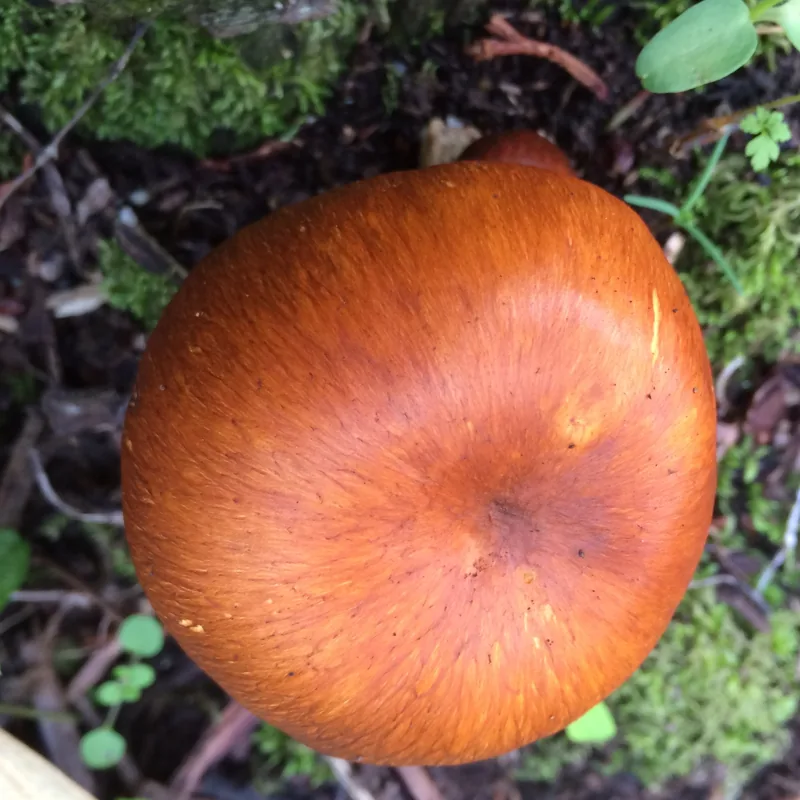
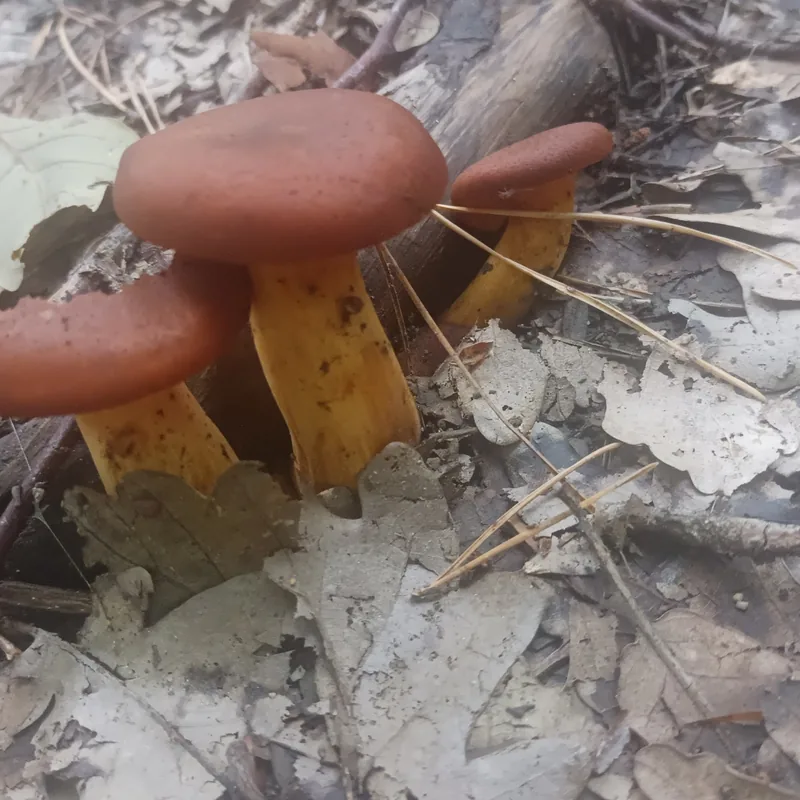
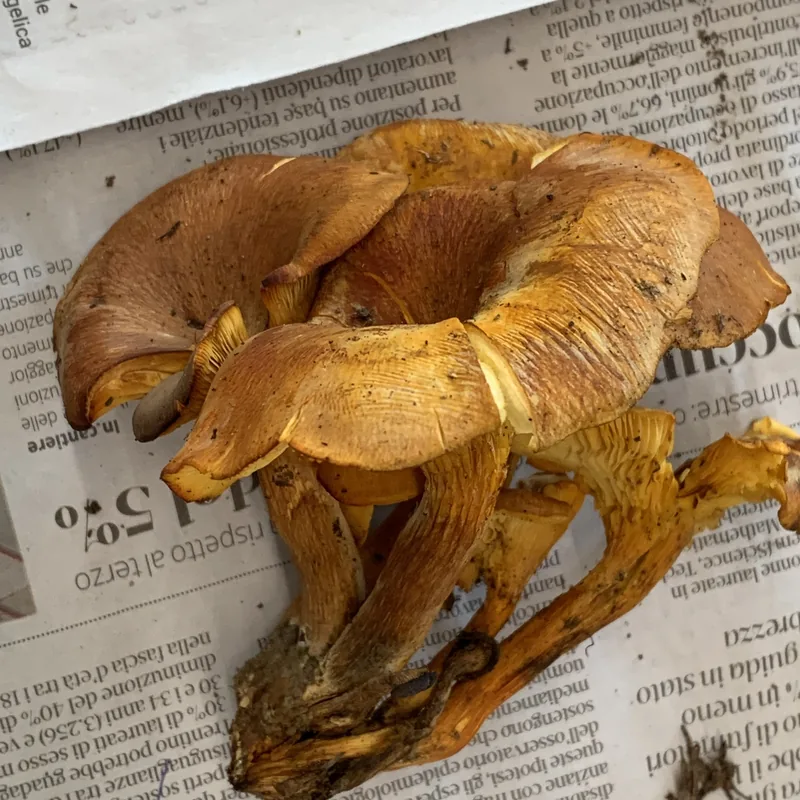
Can you eat Jack-o'-lantern mushroom?
It is toxic. Avoid eating it and seek expert identification if you collect similar mushrooms.[4][9]
Where and when does Jack-o'-lantern mushroom grow?
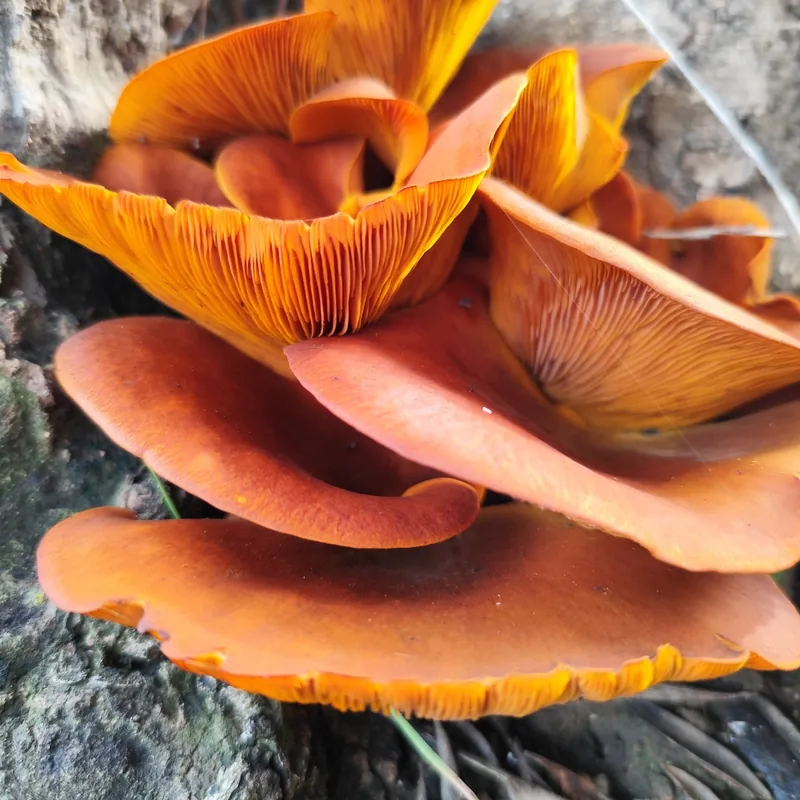
It decomposes hardwood, especially olive trees. It forms large clusters on stumps and buried roots.[1]
The Sonora study documents a September collection. This record provides a local date; the full fruiting season in Mexico remains unspecified here.[4]
Published records from Sonora use the name Omphalotus olearius. The modern account places O. olearius in central and southern Europe. O. illudens occurs in Mexico, east of the Rocky Mountains, and in northern and north-temperate Europe. Interpretation of Mexican records requires attention to this taxonomic separation.[1][2][4]
About the name
O. illudens usually has a more intensely orange cap. Definitive separation from O. olearius requires microscopy: O. illudens has smaller spores and frequent refractive hyphae in the cap covering.[1][2]