Skip to content
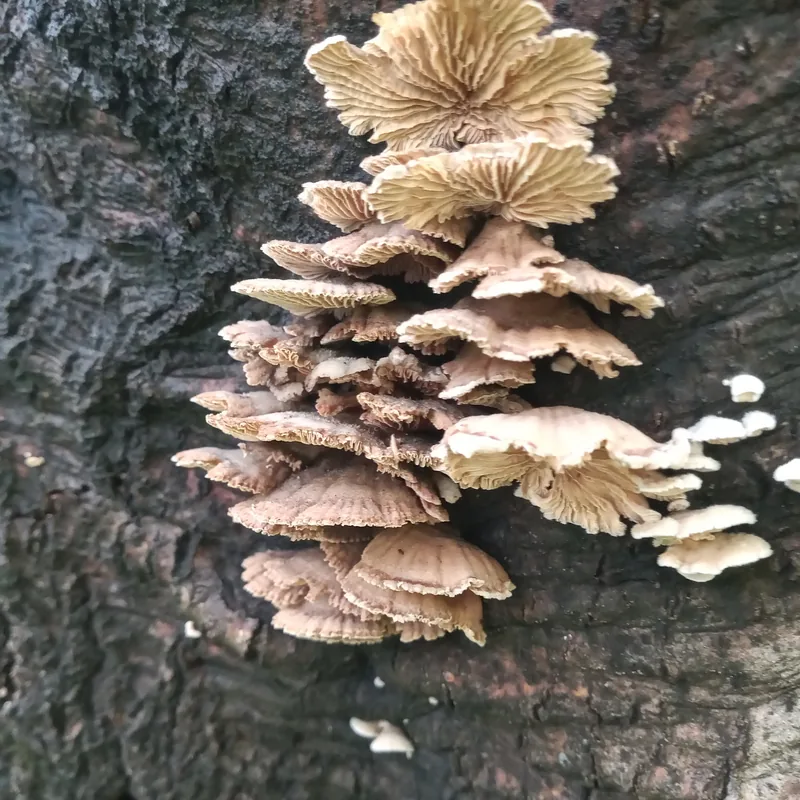
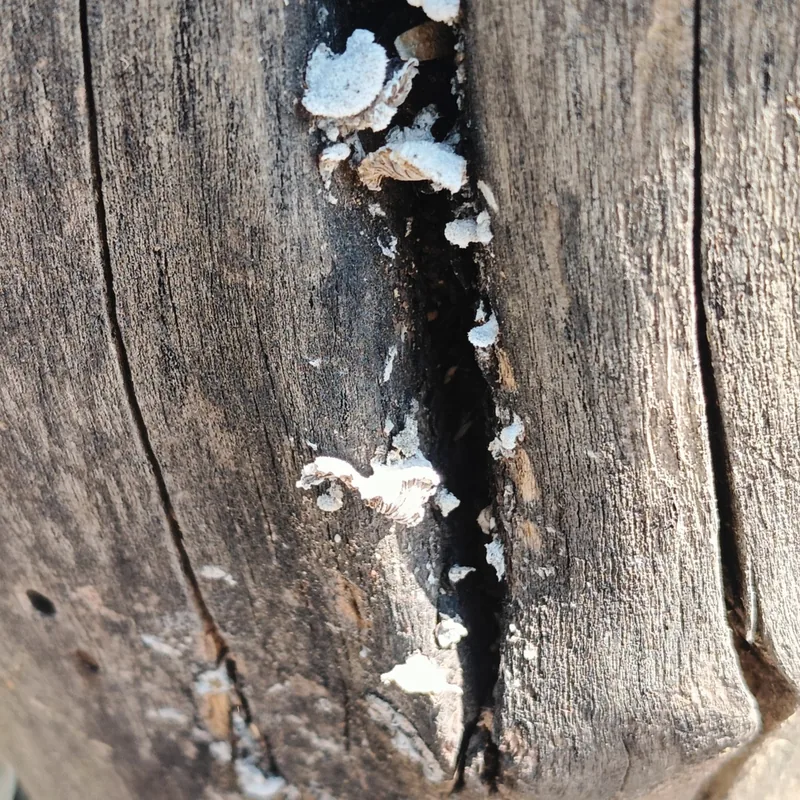
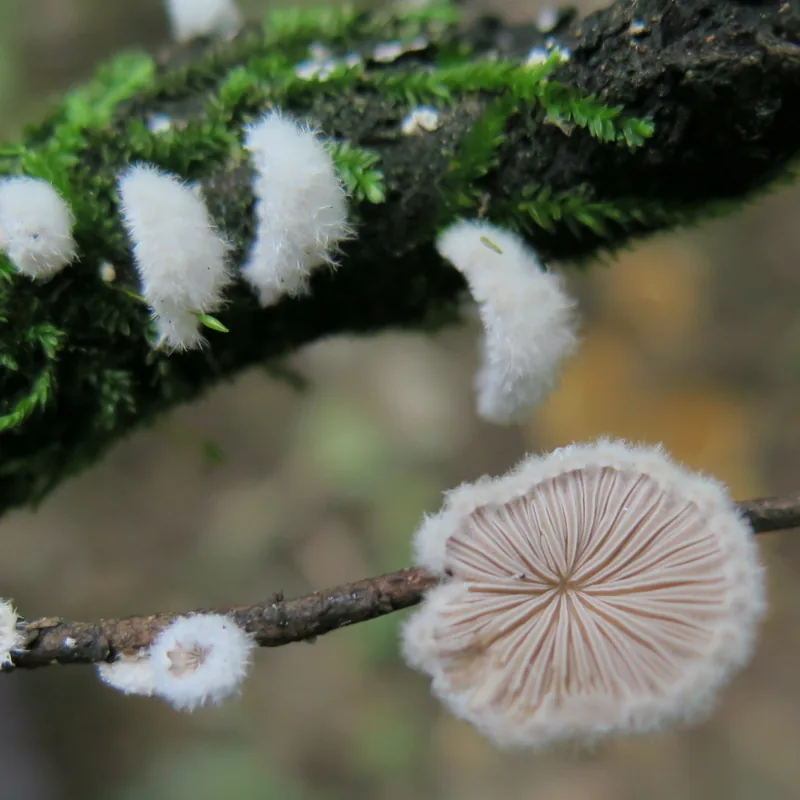
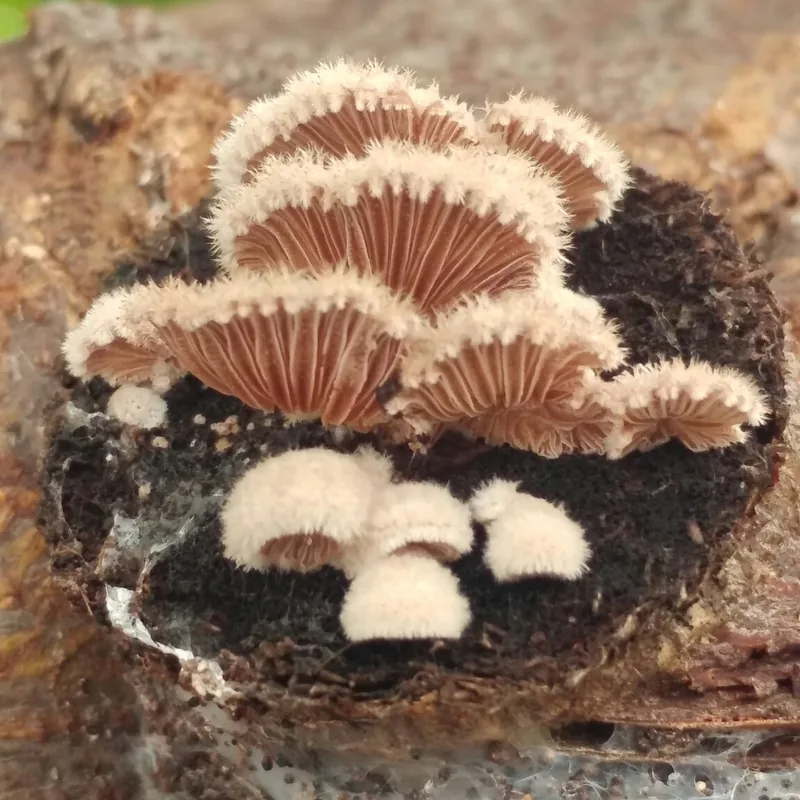
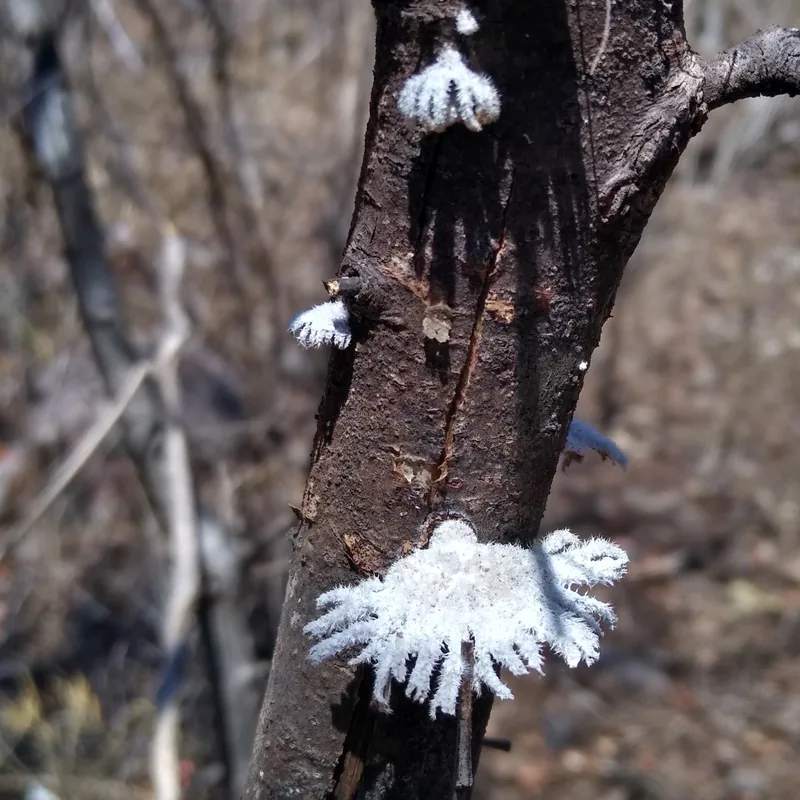
split gill (Schizophyllum commune), photo
Photo
Wild in Mexico

Split gillSchizophyllum commune

common split gill · oreja de palo · siquinché · oreja café · xikin che’

Schizophyllum commune is an edible mushroom that grows on wood and has folds split lengthwise on its underside. In Mexico it is traditionally eaten and sold in markets in Tuxtepec, Oaxaca, and Teapa, Tabasco.[1][4][6]

Edible. Eat it cooked. Never eat a wild mushroom identified only from photos.

  • Season in Mexico
  • HabitatDecaying wood
  • FamilySchizophyllaceae

How do you identify split gill?
Cap
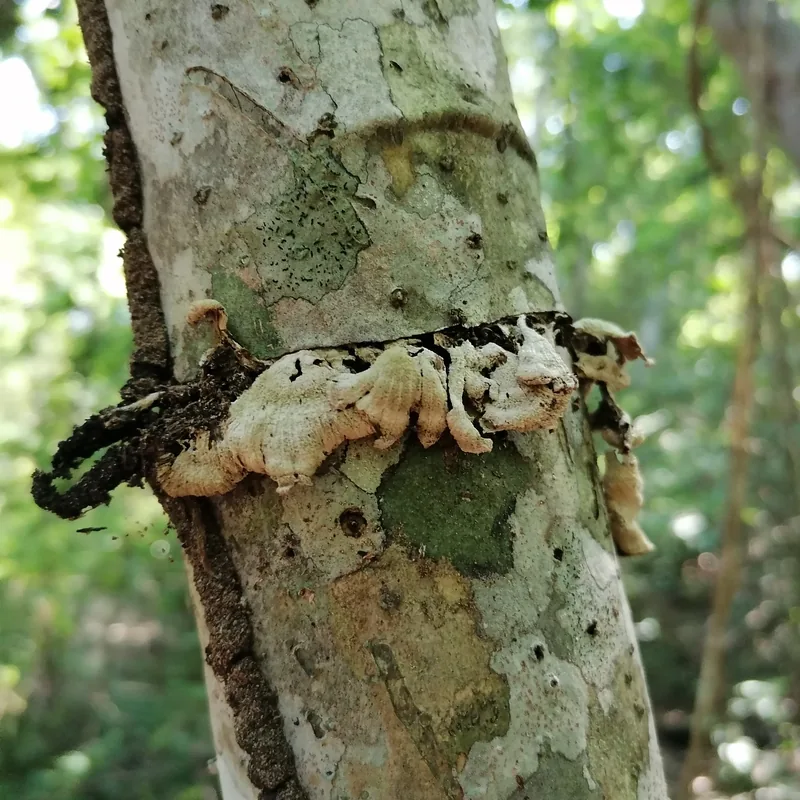
Fan-shaped or shell-shaped, whitish, grayish or brownish. The surface is dry and finely hairy.[1]
Size
Cap 1–4 cm across.[1]
Underside
Widely spaced, whitish to grayish folds, split lengthwise.[2]
Stem
Absent or reduced to a narrow extension of the cap.[2]
Ring and volva
Veil absent; ring and volva absent.[2]
Flesh
Tough and whitish.[1]
Spore print
White.[2]
Smell
No distinctive odor.[1]

Can you eat split gill?

Edible, with traditional food uses in Mexico. Eat it only after a mycologist or experienced local mushroom expert confirms its identity. Cook it thoroughly and never eat it raw. Documented practice in the Lacandon rainforest includes boiling it before further preparation.[4][12]

Where and when does split gill grow?

It grows on dead hardwood branches and logs. It occasionally colonizes living wood.[1]

May through October in Antelá and Tziscao, Chiapas, during the rainy season. This calendar applies to those communities.[7]

These states have records or food uses documented in the Mexican sources consulted. The species has a worldwide distribution.[1][3][4]
Baja CaliforniaBCSonoraSONChihuahuaCHHCoahuilaCOANuevo LeónNLBaja California SurBCSSinaloaSINDurangoDURZacatecasZACSan Luis PotosíSLPTamaulipasTAMNayaritNAYJaliscoJALAguascalientesAGSGuanajuatoGTOQuerétaroQROHidalgoHGOColimaCOLMichoacánMICEstado de MéxicoMEXCiudad de MéxicoCDMXTlaxcalaTLXVeracruzVERYucatánYUCGuerreroGROMorelosMORPueblaPUETabascoTABCampecheCAMQuintana RooROOOaxacaOAXChiapasCHP
States with records (5/32): Veracruz, Tabasco, Quintana Roo, Oaxaca, Chiapas

See the mushroom map

Names in Mexico

  • oreja de palo[3]
  • siquinché[3]
  • oreja café[4]
  • xikin che’[4]
  • tainisé[3]
  • hongo de palo mulato[3]

Fun facts

  • It shrivels when dry and survives until moisture returns.[1]
  • Schizophyllum combines roots meaning split and leaf or gill.[2]

Frequently asked questions

Sources

  1. Schizophyllum commune (MushroomExpert.Com)
  2. Schizophyllum commune
  3. Aproximación al conocimiento micológico tradicional en tres regiones tropicales del sureste mexicano, a través de un estudio en mercados
  4. Uso y manejo de hongos silvestres en dos comunidades de la Selva Lacandona, Chiapas, México
  5. Aproximaciones a la etnomicología Maya
  6. Process and dynamics of traditional selling wild edible mushrooms in tropical Mexico
  7. Conocimiento micológico tradicional en dos comunidades aledañas al Parque Nacional Lagunas de Montebello, Chiapas, México
  8. Group A - Gilled Fungi that are Sessile or have a lateral stem
  9. Plicaturopsis crispa
  10. Pleurocybella porrigens
  11. Mycetism: A Review of the Recent Literature
  12. Intoxicación por Hongos
  13. Schizophyllum commune as an emerging fungal pathogen: a review and report of two cases
  14. Nanacate (Schizophyllum commune)

Written with AI help from the cited sources. A second model checked every fact against those sources and removed what they did not support.

Image credits

Photos are under free licenses (CC0, CC BY or CC BY-SA).

Related mushrooms