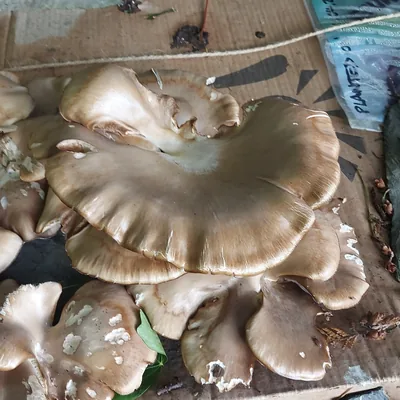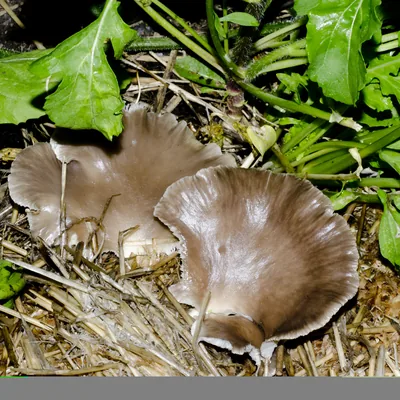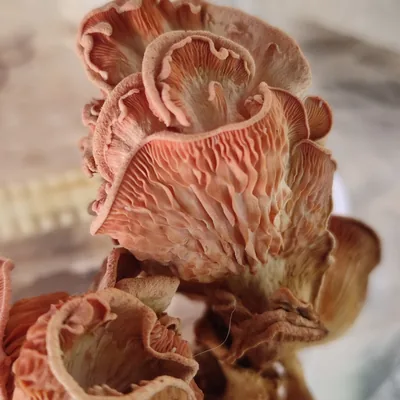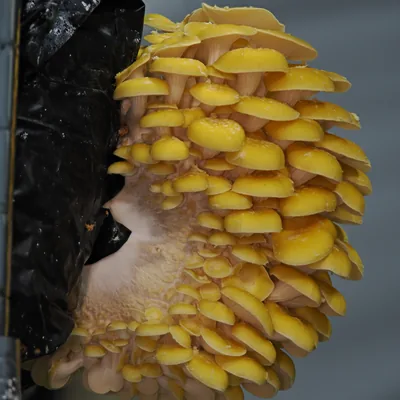
Wine capStropharia rugosoannulata
king stropharia
Stropharia rugosoannulata is an edible mushroom also produced for cooking. It grows on wood chips and organic debris in gardens, pastures, and forests. People look it up for its culinary uses and its jagged-edged ring.[3][6]
Edible. Eat it cooked. Never eat a wild mushroom identified only from photos.
- Season in Mexico
- HabitatWood chips and debris
- FlavorUmami and sweet
- GrowingMedium
- FamilyStrophariaceae
How do you identify wine cap?
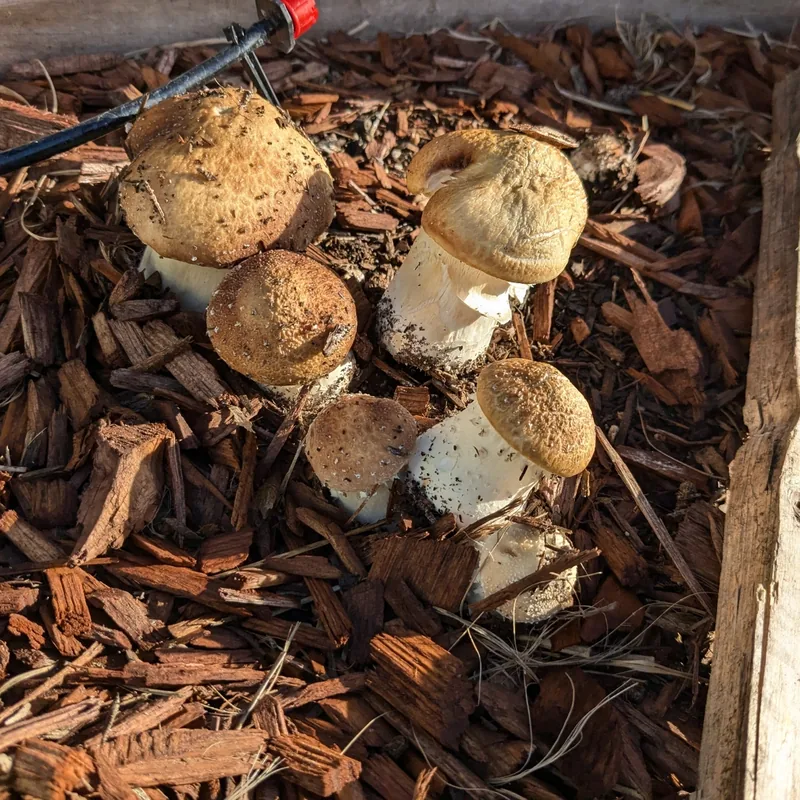
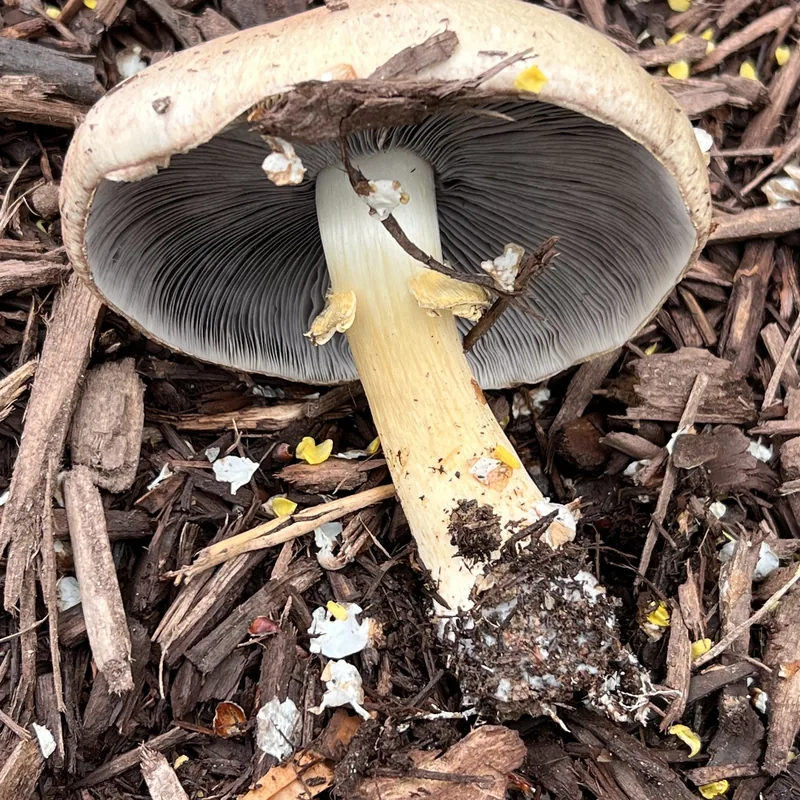
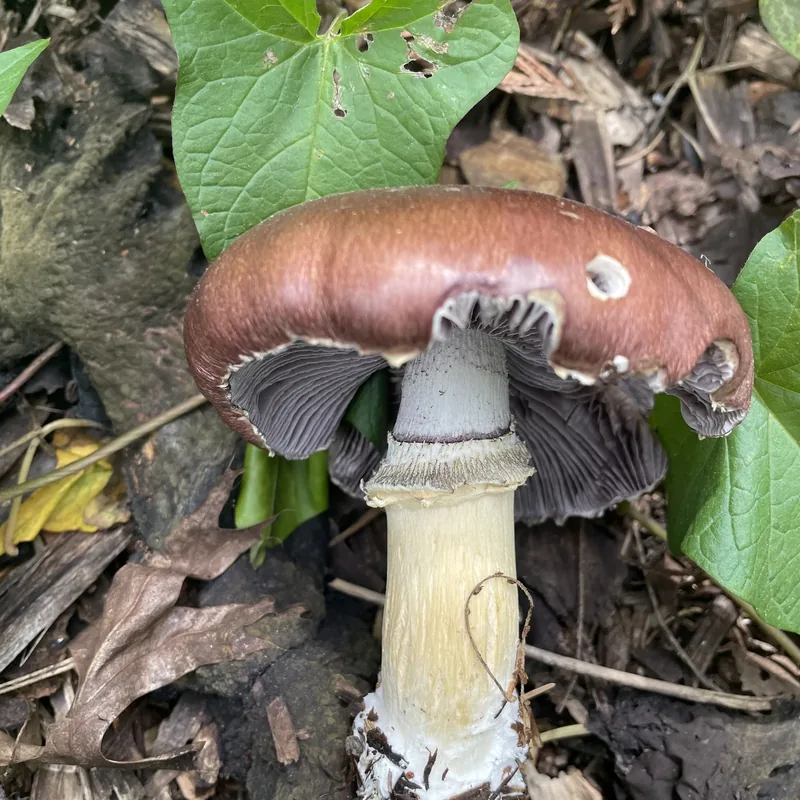
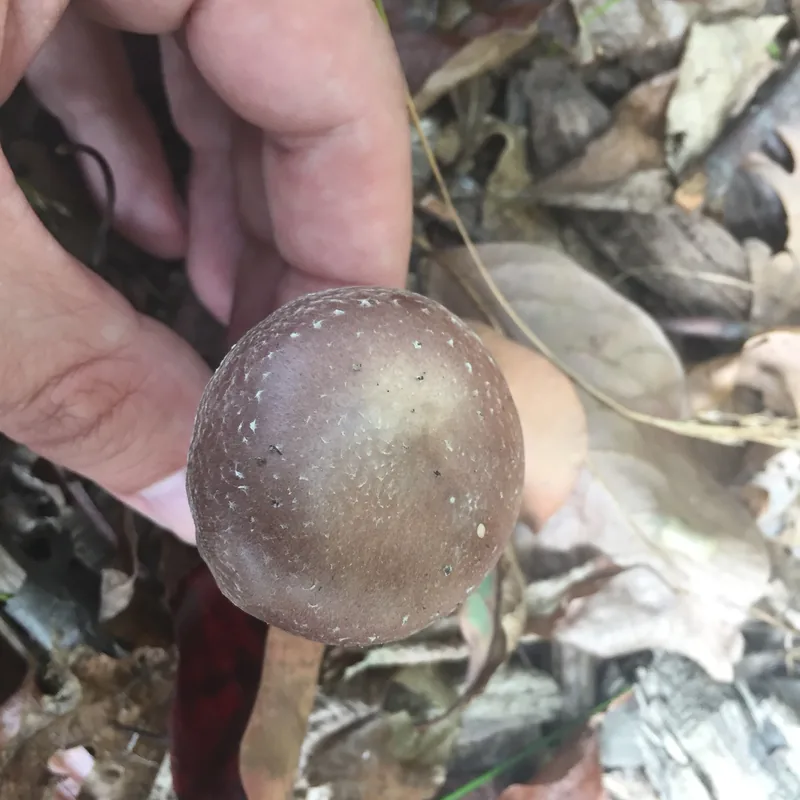
- Cap
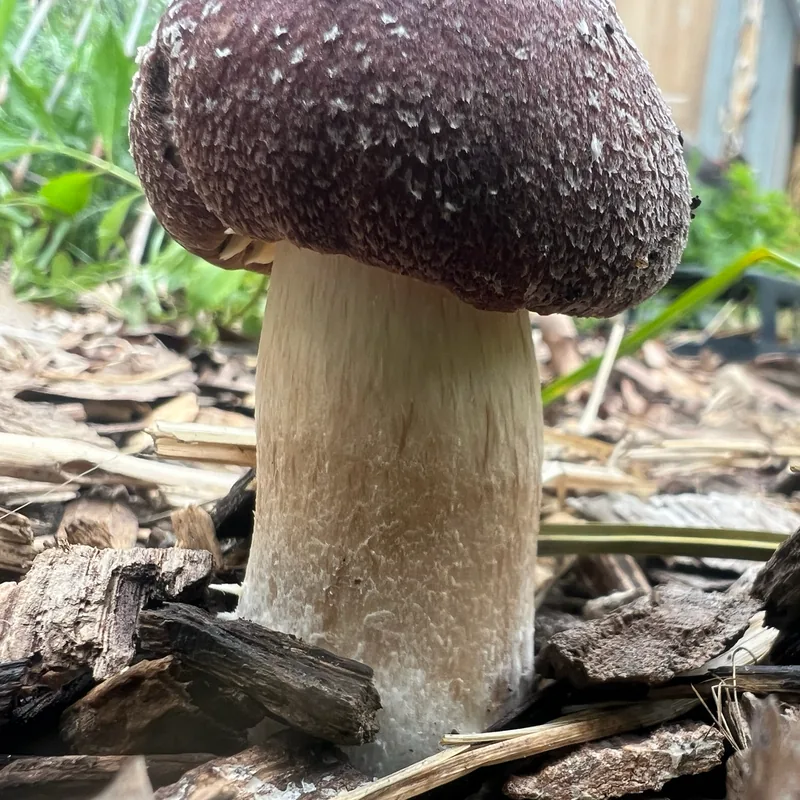
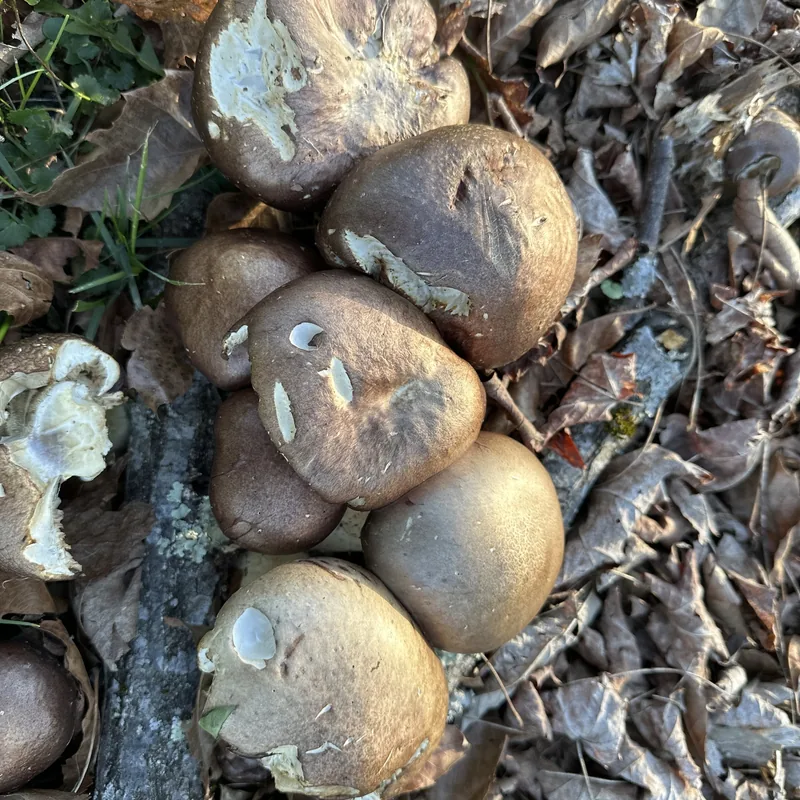
- 4–13 cm; convex, becoming nearly flat. Wine red to reddish brown, fading to yellowish brown.[1]
- Gills
- Attached to the stem. Initially whitish to pale gray; later purplish gray to purple-black.[1]
- Stem
- 8–16 cm long and 1–2 cm thick. White, becoming yellowish or brownish with age.[1]
- Ring
- Thick, white to yellowish; grooved above and radially split below.[1]
- Flesh
- White and firm; unchanged when sliced.[1]
- Spore print
- Very dark purple-brown. Useful for identification together with the ring.[3]
- Wild and cultivated specimens
- Identification of wild and cultivated specimens combines a wine-colored cap, purplish gills, and a jagged-edged ring.[3]
Can you eat wine cap?
It is edible. Cook it before eating, and have an expert confirm any wild specimen you intend to consume.[8][10]
How do you grow wine cap?
Temperature
Colonization21–27 °C
Fruiting16–21 °C
Humidity
Colonization0–95 %
Fruiting0–90 %
Full cycle: 70 days
- Light
- Indirect
Substrates
Log your batches, temperatures and harvests. The free plan needs no card.
How do you cook wine cap?
It has firm flesh. You can sauté it in oil or butter, or grill it. Serve it with rice and asparagus, on hamburgers, or alongside vegetables.[5][7]
Where and when does wine cap grow?
It grows among wood chips, straw, mulch, lawns, and gardens. At Tequila Volcano in Jalisco, it is recorded as terrestrial in pine-oak forest.[8]
The North American description reports fruiting from spring through fall. Fruiting months in Mexico remain unconfirmed.[1]
It is documented in North America, Europe, and Asia. Mexico has a record from Tequila Volcano in Jalisco.[8]